The Public Service Association will release a report at its biennial congress calling for a public-good test before major government agency restructures or large-scale job cuts.
The proposal would require agencies to assess costs and benefits before proceeding. It comes as the coalition targets no more than about 55,000 full-time equivalent core public servants by July 2029.
That figure is roughly 8,700 fewer than the 63,657 FTEs recorded in December 2025, according to Public Service Commission data and the May 2026 announcement by Finance Minister Nicola Willis and Public Service Minister Paul Goldsmith.
Public Service Commission figures show headcount has since risen. Core public service FTEs reached 64,535 at 31 March 2026, up 877 or 1.4 percent from December 2025.
The Government projects $2.4 billion in savings over four years from the overhaul. Most agencies face a sinking lid on operating budgets: 2 percent in the near term, then 5 percent in each of the following two years. Savings are earmarked for health, education, infrastructure, defence and police.
Reductions are to come via digitisation, agency mergers, process simplification and natural attrition. Teachers, doctors, nurses, other Health NZ staff, police and defence personnel sit outside the headcount target.
Between 2017 and 2023 the core public service grew from about 47,000 to more than 65,000 people. Growth ran nearly three times faster than the overall labour force, with back-office functions expanding faster than frontline roles, the Beehive release stated. The series peaked at 65,699 in December 2023.
Historically, core numbers equalled about 1 percent of population. They rose to about 1.2 percent. The Government aims to restore the historic norm by mid-2029.
Willis said businesses and households use AI daily while parts of the public sector remain locked into outdated processes that prioritise box-ticking over outcomes. Every dollar saved from fixing duplication can support productivity, growth and long-term resilience, she said.
Goldsmith said reductions will be achieved progressively and that the goal is a modern, focused, productive and financially sustainable public service centred on frontline delivery.
Record redundancies already mark the path. In the year to 30 June 2025, 1,533 Public Service employees were made redundant, including 394 voluntary. That was the highest since measurement began in 2000, Public Service Commission data show. The Ministry of Education reported 329 and Oranga Tamariki 249. Total redundancy cost reached $80.4 million.
Contractor and consultant spend in the core public service fell sharply. Organisations spent $611.1 million in 2024/25, down 35 percent from $940.0 million the prior year. OPEX dropped 43 percent to $352.6 million. A $1.25 billion sector-wide OPEX cap for 2025/26 was tracking at an annualised $1.181 billion after nine months to March 2026.
Core Crown personnel expenditure eased to $11.185 billion in 2024/25. Total base salary cost for the Public Service was $6.481 billion.
A March 2026 PSA survey of 3,320 public service workers found only 5 percent believed restructuring had improved delivery. Seventy-seven percent disagreed that restructuring helped agencies deliver better for New Zealanders. The same share disagreed the Government funds services well enough. Fifty-eight percent said their agency was inadequately staffed.
PSA National Secretary Fleur Fitzsimons said: “just 5% think your restructuring has made things better. If the Minister listened to the people who deliver public services instead of patronising them, she would know her cuts are decimating the services New Zealanders depend on.”
The PSA, which represents more than 95,000 workers, has described the Government programme as a chaotic and reckless attack on public services and the foundations of the economy.
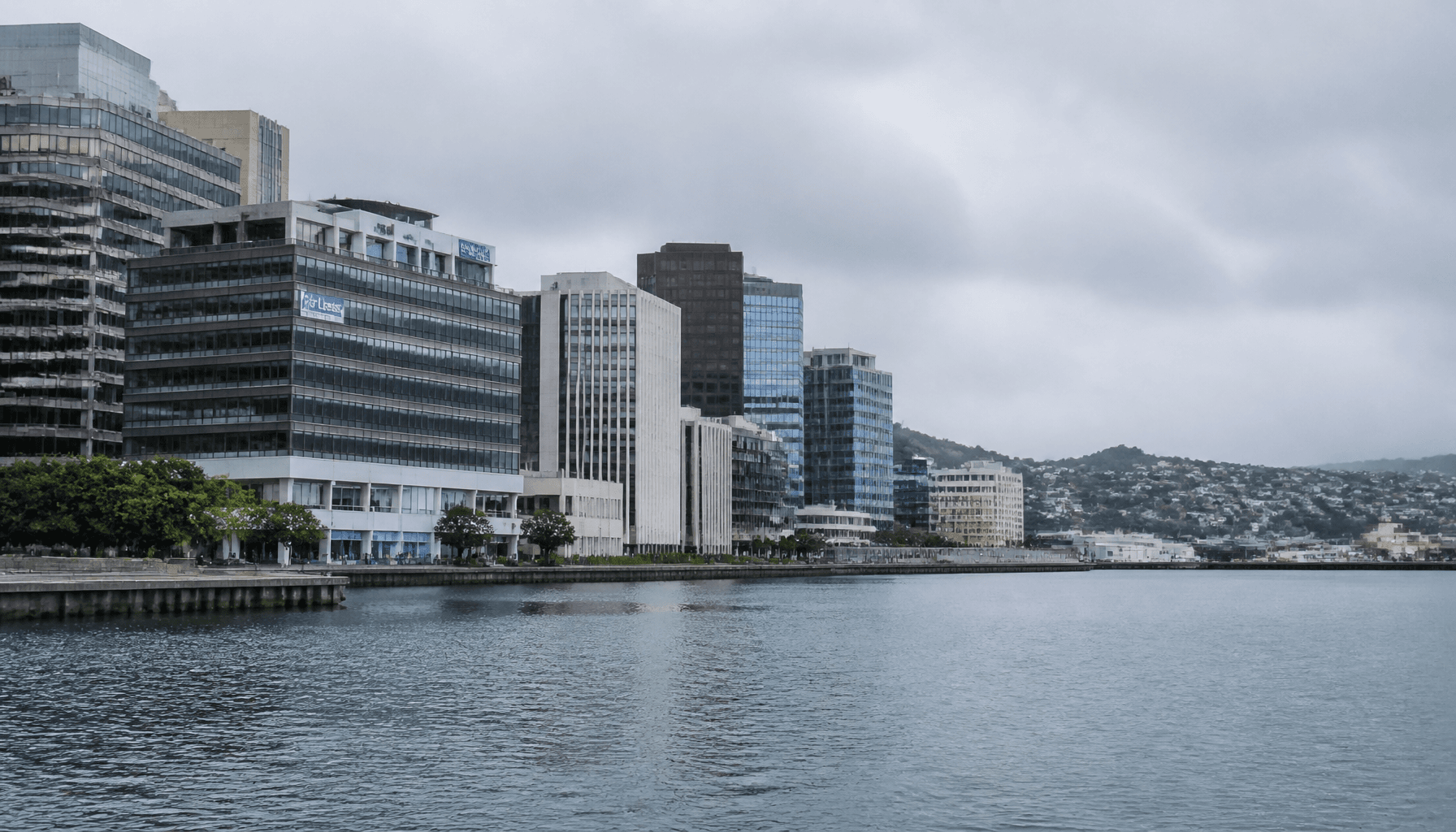
Infometrics principal economist Nick Brunsdon estimated Wellington could lose around 3,700 roles under a proportional 14 percent cut. About 40-42 percent of core public servants are based in the capital. Local consumer spending had already softened relative to the national average around the May announcement.
New Zealand Initiative executive director Oliver Hartwich welcomed the direction. He told RNZ the public service is way too complicated.
We have a public service that is way too complicated – we have 43 government departments and ministries, we have 82 ministerial portfolios and there is simply too much duplication in the system.
Labour leader Chris Hipkins said the changes were not good news for New Zealanders and noted more than half the roles sit outside Wellington.
Budget 2026 referenced $424 million of savings for frontline reprioritisation and $2 billion from future baseline reductions under public service transformation.
The PSA congress proposal lands months before the November 2026 general election. It seeks a formal hurdle on change processes that have already delivered record redundancies even as headcount rebounded in early 2026. The fiscal stakes remain clear: $2.4 billion in identified savings feed operating allowances and frontline priorities, while capability, regional labour markets and service delivery form the contested terrain through to 2029.