Auckland Council Finalises 7.9% Rates Rise Driven by City Rail Link Costs
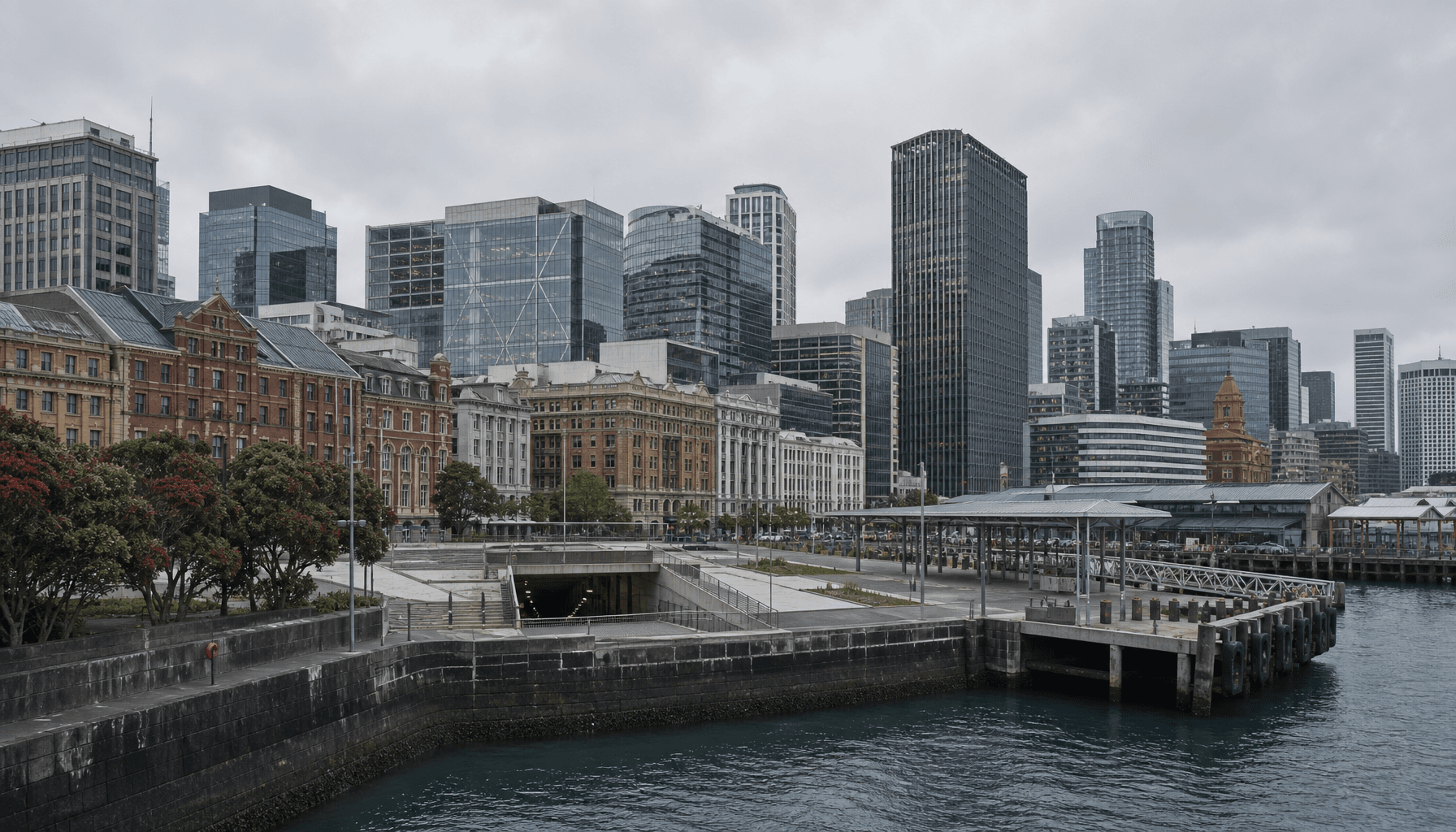
Auckland Council is finalising a 7.9 percent rates increase for the average residential property in the 2026/27 Annual Plan. The rise adds roughly $320 a year to bills and stems directly from $235 million in annual operating costs for the City Rail Link.
Auckland’s potential $5 billion Fast-track infrastructure exposure and 16,270 wrongly suspended Winter Energy Payments have become the first real-world stress tests of the Regulatory Standards Act 2025.
Cabinet’s Economic Policy Committee has formally authorised public consultation on a prudential levy to shift Reserve Bank supervision costs onto banks, insurers and market infrastructure operators from 2027/28.
Cabinet has agreed in principle to three shifts in public performance reporting sought by the Finance and Expenditure Committee, while parking detailed design and costings until 2027.
Auckland Council is finalising a 7.9 percent rates increase for the average residential property in the 2026/27 Annual Plan. The rise adds roughly $320 a year to bills and stems directly from $235 million in annual operating costs for the City Rail Link.
The City Rail Link opens to passengers in the second half of 2026. Its operating bill breaks down into $26 million for Auckland Transport services and stations, $167 million in interest on construction debt, and $42 million in depreciation.
This 7.9 percent increase follows 6.8 percent in 2024/25 and 5.8 percent in 2025/26 under the 2024 Long-term Plan. National CPI inflation stands at 3.1 percent for the year to March 2026.
Auckland Council Residential Rates Increases
Figures for average-value residential properties under the Long-term Plan and Annual Plans.
Source: Auckland Council Long-term Plan 2024-2034 and Annual Plan documents
The council targets $106 million in operational savings for 2026/27. It has achieved $77.6 million so far. Fuel and inflation volatility adds $25 million to $50 million in extra costs.
The 2026/27 figure is the highest in the three-year Long-term Plan path and sits well above current CPI of 3.1%.
Source: Auckland Council / RNZ
Councillors have raised concerns during workshops. Some called for deeper savings or limited borrowing adjustments. Officials warned that deferring costs risks credit ratings or larger rises later.
S&P Global rates Auckland Council AA with a stable outlook. Moody's holds Aa2 but shifted the outlook to negative in April 2026. The government proposes a rates cap of 2-4 percent per capita from 2027.
The Taxpayers' Union notes council spending rose more than 20.5 percent over three years against 7 percent cumulative inflation. It urges immediate caps.
City Rail Link annual operating cost breakdown
Debt-servicing interest dominates the $235m CRL bill, accounting for 71 cents in every dollar of the cost driving the rates rise.
Source: Auckland Council Annual Plan 2026/2027
Auckland represents over 1.8 million residents and a major share of national GDP. Higher rates reduce household disposable income in the country's largest economy. The proposed cap would limit future flexibility and could raise borrowing costs.
The council maintains the increase stays within pre-committed parameters. It frames the outcome as delivering infrastructure without additional percentage points beyond the train set.