The government has given New Zealand's 78 local authorities until 9 August 2026 to submit voluntary amalgamation proposals or face compulsory reorganisation into larger unitary bodies. This deadline confronts a system serving five million people with clear evidence of duplication and rising costs that burden ratepayers.
Auckland’s potential $5 billion Fast-track infrastructure exposure and 16,270 wrongly suspended Winter Energy Payments have become the first real-world stress tests of the Regulatory Standards Act 2025.
Cabinet’s Economic Policy Committee has formally authorised public consultation on a prudential levy to shift Reserve Bank supervision costs onto banks, insurers and market infrastructure operators from 2027/28.
Cabinet has agreed in principle to three shifts in public performance reporting sought by the Finance and Expenditure Committee, while parking detailed design and costings until 2027.
The government has given New Zealand's 78 local authorities until 9 August 2026 to submit voluntary amalgamation proposals or face compulsory reorganisation into larger unitary bodies. This deadline confronts a system serving five million people with clear evidence of duplication and rising costs that burden ratepayers.
The drivers
New Zealand operates 78 local authorities for a population of five million. This structure creates overlapping responsibilities between regional councils and territorial authorities. The Department of Internal Affairs notes that the split produces inconsistent decisions and administrative overhead in areas such as planning, water services and roading.
Operating expenditure has climbed steadily. Stats NZ data for the year ended June 2025 record general public services at $5.342 billion, economic affairs at $4.753 billion and environmental protection at $2.822 billion. Employee costs reached $3.852 billion while interest payments hit $1.515 billion. These figures reflect the fiscal strain that larger structures are meant to relieve.
Local authority operating expenditure by category, year ended June 2025
Bars show the five main expenditure categories across all 78 New Zealand local authorities.
Source: Stats NZ, Local authority statistics: June 2025 quarter
The policy responds to more than 1,150 submissions received in the November 2025 consultation. Officials from the new Ministry for Cities, Environment, Regions and Transport will assess proposals on deliverability by 2028, support for the resource management planning system, simplified governance, economies of scale and fair representation. Partial-region mergers are allowed if they secure majority support by number of councils or population.
The trade-offs
Proponents argue that fewer, larger authorities will cut duplication and free resources for infrastructure. The approach offers incentives for councils that act early while retaining a compulsory backstop. Cabinet will consider outline proposals in September 2026 with final decisions targeted for May 2027.
Critics point to transition costs and loss of local voice. Manawatū District Mayor Michael Ford described the three-month timeline as ludicrous and the reforms heavy-handed. He prefers shared services or council-controlled organisations over full mergers, warning of detriment to ratepayers.
Evidence from past amalgamations shows mixed results. A 2022 Te Waihanga Infrastructure Commission report found no evidence that larger New Zealand councils deliver inherent cost efficiencies in infrastructure or services.
Short-term expenses for IT systems, staff realignment and legal work could add pressure before any savings materialise.
Second-order effects
If duplication falls, councils could redirect savings toward capital projects in housing and transport. Businesses would face fewer regulatory interfaces when dealing with planning and environmental consents. This could support productivity over the 2026–2028 period.
However, transitional costs may push rates higher in the short term. Voter turnout in Auckland fell to 29 percent in the 2025 local elections, suggesting further disengagement if communities feel distant from decision-makers. Rural districts risk reduced influence unless representation safeguards are built into the new structures.
Historical context
The 1989 reforms under the Fourth Labour Government consolidated roughly 850 single-purpose bodies into 86 multi-purpose entities. That change created the modern two-tier model of 11 regional councils and 67 territorial authorities.
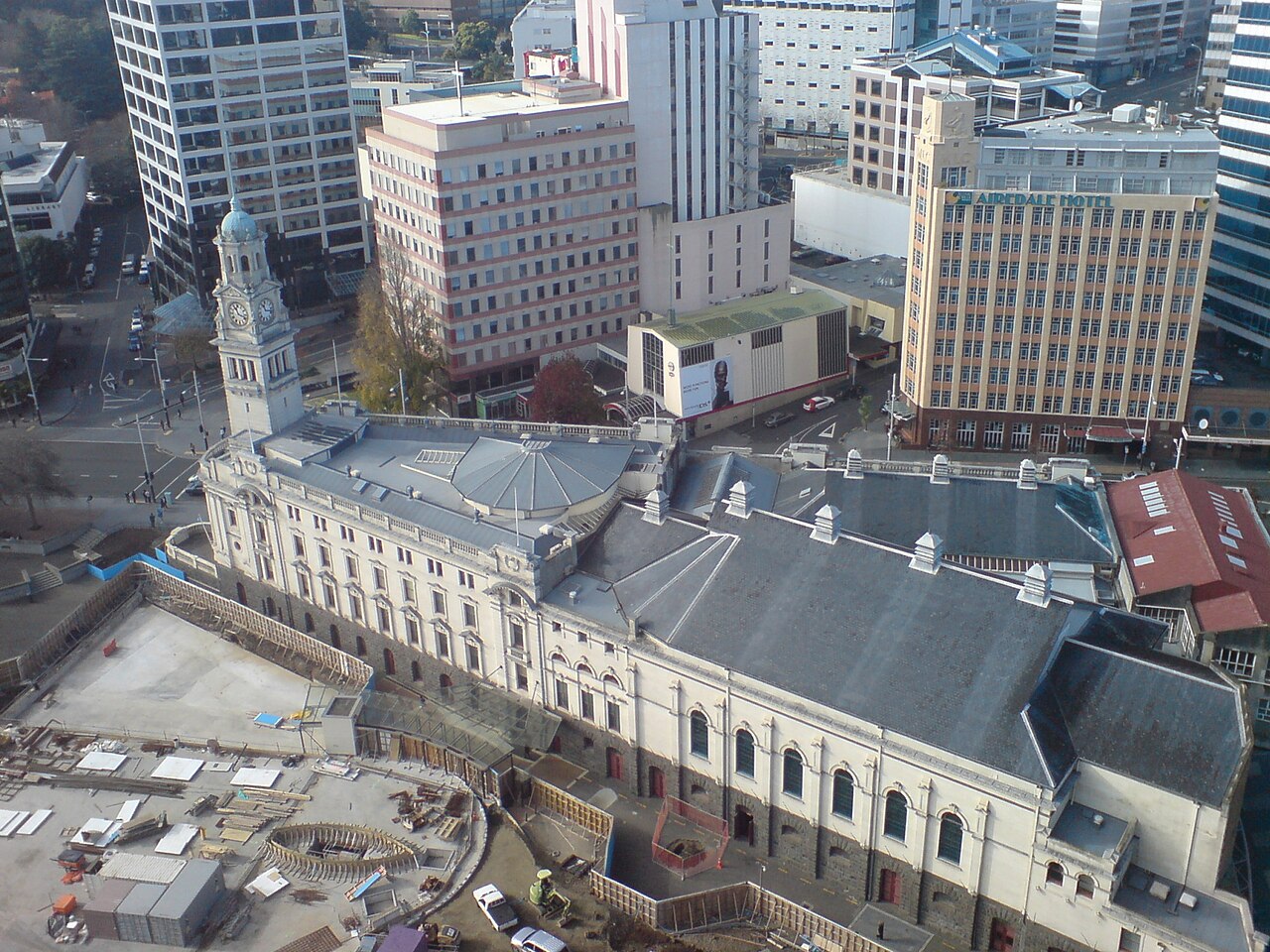
Auckland's 2010 super-city merger combined eight councils and the regional authority into one unitary body. Auckland Council has claimed cumulative operating savings of $1.89 billion by June 2020. Yet rates revenue nearly doubled from $1.57 billion to $3 billion since 2010, and real per-capita spending returned to national average levels without a sustained efficiency premium.
Auckland Town Hall and Aotea Square — the civic centrepiece of the 2010 super-city merger that combined eight councils into one unitary authority, the precedent now being weighed as New Zealand's 78 councils face their own amalgamation deadline. Photo: Ingolfson · Public domain · Wikimedia Commons
International experience points to similar patterns. Victoria's 1990s reforms claimed potential 20 percent savings but delivered only about 8.5 percent, mostly from competitive tendering. Queensland's 2008 involuntary mergers faced criticism for unquantified transition costs and integration problems. UK unitary reorganisations carry estimated five-year costs of £850 million with scenarios showing no net long-term savings.
The counter-argument
Advocates of the status quo argue that smaller councils preserve community identity and allow tailored services for rural and provincial areas. They cite the Infrastructure Commission finding that scale alone does not guarantee efficiency. Some mayors favour voluntary shared services instead of forced mergers.
The government's position rests on the scale of current duplication and the need to align governance with the new resource management planning regime. Criteria for proposals explicitly require clear community benefits and majority support. Cabinet retains final approval, providing a check against poorly designed mergers.
Open questions
It remains unclear how many councils will submit viable voluntary proposals by the 9 August deadline. Partial-region mergers must still meet the majority-by-number or population tests.
Measurable effects on rates, debt and service quality after 2028 will depend on implementation quality. Auckland's experience shows that claimed savings can coexist with rising expenditure and lower voter engagement.
Interim governance bodies such as boards of mayors or Crown commissioners will manage the transition after the 2028 elections. Their ability to maintain democratic legitimacy during the 2027 detailed-design phase is yet to be tested.
The government has set a clear path. Councils that lead their own reform can shape the outcome. Those that do not will see change imposed. Ratepayers will ultimately judge whether fewer layers deliver lower costs or simply shift the burden.