Government Caps Cook Strait Ferry Programme at $1.7 Billion
The government has capped taxpayer funding for New Zealand's new Cook Strait rail ferries at $1.7 billion. This delivers a $2.3 billion saving against the cancelled Project iReX.
Auckland’s potential $5 billion Fast-track infrastructure exposure and 16,270 wrongly suspended Winter Energy Payments have become the first real-world stress tests of the Regulatory Standards Act 2025.
Cabinet’s Economic Policy Committee has formally authorised public consultation on a prudential levy to shift Reserve Bank supervision costs onto banks, insurers and market infrastructure operators from 2027/28.
Cabinet has agreed in principle to three shifts in public performance reporting sought by the Finance and Expenditure Committee, while parking detailed design and costings until 2027.
The government has capped taxpayer funding for New Zealand's new Cook Strait rail ferries at $1.7 billion. This delivers a $2.3 billion saving against the cancelled Project iReX.
Rail Minister Winston Peters announced on 17 July 2026 that KiwiRail will operate the two new vessels. The company will also pay commercial fees to ports and Ferry Holdings.
The ferries will arrive in 2029 under a fixed-price contract with Guangzhou Shipyard International. Ferry Holdings signed the contract in November 2025.
Labour's transport spokesperson Tangi Utikere disputed the savings claim, telling media that the announcement was "another sideshow" and arguing that the iReX cancellation had itself wasted hundreds of millions of dollars. "If Nicola Willis hadn't destroyed Labour's iReX programme, New Zealand would be preparing to welcome modern replacement ferries into service," Utikere said, adding that years of delay had pushed replacement and resilience further into the future. The Government rejects that characterisation, with Peters maintaining the new programme saves taxpayers billions compared to what iReX would ultimately have cost.
iReX Cost Escalation
Project iReX began with a 2021 detailed business case approved at $1.45 billion total capital cost. KiwiRail re-estimated costs at $2.609 billion by February 2023. Treasury warned of a potential trajectory toward $4 billion due to expanded scope, according to Treasury Report T2023/1904 (November 2023).
Cabinet allocated an additional $750 million in principle in late 2023, according to Treasury Report T2023/1904. This allocation was not disclosed in the pre-election update. The project was cancelled after the 2023 election. Final sunk costs reached $671 million.
The new programme reverts to a simpler scope of two rail-enabled ferries plus necessary port upgrades.
Funding Model
The $1.7 billion Crown cap forms part of a total $1.867 billion programme including contingency, as confirmed by the Treasury's Cook Strait Ferry Replacement programme key decisions report of March 2026. CentrePort contributes $100 million for Wellington assets it will own. Port Marlborough contributes $110 million for Picton assets it will own, funded via a Local Government Funding Agency loan. Ferry Holdings provides $373 million for complex Picton infrastructure via a special purpose vehicle.
KiwiRail will pay commercial port fees and lease the ferries. It must build a reserve over 30 years to purchase replacement vessels in 2059.
The structure aligns incentives across parties for on-time delivery. Each entity carries risk within funding caps.
Cook Strait Ferry Replacement Funding Sources
Funding Source
Amount (NZD million)
Crown (capped)
1700
CentrePort
100
Port Marlborough
110
Ferry Holdings (Picton)
373
Crown contribution capped at $1.7 billion. Total programme reaches $1.867 billion with contingency.
According to the KiwiRail Half-Year Report 2026, KiwiRail reported a half-year operating surplus of $73.4 million to 31 December 2025. The company is on track for its $160 million full-year target to 30 June 2026. Freight volumes rose 7 percent in the first half.
Interislander reliability reached 98 percent in 2026, up from 81 percent in 2021 and 83 percent in 2022, according to Minister Peters' 17 July speech. KiwiRail will operate the ferries for 30 years. The arrangement faces review in 2039 after the first decade.
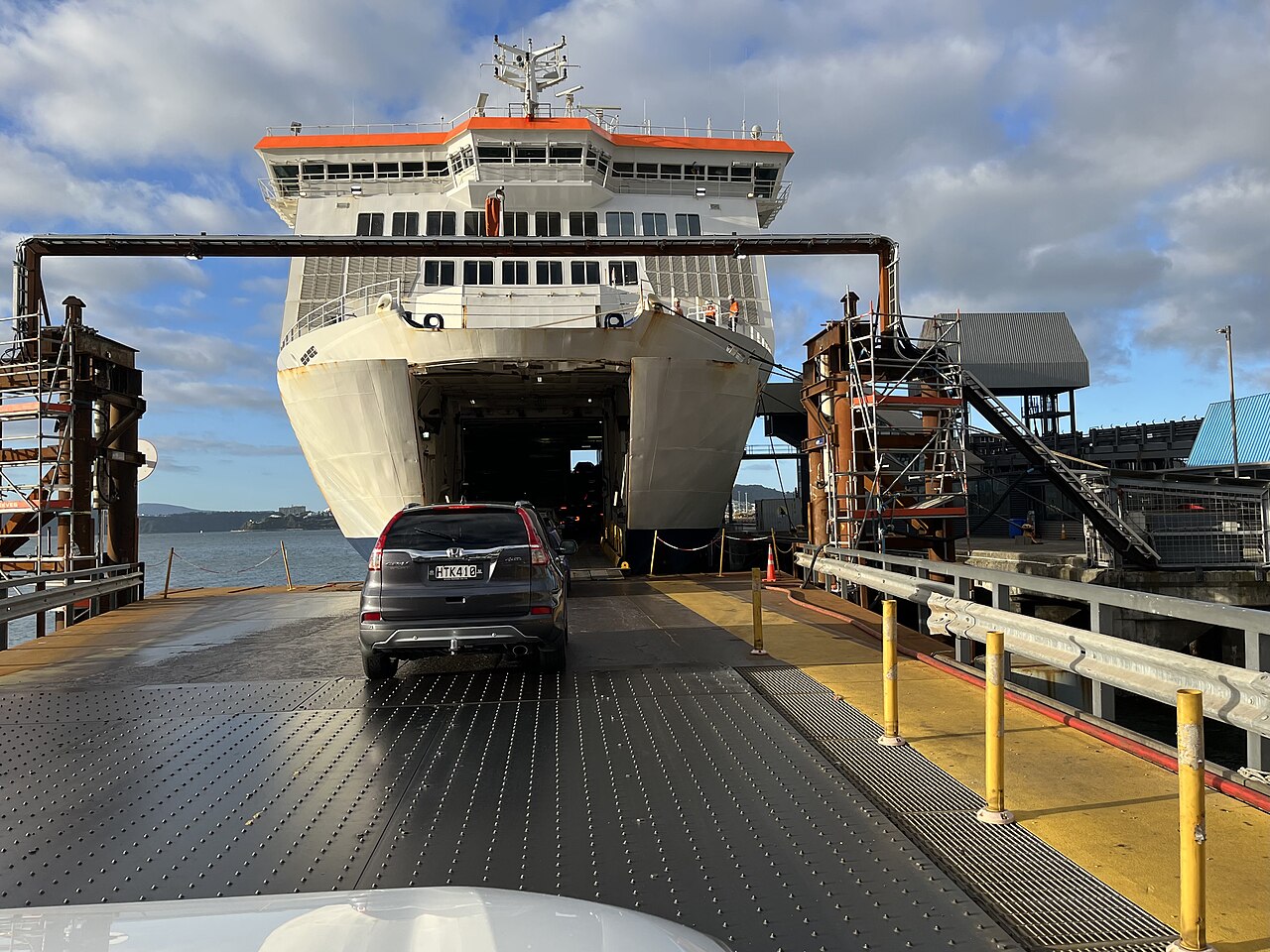
The Kaitaki loading at Picton — one of the current Interislander vessels that will continue operating until the two new ferries, Kupe and Cook, arrive in 2029. Photo: AnnWoolliams · CC BY-SA 4.0 · Wikimedia Commons
Construction and Risk Management
Construction partners identified in Minister Peters' speech and confirmed by the NZ Herald include HEB and Vinci in Picton and Brian Perry Civil in Wellington. Early works such as the Dublin Street overbridge are underway. Contracts use fixed-price terms with performance incentives, according to the Treasury March 2026 report. No cost-plus arrangements apply.
Forward Outlook
The agreements set the basis for main works contracts later in 2026. The model limits Crown exposure while securing rail connectivity across Cook Strait for at least two generations. Treasury's March 2026 key decisions report notes that the structure — capped Crown funding, port co-contributions, commercial leasing and reserve-building — avoids the fare increases or major write-offs that a larger recovery under iReX would have required.
The ferries, to be named Kupe and Cook, honour New Zealand's maritime history. Current vessels Kaitaki and Kaiārahi will continue operating until the new ships arrive in 2029.