Fast-track $5bn gap and WEP errors put Regulatory Standards Act to early test
Auckland’s potential $5 billion Fast-track infrastructure exposure and 16,270 wrongly suspended Winter Energy Payments have become the first real-world stress tests of the Regulatory Standards Act 2025.
Cabinet’s Economic Policy Committee has formally authorised public consultation on a prudential levy to shift Reserve Bank supervision costs onto banks, insurers and market infrastructure operators from 2027/28.
Cabinet has agreed in principle to three shifts in public performance reporting sought by the Finance and Expenditure Committee, while parking detailed design and costings until 2027.
MBIE’s 6 September snapshot shows 51.7 days of petrol cover on paper. Only 34.5 of those days sit onshore. Eight of nine ships still float outside the EEZ, and sequential Hormuz then Red Sea stress is already priced into $3-plus petrol.
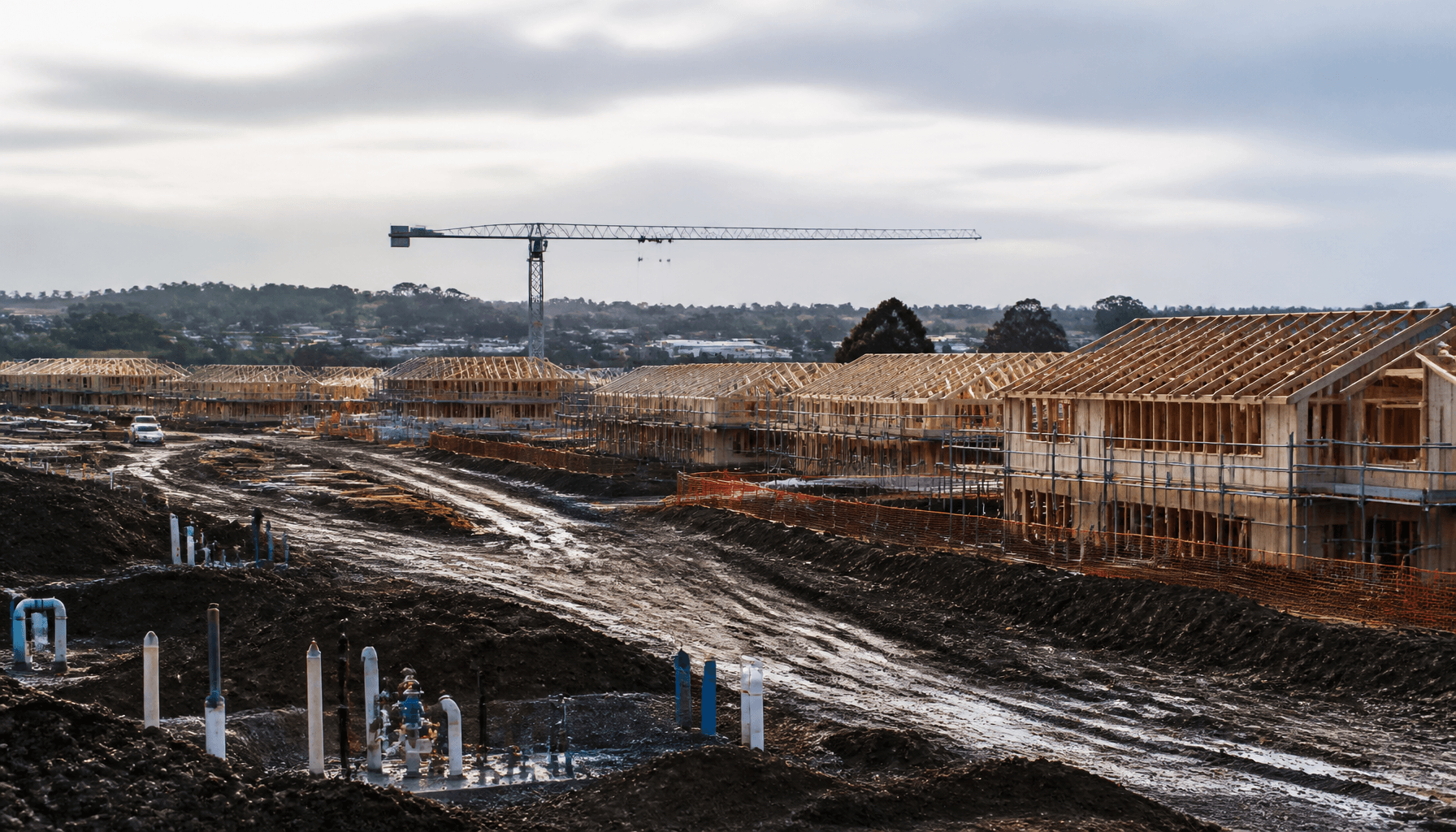
Auckland Council has flagged a potential infrastructure bill of up to $5 billion from 50,000 to 60,000 unanticipated homes enabled outside planned growth areas. Parliament has moved under urgency to let councils update development contribution policies for Fast-track projects. The same sitting period followed public apologies over 16,270 superannuitants and veterans whose Winter Energy Payments were wrongly suspended.
Both episodes expose gaps between flagship delivery laws and funding or implementation design. They also test the new Regulatory Standards Act 2025, which requires transparency against principles of responsible regulation but does not invalidate inconsistent statutes.
Housing and Infrastructure Minister Chris Bishop and Local Government Minister Simon Watts advanced an Amendment Paper to the Local Government (System Improvements) Amendment Bill. Councils may amend development contribution policies within six months of Fast-track approval, without full consultation, to recover growth-related capital costs, including cross-boundary shares.
Bishop told media the core objective is that growth pays for growth. "Where a development creates additional infrastructure costs, an appropriate share should be met by the development rather than being shifted onto existing ratepayers," he said, according to RNZ.
The interim fix does not apply to already-approved projects. The Government estimates the current development contributions system leaves an $11 billion under-recovery of growth-related capital expenditure on existing ratepayers between 2021 and 2031. It plans a broader development levies regime covering water, wastewater, stormwater, transport, reserves and community infrastructure from 2029, mandatory from 2030.
Bishop has insisted the levies are not a new tax. He framed them as tools long sought by councils so developers and new residents meet growth costs rather than existing ratepayers through higher rates.
Auckland's skyline. The council has flagged a potential $5 billion infrastructure exposure tied to Fast-track housing enabled outside planned growth areas.
MSD payment suspensions after mandatory reviews law
WEP drafting omission hit pensioners hardest by headcount; backlog errors added separate main-benefit and supplementary arrears.
Source: MSD review via 1News and RNZ, September 2026
Weeks earlier, the Social Security (Mandatory Reviews) Amendment Act 2025 produced a separate operational failure. The Act, passed under urgency, required many beneficiaries to confirm circumstances annually. A drafting omission failed to exclude automatic, non-means-tested Winter Energy Payments for superannuitants and veterans.
MSD systems suspended those payments under the letter of the law. An MSD review in September 2026 quantified 16,270 superannuitants and veterans affected, up from an earlier public figure of about 14,862. Processing backlogs separately suspended main benefits for 2,460 people and supplementary assistance for nearly 12,000. Total erroneous suspensions exceeded roughly $2–2.5 million.
Concerns were first flagged internally on 30 April 2026. Senior escalation lagged until mid-August. Prime Minister Christopher Luxon and Social Development Minister Louise Upston apologised. Payments resumed and were backdated.
Upston later accepted ministerial responsibility.
I'm the minister. I accept responsibility.
She told RNZ she described the outcome as incredibly frustrating and unacceptable, rejected urgency as the root cause, and pointed to an earlier policy omission. She committed to a legislative fix before the next winter season and stronger independent quality assurance on drafting.
What the Regulatory Standards Act requires
The Regulatory Standards Act 2025 received Royal Assent on 18 November 2025. It came into force on 1 January 2026. Substantive Part 2 requirements, including Consistency Accountability Statements, commenced on 1 July 2026, according to the Ministry for Regulation.
Section 9 sets principles of responsible regulation. They cover rule-of-law attributes, protection of liberties and property, disciplined taxes, fees and levies, the role of the courts, and good law-making practices. Those practices include practicable consultation with affected parties and genuine consideration of costs, benefits and alternatives.
Agencies must produce Consistency Accountability Statements assessing legislation against the principles. Ministers must provide Statements of Reasons for any inconsistencies. The Act expressly does not invalidate inconsistent legislation or create enforceable rights. Legal firm Franks Ogilvie notes the regime promotes voluntary compliance through transparency rather than force and leaves Parliament's power intact.
The independent Regulatory Standards Board, chaired by Paul Ridley-Smith, was appointed in April 2026 and became operational from 1 July 2026. Its role is to inquire into existing law and review CAS material. Section 15 places proactive regulatory stewardship duties on chief executives rather than portfolio ministers.
Regulation Minister David Seymour positioned the Act as a transparency companion to the Public Finance Act and Reserve Bank Act. "This is a historic moment for Kiwis' rights. Politicians will no longer be able to hide lazy thinking that piles regulatory costs on Kiwis," he said on third reading, according to the Beehive release. "The high cost of regulation will be there for all to see, for each and every law."
Design limits under urgency and election risk
University of Auckland commercial law professor Gehan Gunasekara has argued the RSA would likely have made little difference to either episode. Fast-track settings predated full RSA operation in key respects. The social security amendment ran under urgency, which inherently limits the consultation principle.
Critics say the principles prioritise property and levy restraint in ways that can cut against robust developer cost-recovery protecting ratepayers, and omit Treaty of Waitangi or te ao Māori values. Proponents say the Board and CAS regime force governments to own liberty and property costs and give citizens a watchdog, even if the tools remain political rather than judicial.
The Act's own path was contested. It passed 68–55 on party lines. About 98.7 percent of roughly 159,000 submitters opposed it. The Waitangi Tribunal's May 2025 interim report found Treaty breaches for inadequate Māori consultation. Labour pledged repeal within 100 days; Greens and Te Pāti Māori also committed to repeal; NZ First later signalled willingness to support repeal.
Sir Geoffrey Palmer has long described New Zealand as having the fastest law-making system in the West because of its unicameral structure and strong executive. Urgency use in the 54th Parliament has remained elevated, producing statutes that later need costly patches.
For households and firms, the stakes are concrete:
Auckland ratepayers face residual infrastructure costs if developer recovery stays incomplete.
Superannuitants absorbed winter payment shocks measured in the low hundreds of dollars each but at scale.
Developers, builders and councils need predictable levy settings if the 2029 regime proceeds.
The RSA's operational record remains thin. Full Part 2 duties were only weeks old when these fixes landed. Election outcomes will decide whether the Board builds a body of reports markets can price, or whether repeal returns New Zealand to prior Regulatory Impact Statement norms. Either path will shape the cost and speed of future housing, local government finance and social security change.