MBIE reports days of cover using pre-conflict demand baselines of 8.1 million litres per day petrol, 10.7 ML diesel and 4.8 ML jet. Those denominators imply about 24 ML per day of liquid transport fuel, consistent with ministerial statements that diesel is nearly half of national liquid-fuel use.
Regulatory MSO counting, in force from 1 January 2025, only includes onshore stock and ships inside the EEZ. Public “total stock” reporting additionally includes cargoes outside the EEZ up to about three weeks away. An MBIE Official Information Act response has confirmed that distinction. Headline days therefore smooth voyage risk until a missed, delayed or quality-rejected tanker fails to discharge.
From the week commencing 13 July 2026, MBIE moved stock updates from twice-weekly to weekly. Officials noted the change may create greater apparent swings between prints. Commercial stocks have run well above MSO floors for most of 2026. The Envisory/Castalia Fuel Security Study had already flagged that diesel’s buffer at the 21-day floor alone looked thin for some disruption scenarios, including a contaminated large tanker.
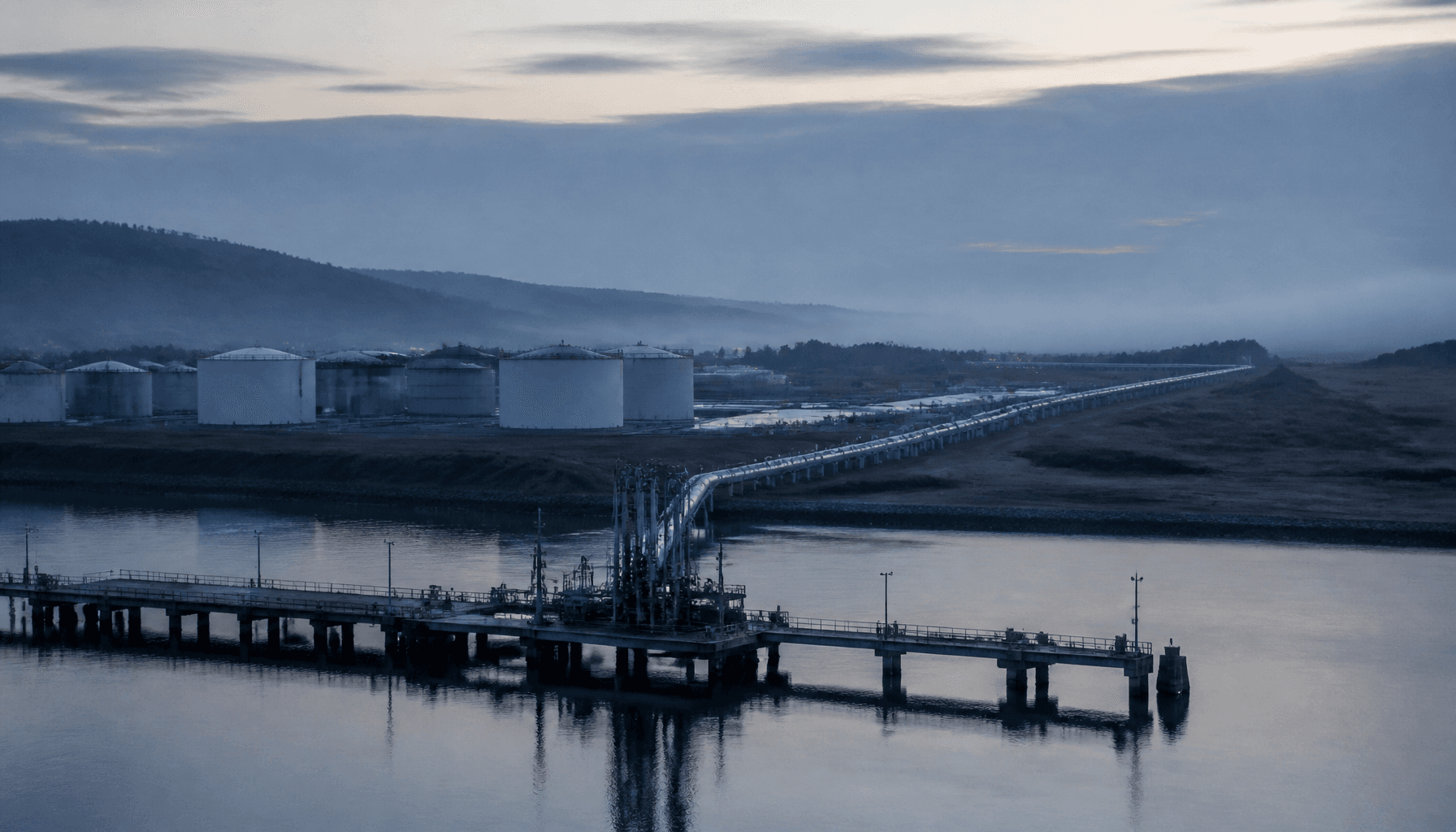
Bulk storage capacity sits near 1,053 ML — about 420 petrol, 434 diesel and 198 jet — dispersed across Northland, Auckland, Wellington and Canterbury. Marsden Point, operated by Channel Infrastructure, remains the largest import node. It has historically received around 40 percent of imports and feeds Auckland via the 170 km RAP pipeline. Concentration risk did not vanish when the refinery closed.
While system is coping the safety margins are thinner, so inventories are being drawn down, some refineries are deferring maintenance to keep operating and that reduces the market's ability to absorb another disruption.
Jones also said elevated prices would persist for households and business until global markets rebalanced after any conflict end, with ships, maintenance and product flows needing time to normalise.
The policy stack
The Minimum Stockholding Obligation took effect on 1 January 2025: 28 days petrol, 24 days jet and 21 days diesel, countable onshore or on ships inside the EEZ. Large importers with more than 10 percent market share face a diesel uplift to 28 days from 1 July 2028. A 2026 review is examining whether to extend that uplift to all importers. Civil pecuniary penalties for breach can run from $100,000 into the millions. Ministerial exemptions exist for exceptional shipping-route crises.
A location-specific jet obligation of 10 days at 80 percent of average demand at or near Auckland Airport takes effect on 1 November 2026 on a net-stock basis excluding tank heels. That rule forces more usable jet near the single largest demand node and interacts with Wiri and JUHI investment plans.
The Fuel Response Plan 2026 defines four phases assessed separately by fuel grade. New Zealand has remained in Phase 1 Watchful — elevated prices, adequate stocks, monitoring and information. Phase-change triggers include source-refinery export restrictions, a plus-or-minus three-day stock move, inability of a company to fill future orders, or MSO breach risk. A May 2026 revision moved priority-user rationing from Phase 3 to Phase 4 and emphasised supply levers and voluntary demand reduction at Phase 3.
The Crown also stood up a strategic diesel reserve. Up to $21.6 million from the Regional Infrastructure Fund supported Channel Infrastructure to recommission tanks. Z Energy won competitive procurement for about 90 to 93 ML of New Zealand-spec diesel — roughly nine days of national diesel demand. Crown control of release applies. Storage is contracted to 31 December 2027. Channel marked the opening of 120 ML of new capacity (93 ML government diesel plus 30 ML Z jet) in July 2026, with the Prime Minister, Finance Minister and Associate Energy Minister present. Channel reports more than 400 ML tankage in use and about 350 ML still available for repurposing. That reserve is additional to commercial MSO and is excluded from MBIE’s public days-of-cover totals until released.
Internationally, New Zealand meets its International Energy Agency 90-day net-import obligation through a mix of domestic commercial stocks and oil tickets with the United States, the United Kingdom and Japan. A Beehive fact sheet is explicit that MSO is part of, not additional to, the 90-day picture, and that New Zealand was compliant. In the March 2026 IEA collective action, New Zealand’s share was 1.577 million barrels via ticket release — about 20 percent of tickets then held. Those tickets covered crude or non-New Zealand-spec product, so domestic physical impact was minimal. Ticket compliance without local molecules is now a live analytical point, not a theoretical one.
Australia’s thicker buffer
Australia provides the peer comparator. Temporary 20 percent MSO reductions in 2026 allowed industry stocks to be drawn into the market. June quarter 2026 industry holdings still averaged 44 days gasoline, 31 days kerosene and 36 days diesel at normal consumption, according to DCCEEW statistics.
Canberra then announced a Fuel Security and Resilience package initially cited above A$10 billion, with later Strengthening package figures up to A$14.8 billion. Elements include a roughly A$3.2 billion government-owned reserve of about one billion litres focused on diesel and jet, a roughly 10-day MSO uplift, and a target of at least 50 days diesel and aviation fuel supply and storage, plus a large Fuel and Fertiliser Security Facility.
AA fuel spokesperson Terry Collins has argued New Zealand need not simply copy Australia given different defence and economic scale, and that supply arrangements with Korea and Singapore remain sound. The counter-read is that Australia is buying a thicker onshore buffer and a permanent state reserve. New Zealand’s new diesel reserve is time-bound to end-2027 and smaller in absolute and days terms. Scale, defence exposure and over-insurance risk for a small trade-exposed economy are the real trade-off variables, not slogan comparisons.
Where the trade-off bites
Thicker onshore diesel and jet buffers buy option value against sequential chokepoint failure and single-tanker quality shocks. They also impose storage capex, inventory carry and quality-spec risk. The Regional Infrastructure Fund’s up to $21.6 million support and any post-2027 reserve rollover carry a fiscal opportunity cost that should be weighed against other infrastructure claims.
Commercial MSO plus IEA tickets keep New Zealand formally compliant at lower steady-state working capital than an Australia-scale permanent state reserve. Tickets, as March 2026 showed, need not deliver New Zealand-spec molecules in a collective action. Counting EEZ-and-beyond cargoes smooths headline days and avoids false alarms. It also masks voyage risk until onshore tanks feel the miss.
Phase 1 monitoring and voluntary levers preserve market allocation. Moving priority rationing to Phase 4 reduces early distortion. It also leaves less rehearsed demand destruction if a cluster of cargoes fails. Holding diesel’s commercial floor at 21 days until 2028 minimises importer working-capital burden. Envisory/Castalia already flagged thinness to some single-tanker scenarios. Uplift timing is an insurance-price decision, not a free lunch.
Post-Marsden finished-product dependence captures Asian refining scale efficiency. It forfeits domestic crude-to-product shock absorption. Pump outcomes now track Middle East–Asia seaborne crude risk more tightly than under the old refinery model.
Second-order channels into the real economy
Operational transmission to households and firms is primarily price so far, not rationing. Freight and logistics cost pass-through lifts CPI food and building-material prices. Diesel-heavy primary sector, construction, fishing and coastal shipping absorb crude more directly. Jet-fuel cost pressure hits Air New Zealand, tourism and export airfreight margins where surcharges cannot fully pass through.
The Reserve Bank and Treasury must carry a geopolitics risk premium in CPI and business inflation expectations while Hormuz and Bab remain contested. A soft New Zealand dollar amplifies USD-priced cargoes. Terms of trade squeeze if oil stays high while dairy and meat export prices do not keep pace.
Channel’s recommissioning work supports Northland employment and capex. Single-point concentration at Marsden Point plus the RAP pipeline remains an operational risk for upper North Island supply. Global inventory draw and deferred refinery maintenance keep rebalancing premia even after any ceasefire. Tonnage tied on Cape routes lifts freight structurally for months.
Historical context after the refinery
The closest analogue is the post-April 2022 Marsden Point closure itself. Domestic crude-to-product shock absorption disappeared. Dependence on Asian finished product rose above 90 percent. IEA compliance became more ticket-heavy relative to onshore physical cover over a decade, a point AUT analysis has highlighted using IEA data.
Prior Red Sea closure episodes already demonstrated the Cape diversion playbook: extra days, tonnage tie-up, insurance spikes. The 2026 sequence differs because Hormuz compression and Bab pressure arrived in series, not as a single-strait scare. Saudi East-West and Yanbu bypass capacity became the new binding constraint rather than a theoretical alternative.
The March 2026 IEA collective action showed ticket release need not deliver New Zealand-spec molecules. That episode is the modern precedent for paper security without pump molecules. Australia’s 2026 path — temporary MSO relaxation then multi-billion permanent reserve ambition — is the peer choosing state inventory over pure commercial obligation.
The counter-argument
The strongest opposing read is straightforward. Headline days of cover still sit roughly double MSO floors and well above April 2026 diesel troughs. Industry and officials insist the near-term problem is price. Tickets plus commercial stocks keep IEA compliance. Cape routing and multi-origin Asian refining give flexibility. The new Marsden diesel reserve adds a discrete nine-day Crown-controlled buffer.
Jones put the industry view plainly on RNZ.
This is a tough time for business and households in terms of elevated fuel prices and I believe it will be some time before prices return to normal.
That read is not wrong on the base case. Physical shortage next quarter is not the central forecast under Phase 1 Watchful. Commercial importers continue to land cargoes. Stocks remain above floors.
The stress case does not require contradiction of those facts. Paper cover is not pump cover when eight of nine ships sit outside the EEZ. Two chokepoints can fail in sequence. War-risk and diversion costs are already capitalised into $3-plus petrol. The post-refinery model has less domestic shock absorption than the pre-2022 system. Both readings can be true simultaneously. The left tail has fattened. The cost of insurance against that tail is visible at the pump and in fiscal outlays for storage and reserve product.
Open questions for 2026–28
Several data and policy questions remain open. Will MBIE publish a primary table matching secondary prints that showed lower jet cover later in September? What share of New Zealand-bound product molecules had crude feedstock that last transited Hormuz versus other origins — still inferred from Asia-refinery dependence plus EIA destination data, not a single MBIE series?
Does the 2026 MSO review extend 28-day diesel to all importers or only large players above 10 percent share? Will the Crown–Z diesel reserve roll past 31 December 2027, and on what fiscal terms given Channel’s remaining repurposable tankage? How binding are war-risk refusals and Saudi-linked premium spikes on actual fixture availability into Singapore and Korea load ports serving New Zealand?
If a plus-or-minus three-day stock swing or source-refinery export ban triggers a Phase review, what is the operational lag before onshore usable cover — not headline totals — approaches MSO floors by grade?
Watch the next MBIE weekly stock print and any Phase-review language from the Fuel Security Ministerial Oversight Group. Watch the 1 November 2026 Auckland jet location obligation landing in commercial tank plans. Watch the 2026 diesel MSO review outcome and any signal on reserve rollover beyond end-2027. Watch Brent, NZD and Singapore product cracks as the transmission into the next 28-day pump move.
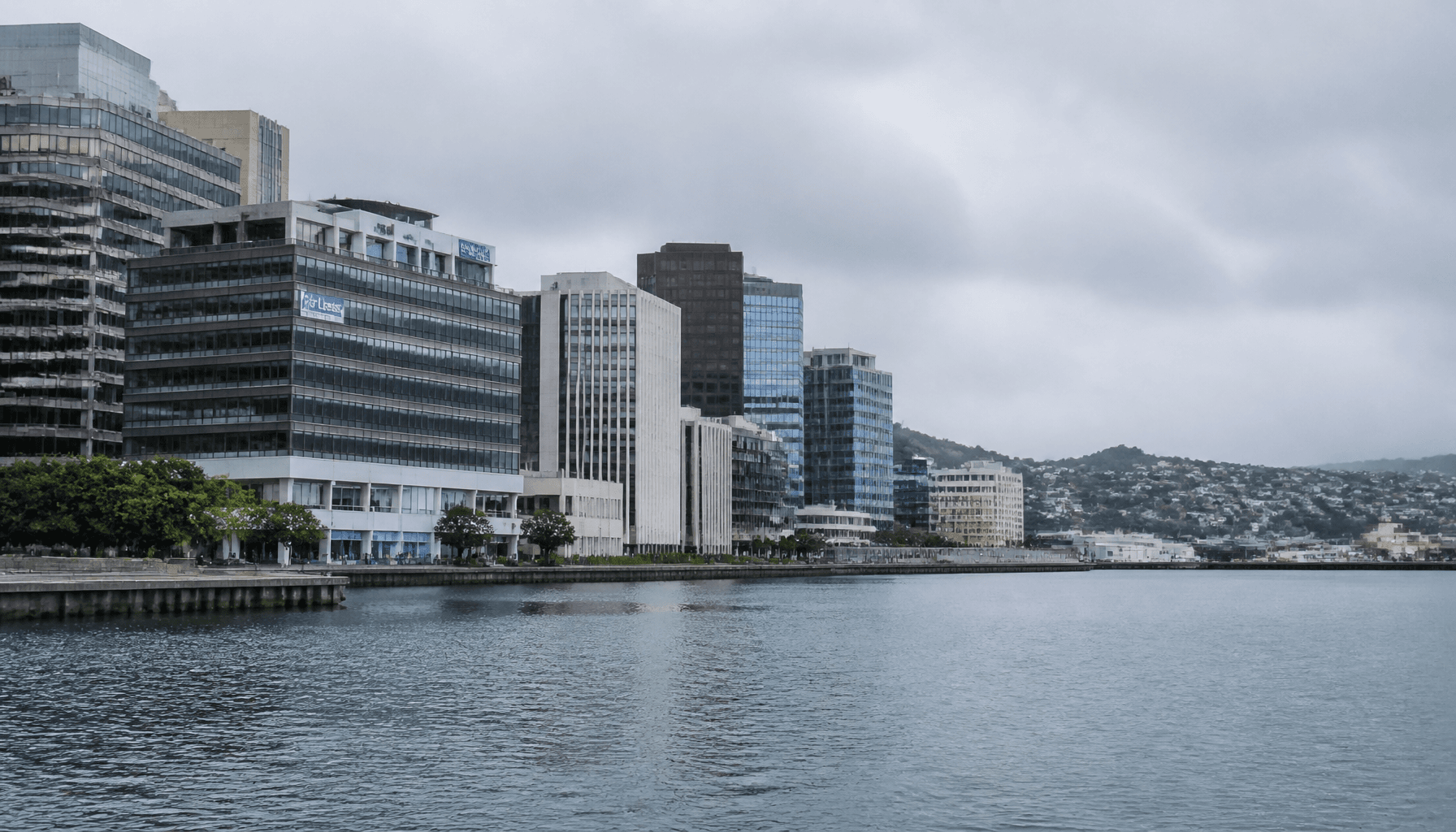
Wellington does not face an imminent empty-tank crisis on present MBIE numbers and industry guidance. It does face a live choice about how much onshore diesel and jet option value to buy, at what carrying cost, and for how long, after two chokepoints moved from theoretical risk to priced reality. That choice, not apocalyptic shortage language, is the 2026–28 decision window.