Lines charges drove 54% of 2026 power-bill rise as DPP4 path locks in network spend
Higher distribution and transmission charges accounted for 54% of the 6.8% average power-price rise for households and small businesses in the first half of 2026, Electricity Authority retailer data show, as Commerce Commission revenue paths and a multi-decade electrification bill keep network costs rising.
Cabinet’s Economic Policy Committee has formally authorised public consultation on a prudential levy to shift Reserve Bank supervision costs onto banks, insurers and market infrastructure operators from 2027/28.
Cabinet has agreed in principle to three shifts in public performance reporting sought by the Finance and Expenditure Committee, while parking detailed design and costings until 2027.
MBIE’s 6 September snapshot shows 51.7 days of petrol cover on paper. Only 34.5 of those days sit onshore. Eight of nine ships still float outside the EEZ, and sequential Hormuz then Red Sea stress is already priced into $3-plus petrol.
Higher lines charges drove most of New Zealand's latest power-bill lift. Electricity Authority data from retailers covering about 98% of the market show average prices for households and small businesses rose 6.8% in the first half of 2026. That followed an 8.0% average increase in 2025.
Lines charges — distribution plus transmission — made up 54% of the 2026 half-year increase overall. The share was 55.9% for gentailers and 47.8% for independent retailers on average. About 22% of households and 34% of small businesses saw no change between 1 November 2025 and 30 June 2026. Among those who did face a change, household bills rose 8.7% on average and small-business bills 7.2%.
The Commerce Commission states distribution and transmission costs together make up just over 30% of the average power bill. Those costs started rising in 2025 and are likely to keep rising until at least 2030. Stats NZ recorded electricity prices up 12.0% in the CPI year to June 2026, while headline CPI rose 4.1%.
MBIE's Quarterly Survey of Domestic Electricity Prices to 15 May 2026 put the national average residential price at 42.0 c/kWh GST-inclusive. The lines component was about 16.8 c/kWh. Regional gaps remain large. Sparse networks such as Balclutha sit near 52.5 c/kWh while Wellington City is near 37.0 c/kWh, mainly a lines-charge effect.
DPP4 sets the near-term path
The Commerce Commission's DPP4 default price-quality path for non-exempt electricity distribution businesses runs from 1 April 2025 to 31 March 2030. Total forecast net allowable revenue is $11.5 billion nominal — a 47% real increase on DPP3. Total ex-ante expenditure allowances (capex plus opex, nominal, net of capital contributions) are $10.4 billion. That is 30% higher than DPP3 in real terms but 12% below EDBs' 2024 asset-management-plan forecasts of $11.9 billion. Capex alone is $6.4 billion nominal, 17% below the EDB AMP ask of $7.6 billion.
To limit price shocks, the Commission capped the initial real increase in distribution revenue per ICP at about 20% for most EDBs. That equates to roughly $10 per month ex-GST on an average household bill for the first step. Further increases spread across the path. Drivers cited include high input-cost inflation, a higher regulatory WACC and interest environment than the 2019 reset, ageing 1960s–70s assets, post-Cyclone Gabrielle resilience, and demand growth from population, EVs, process heat and data centres.
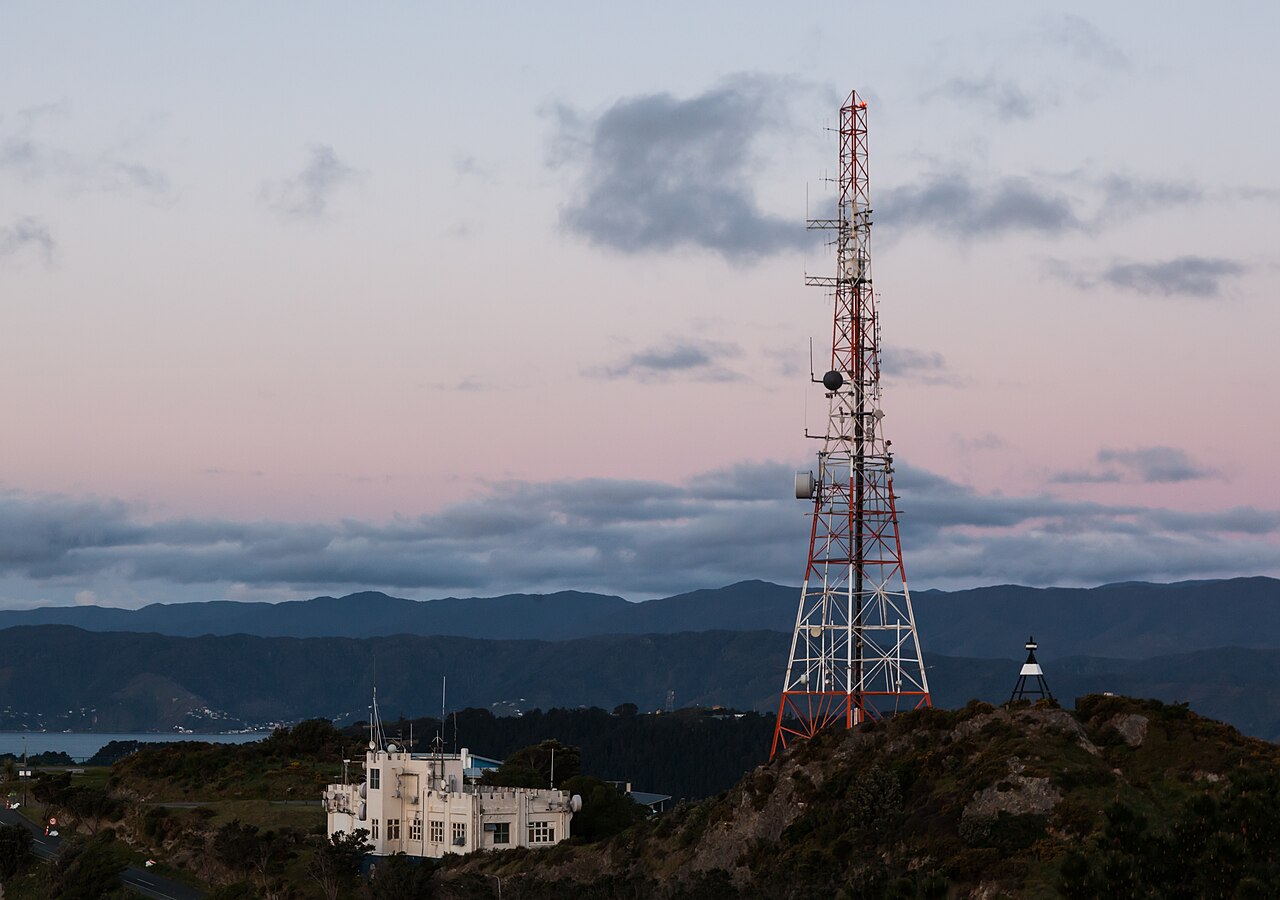
A transmission tower above Wellington. Lines charges — distribution plus transmission — made up 54% of the latest half-year rise in power bills.
Transpower's parallel RCP4 individual price-quality path embeds multi-billion-dollar grid renewals and capacity work. Vector reported record electricity network investment of $512 million in FY26. Powerco's charges rose an average 7.9% from 1 April 2026.
DPP4 revenue and expenditure allowances, 2025-2030
TOTAL EX-ANTE EXPENDITURE
$10.4b
+30% real vs DPP3
CAPEX ALLOWANCE
$6.4b
-17% vs EDB AMP ask
FIRST-STEP REVENUE CAP
~20% per ICP
≈$10/month household
Figures cover non-exempt electricity distribution businesses under the Commerce Commission’s DPP4 path.
Source: Commerce Commission DPP4 Final Decision Reasons Paper, 20 November 2024
$20 billion versus $32 billion
Investment-scope figures differ and are not interchangeable. An Infrastructure Commission / Te Waihanga-linked estimate puts capital expenditure on the network over the next decade to manage electrification at more than $20 billion. MBIE's August 2026 discussion document on EDB efficiency forecast lines companies to spend more than $32 billion over the next decade, largely on physical infrastructure recovered via lines charges. Scope, years, renewals versus growth, and real versus nominal bases all matter. Writers and policymakers should not treat the two totals as the same bill.
Non-network solutions and flexibility
Regulators have already signalled that pure poles-and-wires responses are insufficient. On 24 February 2026 the Commerce Commission, Electricity Authority and EECA jointly wrote to distributors. They required evaluation of non-network solutions — flexibility, energy efficiency, distributed generation and storage — on a comparable basis with traditional reinforcement. They also pressed price signals that reward load-shifting near capacity and transparent, standardised procurement so a competitive flexibility market can form.
EECA's Jacobs study finds roughly 1.7–1.9 GW of shiftable demand today, about a quarter of system peak. Fully unlocking flexibility could avoid up to about $3 billion of generation and network investment, using Transpower's estimate of about $1.5 billion per GW of peak reduction. Pilots already run across Aurora, Powerco, EA Power Innovation Pathway platforms and EECA home-energy-management trials. Electricity Networks Aotearoa welcomed transparent least-cost evaluation while stressing technology-neutral reliability.
Victoria University of Wellington and Durham University researchers have argued for smarter secondary assets — solid-state transformers, voltage control, AI forecasting, digital twins and hybrid microgrids — to shrink the multi-decade capital bill. International trials such as UK Smart Street voltage control supply the technical menu. Those options remain one pathway among others, not a guaranteed substitute for every feeder upgrade.
Political and regulatory pressure
In mid-August 2026 Energy Minister Simeon Brown and Commerce Minister Cameron Brewer released an MBIE consultation on EDB efficiency. Brown said distribution network costs make up about a quarter of household bills and were responsible for around two-thirds of a recent rise, and that distribution companies need to “come to the affordability party.” He said the cost of electricity and rising bills is front of mind and that he expects the sector to boost efficiency through greater collaboration and standardisation.
Brown said distribution network costs make up about a quarter of household bills and were responsible for around two-thirds of a recent rise, and that distribution companies need to “come to the affordability party.”
The consultation's three pillars are collaboration and standardisation across the roughly 28 EDBs; a more responsive Commerce Commission toolkit (benchmarking, expanded information powers, intermediate tools between disclosure and full price-quality control, easier pathways to intensify regulation); and stronger governance and accountability. Forced amalgamation is not mandated. Submissions ran into late September 2026.
In September 2026 the Commerce Commission issued a further open letter. It warned that inconsistent performance could trigger tougher tools and urged smaller networks to consider whether consolidation could deliver better consumer outcomes.
Retail and wholesale backdrop
The Electricity Authority notes wholesale forward prices have eased since early 2026. Retail prices lag. Level-playing-field hedge and non-discrimination rules applied from 1 July 2026. Billing-clarity reforms begin from late October 2026. Gentailers reported combined $1.2 billion investment in new or upgraded generation in half-year results. The Authority has flagged that gentailer “energy cost versus margin” splits remain poorly defined because vertical integration blurs transfer pricing.
DPP4 already cut AMP asks and added innovation and non-traditional solution allowances. The live debate is as much about utilisation of existing headroom and procurement culture as about bare revenue caps.
What to watch
MBIE consultation outcomes on EDB efficiency tools and any dividend or ring-fencing signals
Electricity Authority connection-pricing reform and flexibility market design
First DPP4 reopeners and how falling wholesale contracts pass through to retail next to locked-in lines paths
Household and SME bills will remain the visible transmission mechanism for Part 4 revenue decisions through 2030.