Crown Settlement Account Data Challenges Fiscal Narratives
New Zealand's Crown Settlement Account has gone negative 272 times since November 1997, according to Official Information Act data released by NZ Debt Management.
An Auckland Council-commissioned report estimates that integrated energy and spatial planning could deliver up to $17 billion in avoided costs over the next decade. The finding arrives as the supercity grapples with $15.5 billion in net debt and structural decline in domestic natural gas supplies.
New Zealand's net core Crown debt stood at 42.3 percent of GDP as at 30 September 2026, well below Japan's near 200 percent ratio, yet heavy offshore ownership makes fiscal credibility essential to avoid rollover risks.
Delivereasy paid more than $4 million in tax on $118 million revenue over four years. Portier New Zealand Limited, the Uber Eats operator, paid $945,000 in net income tax expenses on more than $1.16 billion revenue over the same period.
New Zealand's Crown Settlement Account has gone negative 272 times since November 1997, according to Official Information Act data released by NZ Debt Management.
The figures come from daily balance records obtained through multiple OIA requests. They include seven instances during bond maturities when the account dipped below zero to cover repayments.
This record undercuts common claims that the government must first collect taxes or borrow before it can spend. Parliamentary appropriations under the Public Finance Act provide the authority and trigger the crediting process.
Daily net-zeroing between the Treasury and Westpac keeps settlement accounts at zero at the start and end of each day. Spending occurs first, with tax and debt proceeds flowing into the Crown Settlement Account afterward.
A different story in recent balances
Recent balances tell a different story about cash management. The account held $25.61 billion at the end of September 2026, well above the $10 billion liquidity target. It has averaged $27.8 billion daily since 2021.
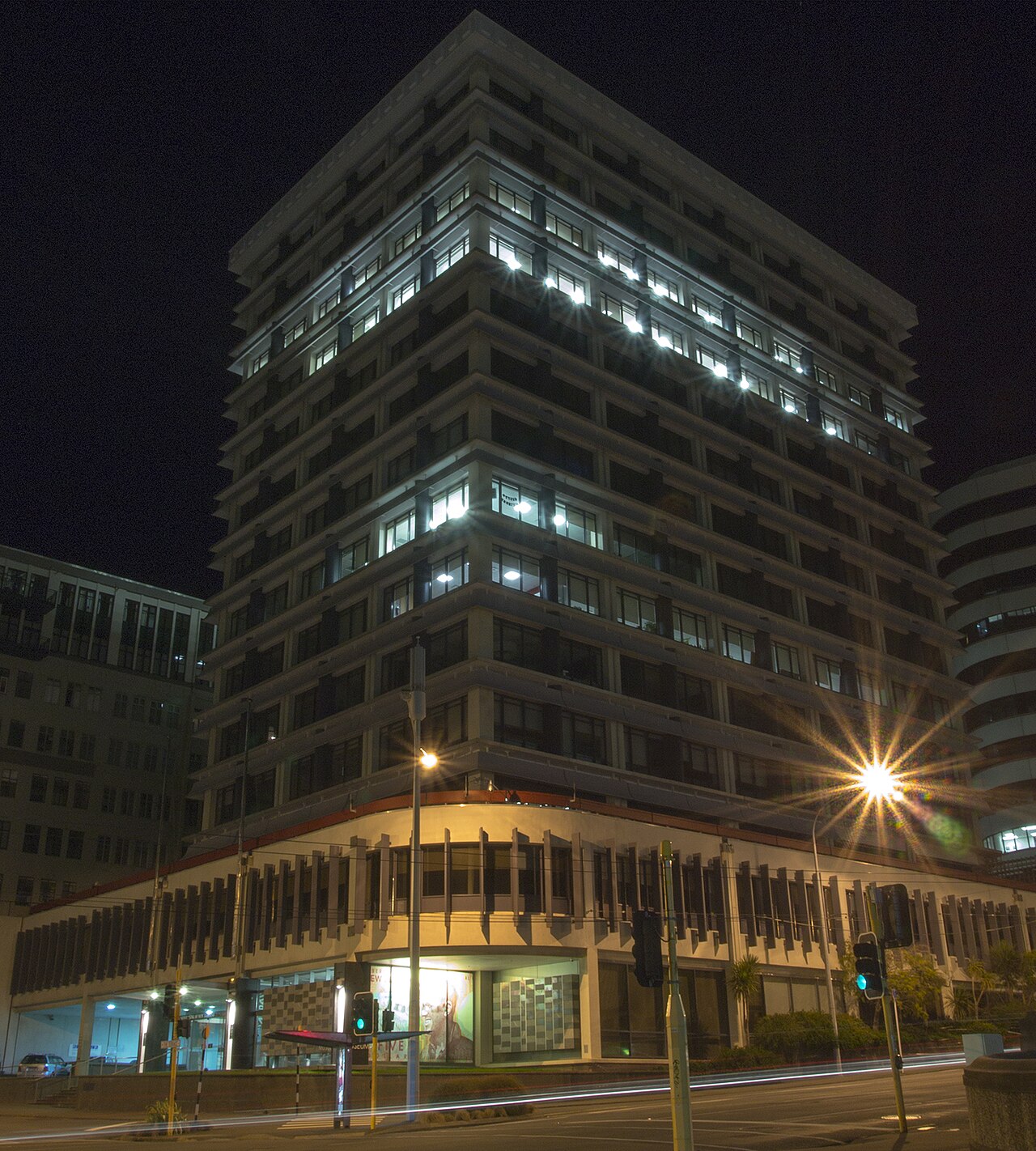
The Reserve Bank of New Zealand in Wellington, where the Crown Settlement Account is held and settled daily against Treasury's accounts at Westpac.
OBEGALx Fiscal Balance
Deficits narrowing toward surplus under current forecasts
Source: Pre-election Economic and Fiscal Update 2026, The Treasury
Net core Crown debt stood at $186.8 billion or 40.9 percent of GDP at 30 June 2026, according to the Financial Statements of the Government. PREFU 2026 forecasts show debt rising to a peak of 46.1 percent of GDP in 2027/28 before declining toward a 40 percent target.
Section 26G and the operational reality
Section 26G of the Public Finance Act 1989 requires governments to reduce debt to prudent levels through operating surpluses and then maintain balance on average over time. The operational mechanics revealed by the CSA data show these rules operate against a backdrop where nominal balances are not the binding constraint.
Real limits remain labour, materials and capacity. Exceeding those can generate inflation regardless of account mechanics.
The excess CSA balances represent an opportunity cost estimated at up to $340 million a year in foregone interest, according to analysis by B2B News and researchers at the University of Otago.
What it means for the next Budget
The next government will face decisions on operating allowances and between-Budget spending via Imprest Supply Acts. Clearer understanding of how appropriations actually authorise expenditure could shift focus toward efficient allocation of real resources rather than nominal deficit optics.