EV fleet cuts NZ oil import bill by $90m as fuel leads trade rise
Electric vehicles on New Zealand roads have avoided about $90 million in oil-product imports since the start of 2024, a Newsroom analysis estimates, as Stats NZ reported fuel led the rise in merchandise imports in the year to July 2026.
Cabinet’s Economic Policy Committee has formally authorised public consultation on a prudential levy to shift Reserve Bank supervision costs onto banks, insurers and market infrastructure operators from 2027/28.
Cabinet has agreed in principle to three shifts in public performance reporting sought by the Finance and Expenditure Committee, while parking detailed design and costings until 2027.
ASB’s Q2 2026 Regional Economic Scoreboard left Wellington joint last with Gisborne while Canterbury led on dairy cash, jobs and retail. The capital’s multi-quarter underperformance is structural: public-service consolidation, a deep housing correction and stalled population growth colliding with a national OCR still set for nationwide inflation.
Electric vehicles on New Zealand roads have avoided about $90 million in oil-product imports since the start of 2024, a Newsroom analysis estimates, as Stats NZ reported fuel led the rise in merchandise imports in the year to July 2026.
Electric cars, trucks and buses already on New Zealand roads have cut about $90 million from the country's overseas oil bill since the start of 2024, according to a Newsroom analysis published on 15 September 2026.
The estimate lands as Stats NZ reported that fuel led the rise in merchandise imports in the year ended July 2026. Brent crude last-day futures traded near US$105.57, with a 52-week range of US$58.72 to US$126.10 on Yahoo Finance data. NZD/USD sat near 0.58, magnifying the kiwi cost of dollar-priced product.
Newsroom's conversion rule is simple: every three kilowatt-hours that charge an EV displace one litre of imported oil product. The figure is a journalist-estimated import-side rule of thumb, not a Treasury, MBIE or RBNZ release. Full methodology sits behind Newsroom's paywall.
At roughly NZD/USD 0.58, US$105-a-barrel Brent equates to about NZ$181 per barrel before freight, margins and tax. That price regime makes each avoided litre unusually valuable on the trade balance.
External accounts and fuel security
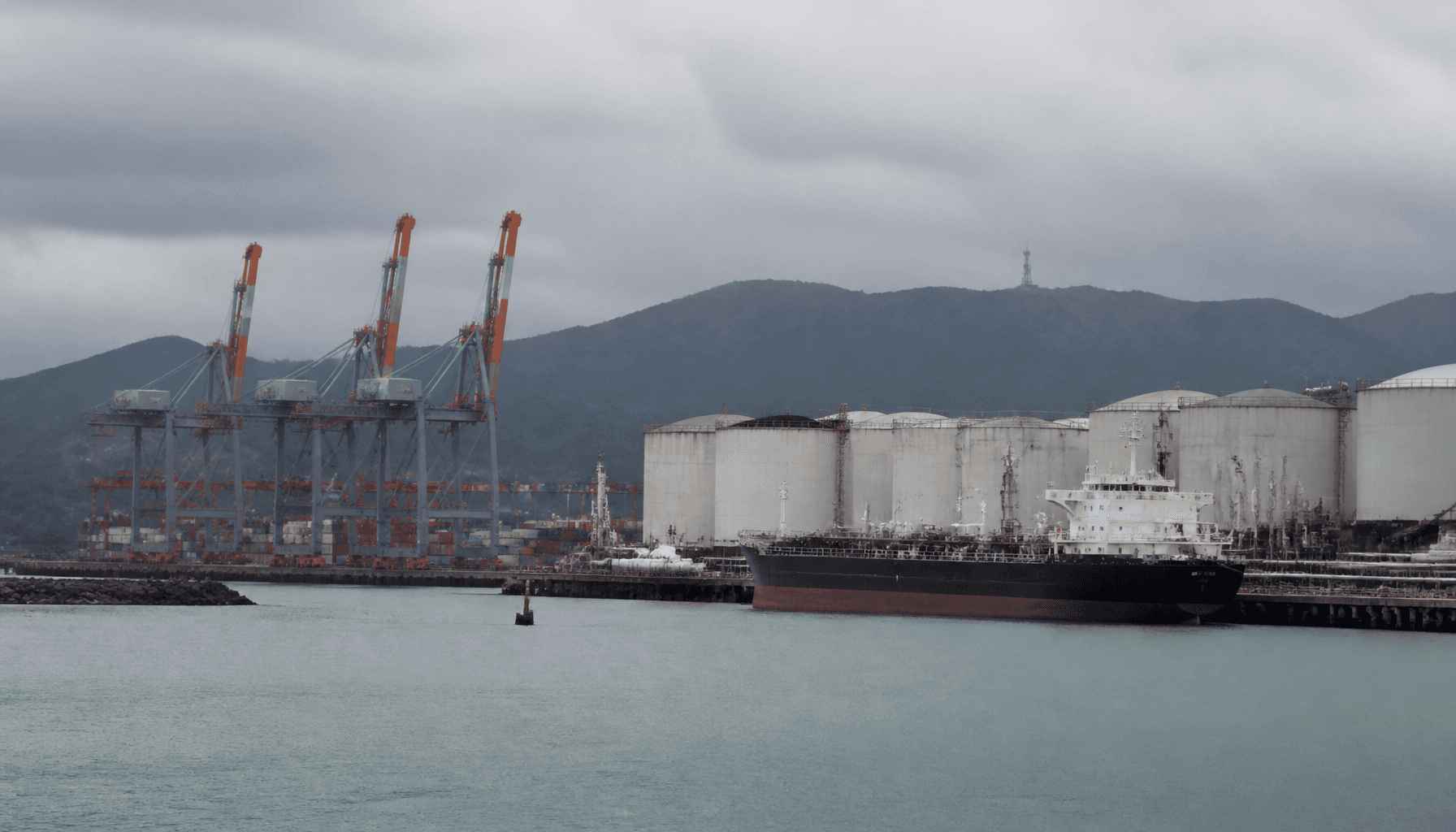
New Zealand closed the Marsden Point refinery in 2022. MBIE oil statistics show the country now relies almost entirely on imported refined petrol, diesel and jet fuel. Spikes in product prices and freight pass straight into the merchandise trade balance and the current account.
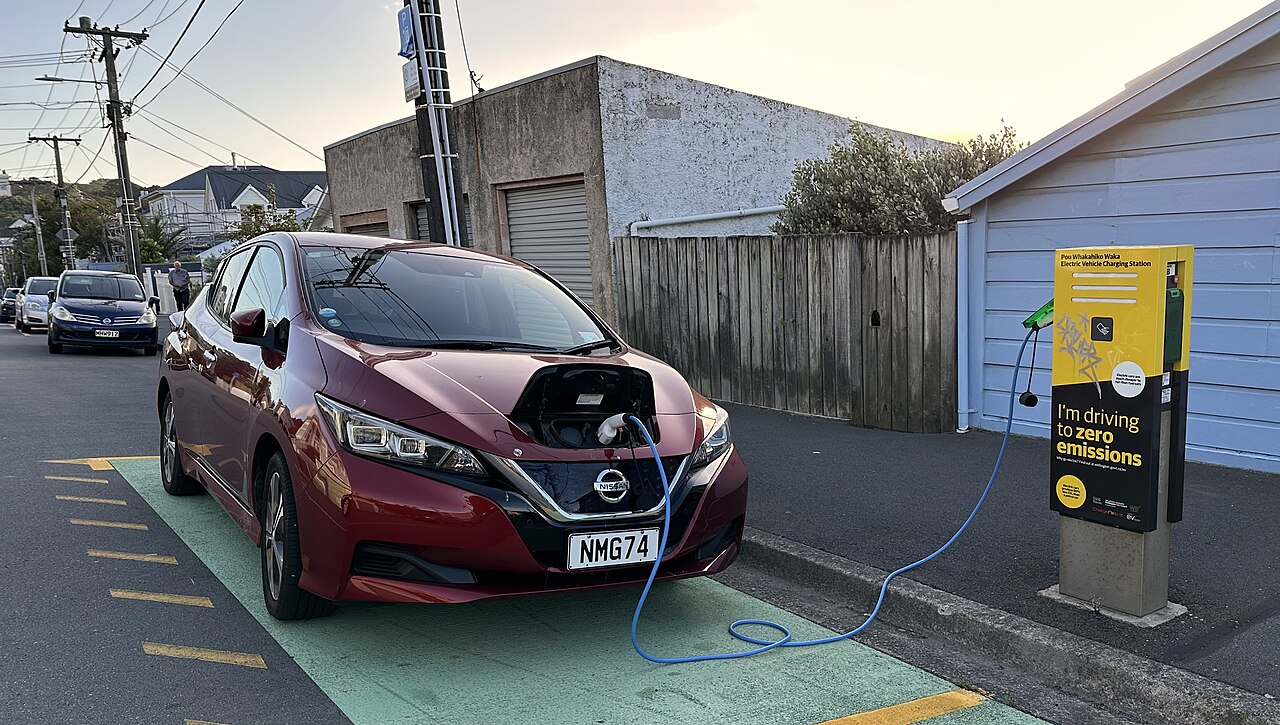
A public EV charging station in Wellington. Every three kilowatt-hours that charge a vehicle like this displace one litre of imported oil product, under Newsroom's estimate.
Stats NZ's year-to-July-2026 finding that fuel led the import rise underlines the exposure. Importers and distributors, freight operators on diesel, and exporters facing a softer external position all feel the channel.
Stockholding runs through the Minimum Stockholding Obligation and commercial inventories rather than a large strategic petroleum reserve. Independent monitors such as FuelClock.nz, a Taxpayers' Union initiative, combine MBIE petroleum stock figures with tanker AIS, retail prices and market feeds to track days of cover in closer to real time than delayed official tables.
Fleet effect versus sales flow
Oil-import savings scale with the stock of EVs and the kilometres they travel, not only with monthly registrations. Vehicles bought under the Clean Car Discount era continue to charge and displace petrol and diesel every day.
The Clean Car Discount feebate ended in December 2023. EECA fleet insights record that plug-in share of new light vehicles peaked near one-quarter in 2023, then fell sharply through 2024 as incentives disappeared. Drive Electric monthly sales releases track the post-CCD path, including partial recovery as global EV prices fell and more models arrived.
Conflating slower sales with a stalled fleet effect is the main analytical trap.
Cumulative electricity into transport can keep rising even when monthly market share sits well below the 2023 peak.
Engineering and electricity mix
At the vehicle, a typical petrol car using 8–10 L/100 km versus a battery EV using 15–20 kWh/100 km implies roughly 2–2.5 kWh per litre displaced tank-to-wheel. Newsroom's 3 kWh per litre builds headroom for charging losses, oil-to-product yields and mixed fleets.
MBIE energy statistics show New Zealand generation is predominantly renewable—hydro, geothermal, wind and solar. Incremental EV charging largely swaps imported fossil product for domestic renewable power on the external accounts, subject to distribution peaks, public charging investment and time-of-use pricing.
Fiscal second-order effects
Lower petrol volumes erode fuel-excise and related hypothecated road revenue over time. Electricity GST and ETS settings differ from the petrol stack. Treasury Budget and Half Year Economic and Fiscal Update tracks increasingly need explicit assumptions on fuel-excise decline versus road-user charges and electricity tax bases as the light fleet electrifies.
The $90 million avoided-import estimate is not a Budget line item. The same physical trend that produces it is a medium-term revenue-base story for the Crown. NZTA, IRD and line companies sit on the domestic cost and charging side; RBNZ watches CPI transport and current-account channels when oil spikes.
Scale check
At wholesale or import-equivalent prices around NZ$1.50–2.50 a litre, $90 million implies on the order of tens of millions of litres avoided—still a small fraction of multi-billion-litre annual petrol-plus-diesel demand. High oil prices and a soft kiwi make the dollar saving material at the margin. They do not prove oil dependence is solved.
Households still face pump prices that embed Singapore-linked product, freight, the ETS, fuel excise on petrol, GST and retail margins. EVs shift cost-of-living risk from global crude toward domestic electricity tariffs and regulated network charges.
Looking ahead, the trade-balance and fuel-security case for fleet electrification will track kilometres driven and GWh charged more than any single month's registration share. Treasury will need cleaner fuel-excise and RUC transition assumptions in successive Budget and HYEFU rounds. Without faster uptake after the end of large fiscal subsidies, cumulative import savings grow more slowly—even while the existing stock keeps trimming the oil bill every day.