Fertiliser lag tests RBNZ: cool food CPI, hot farm costs
Farm-gate fertiliser has surged while retail food inflation sits at 1.9%. RBNZ’s September MPS still expects petroleum-linked costs to spill into food, transport and construction through late 2026.
The Reserve Bank raised the OCR 25 basis points to 2.75% on 2 September, a second consecutive hike framed as gradual removal of stimulus toward neutral settings rather than a 2022–23-style squeeze, as Treasury’s Fortnightly Economic Update tied the move to firmer business activity, a fuel-led CPI spike to 4.1%, slowed Australian growth and a Very Strong El Niño.
New Zealand’s 10-year government bond yield sat at 4.78% in early September 2026, matching the US Treasury 10-year while the OCR was only 2.75% after the Reserve Bank’s 25 basis point hike. Global term premium, AI-sector debt supply and Middle East fuel inflation have already lifted wholesale, swap and fixed mortgage pricing ahead of Wellington’s calm central track toward about 3.2%.
New Zealand ranks in the IMF’s global top ten on AI preparedness, yet Datacom finds only 4% of firms say AI has transformed core operations. The conversion gap—not discovery—is now the growth constraint.
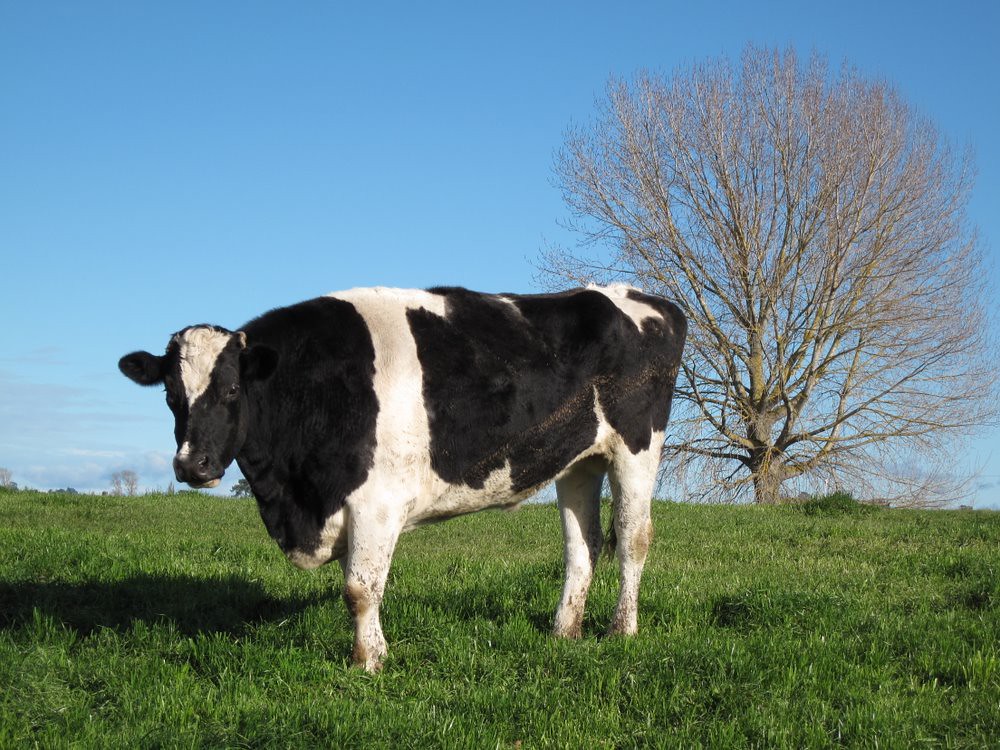
New Zealand's food inflation remains modest even as farm fertiliser bills jump. Stats NZ Selected Price Indexes put annual food-group inflation at 1.9% in the year to July 2026, the smallest rise since December 2024. DairyNZ's June 2026 Econ Tracker shows fertiliser driving a 41% lift in that cost line under its expected 2026/27 scenario.
The Reserve Bank's September 2026 Monetary Policy Statement supplies the official bridge. Higher costs for fuel, plastics, fertilisers and other petroleum-based products are expected to spill over into other prices over the rest of 2026 — notably air and road transport, food, and construction. That sentence, not a claim that supermarket shelves have already repriced, is the load-bearing link.
On 2 September the Monetary Policy Committee raised the Official Cash Rate 25 basis points to 2.75%. The Summary Record of Meeting shows Hayley Gourley, Karen Silk, Prasanna Gai and Governor Anna Breman saw upside risks to inflation relative to the central projection. They cited more persistence in energy and petrochemical prices that could raise near-term inflation, affect price-setting behaviour, and produce stickier medium-term inflation. Paul Conway and Carl Hansen assessed risks as balanced.
Gourley, an external MPC member with a Canterbury herb-seed export farm and two decades in agribusiness, has publicly connected fertiliser and fuel costs to food-price risk after farm visits with the new Governor. The analytical tension is forward-looking: farm-gate nitrogen and diesel are already elevated; retail food has not yet re-accelerated to 2022-style rates.
Cool shelves, hot paddocks
Headline CPI inflation reached 4.1% in the year to the June 2026 quarter, up from 3.1% in the March quarter and above the 1–3% target band. Petrol rose 27.5% year-on-year and fuel contributed about 1.2 percentage points of the annual rise. Excluding vehicle fuels, annual CPI was about 2.9%.
Food tells a different story. Annual food-group inflation was 2.5% in the year to June 2026 and eased to 1.9% in the year to July. That split matters. The Bank and the upside camp on the committee are warning about lagged pass-through and second-round price-setting, not asserting that food CPI has already exploded.
Inflation and farm-cost snapshot — mid-2026
CPI y/y (Jun qtr)
4.1%
from 3.1%
Food SPI y/y (Jul)
1.9%
smallest since Dec 2024
Petrol y/y
+27.5%
~1.2 ppt of CPI
OCR
2.75%
+25 bp 2 Sep
Fertiliser in FWE
+41%
DairyNZ expected
BEMP expected
$8.79/kgMS
+$0.36
Food CPI remains cool while fertiliser and fuel at the farm gate have jumped.
Source: Stats NZ CPI and SPI; DairyNZ Econ Tracker June 2026; RBNZ OCR decision
DairyNZ's expected scenario for 2026/27 lifts Farm Working Expenses about 10% to $6.19 per kilogram of milksolids. Fertiliser is the largest single driver, up 41% or $0.23/kgMS. Feed rises 10% ($0.15). Fuel rises 34% ($0.03). Breakeven milk price rises $0.36 to $8.79/kgMS. Operating profit falls to $3.88/kgMS.
DairyNZ Head of Economics Mark Storey put the geography of the shock in plain terms: the Strait of Hormuz is no longer a distant watchpoint; it is at the farm gate. Four months in, the disruption is feeding through fuel, fertiliser, feed prices and freight — the 4Fs. Spring from August to November is the decision pressure point for those inputs.
Chair Tracy Brown has urged stress-testing of budgets, selective fertiliser use, flexible feed strategies and cash buffers, and planning for elevated costs beyond one season. El Niño may compound any feed deficit.
Farm-gate costs, not supermarket shelves, are where the fertiliser shock has landed first — nitrogen prices remain elevated even as retail food inflation stays subdued.
Oil, Hormuz and the nitrogen chain
Nitrogen fertiliser is an energy derivative. The Haber–Bosch process converts nitrogen and hydrogen, typically from natural gas, into ammonia and then urea. Global urea and ammonia prices historically co-move with gas and broader energy costs.
Brent last-day financial futures recently traded near US$96.28, with a 52-week high of US$126.10 and low of US$58.72. Monthly closes trace a path from the low $60s through a spike near $114, partial retracement, and renewed pressure into the $90s. The Reserve Bank's September MPS Dubai crude assumptions put the June 2026 quarter average at US$93 a barrel, about 40% above pre-conflict levels, and the September quarter assumption at US$85, still about 30% above pre-conflict.
Brent crude monthly closes (approx.)
Oil remains well above pre-shock levels even after partial pullback from the Hormuz spike.
Source: Yahoo Finance BZ=F
Paul Conway, in a 14 July 2026 speech on price-setting, described the Strait of Hormuz closure as removing roughly 10 million barrels a day of oil, generating one of the largest monthly oil-price increases on record, and producing large shocks not only in oil but in chemicals, fertilisers, sulphur and aluminium. Monetary policy's job, he stressed, is to prevent second-round effects.
Governor Breman echoed that doctrine at the September media conference: policy cannot offset the direct headline effect of higher fuel but must stop the shock becoming persistent inflation.
Higher costs for fuel, plastics, fertilisers and other petroleum-based products are expected to spill over into other prices over the rest of 2026 — notably air and road transport, food, and construction.
WTO Secretariat analysis in July 2026 found urea roughly doubled after the Hormuz conflict outbreak — from about US$400 a tonne to over US$850 in April 2026 — before falling back to about US$453 by June. DAP also rose substantially. Gulf outbound fertiliser shipments effectively stalled. IFPRI's Food Security Portal estimated Hormuz risk to roughly one-third of global seaborne fertiliser trade. Industry analysis linked to Rystad put roughly 15% of global ammonia trade and 21% of urea trade with exporters potentially impacted across the Gulf.
The Financial Times reported in June 2026 that Middle East urea fell about 50% to $475 a tonne from an April Argus peak of $918 even before full reopening, as traders bet on weak seasonal demand and Chinese exports. The war premium can reverse quickly. Permanent pass-through is not guaranteed.
Why NZ lists stayed high
New Zealand is a near-total importer of manufactured nitrogen and a significant importer of phosphate rock and potash. Domestic manufacturing is limited. Ballance's Kapuni gas-to-urea route is a strategic but vulnerable node.
In May 2026 Ballance raised urea and SustaiN by $100 a tonne to $1,175 and $1,224, citing global urea up roughly 110% since January and Kapuni gas-supply uncertainty that forced contingency import shipments. SOA and DAP also rose, Farmers Weekly reported.
Ravensdown's 27 July 2026 price list showed bulk urea about $1,349 a tonne direct ($1,369.54 debit) excluding GST, N-Protect about $1,398, and superphosphate about $597 — far above mid-2025 urea near $933–$953 when both co-ops had held the line. RNZ reported Ravensdown net profit of $30 million for the year ended 31 May 2026 after rebate, a $15 a tonne shareholder rebate, and management commentary that around a fifth of world nitrogen supply comes from the Gulf.
Local list prices thus lagged and partially decoupled from the sharp June global spot fade. Freight, a softer NZ dollar, inventory hedges and domestic gas risk keep NZ farm-gate nitrogen elevated. NZD/USD near 0.5876, within a 52-week range of roughly 0.5584–0.6093, raises the local-currency cost of USD-priced urea, phosphate, potash, fuel and freight.
NZ bulk urea list prices vs global spot path
Global urea faded hard by June; NZ co-op lists remained elevated into late July.
Source: Ravensdown price list 27 July 2026; Farmers Weekly Ballance May 2026; WTO July 2026; FT June 2026 Argus
Transmission to the CPI basket
Transmission runs farm-gate cost to processor margins to wholesale to retail, with category-specific lags. Fresh produce and protein typically show faster pass-through when domestic supply is weather-constrained. Packaged grocery and long-life dairy move more slowly. Fuel hits twice: on-farm and in distribution — refrigerated road freight, coastal shipping and air freight for high-value horticulture.
The MPS explicitly names food, transport and construction as spillover destinations. The story is broader than the supermarket tomato. Petroleum-based inputs also touch plastics and construction materials.
If the shock proves persistent, inflation expectations and wage bargaining can embed it. The August 2026 Survey of Expectations showed one-year CPI expectations at 2.60%, down 81 basis points, two-year at 2.34%, and five-year slightly higher at 2.31%. Mean expected end-September-quarter OCR was 2.73% when the OCR was still 2.50%, so the 2.75% decision was largely anticipated. Anchored near-term expectations are a genuine counterweight to entrenchment narratives. The hawkish minority colour on petrochemical persistence is about tail risks and price-setting behaviour, not about expectations already de-anchoring in the survey print.
Trade-offs at the farm gate and the Bank
The MPC faces a classic supply-shock trade-off. Looking through first-round relative-price energy and food shocks preserves demand when the shock is temporary. Leaning against second-round price-setting and petrochemical persistence means a higher-for-longer OCR. That cools demand but cannot erase an imported cost shock. It tightens farm and household cashflow in the same quarter as the input spike.
Farms face a parallel choice. Full fertiliser application protects yield. Cutting rates burns less cash but accepts pasture and crop risk. Stress-testing budgets and building cash buffers competes with delayed capital expenditure on irrigation, effluent systems and plant. Export payouts may rise with global food prices while breakeven milk price and working expenses compress operating profit. Cashflow is not automatically protected.
Fertiliser co-operatives must pass global prices, Kapuni contingency, freight and FX into lists or protect shareholder volumes and rebates. Contingency imports compete with Kapuni utilisation. Inventory hedges can keep NZ lists elevated after global spot fades.
Processors and supermarket majors absorb farm-gate and freight cost into margins or pass through to retail. Fresh and protein move faster when weather constrains supply. Packaged grocery moves slower. Timing is both competitive and politically salient.
Households already feel petrol's contribution to the CPI. Food pass-through would hit real incomes further. Higher CPI lifts indexed welfare and NZ Super outlays and complicates Treasury expense tracks — a fiscal cost of a supply shock without a discretionary spending decision.
Structurally, multi-year investment in precision nitrogen, inhibitors, biological fixation and lower stocking-rate systems competes with near-term working-capital and drought-resilience capex. Until import intensity falls, every Middle East flare-up still hits the farm gate within a season.
Second-order effects to watch
Application cuts or drought raise yield risk and can firm farm-gate fresh and protein prices, accelerating food CPI if El Niño verifies. MPS Box A covers El Niño, droughts and the New Zealand economy. Earth Sciences NZ confirmed emergence. The spring and summer outlook favours drier-than-usual conditions in the north and east, with some southern and western South Island areas wetter. Central projections assume no El Niño effects, but the box notes droughts reduce activity and lift some consumer prices.
Earth Sciences New Zealand's September–November 2026 outlook, carried on Scoop, said El Niño was strengthening considerably, with peak likely in late spring or early summer, potentially among the strongest in recent history and comparable to 1997, with impacts already starting. A strong El Niño fresh-food supply shock arriving while fertiliser and fuel costs remain elevated is the compound upside inflation risk that links Gourley's fertiliser warning to the Bank's climate box.
Under DairyNZ's prolonged disruption scenario, breakeven milk price stays near $9/kgMS into 2027/28. Equity drawdown, delayed capex and selective destocking would flow into rural services, machinery dealers and regional economies in Waikato, Canterbury, Southland and the lower North Island. Banks' agri portfolios would reprice risk. A soft NZ dollar supports export receipts in local-currency terms but sustains import-cost pressure — the classic primary-sector scissors.
CPI indexation raises welfare and Super expense tracks. Terms of trade and real household income can diverge: export receipts may rise with global food prices even as domestic CPI food and farm costs hurt households and leveraged farms.
Historical context: 2021–22 and the energy-shock doctrine
The closest analogue is the 2021–22 global fertiliser shock. Post-COVID demand, the European gas crisis and Russia–Ukraine disruptions to gas, potash and trade multiplied international nutrient prices and drove a major New Zealand farm working-expense and food-price cycle.
Similarities are clear:
Import dependence
Co-op pricing off global benchmarks
Spring application windows
The risk that relative-price shocks infect wage- and price-setting
Differences matter more for policy calibration. The 2026 initiator is Middle East oil and Hormuz energy risk rather than Black Sea potash and gas alone. New Zealand headline food inflation starts from a much cooler base — sub-3% SPI food — than the peak-COVID era. Survey expectations look better anchored. The OCR is being raised into the shock rather than from ultra-easy settings.
Peer practice after energy shocks — the ECB and Bank of England post-2022 playbook, and the RBA's August 2026 Statement on Monetary Policy discussion of energy and Middle East conflict pass-through — treats first-round energy and food as relative-price changes to look through unless second-round effects appear in wages, expectations or non-energy core. Conway's July speech and Breman's September remarks sit squarely in that doctrine. New Zealand's twist is extreme commodity-export exposure plus extreme manufactured-input import exposure.
The counter-argument
A rigorous reading must steelman the opposing case. Food CPI is already cool at 1.9% year-on-year to July. Global urea is off roughly 50% from April peaks on WTO and FT Argus figures. One- and two-year inflation expectations are well behaved near 2.3–2.6%. The OCR move was largely baked into the Survey of Expectations. On that view, Gourley's fertiliser warning is precautionary hawkish colour rather than evidence inflation is already entrenched. The Bank is managing tails, not the base case. Farmers face a cost squeeze, but consumers are not yet in a 2022-style food crisis. Sustainable fertiliser transition is multi-year work more than 2026 CPI arithmetic.
That counter-read is fair on the current prints. The upside camp still cares because of lags, NZ list stickiness, Kapuni gas risk, the spring application window, El Niño compound risk, and second-round price-setting behaviour — the doctrine Breman and Conway articulate. Local urea lists near $1,350 a tonne in late July did not fully track the June global fade. Freight, FX and domestic production uncertainty are NZ-specific amplifiers. The MPS spillover paragraph is an official forward-looking statement, not a journalist's inference.
Open questions
Several facts remain unresolved on the public record. The exact Stats NZ Farm Expenses Price Index fertiliser percentage for the latest quarter was not locked cleanly in primary tables in this cycle; DairyNZ's kilogram-of-milksolids figures and co-op lists are the load-bearing farm-gate evidence. The precise percentage-point contribution of the food group to the 4.1% annual CPI headline needs the Stats NZ contributions table before tight citation.
Will NZ co-op urea lists follow the global fade through the spring application window, or will Kapuni, freight and FX keep farm-gate prices elevated? Does El Niño verify toward a strong 1997-comparable drought in the north and east, or stay mild enough that the central projection of no effect holds? Will late-2026 data show second-round price-setting or wage effects, or only first-round relative-price noise? How much margin will processors and supermarket majors absorb on fresh versus packaged lines?
Gourley was appointed on 18 September 2025 by Finance Minister Nicola Willis on the Reserve Bank Board's recommendation for a term from 1 October 2025 to 30 September 2029, succeeding Bob Buckle. Her CV spans an MSc in agricultural economics, Rabobank roles including GM Country Banking New Zealand and Director of Dairy Research, Agri Divisional Manager at Skellerup, and non-executive roles including Seeka. Governor Anna Breman took office on 1 December 2025 for a term to 30 November 2030 — the first woman and first foreign-national Governor, formerly First Deputy at the Riksbank. An agribusiness-steeped external member publicly connecting farm-gate petrochemical costs to food CPI under a new Governor still establishing her domestic communications voice is itself an institutional fact of this cycle.
What to watch next
Through the rest of 2026 the test is whether elevated fertiliser and fuel print through into food, transport and construction CPI as the MPS spillover paragraph projects, or whether the global urea fade, anchored expectations and margin absorption keep retail food soft. Spring fertiliser and feed decisions land while Ravensdown and Ballance nitrogen lists remain far above mid-2025 levels. Any further Gulf supply noise or Kapuni disruption feeds straight into working-capital lines. Petrol's already-large CPI contribution keeps household inflation salience high even before fertiliser fully passes through. The OCR at 2.75% begins to work through floating-rate mortgages and farm debt servicing in the same quarter farmers face higher input bills.
Watch the next Stats NZ food SPI and CPI prints, co-op list updates into peak application season, Earth Sciences NZ El Niño verification, and the Bank's November communications for any shift in language on petrochemical persistence and second rounds. If second rounds fade quickly, the balanced-risk view of Conway and Hansen will look vindicated and the risk of over-tightening into a weather- and import-cost shock will rise. If food and construction spillovers firm while expectations hold only because policy stays restrictive, the Gourley–Silk–Gai–Breman upside camp will have defined the cycle.