McClatchy reappointed to Guardians board overseeing $94.4bn NZ Super and Elevate funds
Finance Minister Nicola Willis has reappointed David McClatchy to the Guardians of New Zealand Superannuation Board for three more years, citing continuity for the $94.4 billion NZ Super and Elevate funds through the pre-election period.
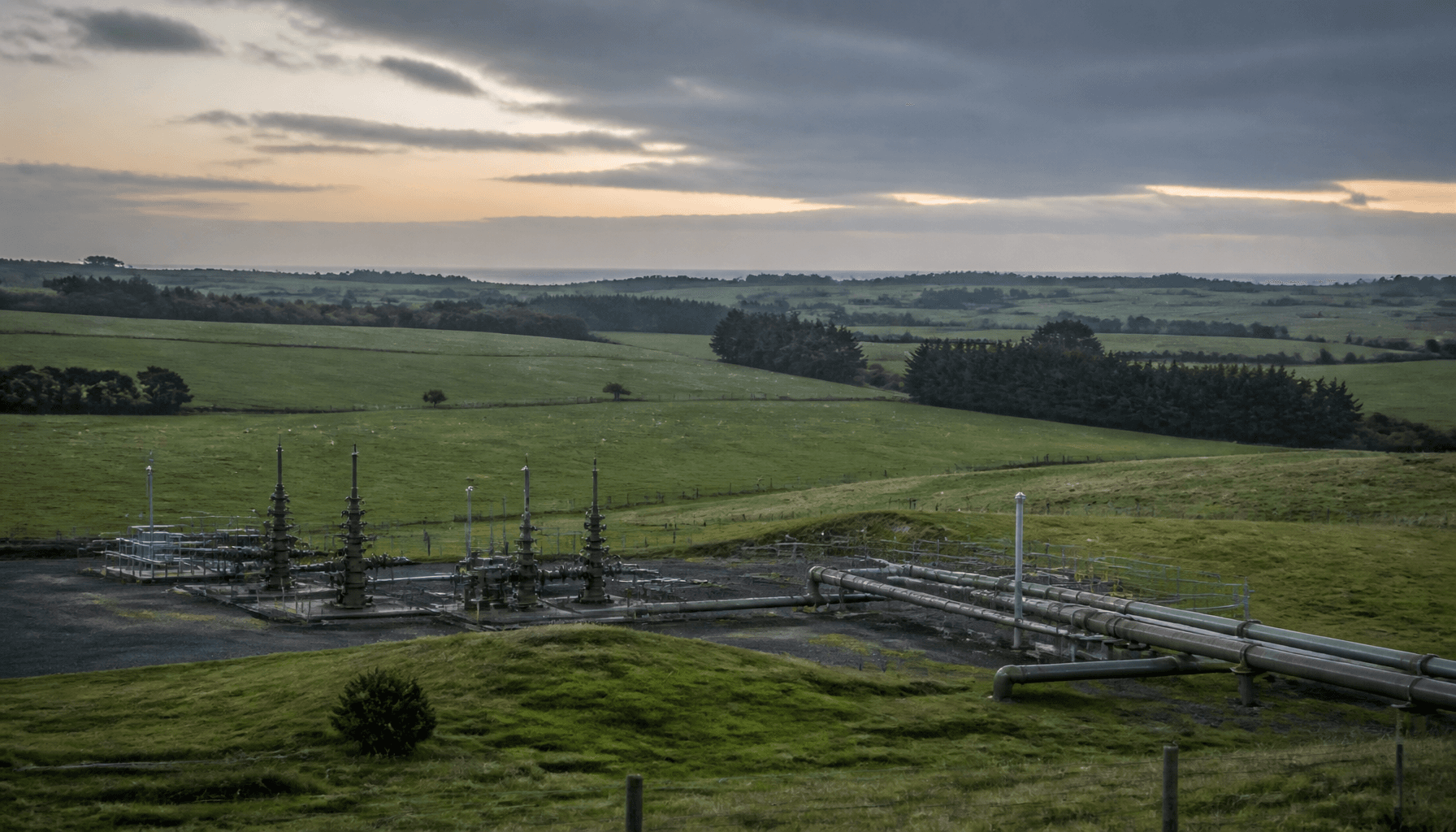
Resources Minister Shane Jones will scrap petroleum royalties on non-saleable cushion gas, targeting a 2013 rule that charges developers 5% on original gas in underground storage facilities.
NZ Vine Care Limited, a dormant Katikati horticultural labour supplier, entered shareholder liquidation owing Inland Revenue $845,000 as the sole preferential creditor, crystallising years of PAYE, GST, penalties and interest.
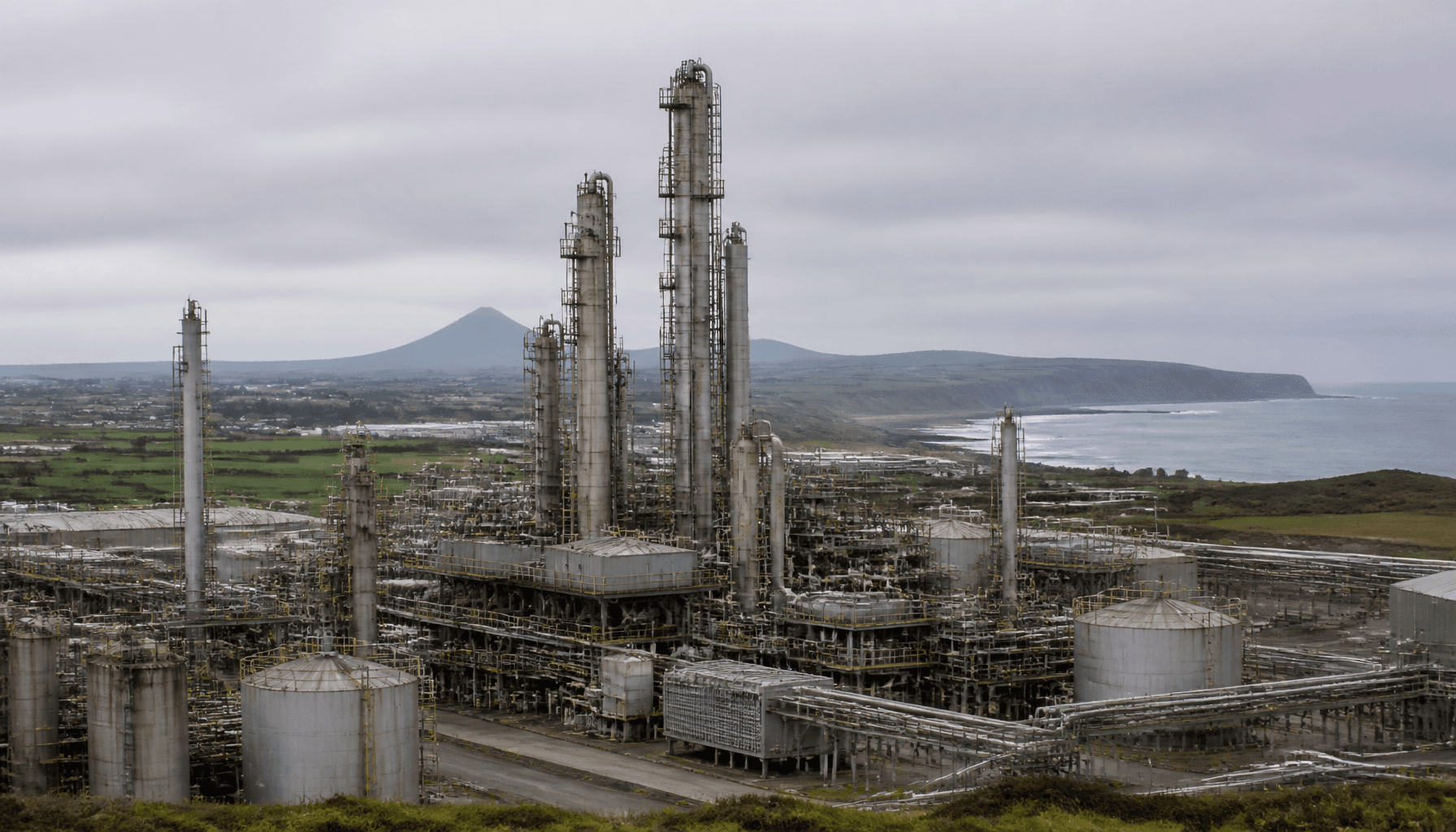
The Coalition has put $3 million of Regional Infrastructure Fund operating money behind the Taranaki Alliance, an industry bid vehicle intended to redeploy oil-and-gas engineering skills as Methanex prepares to idle Motunui from early 2027.
Finance Minister Nicola Willis has reappointed business leader David McClatchy as a member of the Guardians of New Zealand Superannuation Board for a further three years from 1 October 2026.
The board manages investments for the NZ Superannuation Fund and the Elevate NZ Venture Capital Fund. Those portfolios were worth a combined $94.4 billion as at 30 June, according to the government announcement on 9 September 2026.
Willis framed the decision around governance stability. She said the reappointment recognises McClatchy's commitment and contribution, maintaining continuity during the pre-election period and into the future.
Mr McClatchy's reappointment – for a further three years from October 1 this year – recognises his strong commitment and contribution, maintaining stability and continuity during the pre-election period and into the future.
McClatchy first joined the board on 1 October 2021 for a five-year term ending 30 September 2026. Then Finance Minister Grant Robertson recommended the appointment under the Crown Entities Act and the New Zealand Superannuation and Retirement Income Act 2001. He replaced Simon Botherway when the NZ Super Fund stood at about $58.6 billion.
Record and remuneration
He sits on the board's Audit and Risk Committee. Board member fees are published at $70,995 a year; committee chairs receive $78,095 and the chair $141,990.
McClatchy holds a University of Auckland BCom. He spent 16 years in New Zealand banking and funds management before senior Australian roles. He was Group Chief Investment Officer of Insurance Australia Group and Managing Director of IAG Asset Management until 2019, and earlier CEO and Chairman of ING Investment Management Australia.
External directorships include Trust Investment Management Limited and listed investment companies Kingfish, Barramundi and Marlin Global. Willis highlighted his experience running large investment businesses across mutuals, corporates, superannuation and sovereign wealth mandates.
Mr McClatchy brings extensive experience in managing and operating large investment businesses, overseeing portfolios for mutual societies, corporates, superannuation funds, and sovereign wealth funds. He has held a variety of governance roles within the investment sector.
The Guardians is an autonomous Crown entity. Its board has five to seven members appointed by the Governor-General on the Minister of Finance's recommendation after an independent Nominating Committee process and consultation with other parliamentary parties. Appointees must have substantial financial-investment expertise.
Day-to-day investment decisions remain operationally independent. The Minister may give directions only on risk and return expectations, and those must stay consistent with the statutory duty to invest on a prudent, commercial basis.
Fund performance trajectory
Fund size has grown sharply under recent market conditions. The NZ Super Fund ended the year to 30 June 2024 at $76.65 billion. It closed FY25 at $85.1 billion after an 11.84% pre-tax after-costs return, adding $8.4 billion year-on-year and $745 million of value above its passive Reference Portfolio.
Provisional figures as at 31 May 2026 showed net assets of about $94.15 billion. The Fund returned 17.03% over the prior 12 months, 9.75% a year over 20 years, and 10.29% a year since inception in September 2003.
NZ Super Fund net asset value, FY2024–May 2026
Fund size has climbed sharply on strong markets, though the Guardians caution the pace is unlikely to repeat.
Source: NZ Super Fund Investment Performance / Annual Reports
Since inception the Fund has earned an estimated $68.85 billion more than Treasury bill returns and about $22.01 billion more than the Reference Portfolio. Cumulative Crown capital contributions total about $27.43 billion. The Fund paid substantial NZ income tax back into consolidated revenue.
GlobalSWF rankings released via the Guardians in May 2026 placed the NZ Super Fund as the world's best-performing sovereign wealth fund over 20 years, with average annual returns of 9.93% after costs before NZ tax. Guardians Co-CIO Brad Dunstan cautioned that equity-market tailwinds, especially in the United States, that powered much of that record are unlikely to repeat.
The Guardians have lowered their long-run expected return assumption from 7.8% to 7.2% a year. That change feeds directly into the statutory funding formula and higher required Crown contributions.
Budget 2026 contribution ramp
Budget 2026 set out the fiscal consequences. Formula-prescribed NZSF contributions rise from $562 million in 2026/27 to $600 million in 2027/28, $893 million in 2028/29 and $1.049 billion in 2029/30. The four-year total is about $3.1 billion — $2.2 billion higher than expected at the prior Half-Year Update.
The $61 million formula contribution for 2025/26, plus $39 million from a Budget 2025 capital allowance, was redirected into Elevate rather than the main Super Fund. NZ Superannuation spending itself is forecast to climb from about $24.7 billion in the current year to $31.2 billion by 2029/30. Withdrawals from the Fund to help meet Super costs are now projected from 2054.
Elevate is a fund-of-funds under the Venture Capital Fund Act 2019. The Guardians act as sole limited partner with NZGCP as manager. The original Crown commitment was about $300 million; Budget 2025 added $100 million. By 2025–26 Elevate had committed roughly $246–271 million across 11–12 underlying funds, crowding in private capital and backing well over 150 Kiwi startups.
Domestic NZ assets in the Super Fund were $9.6 billion, or about 11% of the Fund, at 30 June 2025. Absolute size remains modest beside larger peers such as Australia's Future Fund, yet long-run annualised returns have ranked among the stronger sovereign wealth results globally.
Board continuity through the election cycle
Board composition has been refreshed. Chair John Williamson was reappointed in March 2026 for a further two years from 1 October 2026, with Willis again stressing continuity through the pre-election period as five of seven members were then in their first term. Recent appointees include Sue Brake, Hinerangi Raumati-Tu'ua and Andrew Wilson.
Retaining McClatchy's Audit and Risk experience and Australasian investment networks supports that continuity narrative. Every basis point of long-run return and every year of stable oversight affects how large future Crown contributions — or later withdrawals — need to be.
Higher formula contributions add to net debt even though they are capital rather than operating spending. They sit outside the Budget capital allowance and interact with the Government's surplus and debt-to-GDP tracks. Strong governance that sustains value-add above the Reference Portfolio directly reduces that fiscal burden on taxpayers.
The statutory framework is designed to protect the Fund from short-term politics. Cross-party consultation on appointments and operational independence on investment decisions remain central to that design. With Super costs rising and withdrawals still decades away, board quality over a near-$95 billion portfolio is a first-order fiscal-risk issue for Treasury and future Budgets.
McClatchy's three-year extension locks experienced oversight through the 2026 election cycle and into the contribution ramp of 2027–30. The longer test is whether the Guardians can keep compounding returns near their revised 7.2% long-run expectation while markets normalise — and whether successive governments keep the capital path intact so the Fund can ease the tax burden on later generations.