Economic News
Subscribe →
HomeMonetary PolicyFiscalTradeRegulationBankingEconomic DataAbout
Vol. 02 · New Zealand
FRIDAY 22/05/2026
Iss. 2026 / 21
Economic News

Balanced. Independent. Informed.

Sections

  • Monetary Policy
  • Fiscal
  • Trade
  • Regulation
  • Banking
  • Economic Data

Subscribe

  • Free email
  • Email preferences
  • RSS feed

Company

  • About
  • Privacy policy

About

Economic News is an independent New Zealand publication covering monetary policy, markets, the public finances and the wider economy.

© 2026 Economic News Limited
.

Live
Retail Volumes Rise 0.9 Percent in March QuarterBudget 2026 Documents Available 28 May as Government Tightens SpendingHormuz Closure Turns Supply Chain Disruptions Into Multi-Year Cost Burden for New Zealand ExportersRetail Volumes Rise 0.9 Percent in March QuarterBudget 2026 Documents Available 28 May as Government Tightens SpendingHormuz Closure Turns Supply Chain Disruptions Into Multi-Year Cost Burden for New Zealand ExportersRetail Volumes Rise 0.9 Percent in March QuarterBudget 2026 Documents Available 28 May as Government Tightens SpendingHormuz Closure Turns Supply Chain Disruptions Into Multi-Year Cost Burden for New Zealand ExportersRetail Volumes Rise 0.9 Percent in March QuarterBudget 2026 Documents Available 28 May as Government Tightens SpendingHormuz Closure Turns Supply Chain Disruptions Into Multi-Year Cost Burden for New Zealand ExportersRetail Volumes Rise 0.9 Percent in March QuarterBudget 2026 Documents Available 28 May as Government Tightens SpendingHormuz Closure Turns Supply Chain Disruptions Into Multi-Year Cost Burden for New Zealand ExportersRetail Volumes Rise 0.9 Percent in March QuarterBudget 2026 Documents Available 28 May as Government Tightens SpendingHormuz Closure Turns Supply Chain Disruptions Into Multi-Year Cost Burden for New Zealand ExportersRetail Volumes Rise 0.9 Percent in March QuarterBudget 2026 Documents Available 28 May as Government Tightens SpendingHormuz Closure Turns Supply Chain Disruptions Into Multi-Year Cost Burden for New Zealand ExportersRetail Volumes Rise 0.9 Percent in March QuarterBudget 2026 Documents Available 28 May as Government Tightens SpendingHormuz Closure Turns Supply Chain Disruptions Into Multi-Year Cost Burden for New Zealand ExportersRetail Volumes Rise 0.9 Percent in March QuarterBudget 2026 Documents Available 28 May as Government Tightens SpendingHormuz Closure Turns Supply Chain Disruptions Into Multi-Year Cost Burden for New Zealand ExportersRetail Volumes Rise 0.9 Percent in March QuarterBudget 2026 Documents Available 28 May as Government Tightens SpendingHormuz Closure Turns Supply Chain Disruptions Into Multi-Year Cost Burden for New Zealand ExportersRetail Volumes Rise 0.9 Percent in March QuarterBudget 2026 Documents Available 28 May as Government Tightens SpendingHormuz Closure Turns Supply Chain Disruptions Into Multi-Year Cost Burden for New Zealand ExportersRetail Volumes Rise 0.9 Percent in March QuarterBudget 2026 Documents Available 28 May as Government Tightens SpendingHormuz Closure Turns Supply Chain Disruptions Into Multi-Year Cost Burden for New Zealand ExportersRetail Volumes Rise 0.9 Percent in March QuarterBudget 2026 Documents Available 28 May as Government Tightens SpendingHormuz Closure Turns Supply Chain Disruptions Into Multi-Year Cost Burden for New Zealand ExportersRetail Volumes Rise 0.9 Percent in March QuarterBudget 2026 Documents Available 28 May as Government Tightens SpendingHormuz Closure Turns Supply Chain Disruptions Into Multi-Year Cost Burden for New Zealand ExportersRetail Volumes Rise 0.9 Percent in March QuarterBudget 2026 Documents Available 28 May as Government Tightens SpendingHormuz Closure Turns Supply Chain Disruptions Into Multi-Year Cost Burden for New Zealand ExportersRetail Volumes Rise 0.9 Percent in March QuarterBudget 2026 Documents Available 28 May as Government Tightens SpendingHormuz Closure Turns Supply Chain Disruptions Into Multi-Year Cost Burden for New Zealand ExportersRetail Volumes Rise 0.9 Percent in March QuarterBudget 2026 Documents Available 28 May as Government Tightens SpendingHormuz Closure Turns Supply Chain Disruptions Into Multi-Year Cost Burden for New Zealand ExportersRetail Volumes Rise 0.9 Percent in March QuarterBudget 2026 Documents Available 28 May as Government Tightens SpendingHormuz Closure Turns Supply Chain Disruptions Into Multi-Year Cost Burden for New Zealand ExportersRetail Volumes Rise 0.9 Percent in March QuarterBudget 2026 Documents Available 28 May as Government Tightens SpendingHormuz Closure Turns Supply Chain Disruptions Into Multi-Year Cost Burden for New Zealand ExportersRetail Volumes Rise 0.9 Percent in March QuarterBudget 2026 Documents Available 28 May as Government Tightens SpendingHormuz Closure Turns Supply Chain Disruptions Into Multi-Year Cost Burden for New Zealand ExportersRetail Volumes Rise 0.9 Percent in March QuarterBudget 2026 Documents Available 28 May as Government Tightens SpendingHormuz Closure Turns Supply Chain Disruptions Into Multi-Year Cost Burden for New Zealand ExportersRetail Volumes Rise 0.9 Percent in March QuarterBudget 2026 Documents Available 28 May as Government Tightens SpendingHormuz Closure Turns Supply Chain Disruptions Into Multi-Year Cost Burden for New Zealand ExportersRetail Volumes Rise 0.9 Percent in March QuarterBudget 2026 Documents Available 28 May as Government Tightens SpendingHormuz Closure Turns Supply Chain Disruptions Into Multi-Year Cost Burden for New Zealand ExportersRetail Volumes Rise 0.9 Percent in March QuarterBudget 2026 Documents Available 28 May as Government Tightens SpendingHormuz Closure Turns Supply Chain Disruptions Into Multi-Year Cost Burden for New Zealand Exporters
FOOD INFLATION · STATS NZ APRIL 2026

Food Prices Flat in April 2026 as Long-Term Costs Rise

New Zealand food prices stayed flat in April 2026, rising just 2.6 per cent over the year — the softest annual pace since February 2025 — according to Stats NZ data that highlights how government-mandated shifts continue to drive up household costs.

Data Desk18/05/2026 · 13:27 NZT7 min read
Economic DataBreaking
DD
Data Desk
Economic Data Reporter · 18/05/2026 · 13:27 NZT · 7 min read
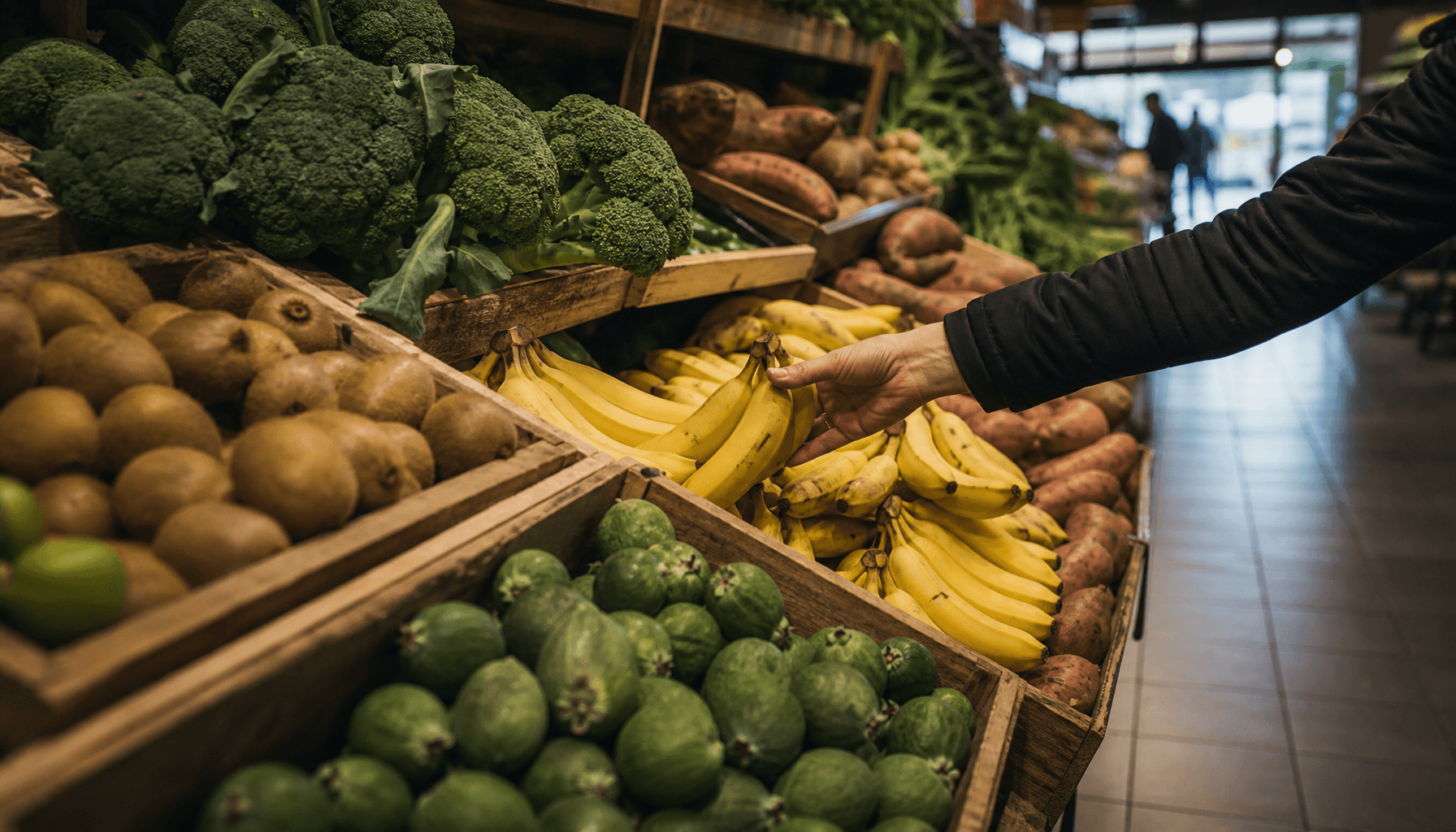
Auckland supermarket produce aisle showing kiwifruit, kumara and greens under warm overhead lighting, shopper reaching for bananas.

At a glance

April food prices held flat month-on-month, but a decade of regulatory and supply shifts has sent eggs up 151% and butter 143%, with a fuel price surge yet to filter through to shelves.

Key stats

Food CPI (monthly)
0.0%
Apr 2026 vs Mar 2026
Food CPI (annual)
2.6%
softest since Feb 2025
Meat / poultry / fish
+7.8%
annual
Fruit & vegetables
+3.7%
annual; −2.3% monthly
Grocery food
+0.7%
annual
Supplier cost index
+2.0%
annual, Apr 2026

Sources cited

  • Selected price indexes: April 2026 — Stats NZ
  • Costs from grocery suppliers to supermarkets increase 2.0%pa in April — Infometrics
  • New Zealand Food Inflation — Trading Economics
  • FAO Food Price Index — FAO
  • New Zealanders should expect 'gradual and temporary' pressure — Foodstuffs
  • Selected price indexes: March 2026 — Stats NZ

Free

New Zealand's economy, straight to your inbox.

By subscribing you accept our privacy policy.

More from economic data

Shoppers browsing a well-stocked New Zealand supermarket aisle, illustrating the retail trade activity recorded in the March 2026 quarter
Economic Data · 22/05/2026 · 13:16 NZT

Retail Volumes Rise 0.9 Percent in March Quarter

New Zealand retail sales volumes increased 0.9 percent in the March 2026 quarter on a seasonally adjusted basis. The gain matched the December 2025 quarter and exceeded market expectations of 0.5 percent.

Data Desk·22/05/2026 · 13:16 NZT·6 min
A Wellington government office interior with stacked Budget documents on a conference table and harbour views, representing Budget 2026 preparations
Fiscal · 22/05/2026 · 09:32 NZT

Budget 2026 Documents Available 28 May as Government Tightens Spending

Budget 2026 documents go online from 2pm on Thursday 28 May, with hard-copy packs on sale for $55 through two retailers.

Fiscal Desk·22/05/2026 · 09:32 NZT·8 min
A laden container ship navigating a narrow maritime strait at dusk, evoking global shipping chokepoint disruption
Trade · 22/05/2026 · 09:30 NZT

Hormuz Closure Turns Supply Chain Disruptions Into Multi-Year Cost Burden for New Zealand Exporters

Kotahi's 4,000 TEU of dairy, meat and horticulture cargo stranded by the Strait of Hormuz closure shows how New Zealand's geography converts geopolitical shocks into sustained higher costs for primary exporters.

Analysis Desk·22/05/2026 · 09:30 NZT·18 min

All economic data →

New Zealand food prices stayed flat in April 2026, rising just 2.6 per cent over the year — the softest annual pace since February 2025 — according to Stats NZ data that highlights how government-mandated shifts continue to drive up household costs.

Stats NZ reported food prices unchanged month-on-month in April 2026. The annual increase reached 2.6 per cent. This marks the lowest annual rate since February 2025.

Subgroup divergence: meat surges, produce dips

Subgroup figures showed clear divergence. Fruit and vegetables fell 2.3 per cent in the month but rose 3.7 per cent annually. Meat, poultry and fish edged up 0.1 per cent monthly while climbing 7.8 per cent over the year. Grocery food increased 0.7 per cent both monthly and annually. Non-alcoholic beverages dipped 0.3 per cent in the month.

Food subgroup annual price change, April 2026
Monthly change shown in parentheses in article text. Grocery food annual and monthly figures are both +0.7%.
Source: Stats NZ Selected Price Indexes: April 2026

A decade of extremes: eggs up 151%, avocados down 22%

Over ten years only seven items in Stats NZ's 147-price basket recorded declines. Avocados led the falls at 22 per cent lower. Onions dropped 7 per cent from $2.13 per kilogram to $1.99 per kilogram. In contrast eggs surged 151 per cent, butter 143 per cent and sultanas 116 per cent. A serve of fish and chips rose from an average $6.09 in the year to April 2016 to $10.77 now.

Selected food items: 10-year price change to April 2026
Only seven of 147 tracked items fell over the decade. Items shown are the most notable movers.
Source: Stats NZ via RNZ, Selected Price Indexes April 2026

Year-on-year the biggest drops included cucumbers at 23 per cent lower, olive oil 21 per cent lower and packaged pasta meals 16 per cent lower. Rises were led by dried apricots up 56 per cent and courgettes up 42 per cent.

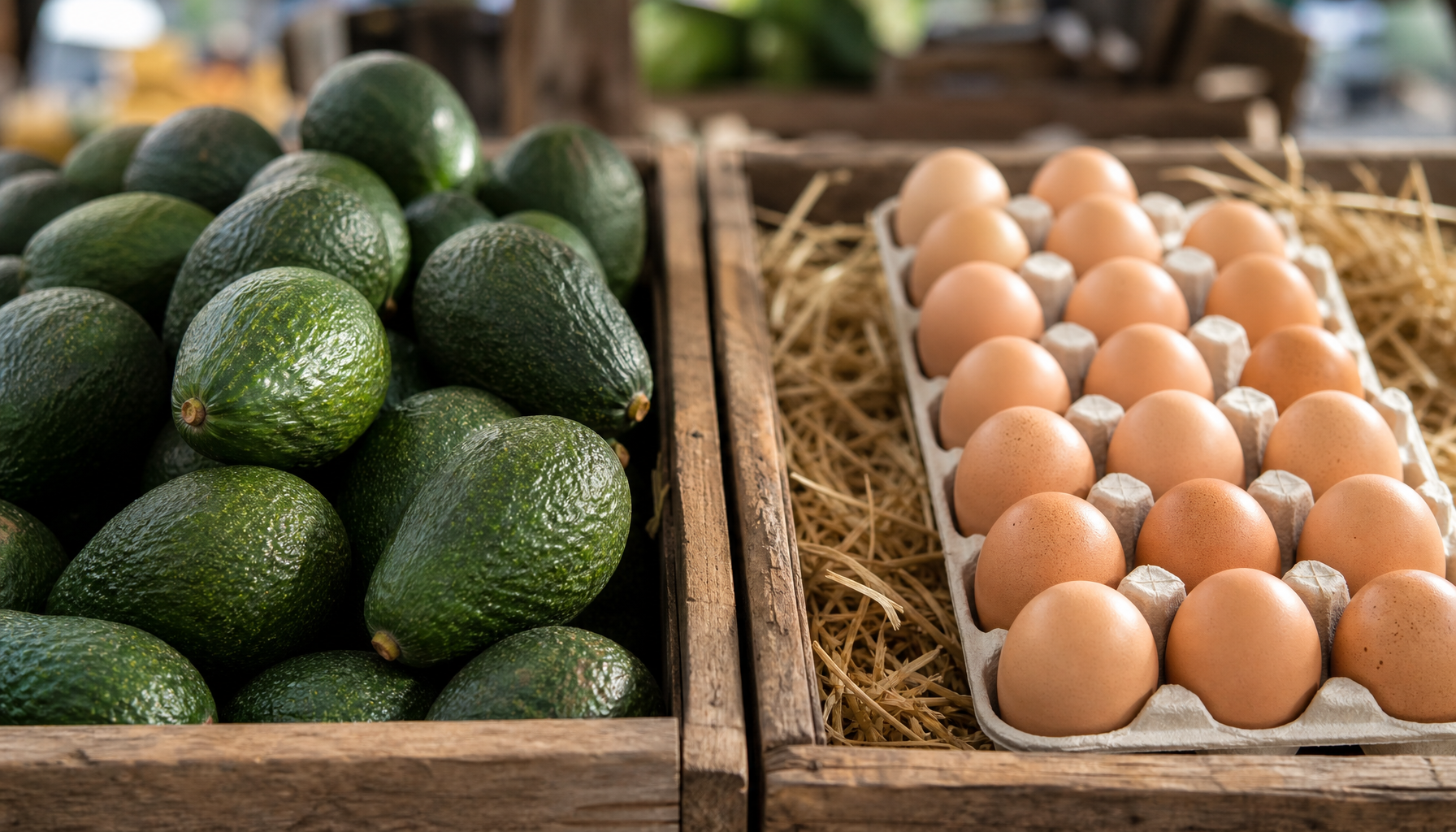
AI illustration of avocados and free-range eggs at a New Zealand market stall. Avocados are down 22% over a decade while eggs have surged 151%, driven partly by the shift away from battery-cage production.

What economists say is driving the moves

Economists linked the patterns to supply changes and regulatory shifts. Infometrics chief economist Brad Olsen pointed to higher avocado supply and weaker demand for the long-term price drop. He tied egg price rises to the move away from battery and caged systems toward free-range production. ANZ economist Matt Dilly highlighted tight global dairy supplies from mid-2024 to late 2025 for butter prices. Westpac economist Michael Gordon cited rain and frost damage in Turkey for sultana increases.

He tied egg price rises to the move away from battery and caged systems toward free-range production. — Infometrics chief economist Brad Olsen

Fuel costs surge — but retail shelves haven't felt it yet

Fuel costs have surged sharply. Petrol rose 33.6 per cent and diesel 94.9 per cent in the two months to mid-May 2026. Analysts expect these higher input costs to reach retail shelves with a three-to-six-month lag. Infometrics Grocery Supplier Cost Index showed supplier costs to supermarkets up 2.0 per cent annually in April 2026.

How households can offset the pressure

Households can offset some pressure through simple swaps. Replacing ham with peanut butter and muesli bars with muesli on school lunches saves $5.10 per week. A Sunday roast for four costs $22.24 per person with beef sirloin versus $8.17 with roast chicken.

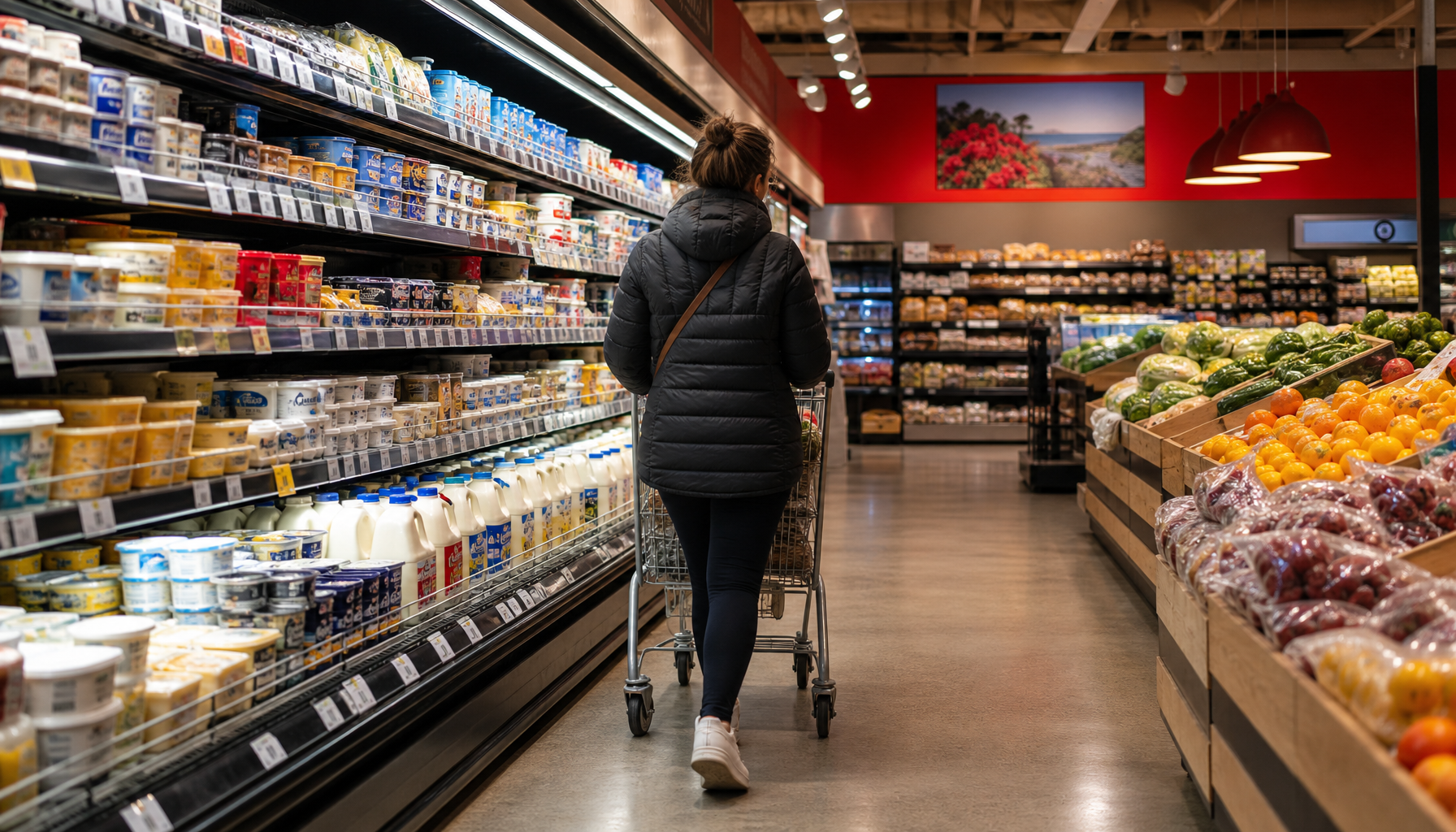
AI illustration of a New Zealand supermarket aisle, used here to illustrate the April 2026 Stats NZ food price data showing annual food inflation at its softest since February 2025.

The data underscores how past regulatory changes have locked in higher baseline costs for New Zealand families. With fuel and fertiliser price shocks still working through the supply chain, further upward pressure on food inflation appears likely in the second half of 2026.