
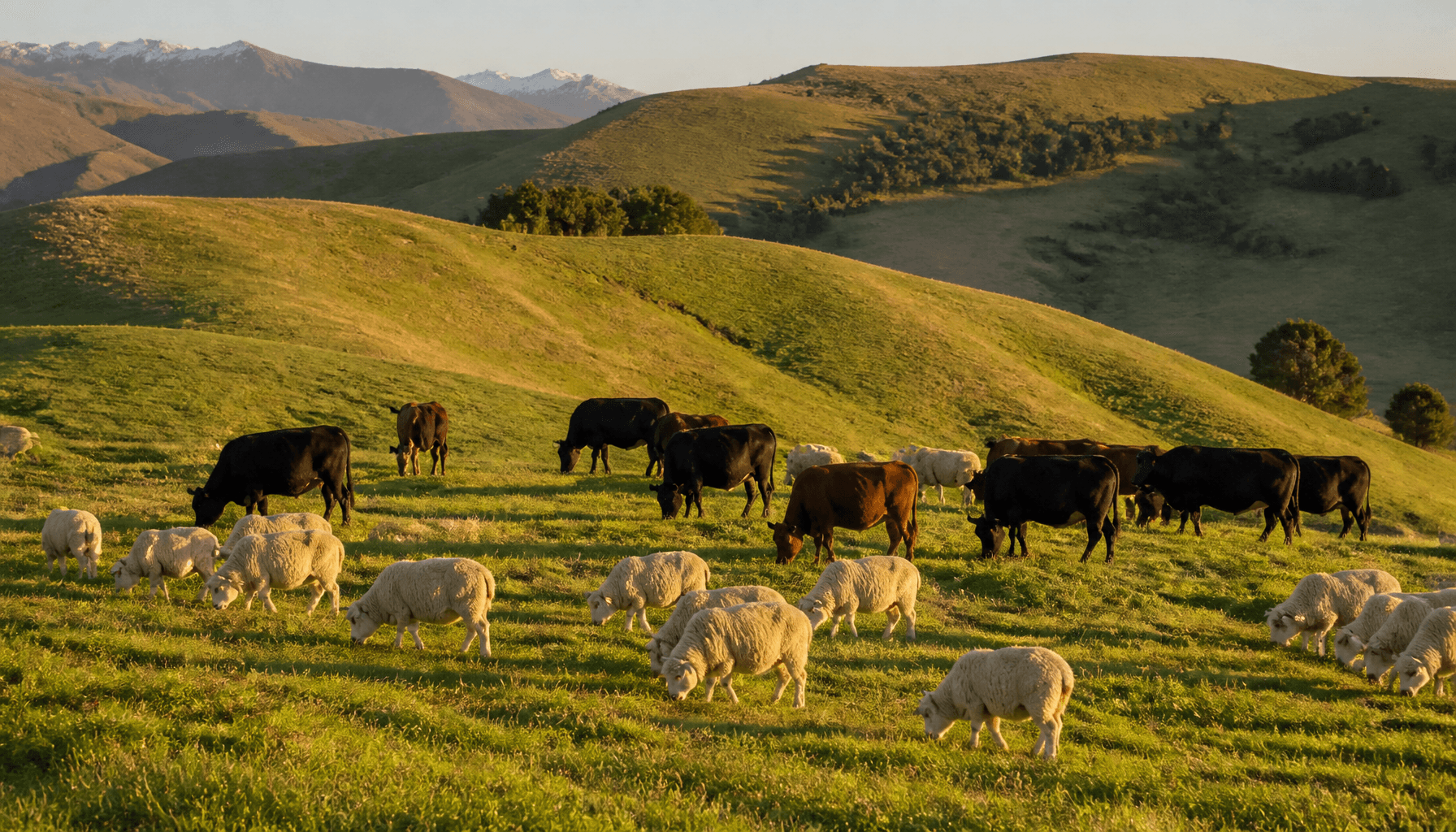
New Zealand’s beef herd has risen for a third straight year to 3.96 million head, matching a recent decade high, while the sheep flock contracted again to 22.78 million, according to Beef + Lamb New Zealand’s stock number survey for the year ended 30 June 2026.
Beef cattle numbers rose 3.3 percent over the year. Sheep numbers fell an estimated 2 percent. The survey blends Stats NZ Agricultural Production Statistics with estimates from about 500 commercial sheep and beef farms, giving an earlier farm-facing read than the full official series alone.
The split is clear on both islands. North Island sheep fell 3 percent to 11.14 million head. South Island sheep fell 1.1 percent to 11.64 million. North Island beef rose 3.2 percent to 2.71 million. South Island beef rose 3.6 percent to 1.25 million.
B+LNZ chair Kate Acland linked the cattle rebuild to strong market signals. Farmers expanded trading and finishing stock where feed and prices allowed. Sheep kept shrinking even in a favourable price year, underscoring longer land-use and relative-return pressures.
The Ministry for Primary Industries’ June 2026 Situation and Outlook for Primary Industries forecast meat and wool export revenue up 14 percent to $14.1 billion in 2025–26. Sheep and beef farm profit before tax was forecast to surge 96 percent as higher revenue outran cost inflation. Whole-of-sector food and fibre exports were pencilled at a record $64.3 billion.
The Meat Industry Association reported New Zealand red meat exports worth $13.2 billion in the year to 30 June 2026, up 21 percent on 2024/25. June alone reached a record $1.37 billion for that month, up 50 percent year on year, with higher volumes and stronger global prices.
Sheep flock still contracting
Nationwide breeding ewe numbers fell 1.9 percent. Hoggets fell 4.5 percent. Northland–Waikato–Bay of Plenty recorded the sharpest regional sheep drop at 6.3 percent. Taranaki–Manawatū fell 2.5 percent and the East Coast 1.6 percent. Marlborough–Canterbury was relatively stable, down 0.5 percent. Southland fell 2.4 percent and Otago 0.8 percent.
Acland said the next lamb crop is still expected to hold up if spring conditions cooperate.
Despite fewer sheep, the lamb crop is forecast to be broadly stable at 19.75 million head, down just 0.3%, supported by an estimated ewe lambing percentage of 132.3%.
Final lamb numbers remain highly sensitive to spring weather. A soft lambing season would tighten sheepmeat supply further into 2026–27.
Longer history is starker. Total sheep numbers have fallen 46 percent since 2000–01, from 42.26 million head. Stats NZ’s Agricultural Production Statistics for the year to June 2025 already showed sheep at 23.3 million, down 1 percent on 2024, before the latest B+LNZ estimate of 22.78 million.