Forward Report Details Effective Tax Rate Gap Between Wealthy and Middle Earners
Political economist Tayla Forward's 2026 report finds New Zealand's very wealthy face an 8.1 percent effective tax rate on comprehensive economic income from 2021 to 2024, compared with 17.4 percent for median-wealth adults.
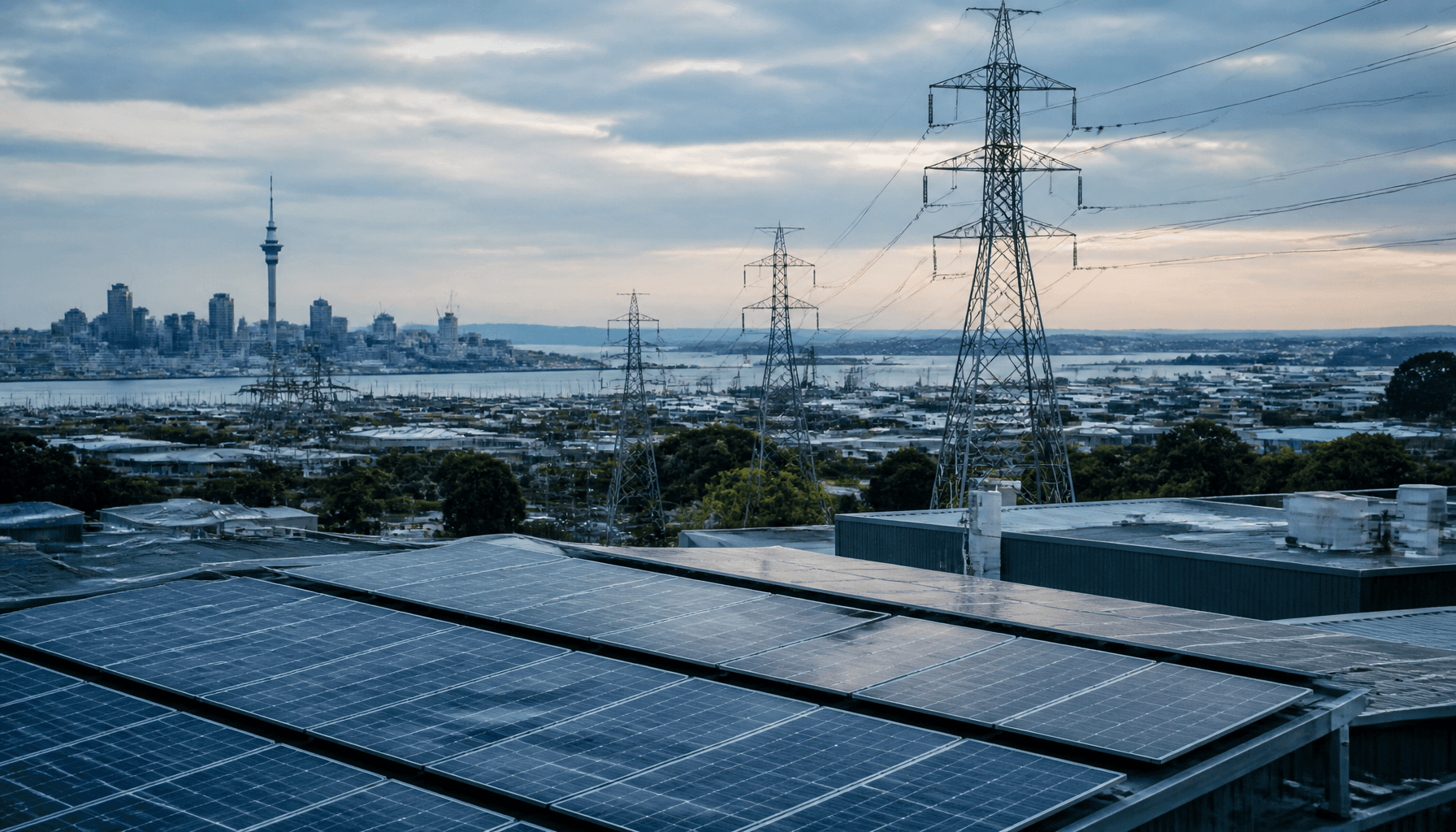
An Auckland Council-commissioned report estimates that integrated energy and spatial planning could deliver up to $17 billion in avoided costs over the next decade. The finding arrives as the supercity grapples with $15.5 billion in net debt and structural decline in domestic natural gas supplies.
New Zealand's net core Crown debt stood at 42.3 percent of GDP as at 30 September 2026, well below Japan's near 200 percent ratio, yet heavy offshore ownership makes fiscal credibility essential to avoid rollover risks.
Delivereasy paid more than $4 million in tax on $118 million revenue over four years. Portier New Zealand Limited, the Uber Eats operator, paid $945,000 in net income tax expenses on more than $1.16 billion revenue over the same period.
Political economist Tayla Forward's 2026 report finds New Zealand's very wealthy face an 8.1 percent effective tax rate on comprehensive economic income from 2021 to 2024, compared with 17.4 percent for median-wealth adults.
The analysis updates the 2023 Inland Revenue High-Wealth Individuals Research Project. That earlier study examined 311 families with median net worth of $106 million. It established the methodology using tax data, public records and surveys.
How the gap opens up
High-wealth households derive most economic income from untaxed capital gains, trusts and company structures. Wage earners pay tax almost entirely through PAYE on salaries. Inland Revenue data showed high-wealth families received only 17 percent of economic income from directly taxable sources.
The report documents sharp wealth concentration. The top 10 percent hold 68 percent of net private wealth. The bottom 50 percent hold 3.5 percent. Economist Thomas Piketty endorsed the findings.
Forward's report finds New Zealand's wealthiest pay an effective tax rate of 8.1% on comprehensive economic income, against 17.4% for median earners.
If the top 1 percent paid tax on economic income at middle rates, the Crown would collect an extra $7 billion annually, the report estimates.
The revenue backdrop
New Zealand collected $119.4 billion in tax revenue in 2025-26, up 2.5 percent from the prior year. Median wage and salary income reached $61,958 for the year ended March 2026.
A 1News Vote Compass survey of 186,475 respondents found 62 percent support higher taxes on the wealthy. Support stood at 53 percent among those earning over $100,000.
If the top 1 percent paid tax on economic income at middle rates, the Crown would collect an extra $7 billion annually, the report estimates.
Policy mechanics and the election backdrop
The Green Party proposes a 2.5 percent wealth tax on net assets above $10 million, excluding the family home. It projects $3.7 billion to $4.1 billion in annual revenue by 2027-2030.
Treasury fiscal forecasts assume current tax settings. Any base-broadening measures would affect OBEGAL and debt tracks. National and ACT have warned that wealth taxes risk capital flight and added complexity.
The report states that raising statutory income tax rates alone will not close the gap. High-wealth individuals can shift income across entity types in ways wage earners cannot, the report finds, a structural feature that any party seeking to close the revenue gap will need to confront in post-election negotiations over the tax and fiscal settings for the next Parliament.