Expert panel clears Genesis Foxton solar under Fast-track
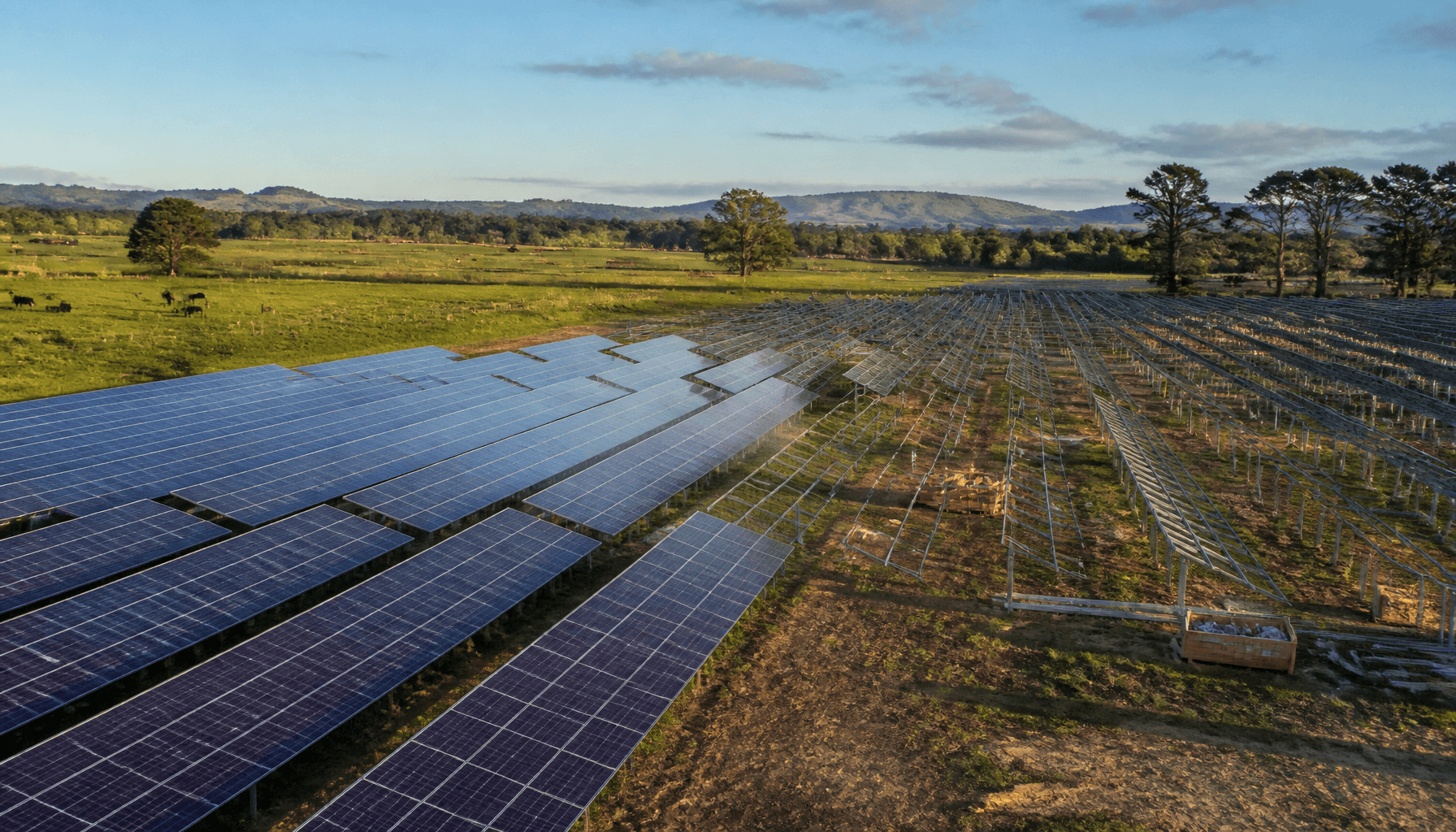
An independent expert panel has granted Fast-track approvals for Genesis Energy’s 220 MWp Foxton Solar Farm, the 32nd project and eighth renewable cleared under the permanent regime.
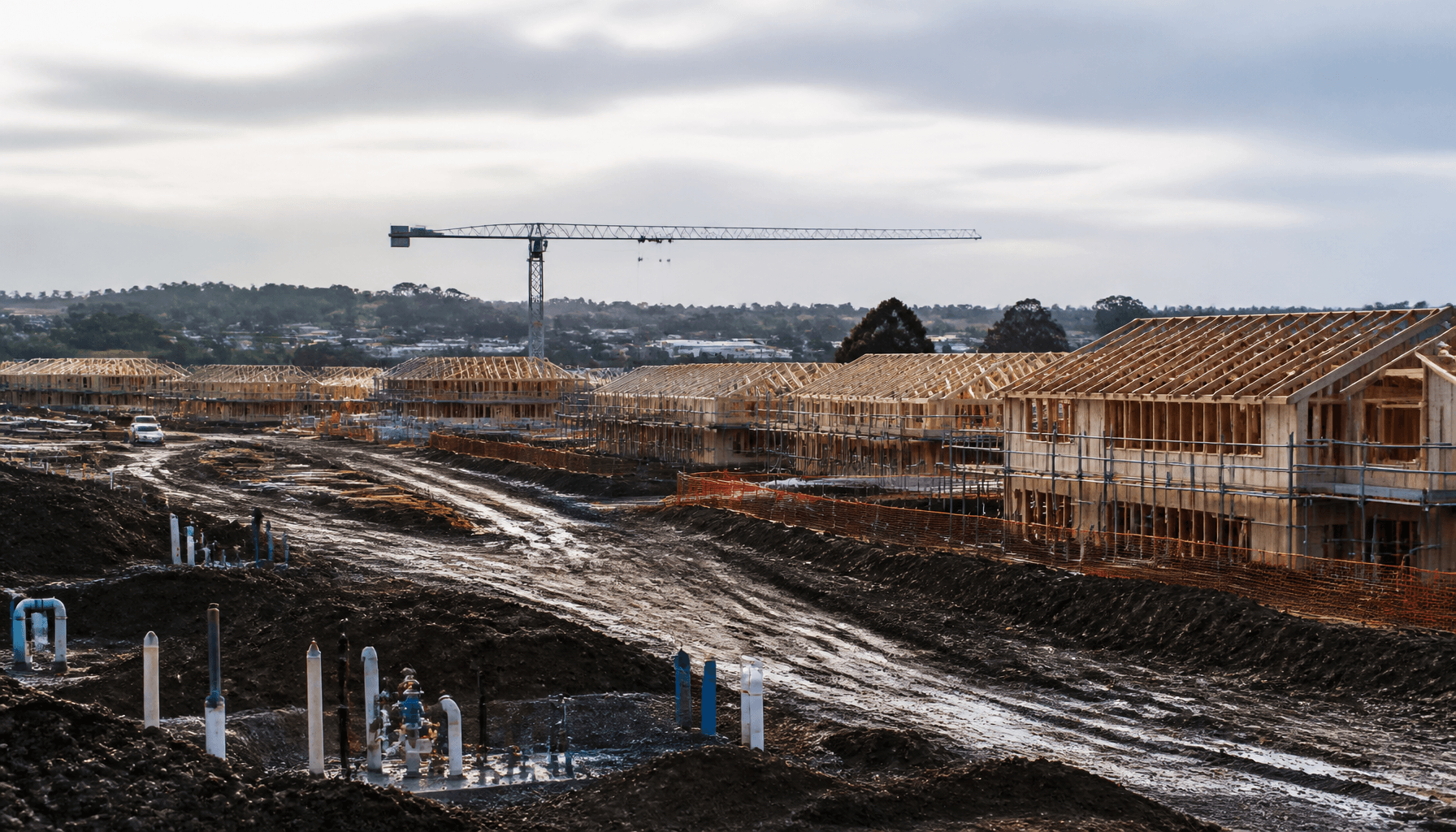
RMA Reform Minister Chris Bishop has opened a short public consultation on six clusters of Hamilton multi-unit housing rules after an investigation found some may raise development cost and complexity.
The Government will amend the Local Government Act 2002 so councils can update Development Contribution policies after Fast-track applications, recovering growth infrastructure costs from future out-of-sequence and cross-boundary projects as an interim bridge to Development Levies from 2029.
Labour productivity in New Zealand civil construction fell 6% between 2020 and 2024, Newsroom reported from Te Waihanga data, erasing most of two decades of prior gains as a multi-hundred-billion infrastructure pipeline looms.
An independent expert panel has granted Fast-track approvals for Genesis Energy’s Foxton Solar Farm, subject to conditions. The 14 August 2026 decision makes the Horowhenua project the 32nd overall approval and the eighth renewable-energy project cleared under the Fast-track Approvals Act 2024.
Genesis lodged the application in February 2026. The panel process ran about three and a half months from appointment to final decision. Approvals cover Resource Management Act resource consents, a Wildlife Act approval, and an archaeological authority under the Heritage New Zealand Pouhere Taonga Act 2014.
The panel comprised DJ Parker as chairperson, with R Fowler, J Hodges and T Kapea. Appeals to the High Court are limited to questions of law and must be filed within 20 working days of publication, according to the Fast-track decision page.
Ministers put nameplate capacity at about 220 MWp. They project annual output of about 345 GWh — enough for roughly 47,000 homes. Infrastructure Minister Chris Bishop said reliable renewable generation is critical to economic growth and regional resilience.
Foxton Solar Farm — headline parameters
Capacity
220 MWp
Annual output
345 GWh
Homes equiv.
~47,000
Construction jobs
~100
Panel granted approvals on 14 August 2026; BESS component was withdrawn before decision.
Source: Ministerial figures via government release; Fast-track.govt.nz decision 14 Aug 2026
Government figures state new renewable projects approved through Fast-track will add more than 990 MW of generation capacity. Ministers frame that as more than five per cent of current national capacity and enough for about 322,000 households a year. Days earlier, Lodestone’s Haldon Solar Farm near Twizel received panel approval on 10 August 2026 as the first solar Fast-track and the 29th project overall, when cumulative renewable Fast-track capacity was put above 770 MW.
Cumulative Fast-track renewable capacity cited by ministers
Haldon decision preceded Foxton by four days; figures are ministerial aggregates of approved new renewable capacity.
Source: Government releases on Haldon and Foxton Solar Fast-track approvals
Genesis pipeline after FRV exit
Foxton advances with Genesis as the named developer after Genesis and FRV Australia ended their New Zealand solar joint venture in October 2025. That JV had delivered Lauriston in Canterbury — about 63 MWp, commissioned around May 2025 and then described as the country’s largest solar farm, with output up to about 100 GWh a year.
Genesis’s wider solar book includes Edgecumbe in the Bay of Plenty (about 28 MW plus battery storage) and Leeston in Canterbury (about 52 MW in industry summaries). Genesis’s generation projects page states Foxton construction is set to start in 2027 and is forecast to take about 18 months. Industry profiles put capital cost around NZ$300 million and target operations in 2028. Site-area figures still differ across public materials, with an early Schedule 2 listing at about 400 hectares and later profiles nearer 200 hectares near Foxton.
The substantive application originally included a battery energy storage system of up to 100 MW / 200 MWh. That storage leg was withdrawn before the panel decision. The approved project is solar only. Genesis Energy Limited trades on the NZX Main Board as GNE. Recent trading near NZ$2.65 sat close to a 52-week high of NZ$2.67 and well above a NZ$2.13 low, per Yahoo Finance chart data.
Genesis Energy (GNE.NZ) — recent share snapshot
Last price
NZ$2.65
52-week high
NZ$2.67
52-week low
NZ$2.13
Price context only; not an investment recommendation.
Source: Yahoo Finance Chart API, GNE.NZ
Record renewables versus security margins
Energy Minister Simon Watts has tied Fast-track generation to the goal of doubling renewable generation by 2050 and to rising electricity demand from electrification. A government release stated renewables were a record 96.5 per cent of generation in the last three months of last year. MBIE’s New Zealand Energy Quarterly summary for December 2025 reported renewables at a record 96.4 per cent in that quarter — a 0.1 percentage-point difference that should be kept distinct.
MBIE’s Electricity Demand and Generation Scenarios 2024 project total demand growth of 35.3 per cent to 82.0 per cent by 2050, reaching 62.1 TWh in the Reference case. Peak demand rises to between 9.1 GW and 12.5 GW. Instantaneous solar remains a small slice of the live stack; utility-scale farms of Foxton’s scale are still material additions to a young solar fleet.
The consented pipeline far exceeds what will be built. Electricity Authority data to 31 August 2025 counted 289 projects and 44.29 GW of potential capacity, with intermittent renewables about 82 per cent. Newsroom reporting on the dashboard put solar alone near 20 GW of planned capacity. A MinterEllison note on 2026 “expected commissioning” figures showed multi-gigawatt headlines compressing to under 1 GW when limited to actively pursued or committed projects.
Transpower’s 2026 Security of Supply Assessment messaging is more cautionary. Coverage of the assessment warned winter energy margins risk falling below standards around 2031 if projects slip, gas supply weakens, thermal plant ages out, or demand accelerates. The System Operator has called for earlier commitment and faster commissioning, not only consented options on paper. Fast-track shortens the consenting critical path; grid connection, EPC, financing and condition compliance still sit between approval and first electrons.
Land use, jobs and the path to 2028
Ministers say the farm will occupy land now used for livestock and dairy farming and will stop nitrogen leaching equivalent to about 25,700 kg a year. Regional Development Minister Shane Jones said the project would provide around 100 construction jobs and contribute to the local economy. Those co-benefits sit beside genuine land-use change in Horowhenua: landscape, ecology and the local pastoral base all shift when panels replace intensive stock.
Wildlife and heritage authorities sit alongside RMA consents for that reason. Expert panels — not ministers — decide substantive Fast-track applications under the permanent 2024 Act, which took effect from December 2024. Final legislation extended panel decision windows toward 90 days after select-committee changes, retaining a one-stop multi-approval model intended to compress multi-year ordinary pathways.
Commerce Commission price-quality regulation of lines and transmission affects connection costs and locational signals. The Electricity Authority oversees market rules and pipeline transparency. Neither agency “approves” merchant generation. Foxton’s economics remain a Genesis investment decision inside wholesale price formation, hedge markets and build-cost reality.
For households and firms, one 345 GWh farm will not reset retail bills. Cumulative Fast-track renewable clearances above 990 MW can still pull forward final investment decisions if developers treat panel approvals as bankable. That earlier-commitment behaviour is what Transpower says the system needs before a possible 2031 security-standard breach. Construction from 2027 and commissioning into 2028 will test whether compressed consenting actually shortens the path to delivered megawatt-hours in the lower North Island.