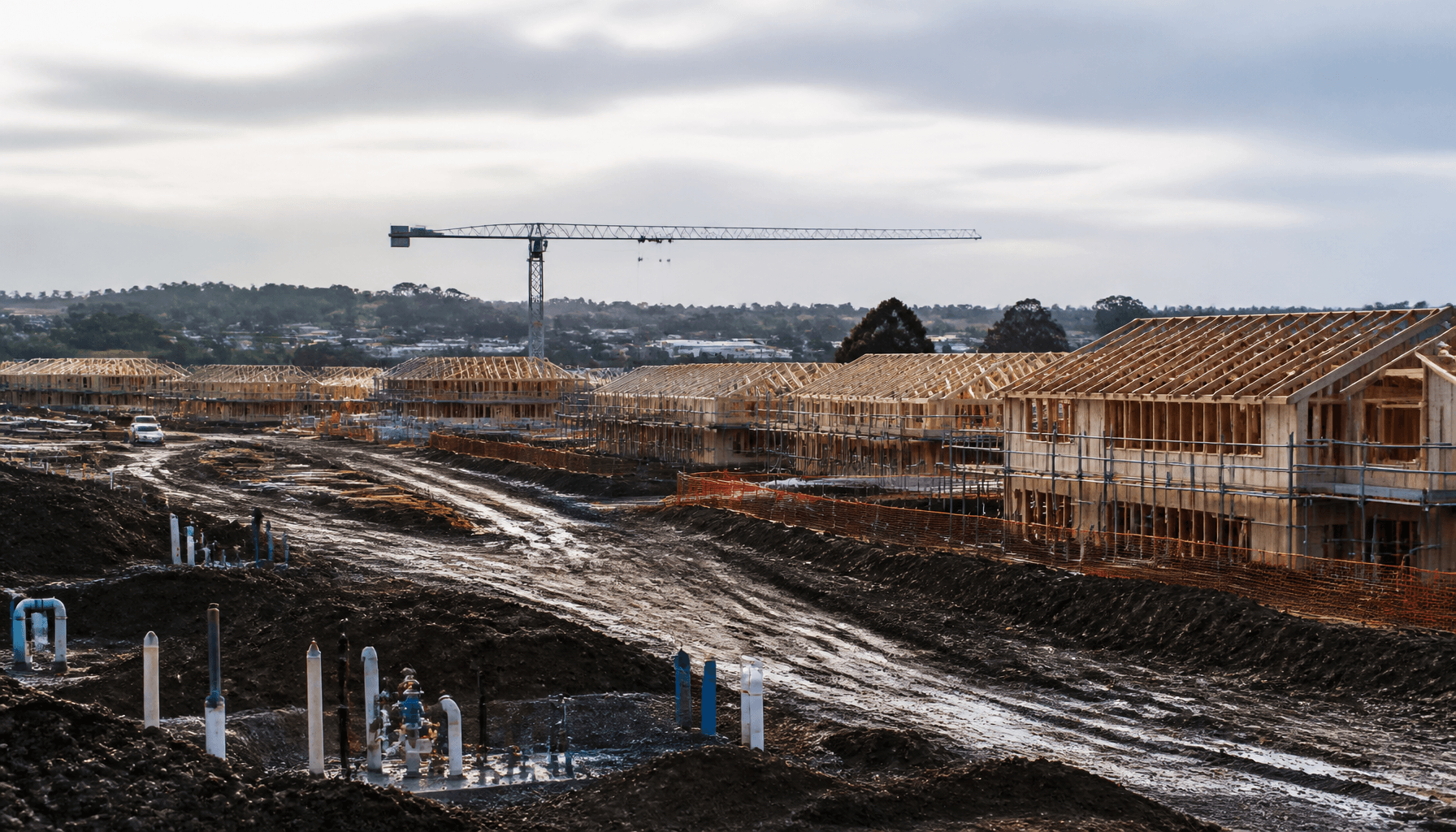
The New Zealand Government has agreed to grant Golden Bay Cement up to $60 million to keep its Whangārei plant operating and maintain domestic clinker production until at least 31 December 2040.
The deal requires Golden Bay Cement, a Fletcher Building subsidiary, to commit at least $150 million of its own funds for investments that support cost-effective production. The company must also preserve jobs and meet enhanced reporting and auditing standards. The Government can claw back funds for non-compliance.
Golden Bay Cement operates New Zealand’s only fully integrated cement plant at Portland near Whangārei. It supplies nearly 60 percent of cement consumed domestically. Cement has no practical substitutes for homes, hospitals, schools, roads and infrastructure.
An independent open-book financial assessment found binding constraints on viability driven primarily by emissions costs under the Emissions Trading Scheme. ETS industrial allocation baselines for cement tightened from 0.9615 in 2023 to 0.8273 in 2025. This reduced free allocation and raised net carbon costs relative to imports.
Carbon Costs Drove Closure Risk
Fletcher Building CEO Andrew Reding stated that without support, rising carbon costs would likely have prompted closure and a shift to an import-only model from 2030.
“Without Government support, increasing costs, including carbon emission costs that our competitors importing cement from overseas do not currently incur at the same level, would likely have required us to close the plant and move to an import-only model from 2030.” — Andrew Reding, Fletcher Building CEO
Fletcher Building warned in January 2026 that the ETS allocation system, based on 2006 emissions intensity data, was penalising the company for cutting emissions. The grant addresses the carbon cost disadvantage Golden Bay Cement faces relative to imported cement under the ETS.
Regional and Supply-Chain Significance
The plant directly employs more than 150 full-time equivalents plus 120 contractors. Total district employment footprint exceeds 600 FTEs. It supports $124.7 million in annual expenditure and $66.9 million in GDP in the Whangārei district.
The plant is one of Northland’s largest private employers and anchors local supply chains. Domestic cement production reduces exposure to shipping disruption, supply shocks and price volatility. The arrangement also preserves tyre-derived fuel processing that handles over 50 percent of New Zealand’s waste tyres.
Conditions and Precedent Framing
Officials described the intervention as an exceptional case that meets a high bar for taxpayer support without undermining ETS integrity. The agreement limits precedent risk through strict conditions.
Previous government grants to the same facility totalled $29.6 million for tyre-to-fuel projects in 2017 and 2021. The current package follows May Cabinet consideration and rigorous supply-chain analysis.
The deal follows Cabinet consideration in May and negotiations meeting strict conditions within the funding envelope. Golden Bay Cement has invested in modernisation, alternative fuels including hard-to-recycle plastics, and aims for coal-free production by 2030.
Broader Fiscal and ETS Context
The grant is described as a specific, one-time response to an exceptional set of circumstances and does not create a precedent for wider support. The arrangement secures private capital commitments and regional jobs.
Treasury modelling released in June 2026 estimates up to $5 billion needed in offshore credit purchases to meet New Zealand’s 2030 Paris targets, reflecting an 84 million tonne domestic reduction shortfall. The cement grant adds to that broader fiscal exposure from ETS design tensions.
Fletcher Building’s cement volumes were near flat in Q2 FY26, with meaningful recovery not expected until calendar 2027 amid broader economic conditions. Strict clawback provisions and the 2040 production mandate aim to protect public funds. Long-term industrial policy questions remain around repeated supports for emissions-intensive sectors facing import competition.
No response from opposition parties had been received by publication time.