Government Completes $21.6 Million Diesel Storage Upgrade at Marsden Point
The Government has finished recommissioning 93 million litres of additional diesel storage capacity at Marsden Point in Northland, using up to $21.6 million from the Regional Infrastructure Fund to create a nine-day national diesel buffer.
Auckland’s potential $5 billion Fast-track infrastructure exposure and 16,270 wrongly suspended Winter Energy Payments have become the first real-world stress tests of the Regulatory Standards Act 2025.
Cabinet’s Economic Policy Committee has formally authorised public consultation on a prudential levy to shift Reserve Bank supervision costs onto banks, insurers and market infrastructure operators from 2027/28.
Cabinet has agreed in principle to three shifts in public performance reporting sought by the Finance and Expenditure Committee, while parking detailed design and costings until 2027.
The Government has finished recommissioning 93 million litres of additional diesel storage capacity at Marsden Point in Northland, using up to $21.6 million from the Regional Infrastructure Fund to create a nine-day national diesel buffer.
Targeted Resilience Measure
The recommissioning work by Channel Infrastructure NZ is now complete. The tanks will store a government-procured diesel reserve amid ongoing Middle East supply pressures.
Finance Minister Nicola Willis welcomed the rapid delivery. The project was contracted in April 2026 and delivered on an accelerated schedule.
"A significant amount of work by a large number of people has gone into getting these tanks ready in a short timeframe so they can store the diesel when it arrives in New Zealand." — Finance Minister Nicola Willis
Two shipments will fill the new capacity. The first arrives at Marsden Point in mid-June 2026. The second follows in July. Together they equal about nine days of average national diesel consumption.
Current Stock Levels
MBIE data as at 31 May 2026 showed national fuel stocks at 55.6 days for petrol, 40.3 days for diesel and 54.6 days for jet fuel, including volumes on water. Diesel remains the tightest category.
Daily diesel consumption runs near 12 million litres, according to Associate Energy Minister Shane Jones, who told RNZ that New Zealand consumes 24 million litres of liquid fuel a day with nearly half being diesel. The new storage adds roughly 30 percent to in-service diesel capacity at the site, which already holds over 290 million litres.
The Minimum Stockholding Obligation regime, in force since January 2025, requires importers to hold 21 days of diesel cover. This additional reserve sits on top of that baseline.
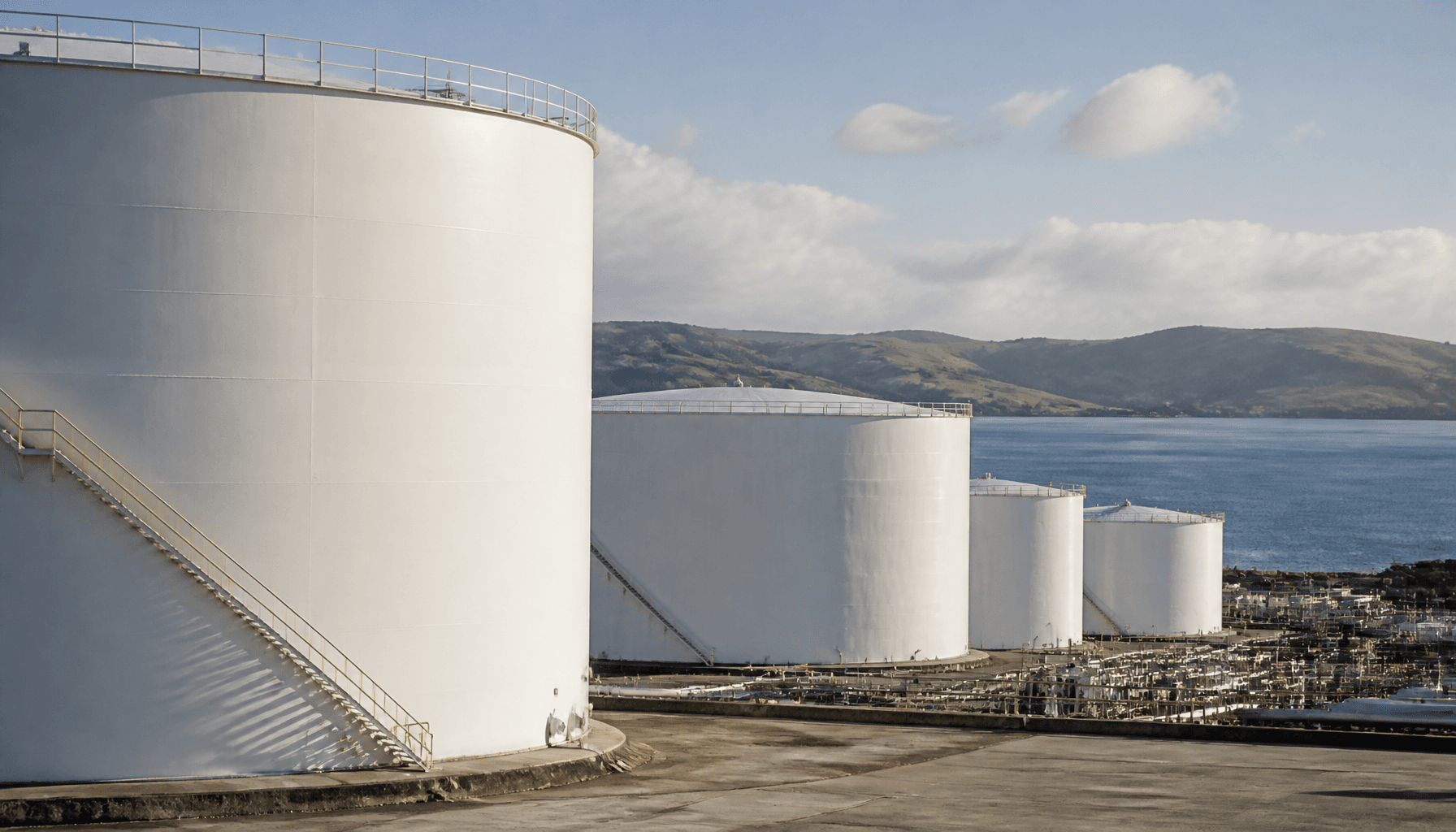
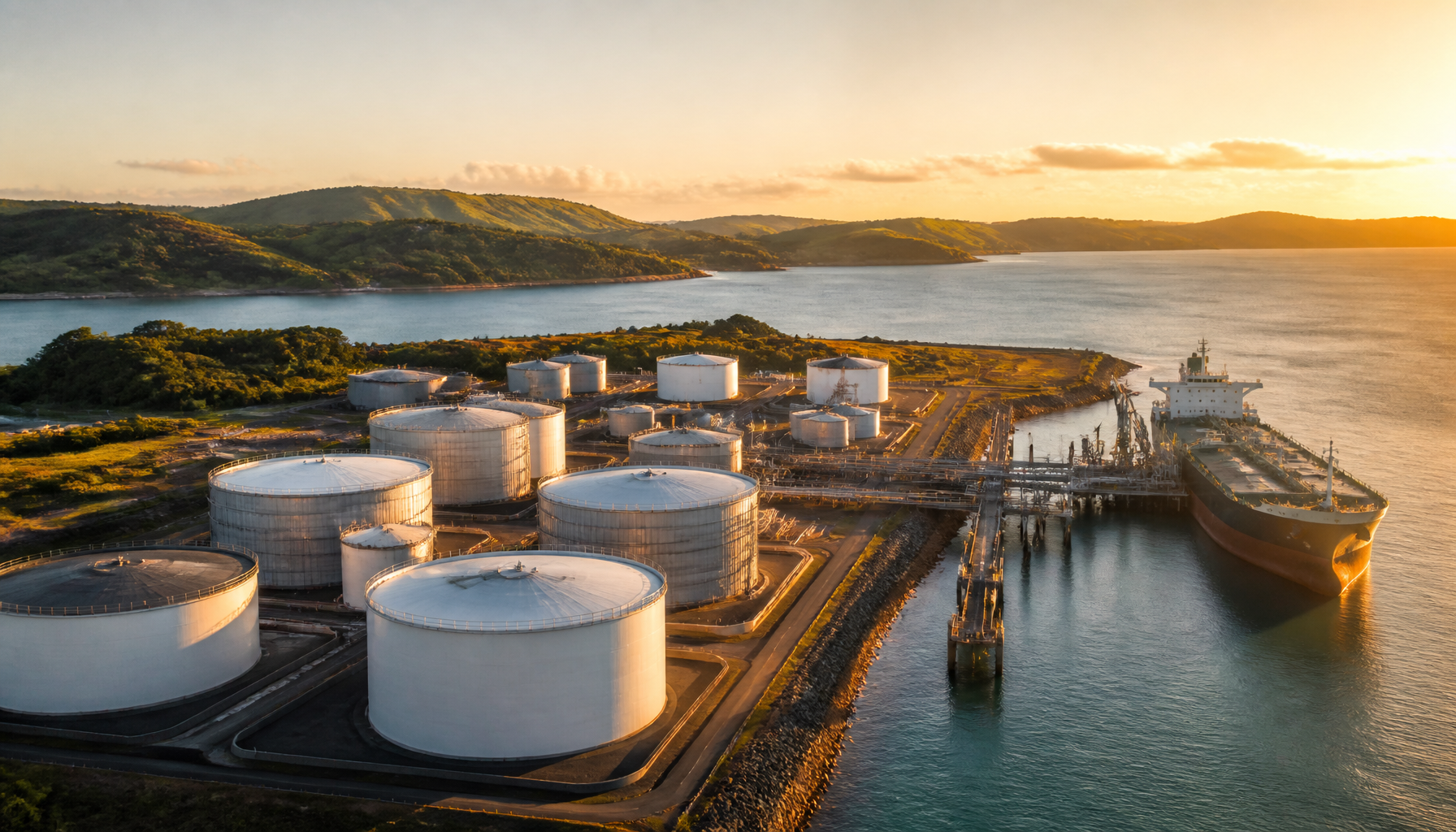
AI illustration of a coastal fuel import terminal with recommissioned diesel storage tanks, used here to illustrate the Marsden Point capacity upgrade funded by the Regional Infrastructure Fund.
Funding and Contract Details
The $21.6 million allocation came from the $1.2 billion Regional Infrastructure Fund. The storage contract with Channel Infrastructure runs until 31 December 2027.
Associate Energy Minister Shane Jones described the action as prudent. The Government hopes the reserve stays unused but views it as essential insurance against short-term disruptions.
"While we hope we never have to use this reserve, the Government has acted prudently and decisively to ensure that should there be an unforeseen issue with our fuel supply, particularly diesel, New Zealand has enough to keep the economy running in the short-term." — Associate Energy Minister Shane Jones
Jones added: "As long as the Middle East conflict continues, and for some time after, fuel supply and prices will be impacted. The Government is working to ensure the situation remains as stable as possible here."
The project forms part of the National Fuel Response Plan 2026, currently at Phase 1 (Watchful). It complements alignment of fuel specifications with Australia and the existing importer obligations.
Opposition Response
Labour leader Chris Hipkins has contested the Government's framing of the project. When the storage deal was unveiled, Hipkins argued the country could already have had this cushion in place, saying the Government "could have had 70 million additional litres of diesel storage in place now, if they hadn't cancelled that when they became the government," a reference to a prior diesel reserve plan that was shelved in a July 2024 Cabinet paper. The Government's position is that the current arrangement is signed, contracted and already at sea.
Fiscal Context
This draw on the Regional Infrastructure Fund represents a narrow, time-bound use for energy security rather than broad new spending. The outlay is small relative to the three-year programme total and draws on funds already approved in principle.
The measure supports transport, agriculture, construction and freight sectors that depend on reliable diesel supply. It provides defined additional cover at New Zealand's primary import terminal through the end of 2027.
No immediate impact on Crown debt or OBEGAL has been quantified. The approach keeps the fiscal response targeted and temporary. With the second shipment due in July and the storage contract running to 31 December 2027, the Government's diesel buffer will remain in place through the period of greatest geopolitical uncertainty.