Fast-track panel clears Ngāi Tahu open-ocean salmon farm off Rakiura
An independent Fast-track panel has approved Ngāi Tahu Seafood’s Hananui open-ocean king salmon farm off Rakiura, the first aquaculture consent under the 2024 Act and a material step toward the Government’s $3 billion aquaculture revenue target by 2035.
Auckland’s potential $5 billion Fast-track infrastructure exposure and 16,270 wrongly suspended Winter Energy Payments have become the first real-world stress tests of the Regulatory Standards Act 2025.
Cabinet’s Economic Policy Committee has formally authorised public consultation on a prudential levy to shift Reserve Bank supervision costs onto banks, insurers and market infrastructure operators from 2027/28.
Cabinet has agreed in principle to three shifts in public performance reporting sought by the Finance and Expenditure Committee, while parking detailed design and costings until 2027.
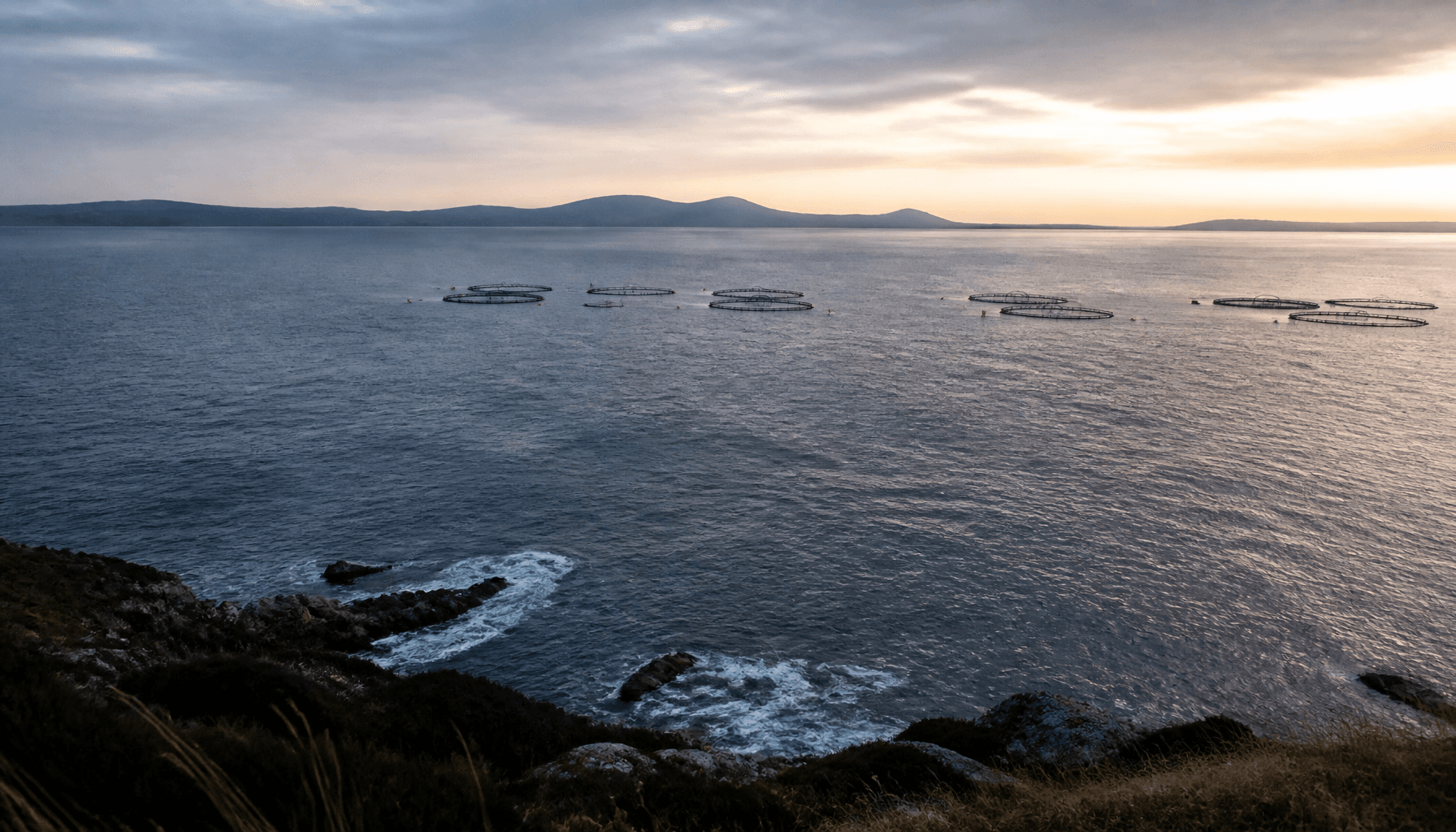
An independent expert panel has granted Fast-track approvals, with conditions, for Ngāi Tahu Seafood Resources Limited’s Hananui Aquaculture Project off Rakiura/Stewart Island.
The decision, dated 10 August 2026, is the first aquaculture approval under the Fast-track Approvals Act 2024. Infrastructure Minister Chris Bishop and Oceans and Fisheries Minister Shane Jones said it was the 31st project cleared by expert panels under the regime.
At full build-out the farm is projected to produce up to 14,400 tonnes of king salmon a year. Ministers put annual sales at more than $310 million and regional jobs at 415 to 480. The panel’s economic assessment cites about $500 million in annual gross revenue at full scale and the same ongoing employment band.
Jones said full Hananui output would be almost as large as all New Zealand farmed salmon production in 2025–26. That scale would re-weight Southland’s share of national supply and deepen the Bluff processing and port cluster.
The project sits in coastal marine space two to six kilometres off the north-eastern Rakiura coast. The consented layout covers about 1,285 hectares, with four separate marine farms. Farm structures occupy a small share of the wider site.
Development is staged. Stage 1 places one 10-pen block at each of four farm sites, with total feed discharge capped at 15,000 tonnes a year. Stage 2 adds a second block at each site and lifts the feed cap to 25,000 tonnes a year. Progression to Stage 2 depends on monitoring results over at least two full production cycles at Stage 1, under adaptive management thresholds.
Hananui at a glance
Full harvest
14,400 t/yr
Ongoing jobs
415–480
Full-scale revenue
~$500m
Regional VA (ops)
$781–888m
Full-scale figures are applicant and panel projections; Stage 2 is contingent on monitoring.
Source: Fast-track panel decision 10 Aug 2026; ministerial statements
The Fast-track application was lodged on 26 November 2025 and deemed complete on 17 December 2025. The panel — Bal Matheson KC, Dr Ngaire Phillips and Stephen Daysh — was appointed in March 2026. Approvals cover Resource Management Act, Wildlife Act and Fisheries Act matters, all subject to detailed conditions on benthic and water-column monitoring, seabirds, marine mammals, biosecurity and management plans.
Seven-year consenting arc
Hananui closes a long consenting history. Ngāi Tahu applied under the RMA in 2019, later withdrew, then sought consent under the COVID-19 Recovery (Fast-track Consenting) Act. An expert panel declined that application in August 2023, finding the proposal inconsistent with key directions in the New Zealand Coastal Policy Statement and the Southland Regional Coastal Plan despite accepting large cultural, economic and social benefits.
Bishop said the project had taken about seven years to progress. The 2024 Fast-track statute listed Hananui and applied a purpose test that weights regional and national benefits more heavily. Environmental groups had earlier labelled previously declined proposals on the Fast-track list as “zombie projects.” The new decision does not erase biophysical risks; it manages them through staging and adaptive gates.
Environment Southland had publicly expressed disappointment at the 2023 decline. Great South, the Southland regional development agency, supported the Fast-track case on GDP, jobs and export grounds while noting more conservative internal job and revenue estimates on older data.
$3 billion aquaculture pathway
The approval lands inside the Government’s Aquaculture Development Plan 2025–2030. That plan targets $3 billion in annual sector revenue by 2035. Open-ocean farming is tagged with potential of up to about $1.4 billion of that total. Other pathways are lifting value from existing consented space, unlocking Māori commercial aquaculture and settlement areas under the Māori Commercial Aquaculture Claims Settlement Act 2004, and innovation.
The plan recorded 2023 sector revenue of about $763 million and more than 3,000 jobs. King salmon harvest exceeded 14,500 tonnes in 2023. Jones has previously highlighted double-digit growth in aquaculture exports as the sector builds toward the 2035 goal.
Bishop linked the approval to wider planning reforms intended to make Aquaculture Settlement Areas easier for iwi to use. Ngāi Tahu Seafood is a wholly owned commercial subsidiary within the Ngāi Tahu Holdings group. The panel treated cultural benefits identified by mana whenua as regionally significant alongside the economic case.
King salmon harvest scale comparison
Hananui full output would be transformative against current listed-producer and national baselines.
Source: Fast-track decision; NZ King Salmon guidance; NZ Aquaculture Development Plan 2025–2030
Peer producers and market context
Listed peer New Zealand King Salmon (NZX: NZK) has narrowed FY26 whole gilled-and-gutted harvest guidance to about 5,950–6,050 tonnes, with FY27 around 7,200–7,600 tonnes and FY28 around 8,500–9,100 tonnes. Its Blue Endeavour open-ocean site northeast of the Marlborough Sounds is the main consented peer open-ocean project. NZK last traded near 24.5 cents, within a 52-week range of about 18.9–25.5 cents.
Sanford operates near-shore king salmon farms at Big Glory Bay on Stewart Island in the same regional processing corridor. Hananui’s preferred land base is Bluff, with alternatives considered at Halfmoon Bay and Oban. Full build-out would deepen demand for smolt, feed, marine engineering, vessels and skilled labour across Invercargill–Bluff–Rakiura.
New Zealand Trade and Enterprise materials cite a substantial export price premium for New Zealand king salmon. Global farmed-salmon price cycles, feed costs and competitor supply from Norway and Chile remain external risks that consent alone does not remove.
Conditions, capital and execution risk
The panel found regional benefits significant by a wide margin and national benefits arguable through the contribution to aquaculture growth. Operational-phase regional value-added is assessed at $781–888 million with 415–480 ongoing jobs; national value-added at $1.7–2.05 billion with 800–1,040 jobs. Establishment-phase regional value-added is put at $61–78 million and 200–260 jobs.
Applicant staging materials previously signalled Stage 1 capital expenditure in the order of $80–100 million and Stage 2 a further $50–70 million, with Stage 1 revenue in a lower band before full build-out. Consent is not a capital commitment. Smolt supply, offtake contracts, biosecurity performance and the Stage 2 monitoring trigger will determine whether projected tonnes and dollars arrive inside the 2030–35 window.
Conditions emphasise staged development, environmental monitoring and management plans, and adaptive responses rather than an unconstrained build. Appeals to the High Court on questions of law are available within the statutory window.
For Crown and Treaty settings, Hananui is a live test of whether Fast-track plus the Aquaculture Development Plan can convert open-ocean space into export receipts, regional GDP and iwi commercial returns. Southland households and firms stand to gain employment and supplier work if Stage 1 is built and performs. Taxpayers gain if the $3 billion pathway reduces the need for ad-hoc industry support later. The measurable checkpoints are Stage 1 construction, first harvest volumes, export receipts and whether monitoring clears the gate to Stage 2.