KiwiSaver Withdrawals Expose Emigration Strain and Cost-of-Living Failures
KiwiSaver recorded a 514 percent jump in partial withdrawals tied to permanent emigration in the first quarter of 2026, with roughly 2,000 people taking $77 million according to Financial Services Council figures. This surge, alongside a record $296.7 million in early hardship and first-home withdrawals in March 2026, signals that New Zealand's retirement scheme is doubling as an emergency exit…
New Zealand rural confidence stayed positive for a ninth straight quarter in August 2026, with horticulturalists overtaking sheep and beef as the most optimistic sector while investment plans stayed soft.
ASB’s Q2 2026 Regional Economic Scoreboard left Wellington joint last with Gisborne while Canterbury led on dairy cash, jobs and retail. The capital’s multi-quarter underperformance is structural: public-service consolidation, a deep housing correction and stalled population growth colliding with a national OCR still set for nationwide inflation.
MBIE’s 6 September snapshot shows 51.7 days of petrol cover on paper. Only 34.5 of those days sit onshore. Eight of nine ships still float outside the EEZ, and sequential Hormuz then Red Sea stress is already priced into $3-plus petrol.
KiwiSaver recorded a 514 percent jump in partial withdrawals tied to permanent emigration in the first quarter of 2026, with roughly 2,000 people taking $77 million according to Financial Services Council data released in Q1 2026. This surge, alongside a record $296.7 million in early hardship and first-home withdrawals in March 2026, signals that New Zealand's retirement scheme is doubling as an emergency exit…
New Zealand's net migration outflows have accelerated in recent periods, driving the sharp rise in KiwiSaver exits. Inland Revenue data show cumulative closed accounts due to permanent emigration reached 89,782 by June 2025, up from 50,110 a decade earlier. These outflows reflect the consequences of prior high immigration levels that inflated housing costs and overloaded public services, prompting both long-term residents and recent arrivals to depart.
Cost-of-living pressures compound the issue. Hardship withdrawals in the year to March 2025 hit $443.6 million, a 67.9 percent increase, according to the Financial Markets Authority KiwiSaver Annual Report 2025. Many of these cases reflect cost-of-living pressures linked to inflation and housing affordability, leaving households reliant on retirement savings for immediate needs.
The default contribution rate rise to 3.5 percent from April 2026 adds further strain on lower-balance members. Inland Revenue's KiwiSaver contribution rate guidance notes this change aims to boost inflows, yet it does little to address the underlying drivers of emigration.
KiwiSaver hardship and first-home withdrawals, year to June (2015–2025)
Hardship withdrawals have grown more than tenfold since 2015; first-home withdrawals have grown sevenfold over the same period.
Source: Inland Revenue — Statistics on KiwiSaver funds withdrawn, by amount
The trade-offs
Access rules for hardship and emigration withdrawals include statutory declarations and supervisor approval, yet these safeguards have not prevented the 514 percent partial surge. Providers must balance liquidity demands against long-term member adequacy for 3.38 million participants.
Regulatory oversight by the FMA and IRD processing carries costs that ultimately fall on members through fees, which remain at 0.7 percent of assets. This regulatory layer carries costs that fall on members, while the underlying drivers relate to immigration policy and fiscal settings.
Fiscal proposals such as New Zealand First's compulsory enrolment at birth with a $1,000 Crown contribution would expand government spending without fixing self-employed contribution gaps identified in the Retirement Commission's 2025 review. These gaps leave many outside the system entirely.
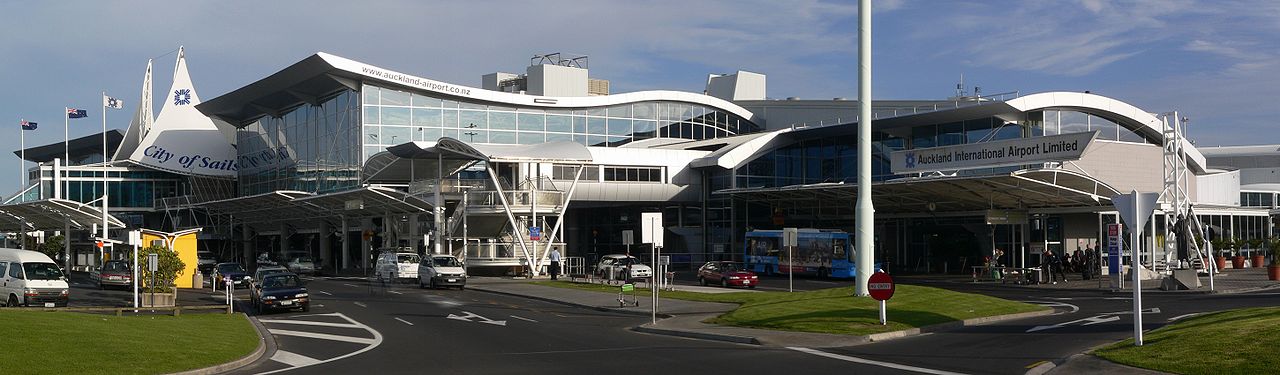
Auckland International Airport's international terminal — the departure point for the roughly 2,000 KiwiSaver members who made emigration-linked partial withdrawals totalling $77 million in Q1 2026.
Second-order effects
Rising first-home withdrawals, which reached $1.9 billion in the year to June 2025 per Inland Revenue figures, slow deposit accumulation and exert downward pressure on housing market entry for younger buyers. This dynamic hits provincial economies hardest.
Younger cohorts and recent emigrants face elevated risk of greater NZ Super reliance in retirement if balances erode further. Government modelling indicates these rate rises could deliver up to 28 percent higher retirement balances for median earners with consistent contributions, but only for consistent contributors who stay in the country.
Gender and regional disparities widen when self-employed members, who contribute at less than half the employee rate, draw down early. The Retirement Commission's 2025 Review of Retirement Income Policies flags a 25 percent average balance gap between men and women as a direct result.
Historical context
KiwiSaver closed accounts have climbed from 181,827 in June 2015 to 603,794 by June 2025, according to Inland Revenue exiting statistics. Hardship cases alone rose from 8,250 in 2015 to 58,460 in 2025.
During the 2020 pandemic, hardship withdrawals stayed flat at $111 million despite market volatility. Today's broad-based pressure across emigration, hardship and first-home categories marks a clear departure from that contained episode.
The counter-argument
Industry voices maintain that withdrawals represent only a tiny share of $143 billion in funds under management. FSC chief executive Kirk Hope stated:
So of the $143 billion funds under management in KiwiSaver, it's a very small proportion. It probably reflects the statistics around net migration.
Hope also noted the broader context of household stress:
Obviously we're in a cost-of-living crisis. People are facing a number of financial challenges. That's still only a very small proportion, and the overall funds under management in KiwiSaver continue to increase.
Contributions reached nearly $2 billion in Q1 2026, the second-highest quarter on record. Funds under management have risen 10.1 percent year on year with stable fees, suggesting scheme resilience rather than systemic breakdown.
KiwiSaver cumulative closed accounts due to permanent emigration (2015–2025)
Cumulative emigration exits have nearly doubled over the decade, accelerating sharply from 2020 onwards.
Source: Inland Revenue — Statistics on members exiting KiwiSaver
Open questions
The net effect of the April 2026 contribution uplift on cohort balances after projected gains remains to be seen in future Inland Revenue data releases.
Whether the 514 percent partial withdrawal surge persists once migration stabilises will emerge in subsequent quarterly reports.
Effectiveness of the Retirement Commission's 12 recommendations on gender and self-employed gaps will require tracking through 2027 and beyond.
Forward outlook
Treasury and Reserve Bank of New Zealand T40 series data on total managed funds will next reveal whether KiwiSaver continues to grow overall while specific cohorts draw down. Providers including Simplicity and Generate must manage liquidity under supervisor oversight as the April 2026 rate changes take full effect. Households in Auckland and provincial centres should monitor how these trends affect deposit timelines and future retirement security.