Lyttelton $821m expansion: public gearing after lease rejection — Economic News
FISCAL
Lyttelton’s $821m dual bet: seismic resilience and big-ship capacity under public gearing
Christchurch City Holdings is committing about $300 million of public capital to an $821 million Lyttelton container expansion after rejecting a DP World–rūnanga operating lease, pairing seismic resilience with a prospective bet on dual large-ship berths and design capacity near 850,000 TEU by 2031.
Auckland’s potential $5 billion Fast-track infrastructure exposure and 16,270 wrongly suspended Winter Energy Payments have become the first real-world stress tests of the Regulatory Standards Act 2025.
Cabinet’s Economic Policy Committee has formally authorised public consultation on a prudential levy to shift Reserve Bank supervision costs onto banks, insurers and market infrastructure operators from 2027/28.
Cabinet has agreed in principle to three shifts in public performance reporting sought by the Finance and Expenditure Committee, while parking detailed design and costings until 2027.
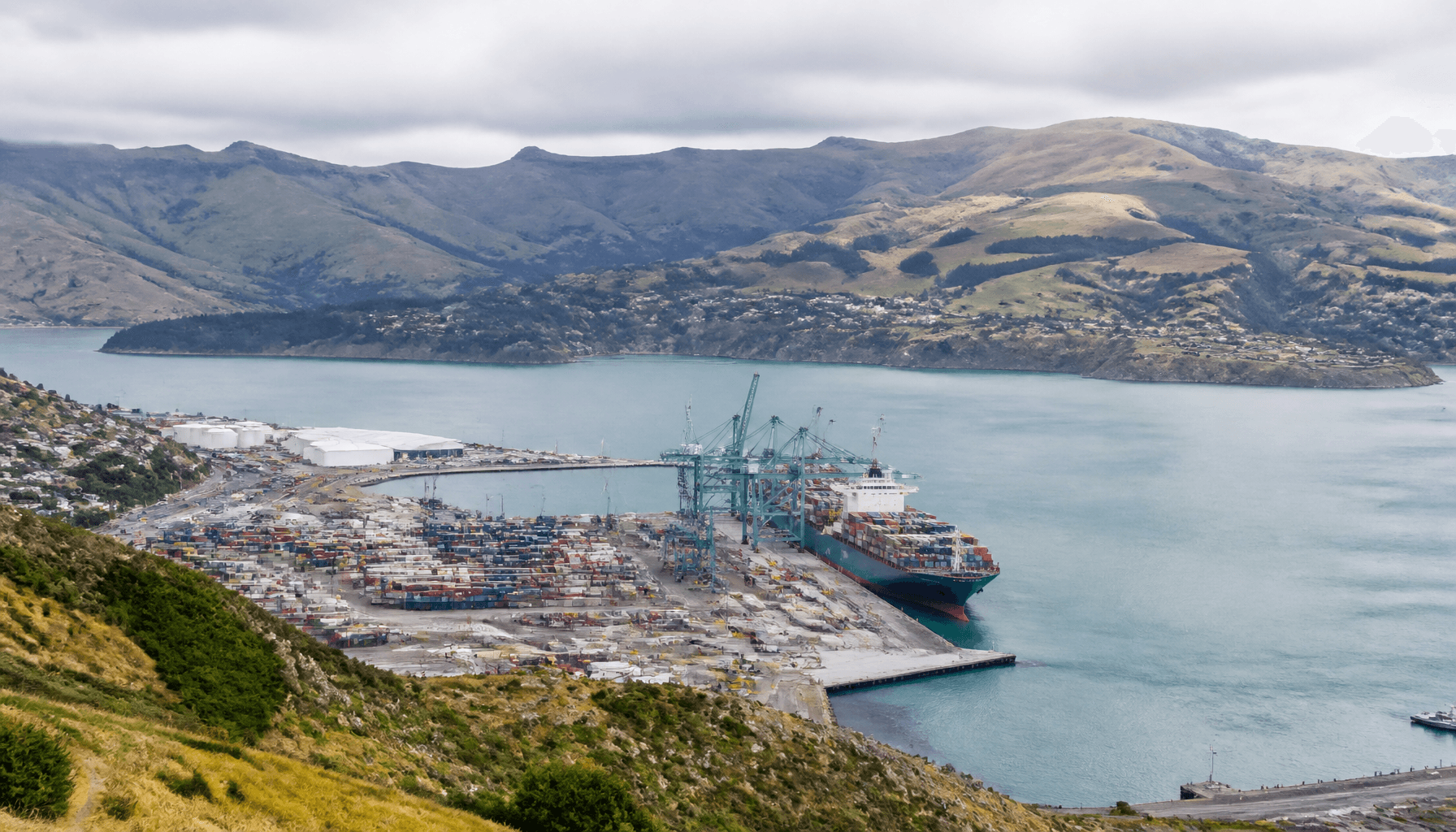
Christchurch City Holdings Limited has green-lit an $821 million expansion of Lyttelton Port Company’s container terminal and a new deepwater wharf at Te Awaparahi Bay. CCHL will put in around $300 million of debt and equity. LPC will fund the balance of about $521 million from its own balance sheet and cash flows. Completion is targeted for 2031.
The package is a dual play. LPC says ageing container berths need a resilience fix that would otherwise force a multi-year rebuild and severe disruption. At the same time the company is betting that dual large-ship berthing and design capacity toward about 850,000 TEU a year will keep South Island primary exports competitive. That bet lands after three years of soft container volumes and two consecutive record underlying profits.
The ownership choice is as important as the concrete. Weeks earlier CCHL rejected an unsolicited Tōnui Consortium proposal for a majority interest in a long-term operating lease. The consortium linked Dubai-based DP World with three Ngāi Tahu papatipu rūnanga. Public control and a directly employed workforce stay. Specialist global terminal capital and risk-sharing leave the table. Ratepayers, via CCHL, now carry more gearing for a strategic gateway that handles the bulk of South Island imports and billions in export value.
LPC’s own harbour modelling states that by 2029–30 the port will no longer berth enough vessels of sufficient capacity under the current footprint. Today LPC can typically work only one large container ship at a time. The new berth is designed so two large vessels can work simultaneously. That physical change is the operational heart of the project.
Lyttelton Te Awaparahi expansion — headline figures
Total capex
$821m
CCHL share
~$300m
LPC-funded
~$521m
Design TEU
~850k
FY26 TEU
427,462
Target complete
2031
Public capital plus port self-funding after lease bid rejected.
Source: LPC announcement coverage via CCHL/LPC disclosures; LPC harbour projects
Why the decision lands now
Chief executive Graeme Sumner has framed resilience of existing container berths as a major driver. Rebuilding those berths in place would take at least three years and severely cut container capacity. Building out Te Awaparahi Bay lets the port keep running at full capacity while new infrastructure comes online.
That logic sits on a long consented pathway. Reclamation at Te Awaparahi Bay continues work enabled by the Port Lyttelton Recovery Plan after the 2010–11 earthquakes. Stages already delivered include 10 hectares finished in 2019 and six hectares in late 2020. A further roughly seven-hectare stage is under way.
LPC says the full reclamation has been consented since January 2018. Long-run consents contemplate headroom toward 1.5 million TEU. Near-term design emphasis is about 850,000 TEU a year against recent throughput near 427,000–432,000 TEU. Wharf length has been reported in a 380–388 metre range across LPC documents and contemporaneous coverage.
Financially the port is not seeking a rescue. Unaudited FY26 results for the year to 30 June 2026 showed record NPAT of $35 million, up 40 percent on FY25’s underlying result near $25 million. Revenue hit a record $226 million, up 9 percent. EBITDA reached a record $77 million, up 22 percent.
Container volumes eased again to 427,462 TEU from 431,556 in FY25 and 448,364 in FY24. Bulk trades and cars were stronger. Logs were weaker. Dividends to CCHL are rising toward a planned $14.5 million for FY26. Higher earnings on soft containers strengthen internal funding. They also shift the case toward future demand and avoided disruption.
LPC container throughput (TEU)
Volumes eased while underlying earnings rose — the expansion case is prospective and resilience-led.
Source: LPC FY25 and FY26 results releases
The drivers
Seismic and structural resilience comes first in LPC’s public rationale. Some existing container berths carry known resilience issues. A multi-year rebuild of CQ3 and CQ4-class structures would ration berth space for exporters of dairy, meat and refrigerated cargo. It would also hit importers of fuel, vehicles, fertiliser and grain. For Canterbury boards and insurers, avoided outage is a continuity product after 2010–11.
Ship-size and network evolution is the second driver. Global cascading of larger, more efficient ships onto Oceania strings continues. LPC wants capacity to accept those ships without forcing South Island cargo onto feeders via Tauranga or Timaru. Dual large-vessel berthing is the physical answer to that network risk.
Demand and hub strategy is the third. LPC Annual Report 2025 put FY25 export value at $7.58 billion and import value at $6.38 billion. The same report states the port handles 79 percent of all South Island imports. Inland nodes MidlandPort at Rolleston and CityDepot support a hub-and-spoke model. FY25 mode split was 21 percent of containers by rail and 79 percent by road.
LPC chair Barry Bragg tied rising returns to that hub ambition after the FY26 result.
Our job now is to keep lifting returns so we can reinvest in the port, support its long-term growth and become the South Island Port Hub.
Consenting advantage is the fourth driver. LPC’s Recovery Plan pathway under earthquake recovery legislation delivered staged reclamation while peers face multi-year blockage. Port of Tauranga’s Stella Passage programme remains constrained by consenting and judicial-review outcomes.
NZIER has estimated that without container berth extension New Zealand could miss $485 million to $749 million of annual GDP by 2032. LPC’s eastern growth path is already consented. That difference is a competitive fact for South Island trade facilitation.
Ownership closure is the fifth. CCHL’s 30 July 2026 media statement said the Tōnui proposal did not meet the threshold for further investigation. Christchurch City Council’s 2026/27 Letter of Expectation did not support leasing the port. It encouraged retention of a directly employed workforce. CCHL also cited LPC’s improving performance and infrastructure-resilience advice.
CCHL chair Bryan Pearson stated the board’s assessment plainly.
Our assessment of the proposal, as presented, is it does not meet the threshold for ongoing consideration and is not sufficiently compelling to warrant further detailed investigation by CCHL, or additional consultation with council given its Letter of Expectation.
With the lease path closed, the publicly geared route is the chosen path. Ratepayer capital replaces the rejected risk-sharing bargain.
LPC underlying NPAT and revenue
Record profits on soft TEU strengthen self-funding but do not remove utilisation risk on new capacity.
Source: LPC FY25 and FY26 results releases
The trade-offs
Public control versus specialist capital is the first trade-off. Rejecting Tōnui keeps assets and workforce under direct public employment and Letter of Expectation control. It forgoes risk-sharing and the operating scale DP World claims across more than 60 ports and terminals worldwide.
Consortium advocates argued public ownership of assets would have been retained under a long lease while investment risk and expertise were shared. Unions and public-ownership campaigners called majority operating control privatisation by another name. Both claims cannot be true in full. The practical effect is that Christchurch retains operating control and the full capital bill.
Resilience insurance versus utilisation risk is the second. Dual-berth capacity and a new five-hectare terminal hedge rebuild disruption and a modelled 2029–30 berth cliff. If larger-ship cascading or South Island volume growth undershoots, design capacity near 850,000 TEU and $821 million of capital sit under-used. Tariff recovery then hardens on exporters and, via CCHL opportunity cost, on ratepayers.
User charges versus inland logistics savings is the third. LPC has already signalled higher charges for container-terminal users after the upgrades. BusinessDesk reported an infrastructure charge rise from $50 to $60 per container from October 2025 as earnings were rebuilt to fund growth.
Higher terminal charges raise FOB and landed costs for dairy, meat, fuel, vehicles and farm inputs. Offsets arrive only if fewer waits, more direct South Island calls and better MidlandPort connectivity cut haul and feeder costs versus Timaru–Tauranga pathways. Without those offsets, the project is a cost shift onto trade, not a productivity free lunch.
CCHL gearing versus portfolio flexibility is the fourth. About $300 million of CCHL debt and equity plus LPC self-funding lifts group leverage. LPC’s Statement of Corporate Intent 2026 financial forecasts explicitly excluded the Te Awaparahi terminal and wharf project before shareholder approval.
Post-approval, near-term dividend growth to council may flatten even as the FY26 dividend rises. That capital competes with other CCHL needs across Orion, Christchurch International Airport, Enable, Citycare and EcoCentral. CCHL’s portfolio was independently valued at over $3.5 billion in June 2024 and carries an S&P AA rating with negative outlook.
LPC leverage is a Christchurch balance-sheet event, not a Crown appropriation. Ratepayer politics will still treat it as local democratic capital. Discipline on scope, procurement and tariffs is the only defence against waste claims later.
Construction activity versus harbour social licence is the fifth. Marine, civil and crane work from 2026 to 2031 supports local employment. It also adds noise, traffic, piling and harbour-use pressure. Mana whenua who sat inside the rejected Tōnui bid remain stakeholders in social licence.
Environmental conditions are already baked in. Hector’s dolphin mitigations require observers, exclusion zones and soft starts. More than 7,000 organisms have been relocated under the kaimoana management plan. LPC was the first New Zealand company to release a TNFD-aligned nature disclosure. It pursues a biodiversity-positive roadmap referenced to an 1875 baseline. Those conditions add cost and schedule risk. They are not optional extras on a consented path.
Second-order effects
South Island competitive geometry will shift if dual large-ship capability works. Direct calls can pull cargo away from feedering via the Port of Tauranga–PrimePort Timaru alliance. Port Otago’s southern positioning faces the same pressure. If tariffs jump ahead of service gains, cargo moves the other way.
PrimePort’s 2013 strategic alliance gave Tauranga a 50 percent stake and a long container-terminal lease. That pathway remains the main alternative hub-and-spoke model Christchurch just declined at whole-port scale. Pricing and reliability will decide which geometry wins cargo.
The national ports debate gains a live contrast. A consented, publicly geared South Island gateway expansion sits beside Tauranga’s consenting paralysis. That contrast strengthens arguments for well-designed enabling pathways for trade infrastructure without loading the Crown balance sheet. It also raises the bar on delivery. Public capital that is slow or over-scoped becomes a different political story.
Peer scale underlines the point. Port of Tauranga handled 1.2 million TEU in FY25 with underlying NPAT of $126.0 million and revenue of $464.7 million. Port of Auckland handled 883,516 TEU with underlying NPAT of $85.4 million. Port Otago managed about 249,000 TEU. LPC’s expansion is an attempt to hold South Island relevance against that hierarchy.
NZ container ports — recent annual TEU
Lyttelton’s ~850k design target would narrow but not close the gap to upper North Island hubs.
Source: POT, POAL, LPC, Port Otago FY25/FY26 disclosures
Household and farm-input channels matter in the South Island. Fuel, vehicles, fertiliser and grain reliability through Lyttelton transmit into regional CPI and on-farm costs. If charges rise ahead of reliability gains, the expansion becomes a cost story for households and farmers before it becomes a productivity story.
Privatisation narratives will not die with the Tōnui rejection. Rail and Maritime Transport Union Lyttelton branch secretary Mark Wilson has warned that heavy debt can later justify partial privatisation. That is a familiar pattern in public infrastructure finance. Higher LPC and CCHL debt becomes a talking point for both “recycle capital later” and “keep assets public” camps through long-term plan and Letter of Expectation cycles.
Inland mode split becomes more valuable if ship calls consolidate at Lyttelton. Rail’s 21 percent share and MidlandPort utilisation matter more when berth reliability improves. Road haulage pricing and KiwiRail capacity are co-determinants of net exporter benefit. Without inland connectivity gains, dual berths mainly reprice waiting time inside the harbour.
Insurance and board risk pricing may matter more than headline TEU compound growth. Avoided multi-year berth outage is an Alpine Fault and local seismic argument. Cargo interests and directors price continuity. That insurance value exists even if volume growth is modest.
Historical context
This is phase two of a multi-decade rebuild, not a greenfield political project. After the 2010–11 earthquakes the Crown used recovery legislation to enable the Port Lyttelton Recovery Plan. Then Minister Gerry Brownlee released the plan, effective from 19 November 2015.
LPC chief infrastructure officer Mike Simmers has stated that more than $650 million has gone into post-earthquake capital works. Those works cover waterfront buildings, dry dock, wharves, cruise and container facilities, the oil berth, Te Ana Marina, Midland Port and rail sidings. Te Awaparahi Bay was always the eastern growth path in that plan.
Australian scale provides perspective without false equivalence. Port of Melbourne moved a record 3.396 million TEU in calendar 2024. It has invested more than A$800 million since 2016 and expects about A$700 million more by 2028. It is planning a fourth international terminal at Webb Dock North for the mid-2030s.
LPC’s $821 million over roughly five years is large for a gateway near 430,000 TEU. It is modest beside Australian metro ports. The more telling New Zealand comparison is consenting speed. LPC’s Recovery Plan pathway versus Tauranga’s multi-year Stella Passage blockage is the domestic benchmark that matters for trade facilitation.
The lease model Christchurch declined has a South Island precedent. PrimePort Timaru’s alliance with Port of Tauranga since 2013 shows how specialist capital and deep-water network access can be bought without full freehold sale. CCHL and the council’s Letter of Expectation chose a different bargain. They retain operating control and fund resilience and capacity from public and port cash flows.
The counter-argument
The strongest opposing read is that Christchurch is placing ratepayer capital on bigger ships and volume that may not arrive on the assumed timetable. On that read it also forgoes a world-scale operator and iwi capital that would have shared risk.
Sceptics, including coverage in The Press in May 2026 when the project was still framed near $800 million, questioned whether forecasts support lifting capacity toward 850,000 TEU. Soft container volumes for three years give that scepticism oxygen. Profit strength from mix, bulk and productivity does not by itself prove future TEU growth.
If cascading stalls, the dual-berth asset under-earns. Tariff recovery then becomes politically harder on exporters who already face global freight cycles. That is the utilisation risk in plain terms.
Tōnui’s commercial counter is related. A long lease with DP World and rūnanga partners could have kept freehold public while importing operating systems, capital discipline and network relationships. DP World states it moves about 10 percent of global trade daily across more than 60 ports and terminals. On that view, rejecting the bid prioritised political control and workforce form over risk-sharing.
Union caution supplies the debt half of the counter-read. Significant gearing on a publicly owned company can become the pretext for later partial sale. That risk is real in public finance history even when today’s Letter of Expectation is firm. Taxpayers and ratepayers have seen that sequence before.
The thesis against that counter-read rests on three evidence stacks. First, resilience is not optional. A three-year rebuild of existing berths is a known operational shock. Paying for a parallel eastern berth is a continuity premium after Canterbury’s earthquake experience.
Second, the congestion cliff is LPC’s own modelling for 2029–30 under the current footprint. It is not a marketing flourish alone. Third, the Recovery Plan pathway already sunk consenting and reclamation cost. Walking away would strand that enabling work. It would leave South Island exporters more exposed to upper North Island concentration and feeder economics.
None of those points abolishes utilisation risk. They reframe the project as insurance-plus-option rather than a pure volume chase. The public capital question then becomes whether CCHL and LPC will run tariffs, procurement and delivery with private-sector discipline under public ownership. That is the live test, not the press-conference slogan.
Open questions
The exact split and instruments of CCHL’s around $300 million remain incompletely specified in public materials. Equity versus debt, tenor and any recourse to the wider portfolio will shape group gearing and rating headroom.
The binding tariff and infrastructure-charge path from 2026 to 2031 is not fully mapped. Pass-through into export FOB and South Island import landed costs will decide whether exporters net gain from dual berths.
Procurement and delivery risk on four ship-to-shore cranes and semi-automated yard gantries is material. Long-lead equipment and foreign-exchange exposure can move both cost and schedule.
Piling under Hector’s dolphin mitigations sits on the critical path. Soft starts, exclusion zones and seasonal constraints can slip a 2031 target without any change in steel or crane markets.
Ship-line network plans are the external unknown. Oceania strings must actually add or retain dual large-ship Lyttelton calls. Timaru feeder and Otago options remain competitive if LPC pricing jumps first.
Council Letters of Expectation and the long-term plan will show whether privatisation or lease revisits are explicitly capped while debt is elevated. Silence on that point keeps union and campaigner concerns alive.
What to watch
Near term, reclamation and detailed wharf design already under way should hit year-end milestones if LPC’s schedule claims hold. Tariff schedules for the 2026/27 export season will show how much of the capital bill users pay up front. CCHL’s next Letter of Expectation cycle and any update to group gearing guidance will reveal how Christchurch prices the $300 million commitment against dividends and other portfolio calls.
Over 12 to 24 months, crane procurement, marine piling and yard automation become visible harbour activity. Competitive response from PrimePort Timaru, Port of Tauranga coastal links and Port Otago will test LPC’s hub claim. FY27 and FY28 LPC results will show whether soft TEU continues while gearing rises.
By 2029–30—LPC’s stated congestion cliff without expansion—either the new berth is approaching service or South Island exporters face rationing and diversion costs. That date is the hard test of the modelling published on LPC’s harbour projects pages.
The strategic question is narrower than the $821 million headline. Can public capex plus retained control deliver dual-berth reliability and South Island hub status without the operating expertise bargain CCHL rejected—and without turning higher debt into a later case for partial sale? Delivery against the 2031 completion target, transparent tariff paths, and dividend and gearing discipline at CCHL will answer that before the first dual large-ship call does.