McClay appoints Leeder to reset Tairāwhiti forestry consenting and compliance
Forestry Minister Todd McClay has appointed former Bay of Plenty regional chair Doug Leeder as facilitator to advise Ministers on further support or intervention for forestry in Tairāwhiti, days after Gisborne District Council launched its own independent review of consenting and compliance.
Auckland’s potential $5 billion Fast-track infrastructure exposure and 16,270 wrongly suspended Winter Energy Payments have become the first real-world stress tests of the Regulatory Standards Act 2025.
Cabinet’s Economic Policy Committee has formally authorised public consultation on a prudential levy to shift Reserve Bank supervision costs onto banks, insurers and market infrastructure operators from 2027/28.
Cabinet has agreed in principle to three shifts in public performance reporting sought by the Finance and Expenditure Committee, while parking detailed design and costings until 2027.
Forestry Minister Todd McClay has appointed Doug Leeder as a Facilitator to advise the Government on what further support or intervention may be needed around forestry in Tairāwhiti.
McClay said he had written to Gisborne District Council about the appointment. Leeder, former chair of Bay of Plenty Regional Council and former chair of Local Government New Zealand’s Regional Sector Group, will work with council leadership, members of the council’s Assurance Review panel, and other stakeholders on consenting and land-use change complexity. He will advise McClay and other Ministers as required.
The move lands days after the council, on 12 August 2026, commissioned an independent assurance review of its forestry consenting and compliance system. That panel is chaired by former Attorney-General Christopher Finlayson KC, with resource-management specialist Dr Marie Doole as a member. Initial findings are expected within six weeks of formal appointment.
McClay said the Government was aware of growing sector-wide concern about the council’s approach to land-use change, including draft enforcement orders on woody debris and sediment. He said stronger compliance may well be necessary, but measures must be workable and proportionate and must not undermine progress toward land transition.
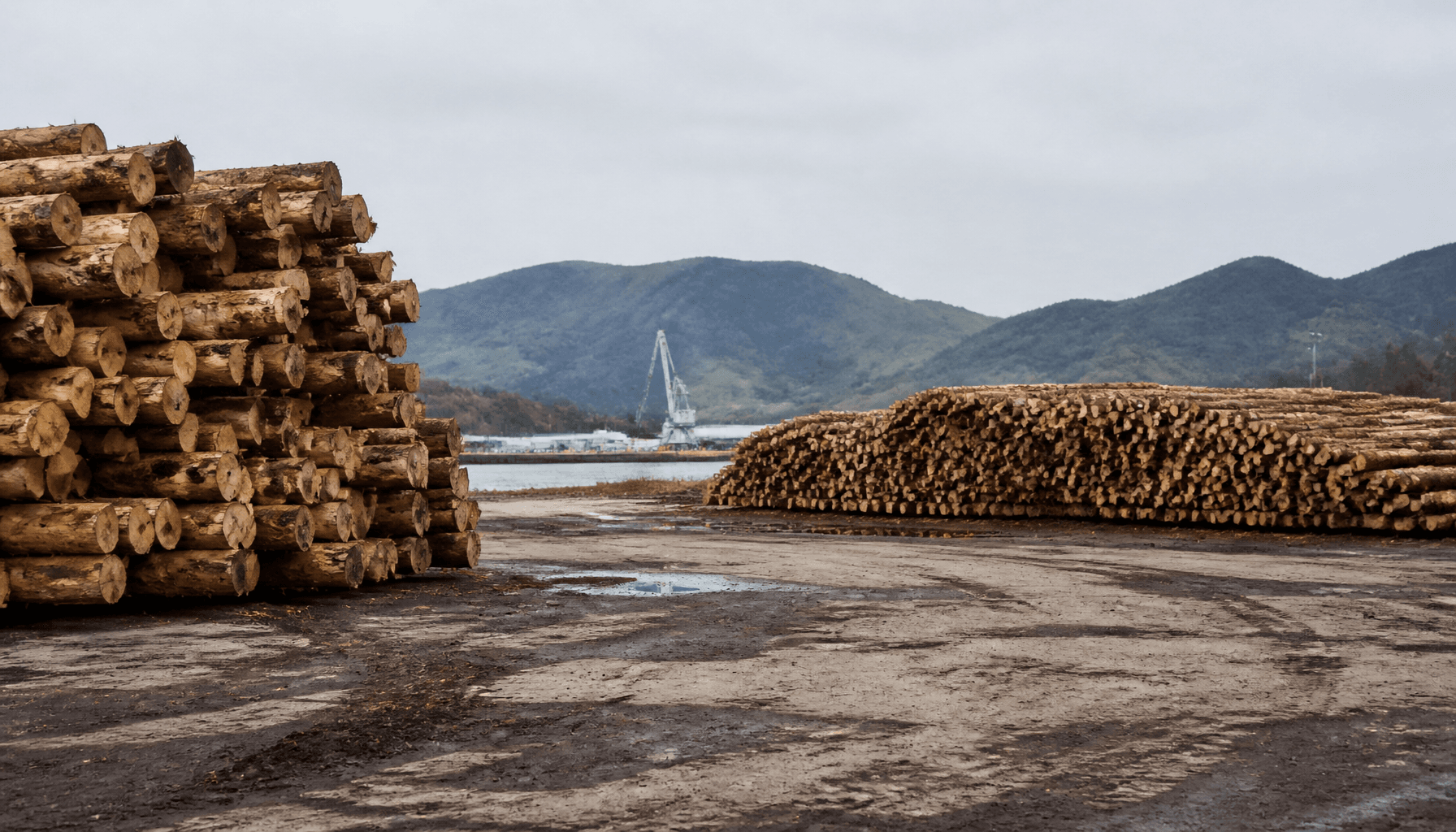
Industry had told him it faced decisions it considered unworkable and costly, with growing uncertainty about the sector’s future in the region. He said that uncertainty was affecting investors’ willingness to pursue processing ventures in Tairāwhiti and elsewhere in the country. He wanted the relationship between the council and stakeholders reset so parties worked constructively on long-term forestry management, the environment, jobs and local businesses.
Tairāwhiti forestry regulatory snapshot
Debris removed (m³)
585,417
TFAG river risk reduced
173 km
Forestry prosecutions
8
Value-chain jobs (survey)
1,155
Clean-up scale and enforcement sit alongside contested regional employment counts.
Council chief executive Nedine Thatcher Swann said GDC initiated its review to test whether its approach was fit for purpose, proportionate to Tairāwhiti’s environmental risks, and clear and workable in practice.
That work has been constructive, but concerns continue to be raised about consenting requirements, compliance settings, costs and processing timeframes. Rather than continue debating those issues from different positions, we want them independently tested against the evidence.
She said the council had strengthened forestry consenting, monitoring and enforcement capability since 2018 and finalised new standard consent conditions after industry engagement. The Finlayson panel will examine a sample of files and conditions against processing records and operational evidence.
We want a regulatory system that protects our environment and communities, gives responsible forestry operators greater certainty, and supports appropriate, sustainable forestry and land use across Tairāwhiti.
Eastland Wood Council chairman Julian Kohn welcomed the council review. He said industry had raised cost and complexity concerns since 2023.
Not only is the lack of movement in the consenting space now resulting in crews leaving the area, but companies are increasingly withdrawing forests from harvest.
Forestry is a major part of Tairāwhiti’s economy, so we’d like to see rules which support good environmental outcomes without adding unnecessary cost or making it harder to operate responsibly.
Residual risk and clean-up scale
Cyclone Gabrielle in 2023 mobilised large volumes of woody debris across highly erodible hill country. Gisborne District Council states about 1.4 million tonnes of debris were deposited across hill country and catchments.
Up to December 2025, 585,417 cubic metres of woody debris had been removed from waterways and beaches since May 2023. Named beach cleans removed a further 106,534 m³. McClay established the Tairāwhiti Forestry Action Group in August 2024.
Tairāwhiti woody debris clean-up volumes
Beach cleans are additional to catchment and waterway extraction totals reported to December 2025.
Source: Gisborne District Council, Removal of large woody debris
Government statements credit TFAG with reducing risk across 173 kilometres of river network and removing almost 40,000 cubic metres from high-risk locations. GDC says it has received more than $80 million in government funding for the woody debris programme, plus a further $27 million MPI allocation for in-forest treatment on vulnerable land. Cumulative Crown debris and sediment funding has exceeded $110 million.
Enforcement has tightened in parallel. GDC reports eight successful forestry prosecutions. Environment Court enforcement orders have been issued for forests including Samnic/Waingaromia, Kanuka and West Ho, requiring respondents to cease discharging woody debris and sediment where it may enter water. Draft enforcement orders, including those naming directors, have been a flashpoint between Ministers and the council.
TFAG will shift toward supporting landowners and operators to accelerate consenting on legacy biomass through pilot projects, monitoring progress, maintaining community engagement, and helping inform land-use change decisions. McClay invited the council’s continued participation.
Jobs, investment and land transition
Nationally, MPI puts forestry and wood processing at about $3.5 billion of GDP and around 42,000 jobs. Treasury FEU analysis put forestry export revenue at $5.75 billion in the year to June 2024, or 8.7% of merchandise exports.
Regionally, employment and GDP shares differ by definition. A Habilis NZ briefing for Mana Taiao Tairāwhiti put forestry and logging at 6.9% of regional GDP ($202.2 million of $2.93 billion) and 565 jobs (4.8% of about 24,856). An Eastland Wood Council and FICA February 2026 survey of 60 organisations counted 1,155 workers across the broader value chain.
Tairāwhiti forestry employment counts compared
Narrow industry classifications understate cartage, processing, port and support roles tied to harvest activity.
Source: Habilis/Mana Taiao briefing Jan 2026; EWC/FICA Employment Survey Feb 2026
Kohn has previously pointed to a reopened sawmill creating about 110 jobs and multi-million-dollar Twin Berth upgrades at the port, which is heavily reliant on forestry throughput. Consent delays, harvest withdrawals or processing deferrals transmit quickly into contractor cashflow and household incomes in a thin regional labour market.
A Transition Advisory Group business case sought about $359 million Crown co-funding over a decade to stabilise roughly 100,000 hectares of erosion-prone land, with regional and private contributions estimated above $240 million. Thatcher Swann said every $1 spent could save $4 on recovery and avoid more than $1 billion in future storm damage. A spokesperson for McClay said the group’s expectation of taxpayer support seemed unrealistic; subsequent reporting indicated the Government did not back the full request.
RNZ reported more than 20% of Tairāwhiti is covered in pine, much planted after Cyclone Bola for erosion control, and estimated the region’s steep hill country loses 55 million tonnes of topsoil each year. The 2023 Ministerial Inquiry into Land Use (Outrage to Optimism) made nearly 50 recommendations, including tighter clear-fell settings and transition of highly erodible land toward permanent cover. A prior facilitator structure was appointed in September 2023 under the then government.
Leeder’s brief is to structure a multi-party reset and report to Ministers. It does not replace the Environment Court, the council’s statutory RMA role, or the Finlayson panel’s file-based evidence. How workable consent conditions and proportionate enforcement are defined will shape harvest schedules, mill investment and residual Crown clean-up liability on some of New Zealand’s most slip-prone export land.