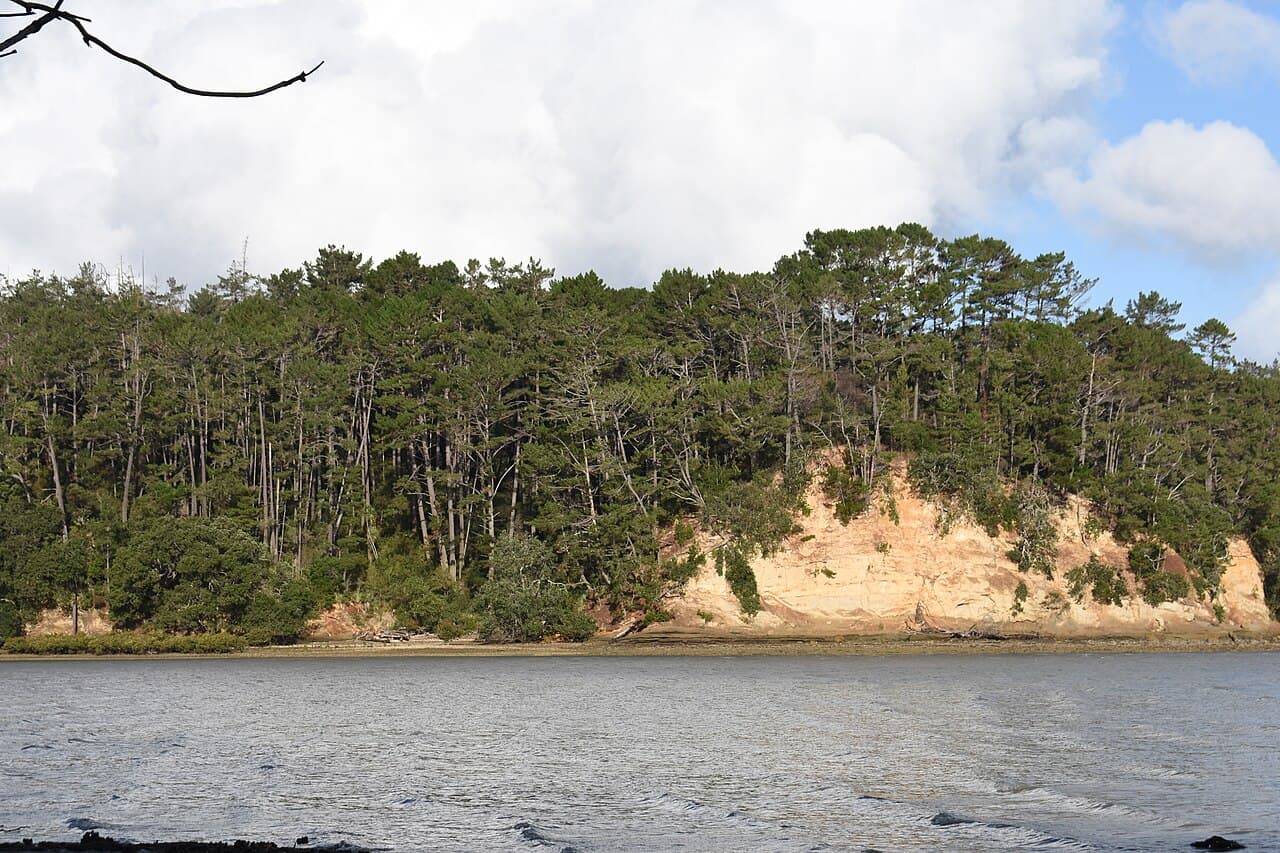
New Zealand forestry exports totalled $6.28 billion in the year ended December 2025, forming the starting point for a government target to double primary sector export value within a decade at a required 7.2 percent compound annual growth rate.
The Ministry for Primary Industries reported forestry exports of $6.28 billion for the year ended December 2025. Logs and poles accounted for 54 percent or $3.4 billion. Sawn timber contributed 18 percent or $1.2 billion. Wood pulp made up 11 percent or $0.69 billion.
China took 55 percent of total forestry exports. The same market absorbed 90.5 percent of log shipments in the year to September 2024 according to Treasury analysis.
Forestry Minister Todd McClay announced the NZ Pine brand on 11 June 2026. The voluntary industry-led initiative will create a single identity for purposefully grown radiata pine from actively managed plantations.
"Global customers now expect more than quality timber - they want to understand where their products come from, and how they perform."
The brand will be supported by a government-backed administrative standard administered by the Ministry for Primary Industries. Rollout is scheduled for early 2027.
Value-Added Products: 15% of Volume, 40% of Revenue
Value-added wood products already represent 15 percent of export volumes yet generate more than 40 percent of revenue, close to $3 billion. The NZ Pine framework aims to expand this share by improving traceability and sustainability credentials for international buyers.
Treasury noted in its medium-term outlook that limited domestic processing capacity constrains further gains even as global wood demand is projected to exceed supply. The branding approach seeks to premiumise output rather than increase raw log volumes alone.
Sector Scale and the Doubling Ambition
Radiata pine comprises 90 to 95 percent of New Zealand's 1.82 million hectares of net stocked production forest as of April 2025. The sector contributes $3.5 billion or 1.2 percent to GDP and supports around 42,000 jobs.
Food and fibre exports overall are forecast to reach a record $64.3 billion in the year to 30 June 2026. Forestry ranks as the fourth-largest earner within that total.
Fiscal and Regulatory Design
The voluntary nature of the NZ Pine standard minimises new regulatory costs while responding to buyer demands for verified supply chains. This market-driven mechanism aligns with efforts to lift export earnings without expanding government spending programmes.
Higher export revenues from premium positioning would increase taxable income across growers, processors and exporters. That outcome supports the Crown's fiscal position through additional company and income tax receipts.
The early-2027 launch provides industry participants with a defined timeline to prepare documentation and marketing materials ahead of the next harvest cycle.
Success will be measured by measurable shifts in average export prices and reduced concentration risk beyond the current 55 percent China share.