Pacific families face steepest losses under Budget 2026 housing rebalance
Official modelling shows 26,000 Pacific families will lose an average $30.75 a week from April 2027 under the Budget 2026 housing support package, the steepest ethnic average loss among losers.
"It will increase rents for around 84,000 households by an average of about $31 a week from next year, but even then, most social housing tenants will still generally pay less than comparable households in the private market."Louise Upston, Minister for Social Development and Employment
Cabinet’s Economic Policy Committee has formally authorised public consultation on a prudential levy to shift Reserve Bank supervision costs onto banks, insurers and market infrastructure operators from 2027/28.
Cabinet has agreed in principle to three shifts in public performance reporting sought by the Finance and Expenditure Committee, while parking detailed design and costings until 2027.
ASB’s Q2 2026 Regional Economic Scoreboard left Wellington joint last with Gisborne while Canterbury led on dairy cash, jobs and retail. The capital’s multi-quarter underperformance is structural: public-service consolidation, a deep housing correction and stalled population growth colliding with a national OCR still set for nationwide inflation.
Official modelling shows 26,000 Pacific families will lose an average $30.75 a week from April 2027 under the Budget 2026 housing support package.
The HUD and MSD distributional analysis dated 14 April 2026 (HUD2026-009593) attributes the hit to high Pacific representation in social housing and larger household sizes. Pacific Peoples make up about 21,700 of roughly 85,800 social housing tenants.
The three-part package raises the minimum Income-Related Rent contribution from 25% to 30% of income. It lifts Accommodation Supplement maxima by $10–$30 a week. It cuts the Temporary Additional Support maximum from 30% to 25% of main benefit rates and removes formula-assessed child support as an allowable cost.
About 240,000 families are affected in total. Some 111,000 gain an average $14.91 a week. About 129,000 lose an average $24.04 a week.
Nearly all social-housing IRR payers—about 84,000 families—lose roughly $31 a week on average. Most package winners are private-market households receiving higher AS. About 94,000 main-beneficiary families lose. Working families gain on average.
Ethnic and regional incidence
For families with losses, Pacific Peoples record the highest average weekly loss at $30.75. About 11,000 Pacific families gain an average $15.79. Māori show 51,000 losers at −$23.85 and 34,000 gainers at +$15.53. Europeans record more gainers than losers (61,000 vs 52,000) and smaller average losses (−$20.62).
Auckland dominates absolute losses: 54,000 families lose about $26 a week while 31,000 gain about $14. Wellington and Canterbury each show about 13,000 losers near −$24.
Average weekly loss by ethnicity, families with losses
Pacific families record the steepest average loss among the four largest ethnic groups tracked.
Source: HUD/MSD Distributional analysis to support the Budget 2026 Housing package, Table 11
MSD factsheets put IRR operating savings at $387.515 million over the forecast period. AS maxima cost $374.347 million. TAS settings save $195.557 million. Net Crown savings average about $52 million a year, or about $209 million over the forecast period.
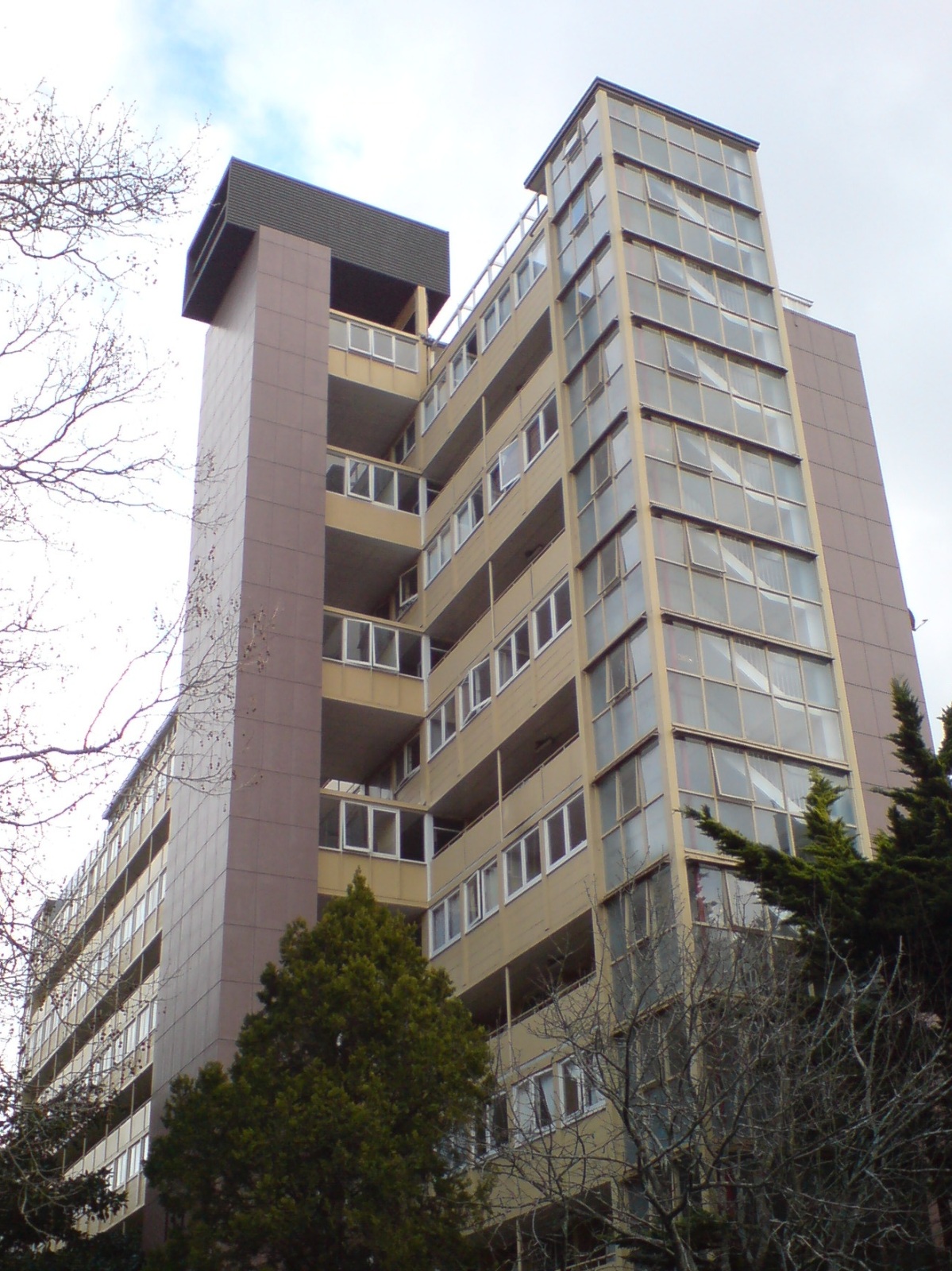
Social housing stock in Auckland, where 54,000 families are projected to lose an average of $26 a week under the Budget 2026 package — the largest absolute number of losers of any region.
Government rationale and surplus path
Housing Minister Chris Bishop and Social Development Minister Louise Upston frame the package as equity and incentives. Social tenants on a main benefit retain about $105 a week more after housing costs than comparable AS private renters, according to the Beehive release of 21 May 2026.
Housing support has more than doubled to $5.5 billion over a decade while the waitlist grew roughly six-fold. About 30% of tenants have stayed over a decade. Remaining tenure is forecast at 16.7 years. About 29% could afford lower-quartile market rent.
It will increase rents for around 84,000 households by an average of about $31 a week from next year, but even then, most social housing tenants will still generally pay less than comparable households in the private market. — Louise Upston, Minister for Social Development and Employment
The 30% of income floor matches a common international affordability benchmark also used in Australian social housing.
Budget 2026 targets an earlier OBEGALx path to a $2.6 billion surplus in 2028/29—the first in a decade on that measure. Finance Minister Nicola Willis has described the housing package as broadly fiscally neutral rebalancing, not a net cut in housing support.
Hardship context and political risk
Stats NZ data show Pacific children had a 31.0% material hardship rate in the year ended June 2025, against 14.3% nationally. Average Pacific household size is 4.0 versus 2.6 for European households. Severe housing deprivation rates for Pacific peoples sit far above the national average.
Officials cautioned that full TAWA child-poverty modelling was not ready in April 2026. Average losses for families with children exceed average gains even if headline income poverty rates may not move statistically. Children in social housing already face material hardship rates of about 45–50%.
Labour leader Chris Hipkins has pledged that a Labour government will not increase state house rents or lift the Accommodation Supplement. Labour finance spokesperson Barbara Edmonds has criticised the rent hike for 84,000 social housing households.
Community Housing Aotearoa chief executive Paul Gilberd and Pacific leaders have warned of residual-income pressure on multi-child Pacific and Māori households in Kāinga Ora stock.
Implementation begins 1 April 2027, with IRR phased over 12 months at annual review or change of circumstances. Dual AS/TAS recipients can see AS gains offset dollar-for-dollar by TAS cuts. Provider revenue for Kāinga Ora and community housing providers stays largely unchanged as the tenant share rises and IRRS falls.
Parallel supply measures include a $69.2 million Flexible Fund uplift for 1,800–2,250 extra social homes from 2028/29. The Housing Register stood near 19,000 at mid-2026, down from peaks above 25,000.
For the Crown books the package is a small within-welfare transfer that trims residual incomes for social tenants while recycling most IRR savings into private-renter AS. Whether mobility and work incentives appear before food and utility stress deepens for large low-income Pacific families remains the live empirical test through the 2026 election cycle and the first year of implementation.