Economic News
Subscribe →
HomeMonetary PolicyFiscalTradeRegulationBankingEconomic DataAbout
Vol. 02 · New Zealand
FRIDAY 22/05/2026
Iss. 2026 / 21
Economic News

Balanced. Independent. Informed.

Sections

  • Monetary Policy
  • Fiscal
  • Trade
  • Regulation
  • Banking
  • Economic Data

Subscribe

  • Free email
  • Email preferences
  • RSS feed

Company

  • About
  • Privacy policy

About

Economic News is an independent New Zealand publication covering monetary policy, markets, the public finances and the wider economy.

© 2026 Economic News Limited
.

PowerHub Battery Model Tests Wholesale Pricing Amid Supply Warning — Economic News
Live
Retail Volumes Rise 0.9 Percent in March QuarterBudget 2026 Documents Available 28 May as Government Tightens SpendingHormuz Closure Turns Supply Chain Disruptions Into Multi-Year Cost Burden for New Zealand ExportersRetail Volumes Rise 0.9 Percent in March QuarterBudget 2026 Documents Available 28 May as Government Tightens SpendingHormuz Closure Turns Supply Chain Disruptions Into Multi-Year Cost Burden for New Zealand ExportersRetail Volumes Rise 0.9 Percent in March QuarterBudget 2026 Documents Available 28 May as Government Tightens SpendingHormuz Closure Turns Supply Chain Disruptions Into Multi-Year Cost Burden for New Zealand ExportersRetail Volumes Rise 0.9 Percent in March QuarterBudget 2026 Documents Available 28 May as Government Tightens SpendingHormuz Closure Turns Supply Chain Disruptions Into Multi-Year Cost Burden for New Zealand ExportersRetail Volumes Rise 0.9 Percent in March QuarterBudget 2026 Documents Available 28 May as Government Tightens SpendingHormuz Closure Turns Supply Chain Disruptions Into Multi-Year Cost Burden for New Zealand ExportersRetail Volumes Rise 0.9 Percent in March QuarterBudget 2026 Documents Available 28 May as Government Tightens SpendingHormuz Closure Turns Supply Chain Disruptions Into Multi-Year Cost Burden for New Zealand ExportersRetail Volumes Rise 0.9 Percent in March QuarterBudget 2026 Documents Available 28 May as Government Tightens SpendingHormuz Closure Turns Supply Chain Disruptions Into Multi-Year Cost Burden for New Zealand ExportersRetail Volumes Rise 0.9 Percent in March QuarterBudget 2026 Documents Available 28 May as Government Tightens SpendingHormuz Closure Turns Supply Chain Disruptions Into Multi-Year Cost Burden for New Zealand ExportersRetail Volumes Rise 0.9 Percent in March QuarterBudget 2026 Documents Available 28 May as Government Tightens SpendingHormuz Closure Turns Supply Chain Disruptions Into Multi-Year Cost Burden for New Zealand ExportersRetail Volumes Rise 0.9 Percent in March QuarterBudget 2026 Documents Available 28 May as Government Tightens SpendingHormuz Closure Turns Supply Chain Disruptions Into Multi-Year Cost Burden for New Zealand ExportersRetail Volumes Rise 0.9 Percent in March QuarterBudget 2026 Documents Available 28 May as Government Tightens SpendingHormuz Closure Turns Supply Chain Disruptions Into Multi-Year Cost Burden for New Zealand ExportersRetail Volumes Rise 0.9 Percent in March QuarterBudget 2026 Documents Available 28 May as Government Tightens SpendingHormuz Closure Turns Supply Chain Disruptions Into Multi-Year Cost Burden for New Zealand ExportersRetail Volumes Rise 0.9 Percent in March QuarterBudget 2026 Documents Available 28 May as Government Tightens SpendingHormuz Closure Turns Supply Chain Disruptions Into Multi-Year Cost Burden for New Zealand ExportersRetail Volumes Rise 0.9 Percent in March QuarterBudget 2026 Documents Available 28 May as Government Tightens SpendingHormuz Closure Turns Supply Chain Disruptions Into Multi-Year Cost Burden for New Zealand ExportersRetail Volumes Rise 0.9 Percent in March QuarterBudget 2026 Documents Available 28 May as Government Tightens SpendingHormuz Closure Turns Supply Chain Disruptions Into Multi-Year Cost Burden for New Zealand ExportersRetail Volumes Rise 0.9 Percent in March QuarterBudget 2026 Documents Available 28 May as Government Tightens SpendingHormuz Closure Turns Supply Chain Disruptions Into Multi-Year Cost Burden for New Zealand ExportersRetail Volumes Rise 0.9 Percent in March QuarterBudget 2026 Documents Available 28 May as Government Tightens SpendingHormuz Closure Turns Supply Chain Disruptions Into Multi-Year Cost Burden for New Zealand ExportersRetail Volumes Rise 0.9 Percent in March QuarterBudget 2026 Documents Available 28 May as Government Tightens SpendingHormuz Closure Turns Supply Chain Disruptions Into Multi-Year Cost Burden for New Zealand ExportersRetail Volumes Rise 0.9 Percent in March QuarterBudget 2026 Documents Available 28 May as Government Tightens SpendingHormuz Closure Turns Supply Chain Disruptions Into Multi-Year Cost Burden for New Zealand ExportersRetail Volumes Rise 0.9 Percent in March QuarterBudget 2026 Documents Available 28 May as Government Tightens SpendingHormuz Closure Turns Supply Chain Disruptions Into Multi-Year Cost Burden for New Zealand ExportersRetail Volumes Rise 0.9 Percent in March QuarterBudget 2026 Documents Available 28 May as Government Tightens SpendingHormuz Closure Turns Supply Chain Disruptions Into Multi-Year Cost Burden for New Zealand ExportersRetail Volumes Rise 0.9 Percent in March QuarterBudget 2026 Documents Available 28 May as Government Tightens SpendingHormuz Closure Turns Supply Chain Disruptions Into Multi-Year Cost Burden for New Zealand ExportersRetail Volumes Rise 0.9 Percent in March QuarterBudget 2026 Documents Available 28 May as Government Tightens SpendingHormuz Closure Turns Supply Chain Disruptions Into Multi-Year Cost Burden for New Zealand ExportersRetail Volumes Rise 0.9 Percent in March QuarterBudget 2026 Documents Available 28 May as Government Tightens SpendingHormuz Closure Turns Supply Chain Disruptions Into Multi-Year Cost Burden for New Zealand Exporters
ELECTRICITY REGULATION · ENERGY SECURITY

PowerHub Battery Subscription Tests Wholesale Pricing Fix Amid Transpower 2031 Supply Alert

Transpower's draft 2026 Security of Supply Assessment warns of a potential energy security gap by 2031 unless the record 1,100 MW commissioning pipeline of generation, batteries and upgrades is accelerated into the 2030s. PowerHub's $149 monthly EcoWave battery subscription offers households a private-sector way to capture low wholesale prices while buffering spikes, providing a market test of…

Analysis Desk18/05/2026 · 10:15 NZT18 min read
RegulationBreaking
AD
Analysis Desk
Senior Economics Correspondent · 18/05/2026 · 10:15 NZT · 18 min read
New Zealand weatherboard home with rooftop solar panels and wall-mounted battery unit, Remutaka Range in background

At a glance

A Transpower 2031 supply warning and falling wholesale prices set the scene for PowerHub's battery-as-a-service test of spot-market pricing for NZ households.

Key stats

Avg residential tariff
39.3 c/kWh
April 2026
EcoWave subscription
$149 /month
no upfront cost
Retail price rise
+12%
2025 actual
Wholesale price forecast
$151.4 /MWh
down 31.8%, 2025-26
Generation pipeline
1,100 MW
commissioning target
Demand growth by 2050
+65%
MBIE projection
"The battery acts as a personal energy reservoir and allows households to capture power when it's nearly free and use it when the grid is under pressure or prices spike."Sophia Bristow, PowerHub founder

Sources cited

  • Draft Security of Supply Assessment 2026 — Transpower
  • Accelerated investment in electricity supply must continue — Transpower
  • New power firm wants to give customers access to wholesale electricity market — RNZ
  • Unlocking the benefits of battery energy storage systems — Electricity Authority
  • Upcoming consultation papers on battery energy storage systems and hybrids — Electricity Authority
  • Electricity prices — MoneyHub
  • Big costs, big profits: the state of the electricity sector in 2026 — The Spinoff
  • Electricity Wholesale Price report — IBISWorld
  • 2026 Invest NZ Overview of the NZ Energy Market — EY / Invest NZ
  • Barriers to real-time electricity pricing: Evidence from New Zealand — Pebereau & Remmy

Free

New Zealand's economy, straight to your inbox.

By subscribing you accept our privacy policy.

More from regulation

A laden container ship navigating a narrow maritime strait at dusk, evoking global shipping chokepoint disruption
Trade · 22/05/2026 · 09:30 NZT

Hormuz Closure Turns Supply Chain Disruptions Into Multi-Year Cost Burden for New Zealand Exporters

Kotahi's 4,000 TEU of dairy, meat and horticulture cargo stranded by the Strait of Hormuz closure shows how New Zealand's geography converts geopolitical shocks into sustained higher costs for primary exporters.

Analysis Desk·22/05/2026 · 09:30 NZT·18 min
Empty rural waste transfer station near Te Anau with beech forest and Fiordland ranges in background
Regulation · 21/05/2026 · 15:37 NZT

WorkSafe charges WasteCo over Te Anau fatality as second death investigated

WorkSafe New Zealand charged WasteCo NZ Ltd on or around May 4 2026 with three alleged breaches of the Health and Safety at Work Act 2015 following the May 2025 death of worker Lynda Marion Kelly at the Te Anau transfer station.

Regulation Desk·21/05/2026 · 15:37 NZT·6 min
  • What went wrong for Flick — RNZ
  • Utility scale batteries report January 2026 — Concept Consulting
  • PLANS | PowerHub Renewable Energy Solution — PowerHub Group
  • PowerHub: Let's build a platform for change together — PledgeMe
  • Kāinga Ora, Ministry of Social Development and Oranga Tamariki offices in Napier, New Zealand
    Fiscal · 21/05/2026 · 13:25 NZT

    Social housing rent rise to deliver $387.5m Crown savings

    The Government will increase the minimum rent contribution for social housing tenants from 25 per cent to 30 per cent of income from April 2027, lifting weekly costs for around 84,000 households by an average of $31 while generating $387.5 million in operating savings over the forecast period.

    Fiscal Desk·21/05/2026 · 13:25 NZT·7 min

    All regulation →

    Transpower's draft 2026 Security of Supply Assessment warns of a potential energy security gap by 2031 unless the record 1,100 MW commissioning pipeline of generation, batteries and upgrades is accelerated into the 2030s. PowerHub's $149 monthly EcoWave battery subscription offers households a private-sector way to capture low wholesale prices while buffering spikes, providing a market test of whether battery-as-a-service can finally de-risk wholesale exposure after Flick Electric's 2017 failure.

    The security warning that sets the stage

    Transpower released its draft 2026 Security of Supply Assessment on 23 April. The assessment concludes that system resource adequacy remains adequate but fragile in the short term. It flags a potential breach of security standards by 2031 if investment slows.

    CEO James Kilty stated that accelerated delivery of new generation and battery storage must continue into the 2030s. This comes as domestic gas supplies decline and demand is projected to rise 65 percent by 2050.

    PowerHub enters this environment with a model that pairs wholesale price exposure plus a 10 percent margin with battery storage. The company seeks $650,000 via PledgeMe to launch, with over $147,687 pledged as of mid-May 2026.

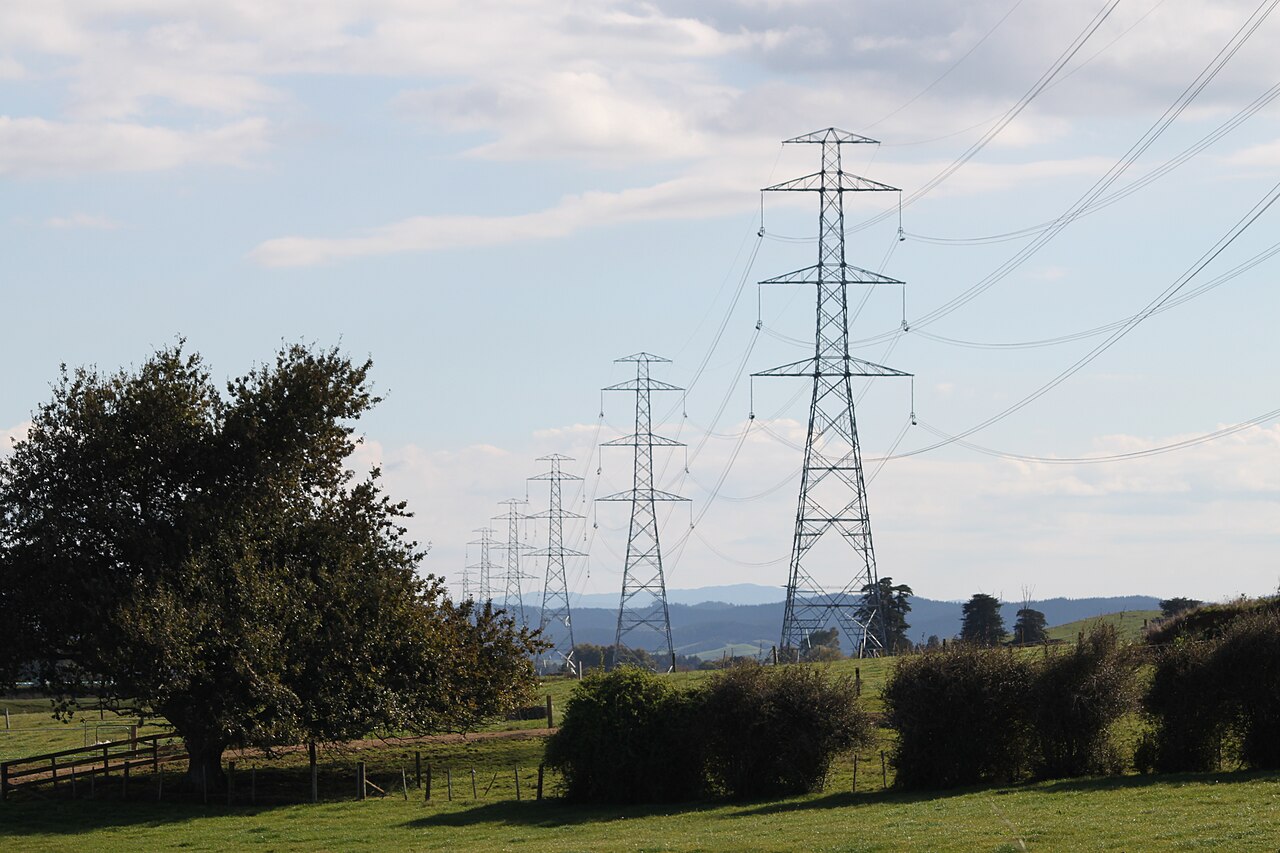
    Transpower's NIGU high-voltage transmission corridor near Te Kauwhata, Waikato — part of the national grid that the draft 2026 Security of Supply Assessment warns faces an adequacy gap by 2031 without accelerated investment.

    The drivers behind rising household costs

    Average residential electricity tariffs reached 39.3 cents per kWh in April 2026. Wellington households paid the lowest at 34.61 cents while Balclutha paid 48.93 cents. Retail prices rose 12 percent in 2025 and face at least another 5 percent increase in 2026.

    Lines charges from Transpower and distribution companies account for one-half to two-thirds of typical bills. These regulated costs fund infrastructure upgrades and higher interest expenses. Gentailers control over 80 percent of generation and retail, limiting competition.

    Wholesale prices are forecast to fall 31.8 percent to $151.4 per MWh in 2025-26. Yet households miss these savings under fixed tariffs that embed an insurance premium for volatility.

    NZ average residential electricity tariff vs wholesale price forecast
    Retail tariff is the April 2026 national average; wholesale forecast is IBISWorld 2025-26 projection. The gap illustrates the margin households currently pay over spot rates.
    Source: MoneyHub (MBIE QSDEP); IBISWorld NZ Electricity Wholesale Price report

    How PowerHub's model works

    PowerHub passes through real-time wholesale rates with a 10 percent markup. Customers can add an opt-in 15 kWh EcoWave battery subscription for $149 per month with no upfront cost. The battery charges at lows near 1–2 cents per kWh and discharges during spikes or outages.

    Founder Sophia Bristow described the battery as a personal energy reservoir. It allows households to capture power when it is nearly free and use it when the grid is under pressure or prices spike.

    "The battery acts as a personal energy reservoir and allows households to capture power when it's nearly free and use it when the grid is under pressure or prices spike." — Sophia Bristow, PowerHub founder

    The model targets households using 20,000 kWh per year or paying $450 or more monthly. It also serves commercial and industrial users.

    Regulatory tailwinds and barriers

    The Electricity Authority launched a BESS roadmap and will release two consultation papers in May 2026 on battery and hybrid arrangements. From April 2026 all 29 distributors must pay rebates for battery injection into the grid. Mandatory time-of-use tariffs for large retailers begin in October 2026.

    Peak-to-off-peak spreads on time-of-use tariffs reach 30–40 cents per kWh. This improves payback for behind-the-meter storage.

    Smart meter penetration exceeds 70 percent, enabling real-time optimisation via the EA's EMI platform.

    AI illustration of a New Zealand suburban home equipped with a wall-mounted battery storage unit at dusk — the battery-as-a-service model PowerHub is bringing to market charges during low wholesale price periods and discharges during evening peaks or outages.

    Historical precedent from Flick Electric

    Flick Electric launched in 2014 as the first major retailer offering direct wholesale spot prices. Market share reached 1.28 percent or 23,057 households by May 2017. The 2017 winter dry-year crisis produced average customer losses of $81 in the first month and $80 overall compared with fixed tariffs.

    Attrition rose sharply. Flick later offered savings guarantees before its acquisition by Meridian Energy in 2025 for $70 million, transferring around 41,000 customers.

    PowerHub's battery buffer directly addresses the volatility that limited Flick's success.

    Trade-offs in battery economics

    BESS installed costs continue declining through 2050 according to Concept and Beca forecasts. Intraday wholesale spreads often exceed $100–200 per MWh even in low-average-price periods. Two utility-scale BESS projects are already commissioned with two more under construction.

    Revenue stacking includes energy arbitrage, potential reserves participation and Transpower demand-response payments that have achieved over 10 percent peak load cuts in trials.

    Risks remain. Sustained dry years or gas shortages could still overwhelm battery capacity. Consent and connection queues may delay the 3,800 MW BESS pipeline.

    Gentailer dominance versus competition

    The four major gentailers dominate over 80 percent of the market. This vertical integration has drawn repeated Electricity Authority scrutiny for muting wholesale price signals.

    PowerHub's lower-margin approach challenges that structure. The EA's new Billy comparison site attracted more than 96,000 visitors by April 2026. It facilitates switching among price-sensitive households.

    Second-order effects for households and the grid

    Successful uptake among high-usage households could accelerate distributed solar-plus-battery deployments. Transpower's demand-response programme may expand, deferring costly grid upgrades.

    Faster smart-meter optimisation and measurable switching via EA tools could pressure gentailers on hedging transparency. This supports net-zero goals amid 65 percent demand growth by 2050 without proportional central generation build.

    Counter-argument on regulatory burden

    Critics note that additional regulations such as mandatory TOU plans and injection rebates add compliance costs for all participants. Gentailer hedging advantages may limit price-signal pass-through regardless of new entrants.

    PowerHub's success depends on whether EA market-making reforms and BESS consultations deliver scalable participation rules before gentailers launch competing offers.

    Open questions for the next 12–36 months

    • Will the May 2026 EA consultations and mandatory TOU rollout scale battery deployment or remain niche experiments?
    • Can PowerHub achieve meaningful share among high-usage households before gentailers respond?
    • Does the 1,100 MW pipeline meet Transpower's 2031 security needs given consent risks?

    What to watch next

    Transpower will finalise the 2026 Security of Supply Assessment by 30 June. The Electricity Authority's two BESS consultation papers close after six weeks. PowerHub's PledgeMe campaign closes in coming weeks. Early subscriber numbers will test whether battery-buffered wholesale pricing finally delivers on its promise for New Zealand households.