Economic News
Subscribe →
HomeMonetary PolicyFiscalTradeRegulationBankingEconomic DataAbout
Vol. 02 · New Zealand
MONDAY 06/07/2026
Iss. 2026 / 28
Economic News

Balanced. Independent. Informed.

Sections

  • Monetary Policy
  • Fiscal
  • Trade
  • Regulation
  • Banking
  • Economic Data

Subscribe

  • Free email
  • Email preferences
  • RSS feed

Company

  • About
  • Privacy policy

About

Economic News is an independent New Zealand publication covering monetary policy, markets, the public finances and the wider economy.

© 2026 Economic News Limited
.

Q1 GDP Forecast 0.7-1.0% Before Oil Shock | Economic News NZ — Economic News
GDP PREVIEW · ECONOMIC DATA

Q1 GDP Expected to Rise 0.7-1.0% Before Oil Shock Hits

New Zealand's gross domestic product is forecast to grow between 0.7 and 1.0 percent in the March 2026 quarter on a seasonally adjusted basis.

Data Desk15/06/2026 · 07:36 NZT6 min read
Economic DataBreaking
DD
Data Desk
Economic Data Reporter · 15/06/2026 · 07:36 NZT · 6 min read
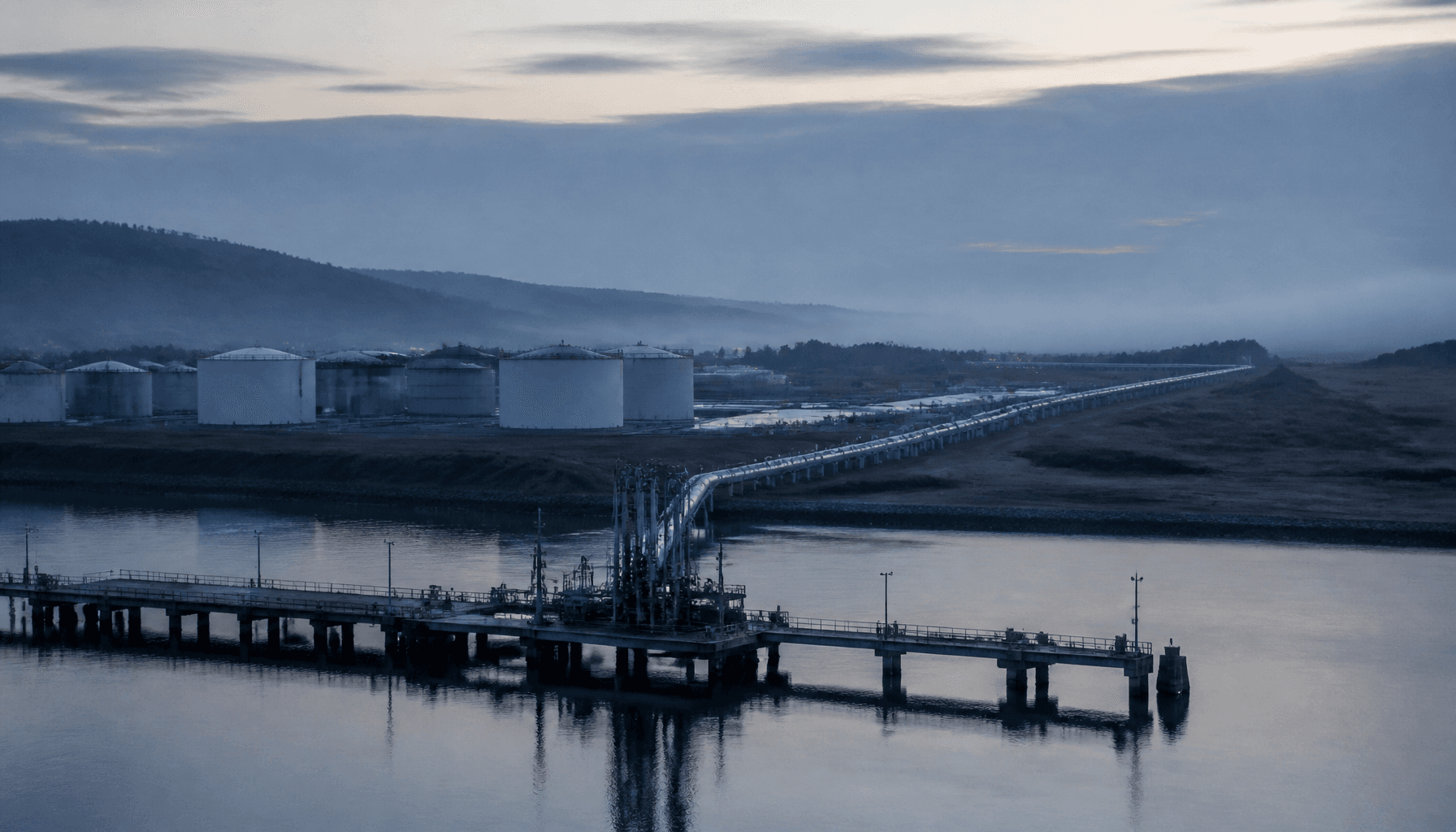
Auckland container terminal at pre-dawn with cargo ships anchored on a still harbour

At a glance

Banks and the RBNZ converge on 0.7–1.0% March-quarter growth ahead of Thursday's Stats NZ release, but an oil-shock-driven Q2 contraction looms.

Key stats

Q1 GDP forecast
0.7–1.0%
Mar 2026 qtr, s.a.
Dec 2025 GDP
0.2%
prior quarter
Brent crude
~$130/bbl
Mar 2026, up $60
OCR (held)
2.25%
April 2026
Treasury 2025/26 GDP
1.2%
post-downgrade
Inflation peak
>4%
projected 2026
RBNZ annual downgrade
−0.9pp
vs Feb projections
"the calm before the storm"Alexandra Turcu, Kiwibank economist

Sources cited

  • Stats NZ Release Calendar — Stats NZ
  • Stats NZ GDP Indicator — Stats NZ
  • Westpac NZ GDP Preview March 2026 — Westpac
  • MPA Mag Q1 GDP NZ Preview — MPA Mag
  • RBNZ Monetary Policy Statement May 2026 — RBNZ
  • Treasury Budget Economic and Fiscal Update 2026 — Treasury
  • IEA Oil Market Report April 2026 — IEA
  • OECD NZ Economic Snapshot — OECD
  • RBNZ Speech Global Shockwaves March 2026 — RBNZ

Free

New Zealand's economy, straight to your inbox.

By subscribing you accept our privacy policy.

More from economic data

Stacked radiata pine logs on Port of Tauranga wharf awaiting loading onto a bulk cargo vessel
Trade · 18/06/2026 · 10:12 NZT

New Zealand-India Free Trade Agreement Delivers Modest Near-Term Gains, Focuses on Long-Term Positioning

The New Zealand Institute of Economic Research states that the free trade agreement with India functions primarily as strategic positioning in a fragmented global economy rather than an immediate export booster.

Analysis Desk·18/06/2026 · 10:12 NZT·25 min
Shoppers in a New Zealand supermarket aisle checking prices amid rising living costs
Economic Data · 17/06/2026 · 15:07 NZT

Westpac Consumer Confidence Index Drops to 80.4, Lowest in Three Years

The Westpac-McDermott Miller Consumer Confidence Index plunged 14.3 points to 80.4 in the June 2026 quarter.

Data Desk·17/06/2026 · 15:07 NZT·6 min
Reserve Bank of New Zealand building on The Terrace, Wellington, under cool morning light.
Monetary Policy · 08/06/2026 · 09:10 NZT

RBNZ Projects 4.3% CPI Peak as Fuel Shock Forces OCR Hikes from 2.25%

The Reserve Bank of New Zealand expects headline inflation to reach 4.3 per cent in the September 2026 quarter after the Strait of Hormuz disruption drives up fuel costs. Markets price an official cash rate peak of 3.7 per cent by the end of 2027, above the central bank's conditional 3.2 per cent path.

Analysis Desk·08/06/2026 · 09:10 NZT·18 min

All economic data →

New Zealand's gross domestic product is forecast to grow between 0.7 and 1.0 percent in the March 2026 quarter on a seasonally adjusted basis. Stats NZ will release the official figures on 18 June 2026.

The December 2025 quarter recorded 0.2 percent growth. The positive print would follow modest momentum from the prior quarter, with timely indicators such as retail spending pointing to continued expansion.

Westpac and ANZ both forecast 1.0 percent growth for the March quarter. Kiwibank predicts 0.7 percent while BNZ sees 0.7 to 0.9 percent. The RBNZ also projects around 1.0 percent. Seasonal factors are expected to add approximately 0.4 percentage points to the headline result.

Kiwibank economist Alexandra Turcu described the Q1 data as the calm before the storm. ANZ economist Matthew Galt noted that aligned growth would shore up prospects of an OCR hike in July.

Auckland's Viaduct Basin commercial precinct — the GDP data due Thursday will set the baseline for how New Zealand's economy entered the oil-shock era.
Q1 2026 GDP Growth Forecasts
Forecasts converged on strong Q1 expansion before oil shock effects emerge in Q2.
Source: Westpac, ANZ, BNZ, Kiwibank, RBNZ

Oil Shock Clouds the Outlook

However the Middle East conflict has already disrupted oil supplies. Brent crude prices reached around $130 per barrel in March 2026 — up $60 per barrel from pre-conflict prices.

The RBNZ May 2026 Monetary Policy Statement incorporated the shock. It downgraded the near-term growth outlook, with annual GDP growth in 2026 now expected to be 0.9 percentage points lower than February projections.

Kiwibank economist Alexandra Turcu described the Q1 data as the calm before the storm.

Treasury's Budget Economic and Fiscal Update 2026 cut its 2025/26 growth forecast by 0.5 points to 1.2 percent. The 2026/27 forecast was reduced by 1.1 points to 2.3 percent.

Westpac revised its full-year 2026 forecast down to 1.9 percent. The OECD projects 1.4 percent growth for New Zealand in 2026. The IMF, in its post-conflict downgrade report released in April 2026, estimates 2.1 percent growth for New Zealand in 2026.

OCR Implications and the Road Ahead

A result near 1.0 percent would support the case for an OCR hike in July. ANZ economist Matthew Galt noted that aligned growth would shore up prospects of such a move. The RBNZ held the OCR at 2.25 percent in April. It signalled potential decisive hikes if inflation pressures persist.

Inflation is projected to peak above 4 percent in 2026 due to higher fuel costs. The full effects of elevated energy prices on consumption and investment will appear in Q2 GDP data due in September. That quarter may show contraction.

New Zealand's floating exchange rate and diversified economy provide some buffers compared with past oil shocks. Households face higher petrol and diesel prices while businesses confront increased input costs. The data will inform the RBNZ's July policy decision and Treasury revenue projections.


Live
ECONOMIC NEWS NZECONOMIC NEWS NZECONOMIC NEWS NZECONOMIC NEWS NZECONOMIC NEWS NZECONOMIC NEWS NZECONOMIC NEWS NZECONOMIC NEWS NZECONOMIC NEWS NZECONOMIC NEWS NZECONOMIC NEWS NZECONOMIC NEWS NZECONOMIC NEWS NZECONOMIC NEWS NZECONOMIC NEWS NZECONOMIC NEWS NZECONOMIC NEWS NZECONOMIC NEWS NZECONOMIC NEWS NZECONOMIC NEWS NZECONOMIC NEWS NZECONOMIC NEWS NZECONOMIC NEWS NZECONOMIC NEWS NZECONOMIC NEWS NZECONOMIC NEWS NZECONOMIC NEWS NZECONOMIC NEWS NZECONOMIC NEWS NZECONOMIC NEWS NZECONOMIC NEWS NZECONOMIC NEWS NZECONOMIC NEWS NZECONOMIC NEWS NZECONOMIC NEWS NZECONOMIC NEWS NZECONOMIC NEWS NZECONOMIC NEWS NZECONOMIC NEWS NZECONOMIC NEWS NZECONOMIC NEWS NZECONOMIC NEWS NZECONOMIC NEWS NZECONOMIC NEWS NZECONOMIC NEWS NZECONOMIC NEWS NZECONOMIC NEWS NZECONOMIC NEWS NZECONOMIC NEWS NZECONOMIC NEWS NZECONOMIC NEWS NZECONOMIC NEWS NZECONOMIC NEWS NZECONOMIC NEWS NZECONOMIC NEWS NZECONOMIC NEWS NZECONOMIC NEWS NZECONOMIC NEWS NZECONOMIC NEWS NZECONOMIC NEWS NZECONOMIC NEWS NZECONOMIC NEWS NZECONOMIC NEWS NZECONOMIC NEWS NZECONOMIC NEWS NZECONOMIC NEWS NZECONOMIC NEWS NZECONOMIC NEWS NZECONOMIC NEWS NZECONOMIC NEWS NZECONOMIC NEWS NZECONOMIC NEWS NZ