RBNZ levy consultation runs on as National holds ‘no new taxes’ line
The Reserve Bank is consulting on a Budget 2026 prudential levy while National campaigns on no new taxes and rules out a separate bank tax. Ministers call the measure cost recovery, not a tax.
Auckland’s potential $5 billion Fast-track infrastructure exposure and 16,270 wrongly suspended Winter Energy Payments have become the first real-world stress tests of the Regulatory Standards Act 2025.
Cabinet’s Economic Policy Committee has formally authorised public consultation on a prudential levy to shift Reserve Bank supervision costs onto banks, insurers and market infrastructure operators from 2027/28.
Cabinet has agreed in principle to three shifts in public performance reporting sought by the Finance and Expenditure Committee, while parking detailed design and costings until 2027.
The Reserve Bank of New Zealand is running a statutory consultation on a new prudential levy even as National campaigns on a firm “no new taxes” pledge and rules out an extra bank tax.
Finance Minister Nicola Willis announced the levy in Budget 2026 on 28 May. It would charge banks, non-bank deposit takers, insurers and designated financial market infrastructure providers for Reserve Bank prudential costs. The Beehive release estimated recovery of about $209 million over the forecast period. Revenue would go to the RBNZ and return to the Crown through a larger central-bank dividend.
National's 23 August release said there would be “no new taxes on the table,” including
no accommodation levy or bank tax.
Prime Minister Christopher Luxon framed the election choice as National's stance versus Labour's proposed taxes. Government messaging treats the Budget levy as already-announced cost recovery, not a fresh tax on industry.
The legal base is the Reserve Bank of New Zealand Act 2021. Section 293 allows a levy for prudential functions. Section 296(1) requires consultation with those liable to pay or significantly affected before regulations. Willis asked the RBNZ to consult on her behalf. The Bank agreed.
The design: $209m over three years
Consultation opened on 11 August 2026. Submissions close at 5pm on 16 October 2026. The paper covers full versus partial cost recovery, sectoral scope, and how individual levies would be set. The RBNZ prefers full recovery, citing peers in Australia, the United Kingdom, Canada and Ireland.
Indicative collections total about $209 million over three years: $68.1 million in 2027/28, $69.5 million in 2028/29 and $70.9 million in 2029/30. The preferred sector split is roughly 54% deposit takers ($113 million), 39% insurers ($81 million) and 7% FMIs ($15 million).
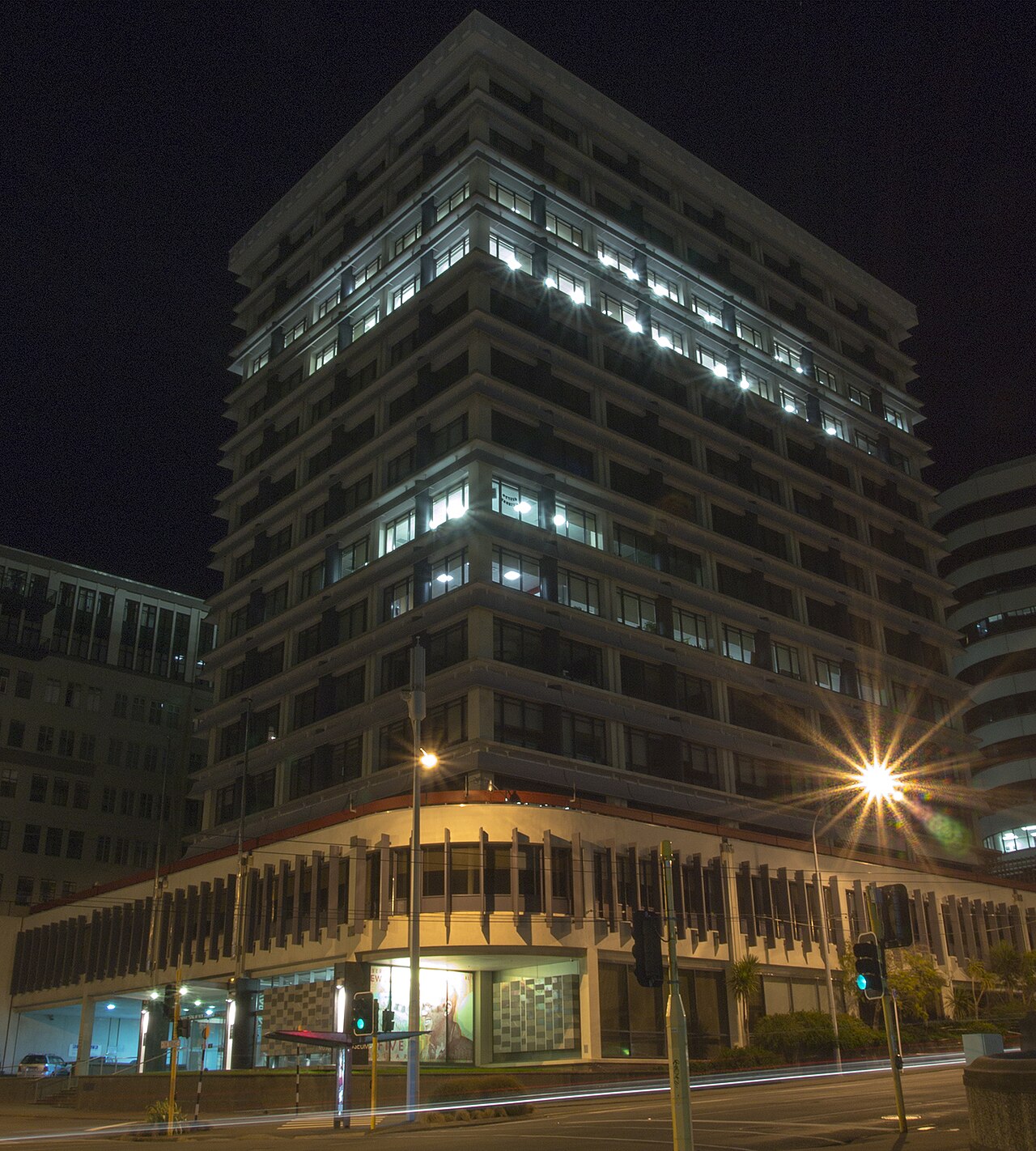
The Reserve Bank of New Zealand, which opened consultation on the prudential levy on 11 August 2026 at the Finance Minister's request.
On 31 March assets, indicative annual bills put ANZ New Zealand near $10 million. BNZ, ASB and Westpac New Zealand, each with $130–144 billion of assets, sit in the multi-million range. Kiwibank, with about $43 billion, would pay less. IAG New Zealand could face more than $5 million a year. Deposit takers would face a suggested $50,000 fixed component plus an asset-based rate. Regulated FMI operators would each face a flat $1.23 million charge, including the Bank's own ESAS and NZClear systems.
Covered populations at announcement included 27 registered banks, 14 licensed non-bank deposit takers, 81 licensed insurers and five designated FMIs. Willis said the move mirrored the approach taken by the Financial Markets Authority and the Commerce Commission, which fund much of their activity through levies on financial market participants, and that it was consistent with international practice in countries like Australia, Canada and the United Kingdom. Government notes said the take would be less than 1% of combined big-four bank profits.
Funding-agreement mechanics
The levy would not expand the RBNZ's budget or mandate. Prudential costs would leave the five-year funding agreement perimeter. That agreement caps operating expenditure at $750 million and capital at $25.6 million for 2025–30. Annual opex limits step from $155 million to $145 million then back toward $155 million. All else equal, more surplus would flow to the Crown as dividend. The RBNZ paid a $542 million dividend for 2024/25 in cited coverage.
A Treasury Stage 1 Cost Recovery Impact Statement, prepared with RBNZ input, estimated full pass-through would lift borrowing costs by less than one basis point and insurance premiums by less than 0.2% on average. It described overall incidence as limited given the levy's size. The statement sat beside other stacked costs: Deposit Takers Act and Depositor Compensation Scheme work, IPSA reform, a separate AML/CFT levy proposal and DCS risk-based levies.
Willis versus Seymour
Willis has told banks not to pass costs on. She told interest.co.nz after the Budget:
I would like to send them a very clear message: They are some of the most profitable banks in the world. Other counties around the world have these levies and you haven't seen it being passed through.
She added:
I would be extremely disappointed if at this time, New Zealand banks chose to do that to their customers.
Competition, she argued, is the check. ACT leader David Seymour disagreed within hours of the Budget:
Let's be honest, banks only have one source of money. That's their customers. So let's not tell the easy lie that we would be taxing the banks, you'd be taxing their customers.
NZ Banking Association chief executive Roger Beaumont said banks understood the need for appropriate funding for regulators, adding that
Banks will engage constructively with the Reserve Bank in the consultation process to help make the levy appropriate, effective, and well targeted.
Labour finance spokesperson Barbara Edmonds accepted the user-pays principle but warned against customer pass-through. NZ First's Shane Jones said coalition constraints ruled out more aggressive windfall-style bank taxes. RBNZ Assistant Governor Angus McGregor has stressed the change is about funding mechanics, not supervisory behaviour or mandate.
International practice and the tax-versus-levy question
Industry-funded prudential supervision is mainstream abroad. Australia's APRA recovers most supervisory costs through Financial Institution Supervisory Levies; ADI levies alone were on the order of A$110 million in recent determinations. ASIC runs a large industry-funding model. UK and Canadian regimes lean on industry in similar ways.
Deposit takers: 54% of collections, about $113 million
Insurers: 39% of collections, about $81 million
Financial market infrastructures: 7% of collections, about $15 million
Tax specialists note the Tax Administration Act can treat levies as tax. Policy vernacular often reserves “levy” for targeted, ring-fenced charges. National's “no new taxes” brand sits on that line. The levy was already Budget 2026 policy when the campaign pledge landed.
What happens next
Cabinet decisions are due early 2027. Regulations are expected to be gazetted around June–July 2027, with effect from about August 2027 for 2027–28 collections. No further consultation on draft regulations is proposed. How full recovery, the insurer-bank split, small-entity relief and any pass-through constraint survive industry feedback will shape the first invoices under the next government.