Tax bill eases student-loan border warrants as OBB overdue hits $2.48b
Clause 230 of the annual rates tax bill would let Inland Revenue establish the student-loan border-arrest offence without proving delivery of a default notice, against $2.478 billion in overdue overseas-based borrower debt.
Auckland’s potential $5 billion Fast-track infrastructure exposure and 16,270 wrongly suspended Winter Energy Payments have become the first real-world stress tests of the Regulatory Standards Act 2025.
Cabinet’s Economic Policy Committee has formally authorised public consultation on a prudential levy to shift Reserve Bank supervision costs onto banks, insurers and market infrastructure operators from 2027/28.
Cabinet has agreed in principle to three shifts in public performance reporting sought by the Finance and Expenditure Committee, while parking detailed design and costings until 2027.
Parliament is considering a change that would make it easier for Inland Revenue to seek student-loan arrest warrants at the border. Clause 230 of the Taxation (Annual Rates for 2026–27, FBT Simplification, Foreign Investment Funds, and Remedial Measures) Bill targets overseas-based borrowers in default.
The Bill was introduced on 10 September 2026. If enacted as introduced, the change would take effect the day after Royal assent.
Inland Revenue figures show overseas-based borrowers (OBBs) owed $2.478 billion in overdue repayments at 31 March 2026. That was up 6.3% from $2.331 billion a year earlier. Total overdue student-loan repayments stood at $2.663 billion.
OBBs held a $4.5 billion nominal balance and numbered 114,724. Only 26.5% met repayment obligations that quarter, against 94.7% of New Zealand-based borrowers.
How the offence works now
Under section 162A of the Student Loan Scheme Act 2011, an overseas-based borrower in default commits an offence after the Commissioner notifies them. They must knowingly fail or refuse, by the notice deadline, to make reasonable efforts to pay or arrange payment. The maximum fine is $2,000.
Section 162B lets a District Court Judge issue an arrest warrant on IR's written application. The court must be satisfied the offence has been committed and the person is about to leave New Zealand. A prior conviction is not required.
The power has been available since March 2014. An Official Information Act response dated 18 August 2026 recorded 24 warrants since commencement.
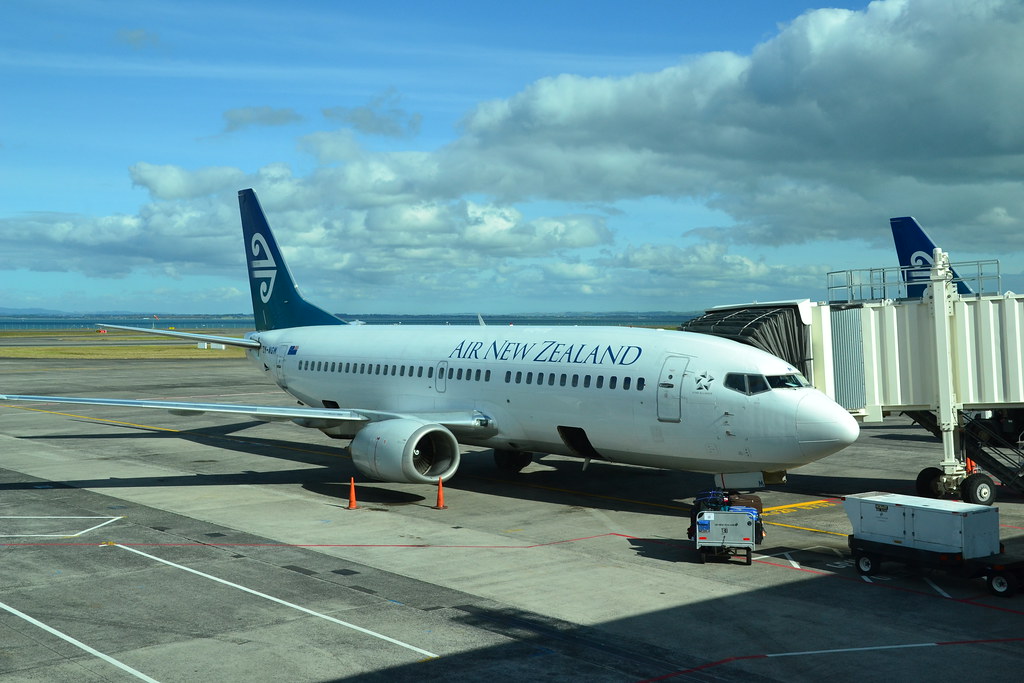
Student-loan debt-related arrests most often occur when a person who has been overseas arrives back in the country. Photo: an Air New Zealand aircraft, illustrating the border route the arrest-warrant power targets.
What clause 230 changes
Clause 230 would allow the offence to be established where the Commissioner cannot notify the borrower despite reasonable efforts. The borrower must have previously communicated with the Commissioner about the default and knowingly failed or refused to make reasonable repayment efforts.
Warrant conditions — offence plus imminent departure — remain. Officials rejected a strict-liability offence. The Regulatory Analysis Summary finalised on 5 August 2026 retains the knowledge requirement as a safeguard.
Revenue Minister Simon Watts's own announcement of the Bill described the target as overseas-based borrowers "deliberately avoiding Inland Revenue communications" — strengthening student loan enforcement, in the Minister's words, by preventing overseas-based borrowers from avoiding enforcement this way. The Bill text does not expressly require proof of deliberate avoidance of notification.
Fiscal stock and collections
The RAS cites roughly 93% of overdue student-loan debt sitting with OBBs and about 90% owed by people overseas more than 10 years. OBB annual loan interest is 5.6%; late-payment interest is 9.6%.
Budget 2024 compliance funding lifted collections. IR reported more than $207 million from OBBs from July 2024 to mid-May 2025, up 43% year-on-year. OBB repayments in the March 2026 quarter rose 20.5% to $83 million.
Between 2022/23 and 2025/26, IR made 73,732 referrals to overseas debt collectors. In a May 2025 release, IR said 89 people had been warned of possible arrest since July 2024; 11 engaged; one was arrested and paid; about 150 high-default borrowers were on active lookout with $15 million combined default.
Drafting gaps and the interest-relief carrot
Tax practitioner Dave Ananth, a partner at Meridian Partners and former IR solicitor, wrote on interest.co.nz that the draft does not require proof of deliberate avoidance. He flagged open questions on how old prior communication can be, what "on the default" means, and the absence of a replacement statutory deadline when notice fails.
I would require deliberate avoidance of notification before this alternative route can be used
Ananth wrote. He also wants published monitoring that separates the amendment's effect from broader collection activity.
A parallel tool already sits beside enforcement. Since 31 March 2026, section 145A lets the Commissioner write off ordinary loan interest on an equitable basis once a full-settlement amount is agreed.
Additional revenue from the arrest change has not been quantified. The RAS says behavioural response is uncertain. Police advised that a material rise in arrests could pressure airports and courts.
What select committee must nail down
For the Crown, the $2.5 billion OBB overdue stock is a material student-loan balance-sheet item. Nominal OBB balances keep growing under interest while compliance sits near one-quarter. Every sustained settlement converts paper into cash.
Select committee scrutiny should pin down deliberate-avoidance thresholds, the age and content of prior engagement, and a clear completion point for the alternative offence. Monitoring of engagement, repayments, warrants and arrests should be published so taxpayers can judge whether the stick recovers money or only raises the threat level.