Treasury flags PIF hosting bid made without Cabinet approval
Treasury told Finance Minister Nicola Willis that Foreign Minister Winston Peters committed New Zealand to host the 2027 Pacific Islands Forum before Cabinet approved the arrangement, locking in unavoidable costs inside a still-deficit Budget track.
Cabinet’s Economic Policy Committee has formally authorised public consultation on a prudential levy to shift Reserve Bank supervision costs onto banks, insurers and market infrastructure operators from 2027/28.
Cabinet has agreed in principle to three shifts in public performance reporting sought by the Finance and Expenditure Committee, while parking detailed design and costings until 2027.
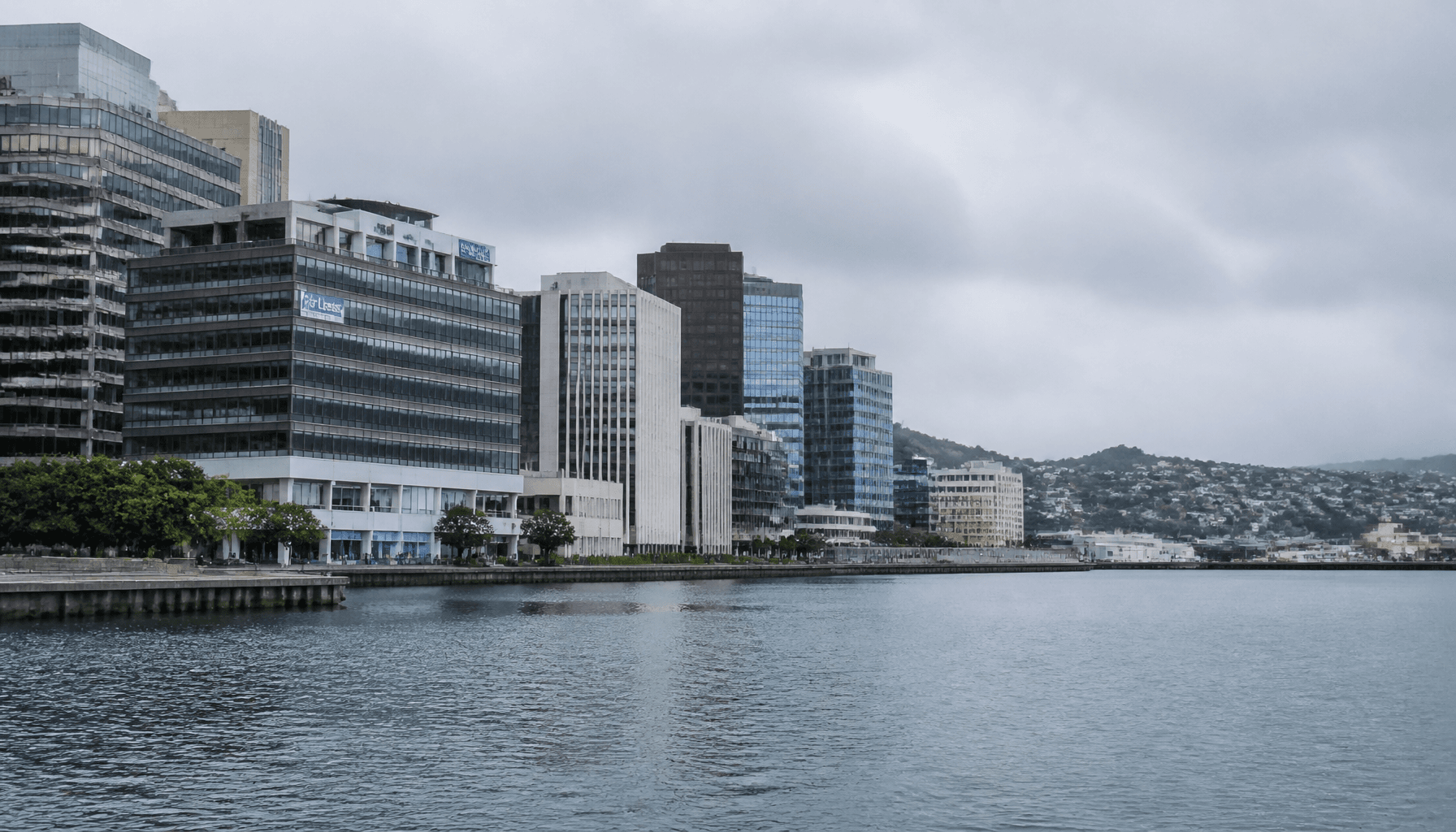
ASB’s Q2 2026 Regional Economic Scoreboard left Wellington joint last with Gisborne while Canterbury led on dairy cash, jobs and retail. The capital’s multi-quarter underperformance is structural: public-service consolidation, a deep housing correction and stalled population growth colliding with a national OCR still set for nationwide inflation.
Treasury advised Finance Minister Nicola Willis that Foreign Minister Winston Peters did not seek Cabinet approval before New Zealand publicly committed to host the 2027 Pacific Islands Forum Leaders' Meeting.
Budget 2026 Information Release advice dated 31 March 2026 (T2026/657) recorded the process gap in plain terms. "Cabinet approval was not sought before announcement of the hosting arrangement," Treasury wrote.
Budget 2026 later set aside $20 million over two years to host the Auckland summit. That figure sat between an MFAT operating-cost estimate of about $30 million and a Treasury alternative near $10 million framed against 2011 hosting costs.
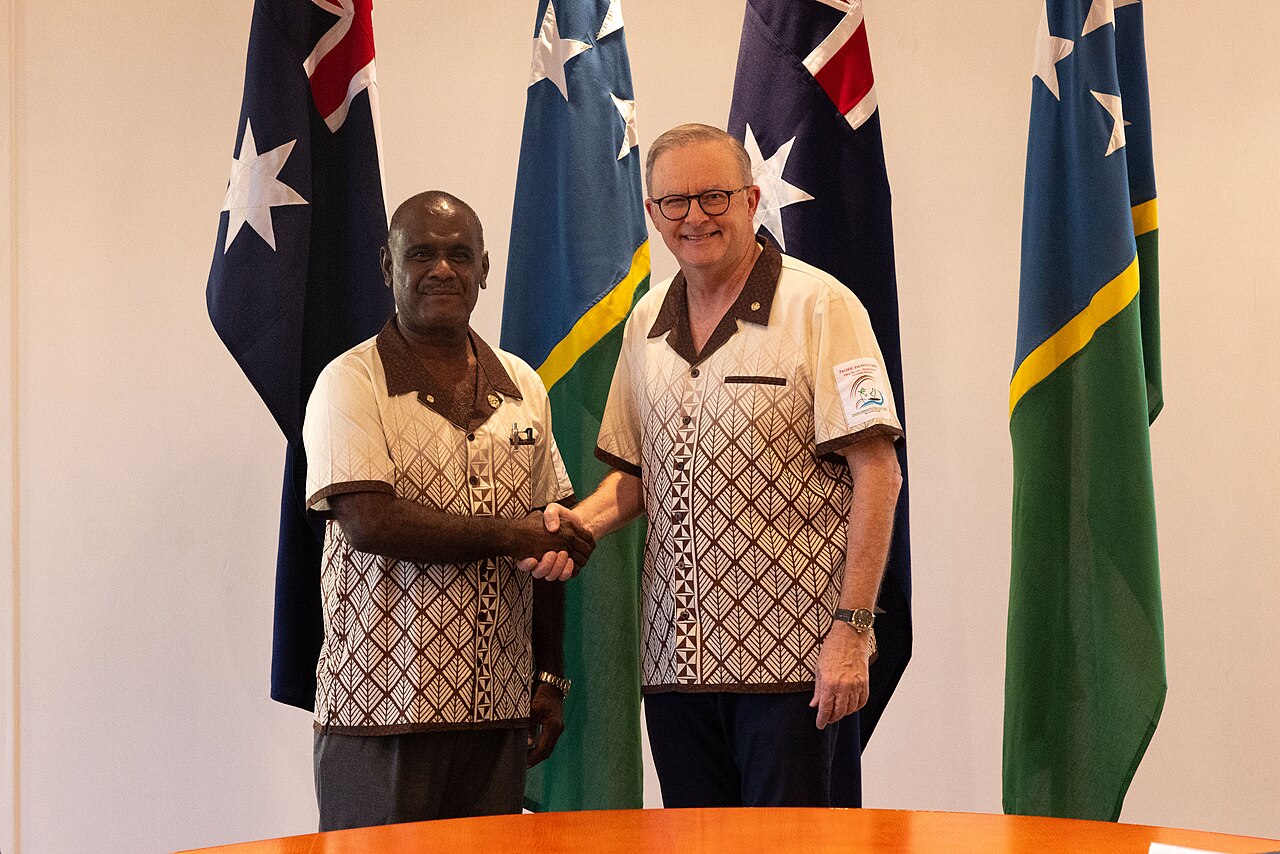
Peters offered New Zealand as host at the Forum Foreign Ministers' Meeting in Suva on 14 August 2025. Forum Leaders endorsed the bid in Solomon Islands in September 2025. Formal Budget money followed only in May 2026.
"Unavoidable costs"
Treasury judged the public pledge had already bound the Crown. "New Zealand has publicly committed to hosting the [Pacific Islands] Forum, creating unavoidable costs," the advice said.
Officials still saw merit in hosting. "We consider that it is valuable to host the Forum, but that there is significant scope to manage down the cost in line with the obligations of hosting," Treasury wrote.
"Cabinet approval was not sought before announcement of the hosting arrangement."
Value-for-money analysis was constrained from the start. "The value for money of the bid is not clear," Treasury told Willis. Lack of prior Cabinet consultation made that assessment harder.
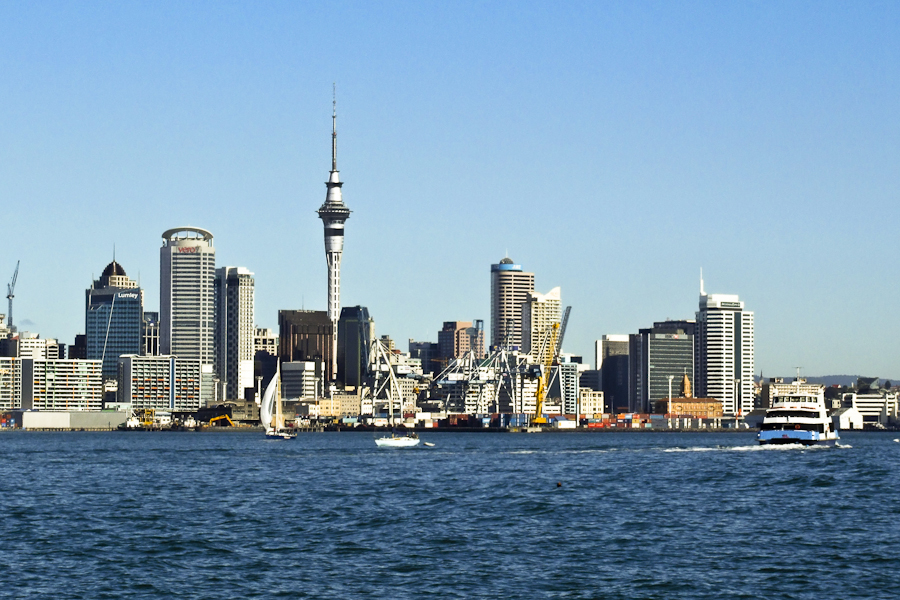
Auckland, which last hosted the Pacific Islands Forum Leaders' Meeting in 2011, is set to host again in 2027 under a commitment Treasury says was made before Cabinet signed off.
The $30m–$10m–$20m bridge
A separate aide-memoire advised cutting the package to $10 million after Willis sought an inflation-adjusted analogue of the 2011 Auckland Forum. Treasury noted the original bid included scalable or discretionary items, including $6.4 million for policy work.
Ministers settled on $20 million "to reflect that the Forum has increased in scope and importance since 2011." Peters' office has said he and Prime Minister Christopher Luxon decided on the mid-2025 offer and that the event is larger and more complex than in 2011.
An MFAT document obtained under the Official Information Act put potential operating costs at $30 million over two years as of March 2026. The $10 million gap between that estimate and the Budget line was flagged as a specific fiscal risk inside MFAT. It was not elevated into published BEFU risk disclosures.
An MFAT spokesperson later said subsequent work to clarify scope and tighten estimates meant the $20 million should cover hosting. Officials did not itemise how the $10 million was removed.
PIF 2027 hosting cost estimates vs. Budget allocation
Estimate
Amount (NZD)
MFAT operating-cost estimate
$30m
Treasury 2011 analogue
$10m
Final Budget 2026 allocation
$20m
Policy-work component (discretionary)
$6.4m
Three figures moved through the process before ministers settled on the final Budget line.
Source: Treasury T2026/657; MFAT OIA release, March 2026
Cabinet process and fiscal discipline
The Cabinet Manual requires proposals that affect the government's financial position or important financial commitments to go to Cabinet. Treasury consultation is required on papers with fiscal implications. Binding the Crown to multi-million-dollar international hosting costs before that gate cuts across usual Budget discipline.
Treasury did not allege illegality. It recorded a process failure that narrowed later choices and clouded value assessment.
The fiscal backdrop remains tight. Budget 2026 BEFU forecasts OBEGALx returning to a $2.6 billion surplus in 2028/29 — a year earlier than some prior tracks. Net core Crown debt is forecast to peak at 46.1 percent of GDP in 2027/28 before declining to 44.4 percent by the end of the forecast period.
Finance Minister Nicola Willis has stressed debt-servicing costs above $9 billion a year and the need for disciplined allowances. Against that setting, every discrete $10–30 million choice is tested against the surplus path.
Forum Leaders endorsed New Zealand's bid to host the 2027 summit at their meeting in Solomon Islands in September 2025, months after Peters had already made the public offer.
Vote Foreign Affairs, the relative winner
Vote Foreign Affairs has been a relative winner. MFAT was exempted from the immediate 2 percent baseline cut applied to many agencies. Budget 2026 also provided $145.3 million for the offshore diplomatic network and $109.8 million for Pacific and Indo-Pacific development and humanitarian assistance over the forecast period, alongside the $20 million PIF line.
Treasury has flagged rapid Vote growth. Expenditure in Vote Foreign Affairs has grown 67 percent from $1.16 billion in 2017/18 toward about $1.94 billion planned for 2026/27. MFAT's departmental baseline is forecast to grow 52 percent from $387 million to $590 million over the same span. Officials argued there is room for reprioritisation without automatic new money.
On Budget day, Peters framed the foreign-affairs package in geostrategic terms. "New Zealand faces the most adverse and contested geostrategic environment of the past 80 years, and we must pursue a highly active and effective foreign policy to defend and advance New Zealanders' interests here at home," he said.
New Zealand last hosted the Leaders' Meeting in Auckland in 2011. The Forum has since expanded in membership dynamics, dialogue-partner complexity, and climate and security agendas. Australia provided an approximately A$20 million support package to help Solomon Islands host in 2025 — a peer comparator for support costs, not a full New Zealand capital-city summit.
New Zealand has joined the PIF Troika ahead of the Auckland 2027 host year. Luxon has said the role puts New Zealand at the centre of regional decision-making for the first time in more than a decade and will be guided by Pacific priorities and PIF centrality.
What it means
For households and firms, the $20 million is a modest two-year operating spike beside multi-billion Crown flows. Its importance is procedural. A public international pledge treated by Treasury as creating unavoidable costs reduces ministers' later ability to scale or refuse spending inside a consolidation Budget.
If outturn costs track closer to MFAT's earlier $30 million estimate, pressure falls on MFAT baselines, contingency, or future Budgets. Delivery now rests on cost control in 2026/27 and 2027/28, Auckland logistics, and whether the host year meets the elevated expectations MFAT itself recorded.
Cabinet Office and Budget practice will face an immediate test: whether international hosting bids that lock in Crown cash clear the fiscal gate before the microphone, not after.