Unemployment Eases to 5.3% as Filled Jobs Show Uneven Recovery
New Zealand's seasonally adjusted unemployment rate fell to 5.3 percent in the March 2026 quarter from 5.4 percent in the December 2025 quarter, Stats NZ reported. Filled jobs nationwide reached about 2.35 million, still roughly 41,000 short of the October 2023 peak.
Official modelling shows 26,000 Pacific families will lose an average $30.75 a week from April 2027 under the Budget 2026 housing support package, the steepest ethnic average loss among losers.
Health Minister Simeon Brown has marked the start of major works on Whangārei Hospital’s acute services building and Budget 2026-backed 158-bed ward tower, a multi-year Crown capital path still partly held in tagged contingency.
NZ Vine Care Limited, a dormant Katikati horticultural labour supplier, entered shareholder liquidation owing Inland Revenue $845,000 as the sole preferential creditor, crystallising years of PAYE, GST, penalties and interest.
New Zealand's seasonally adjusted unemployment rate fell to 5.3 percent in the March 2026 quarter from 5.4 percent in the December 2025 quarter, Stats NZ reported. Filled jobs nationwide reached about 2.35 million, still roughly 41,000 short of the October 2023 peak.
It follows the December 2025 rate of 5.4 percent, which was the highest since the September 2015 quarter. The rate remains well above the post-pandemic lows near 3.2 percent recorded in 2021–2022.
Filled jobs peaked at 2.395 million in October 2023 before dropping to a trough of 2.337 million in October 2025. Provisional data show a partial rebound of about 13,000 jobs since the low point.
Sector Winners and Losers
Recovery varies sharply by sector. Information media and telecommunications lost 11.2 percent of filled jobs since the 2023 peak. Construction shed 8.4 percent.
Sectors tied to population growth performed better. Arts and recreation services gained 6.1 percent. Healthcare and social assistance rose 5.4 percent. Education and training increased 4.4 percent.
Filled jobs change by sector since October 2023 peak
Sectors tied to population growth outperform cyclical industries.
Source: Stats NZ employment indicators, via RNZ 4 August 2026
Young Workers Bear the Brunt
Younger workers faced steeper losses. Filled jobs for people under 30 sit 61,009 below the October 2023 peak. Roles for those over 55 rose 9.7 percent over five years.
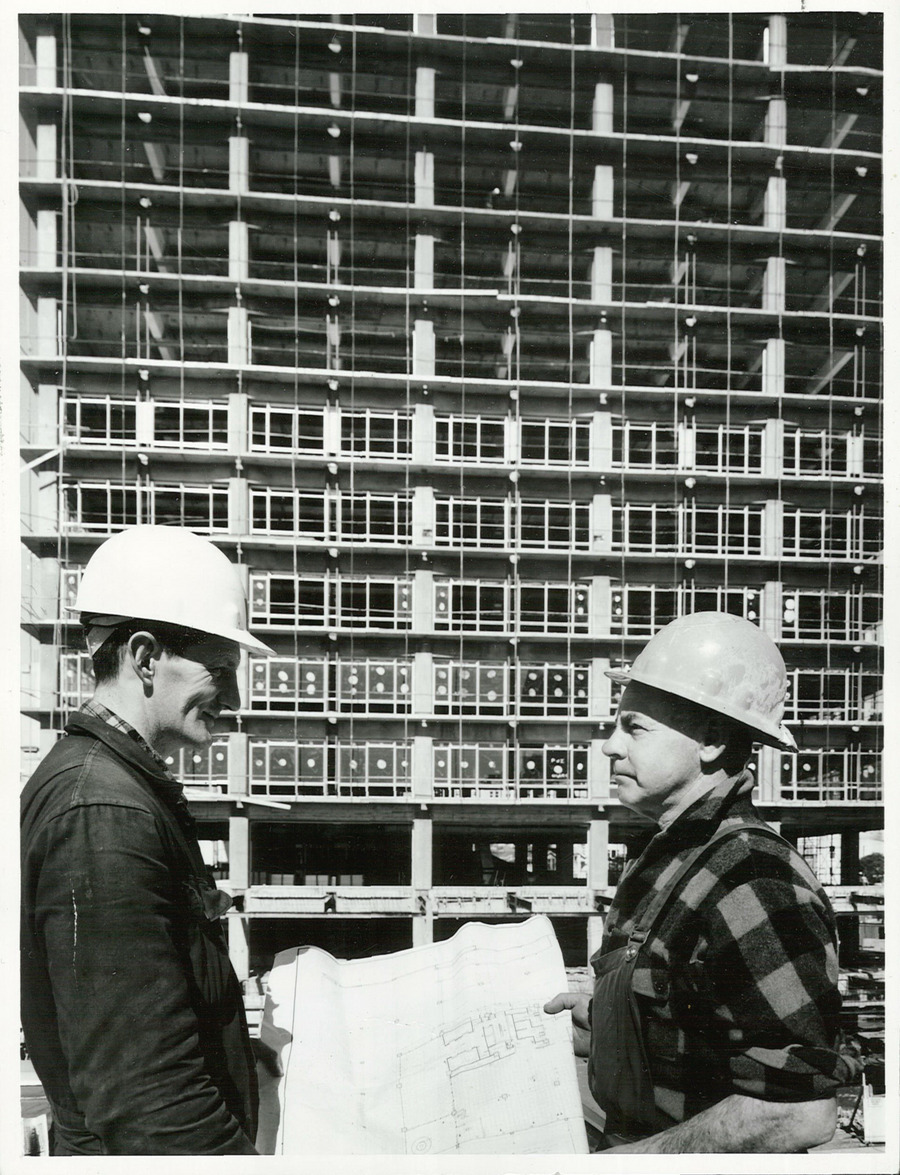
Construction workers on a Wellington site — the sector has shed 8.4 percent of filled jobs since the October 2023 peak, one of the steepest declines in the current downturn. Photo: Archives New Zealand · CC BY 2.0
Regional Divergence
Regional patterns also diverged, according to Stats NZ employment data reported by RNZ on 4 August 2026. Canterbury filled jobs climbed 1.4 percent since the peak. Auckland fell 2.7 percent. Wellington declined 3.8 percent. Gisborne dropped 4.2 percent.
RBNZ and Forecaster Views
RBNZ noted in its May 2026 Monetary Policy Statement that employment grew modestly while total hours worked rose strongly. The February statement highlighted the prior rise to 5.4 percent unemployment.
Westpac's March 2026 forecast update projected unemployment peaking at 5.6 percent in mid-2026 before easing to 5.4 percent by year end — though more recent bank forecasts, including Westpac's own July 2026 labour market preview, have revised the expected peak lower, with several major banks now forecasting the June 2026 quarter rate at around 5.4 percent.
Ministry of Social Development data, as reported by RNZ, show a 20 percent rise in main benefit recipients aged 25–39 from June 2021 to June 2026.
Economists at Infometrics and Simplicity observe that per-capita job growth remains absent. Any rebound has merely matched population increases.
The labour market shows signs of bottoming unevenly. Attention now turns to whether stronger GDP growth in the second half of 2026 will drive broader hiring or leave spare capacity in place.