Cabinet has pulled the additional Waitematā Harbour Crossing under direct Crown control and ordered an independent detailed business case, deferring any preferred option until funding, financing and delivery are settled against a tight balance sheet.
Christchurch City Holdings is committing about $300 million of public capital to an $821 million Lyttelton container expansion after rejecting a DP World–rūnanga operating lease, pairing seismic resilience with a prospective bet on dual large-ship berths and design capacity near 850,000 TEU by 2031.
New Zealand’s recovery is real in soft indicators and South Island export cash-flow, yet annual CPI at 4.1% and unemployment at 5.6% leave the RBNZ removing stimulus into spare capacity—and the pain is not evenly shared.
The Government will spend $42.9 million over four years to modernise the SuperGold Card so seniors can use it as primary photographic identification.
The National-led coalition has allocated $36.4 million in operating funding and $6.5 million in capital funding through Budget 2026 for the upgrade. Rollout of the new physical and digital versions is scheduled for October 2028.
Seniors Minister Casey Costello announced the change on 28 May 2026. The upgraded card will include a photograph and enhanced security features to meet bank and service provider standards.
More than 900,000 New Zealanders aged 65 and over stand to benefit. Many lack driver licences or passports, which currently limits access to banking and legal services.
"This will be free, because older New Zealanders should not have to pay just to prove who they are." — Seniors Minister Casey Costello
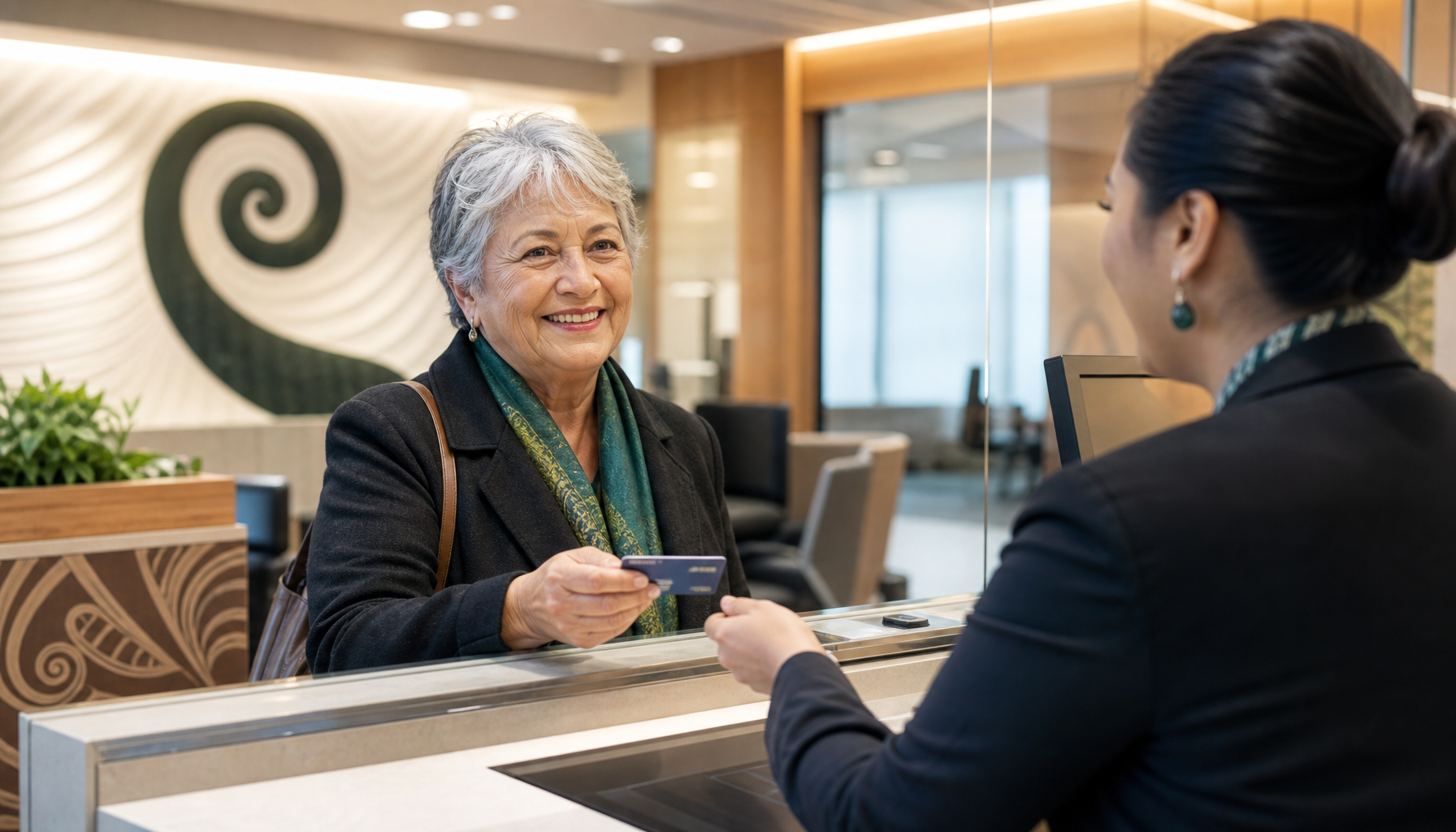
AI illustration of a New Zealand senior accessing bank services with photo identification — the upgraded SuperGold Card aims to remove a longstanding barrier for the 900,000-plus New Zealanders aged 65 and over who lack a driver licence or passport.
Optional upgrade, no cost to seniors
The upgrade remains optional and free. Current holders can still add a photo at an AA office for supporting identification until the new system launches.
"The SuperGold Card is already a trusted and valued tool for older New Zealanders. This change modernises the card and builds on what it already offers by making it easier for people to access the services they need." — Casey Costello
This follows a 2019 digital platform investment of $7.7 million under the previous government, which funded a new website, mobile app, and expanded partner network, according to a Beehive press release from May 2019. The current measure forms part of a restraint-focused Budget 2026 that trims operating allowances and targets fiscal repair.
Demographic and fiscal backdrop
New Zealand Superannuation already costs an estimated $24.7 billion in 2026 — more than 16 percent of core Crown spending — according to Treasury's Budget Economic and Fiscal Update 2026. The 65-plus population is projected to reach one million by 2029, according to Stats NZ.
Treasury's Budget Economic and Fiscal Update 2026 shows the OBEGAL deficit for the year ending June 2026 is forecast at $15.06 billion, narrower than the $16.93 billion projected at the December half-year update but still underscoring the tight fiscal environment. The SuperGold modernisation represents a small, targeted outlay within that context.
NZ OBEGAL deficit forecast, 2025/26 vs 2026/27
2025/26 deficit narrowed from December half-year forecast; 2026/27 widens again.
Source: Treasury Budget Economic and Fiscal Update 2026
Implementation and policy alignment
Work on detailed design begins immediately. The Ministry of Social Development will administer the changes through existing Work and Income channels.
The initiative aligns with coalition priorities on senior support while avoiding new administrative structures. Banks and service providers have set the identification standards the upgraded card must meet.
Population ageing continues to drive long-term pressure on public finances. NZ Super expenditure rises faster than nominal GDP on average according to Treasury modelling.
The four-year funding window and 2028 rollout provide time for implementation planning. No additional cost to seniors is required to obtain the primary ID version.
Opposition parties and senior advocacy groups had not responded to requests for comment by the time of publication.