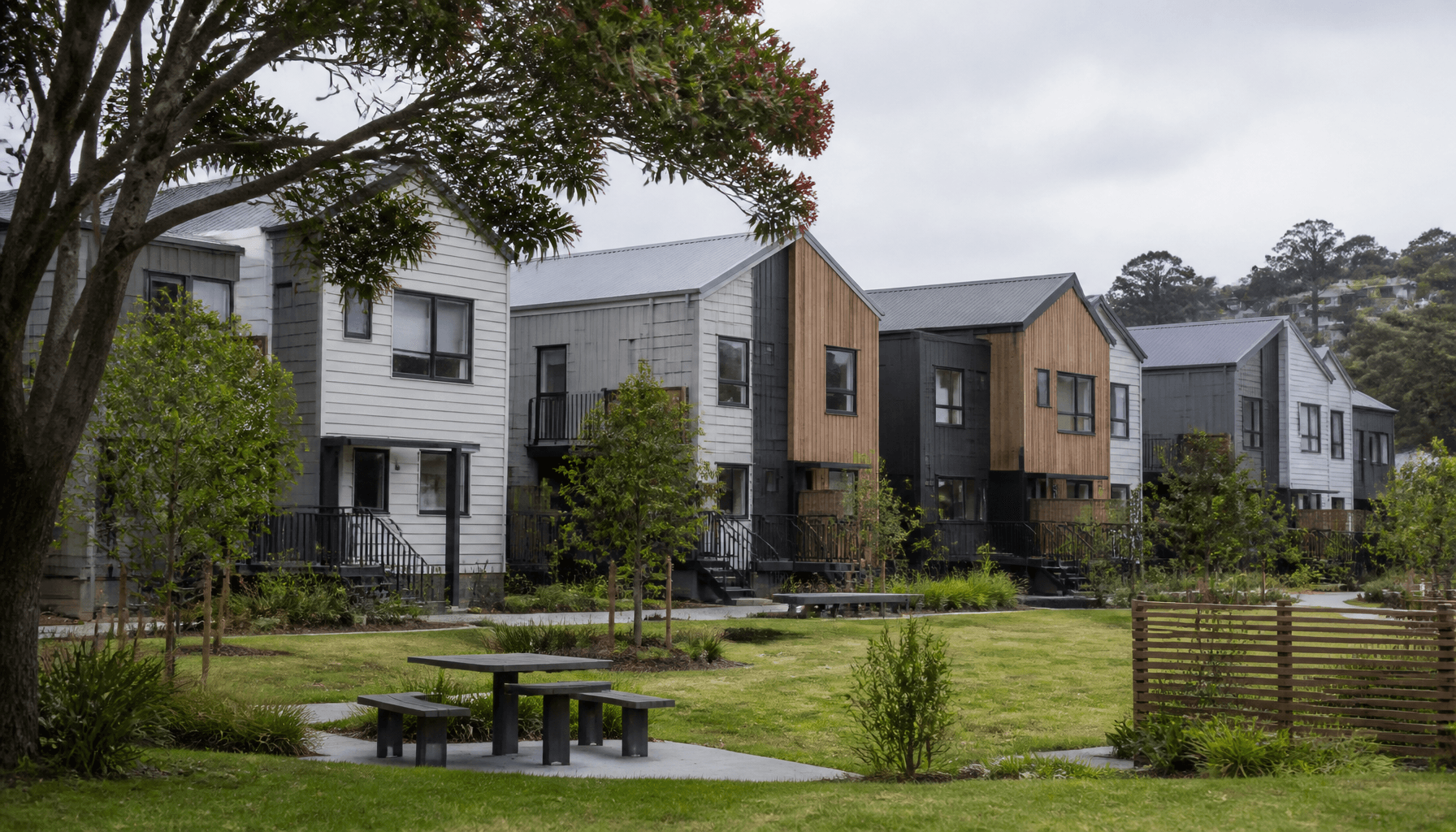
The government will provide up to $180 million in Crown lending to the Community Housing Funding Agency and back an 80 percent loan guarantee scheme that can support $900 million in bank lending to community housing providers.
The measures target higher borrowing costs that have limited CHPs' ability to expand social housing stock. Five major banks have agreed to participate, with BNZ committing $125 million under the scheme.
The Community Housing Provider Loan Guarantee Scheme caps Crown exposure at 80 percent of eligible loans. It supports new lending and refinancing of up to 50 percent of existing CHP debt, with a per-provider limit of $80 million. New loans must be issued by 30 June 2027 and run for a maximum of five years.
CHPs currently own or manage 13,000 to 14,000 social homes, or about 16 percent of the total. Kāinga Ora handles the remaining 84 percent, or roughly 73,000 tenancies. Total government-funded social housing places stood at around 87,000 as of November 2025.
Delivery against Budget targets
Budget 2024 allocated $140 million for 1,500 new CHP homes over 2025/26 and 2026/27. Budget 2025 added funding for 550 to 600 Auckland homes. As of October 2025, 2,135 homes were expected under the combined allocations, with 197 already delivered.
The CHFA, launched in 2024, holds an A+ credit rating from S&P Global Ratings and issued a $200 million social bond in 2025. It operates with a Crown standby facility of up to $150 million.
The housing register has fallen from 25,483 applicants in November 2023 to 19,297 as of September 2025. Public housing stock grew 2.3 percent in the year to June 2026.
The guarantee scheme is explicitly time-limited while longer-term reforms proceed, including a Reserve Bank review of risk weights applied to CHP lending.
'Level playing field' with Kāinga Ora
Housing Minister Chris Bishop has stated the government wants CHPs on a level playing field with Kāinga Ora.
I don't care who builds social houses as long as they are built.
The package leverages private bank capital and existing IRRS revenue streams rather than expanding direct Crown balance-sheet exposure. It aligns with the coalition's preference for partnerships over state-led construction.
Treasury documentation frames the initiative as a bridge measure that controls contingent liabilities through scheme caps and time limits. Actual cost savings will depend on the volume of lending drawn and the pass-through of lower rates to CHPs.
Sector group Community Housing Aotearoa welcomed the announcement as a step toward better financing conditions. Delivery progress will be tracked through HUD dashboards against the budgeted targets.
The RBNZ risk-weight review and planned simplification of HUD funding models from 2027 are intended to reduce the need for ongoing guarantees. Early bank participation suggests market appetite, though outcomes for the remaining waitlist will depend on construction capacity and regional demand.