Crown Inaction Locks Tairāwhiti into Costly Forestry Cycle
The Finlayson-led review has cleared Gisborne District Council of bias in forestry consenting and compliance. It places primary responsibility on central government to remove structural barriers that lock the region into repeated, expensive slash and sediment clean-ups.
Liquidators were appointed to New Zealand Green Investment Finance on 30 October 2026 after the entity posted a $116.4 million deficit driven by a $113.3 million impairment on its SolarZero exposure.
New Zealand's Crown Settlement Account stood at $25.61 billion at the end of September 2026, $15.61 billion above Treasury's $10 billion minimum liquidity target. This excess cash, built from over-issuance of government bonds, costs taxpayers an estimated $260 million to $340 million in net interest each year.
The government will provide up to $180 million in Crown lending to the Community Housing Funding Agency and back an 80 percent loan guarantee scheme that can support $900 million in bank lending to community housing providers.
The Finlayson-led review has cleared Gisborne District Council of bias in forestry consenting and compliance. It places primary responsibility on central government to remove structural barriers that lock the region into repeated, expensive slash and sediment clean-ups.
The clearance shifts the focus
The Independent Assurance Review into Gisborne District Council's forestry processes found no evidence of anti-forestry bias. The panel, chaired by former Attorney-General Christopher Finlayson KC with Dr Marie Doole and Vanessa Eparaima, examined consents, compliance cases and interviewed more than 100 stakeholders.
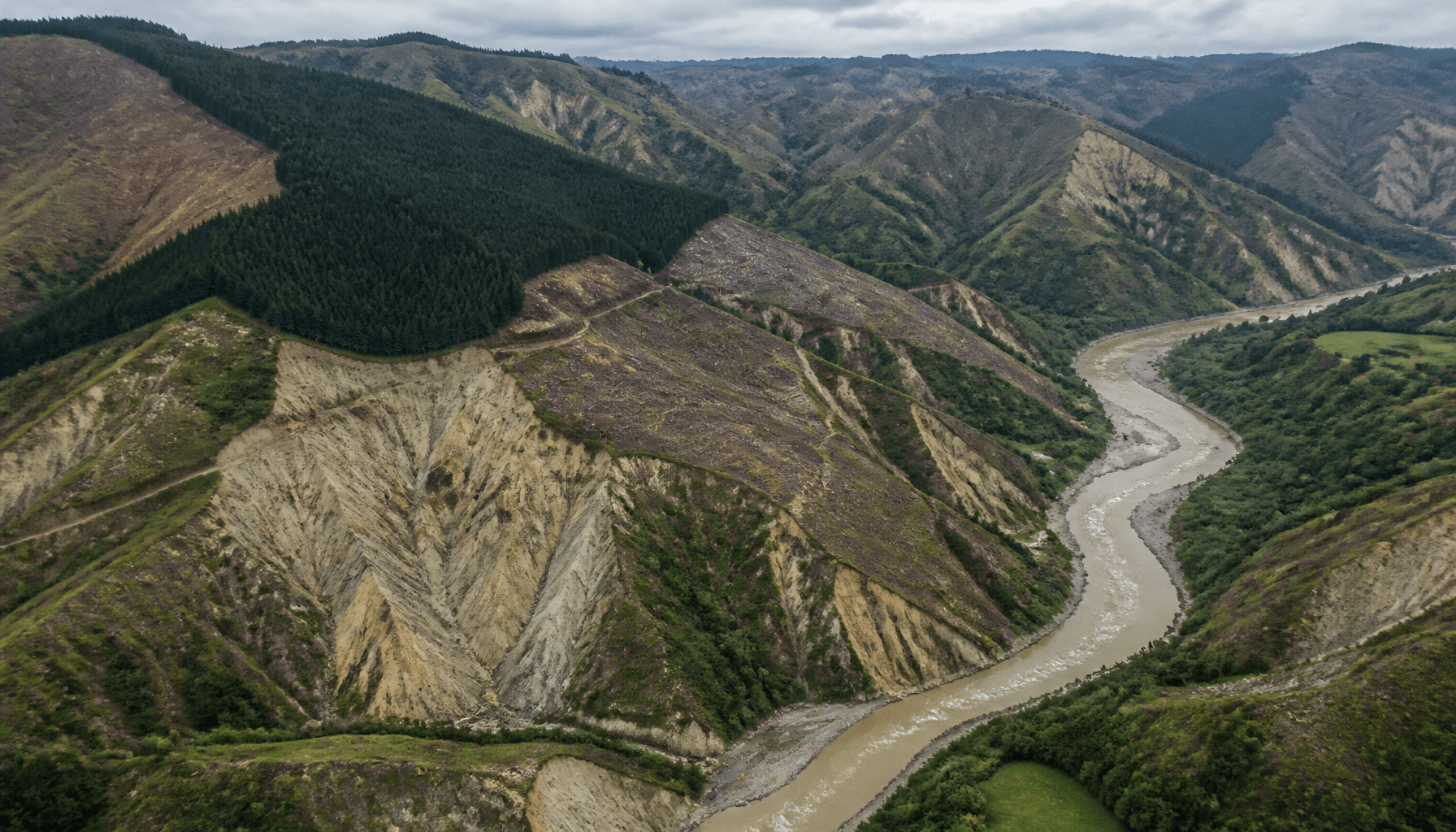
The 80-page report concluded the council's risk-based approach was proportionate to Tairāwhiti's extreme environmental vulnerabilities. Gisborne holds 10 per cent of New Zealand's most erosion-prone land despite comprising only 3 per cent of its area.
The fiscal gap
Crown spending on post-cyclone clean-ups has already exceeded $110 million by 2024, with over $80 million channelled through the Tairāwhiti Forestry Action Group. The Transition Programme Business Case sought $359 million in Crown co-investment over 10 years to stabilise up to 100,000 hectares of extreme-risk land.
Only $16.4 million has been reallocated for pilots in 2026. NZIER modelling projects $4 in avoided recovery costs for every $1 invested in transition.
Crown Funding for Tairāwhiti Forestry Transition
Proposed co-investment versus actual allocation shows persistent underfunding relative to modelled savings.
Source: Gisborne District Council Transition Programme Business Case and related reporting
The drivers
Repeated extreme weather events have mobilised an estimated 1.4 million tonnes of woody debris. Cyclones Hale and Gabrielle in 2023 caused clean-up costs that continue to mount for ratepayers and taxpayers.
Plantation forestry covers 21 per cent of the Tairāwhiti region. Up to 100,000 hectares, particularly purple-zone land, have been identified for transition to permanent native or non-rotational cover.
The Emissions Trading Scheme liabilities, overseas investment rules, Department of Conservation estate management and Crown forestry licences remain key barriers identified by the panel.
Forestry contributes 7.9 per cent of Tairāwhiti GDP according to NZIER analysis, the highest regional share nationally. The sector supports the port, transport and related industries.
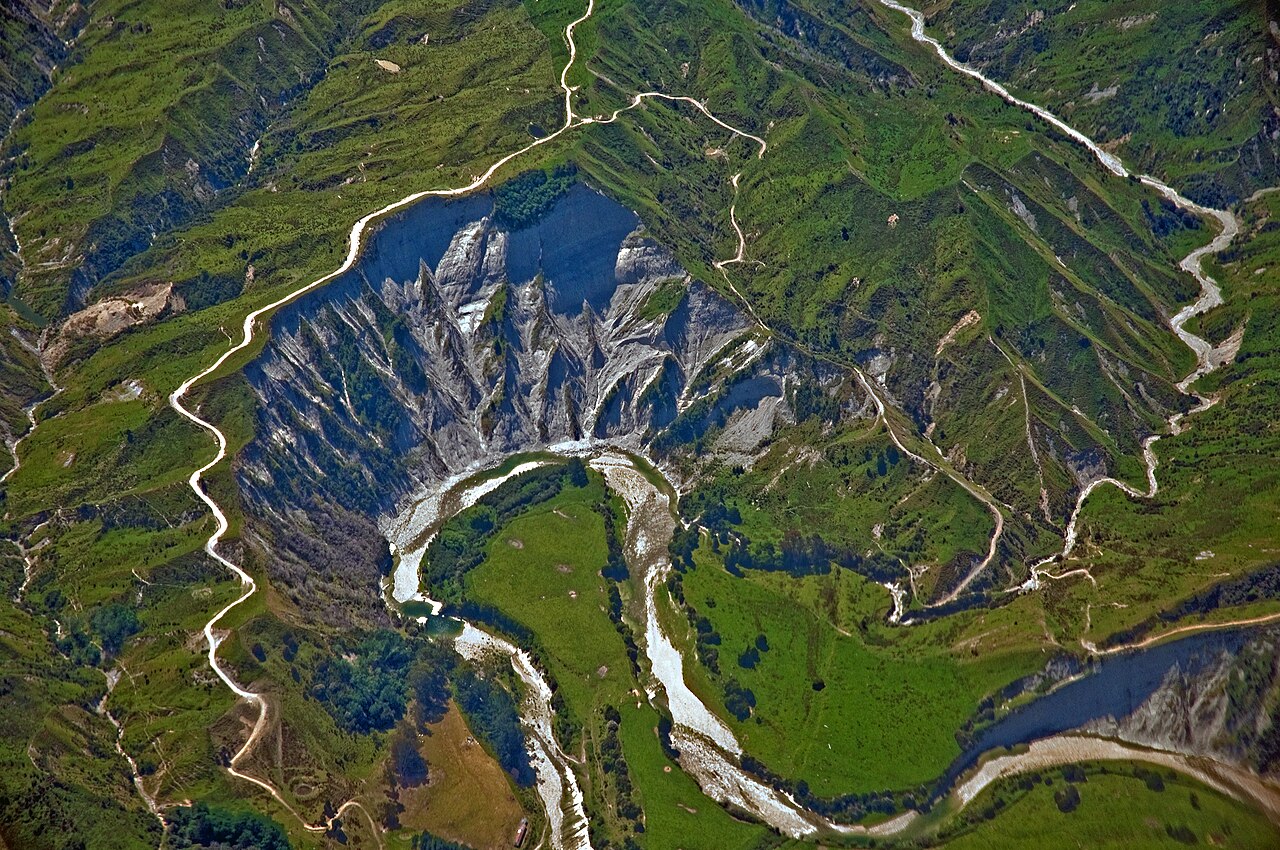
Erosion-prone hill country above Poverty Bay, Gisborne — the kind of extreme-risk land the Finlayson review says must shift out of rotational pine.
The trade-offs
Accelerating transition risks short-term employment disruption in harvesting and logistics. Direct forestry and logging employment estimates vary, with broader primary sector figures reaching 4,614 jobs or 18.9 per cent of regional employment per Infometrics data.
The business case projects more than 350 new land-stewardship jobs over the transition horizon. These roles are temporally and skills-mismatched with displaced logging crews.
Reactive Crown spending has already exceeded $110 million in direct clean-ups. Projected cumulative costs without structural change exceed $1 billion. The $359 million ask represents a choice between front-loaded investment and perpetual reactive appropriations.
Local consenting has strengthened since 2018. Gisborne District Council has consented over 2,800 hectares of high-risk land under updated conditions. The panel found this approach proportionate and effective.
Nationally, plantation forestry sequesters carbon valued at an estimated $1.6 billion annually. Any reduction in pine area affects New Zealand's Paris Agreement accounting, creating inter-departmental tension.
Second-order effects
Contractor crew numbers have declined sharply post-Gabrielle. Reports indicate a drop from 118 crews to 36 in some assessments. Skilled workforce attrition compounds regional fragility as crews relocate to Hawke's Bay and elsewhere.
Repeated events raise insurance risk assessments for Tairāwhiti properties. Repricing or withdrawal of cover would affect property values, mortgage security and regional bank lending.
Ratepayers bear a share of unreimbursed infrastructure and waterway costs. In a region with a small rating base, each event increases rates and constrains council capital investment.
The 60-year horizon flagged by the panel for sustainable forest states clashes with three-year electoral cycles.
Ministerial tenure in forestry portfolios averages far less. This misalignment explains the pattern of inquiries followed by limited action.
Historical context
The current situation echoes the aftermath of Cyclone Bola in 1988. Government-encouraged mass planting of radiata pine addressed immediate erosion but created the present harvest-cycle risks without adequate long-run modelling.
The post-Gabrielle ministerial inquiry labelled slash mobilisation an environmental disaster in 2023. The gap to the 2026 Finlayson review, with only pilot funding allocated, illustrates how disaster labelling has not translated into commensurate fiscal response.
The counter-argument
Industry voices argue tightened consenting has driven workforce attrition and crew collapses. They emphasise forestry's economic contribution and the risk of job losses from stricter rules.
The panel found no evidence the council was driving operators away. Enforcement orders have improved practices. The constraint stems from environmental physics and downstream risks to communities and infrastructure, not regulatory overreach.
Open questions
Specific ETS rule changes needed to remove deforestation liabilities for purple-zone conversion remain unclear. The revenue cost to the Crown of those changes is unquantified.
The $359 million business case breakdown between capital and operating expenditure, and between Crown, iwi and private contributions, has not been detailed publicly.
Overseas investment rule changes recommended by the panel require clarification on whether primary legislation or ministerial direction is needed.
Insurer responses on premium structures or coverage eligibility for Tairāwhiti properties citing slash risk have not been publicly confirmed.
Employment skills overlap between displaced logging crews and proposed land-stewardship roles requires assessment for retraining viability.
Crown forestry licence estate interaction with the purple-zone plan, including hectarage and ETS position, needs further mapping.
The path forward
The review marks a shift from local regulatory disputes to national land-use policy. Treasury and budget processes must now evaluate whether continued reactive spending represents better value than targeted co-investment that prices in transition costs explicitly. The $4-to-$1 return modelled by NZIER provides a clear fiscal benchmark for that decision.