Treasury Holds $15.61 Billion Excess Cash at Crown Settlement Account
New Zealand's Crown Settlement Account stood at $25.61 billion at the end of September 2026, $15.61 billion above Treasury's $10 billion minimum liquidity target. This excess cash, built from over-issuance of government bonds, costs taxpayers an estimated $260 million to $340 million in net interest each year.
The Finlayson-led review has cleared Gisborne District Council of bias in forestry consenting and compliance. It places primary responsibility on central government to remove structural barriers that lock the region into repeated, expensive slash and sediment clean-ups.
Liquidators were appointed to New Zealand Green Investment Finance on 30 October 2026 after the entity posted a $116.4 million deficit driven by a $113.3 million impairment on its SolarZero exposure.
The government will provide up to $180 million in Crown lending to the Community Housing Funding Agency and back an 80 percent loan guarantee scheme that can support $900 million in bank lending to community housing providers.
New Zealand's Crown Settlement Account stood at $25.61 billion at the end of September 2026, $15.61 billion above Treasury's $10 billion minimum liquidity target. This excess cash, built from over-issuance of government bonds, costs taxpayers an estimated $260 million to $340 million in net interest each year.
Excess Liquidity Imposes Recurring Cost
The Crown Settlement Account serves as the government's main payments account at the Reserve Bank of New Zealand. Tax receipts and bond proceeds flow in. Departmental spending and bond redemptions flow out.
Treasury reduced the target buffer to $10 billion in its December 2025 NZDM Insights review. The change reflected shorter assumed market-closure periods and greater use of short-term funding tools. Yet daily balances have stayed well above that level.
The account has averaged $27.8 billion since 2021 and more than $25 billion since 2024. It has not fallen below $14 billion since the start of 2021.
Debt Issued to Sit Idle
Core Crown residual cash deficits have totalled around $115 billion since 2019/20. Much of the associated bond issuance has remained parked in the Crown Settlement Account rather than being spent or used to retire other debt.
Holding cash that earns the Official Cash Rate while paying higher yields on long-term bonds creates a net carrying cost for the consolidated Crown. Current rates show the 5-year government bond yield at 4.40 percent on 15 October 2026 against an OCR of 2.75 percent.
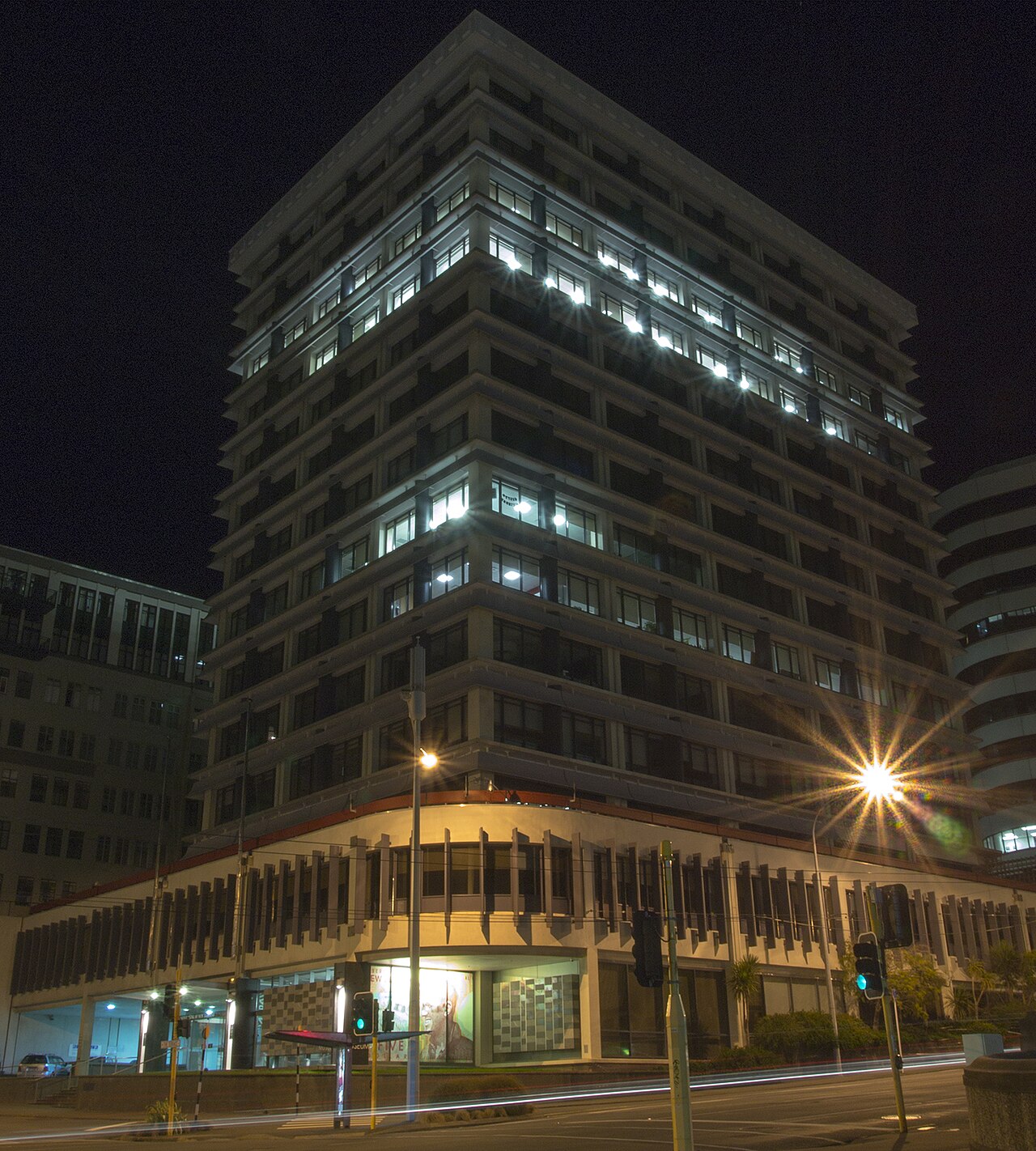
The Reserve Bank of New Zealand in Wellington, where the Crown Settlement Account — the government's main payments account — is held.
Crown Settlement Account Key Figures
Metric
Value (NZD billion unless noted)
CSA Balance End-Sept 2026
25.61
Liquidity Buffer Target
10.00
Excess Cash
15.61
Annual Net Interest Cost of Excess
0.26-0.34
OCR (28 Oct 2026)
2.75%
5-Year Bond Yield (15 Oct 2026)
4.40%
Excess balance creates avoidable interest expense for taxpayers.
Source: NZDM Insights December 2025; PREFU 2026; RBNZ data
Official Plans Have Not Delivered Drawdown
Treasury's 2025 review and the Pre-election Economic and Fiscal Update 2026 borrowing strategy both projected convergence toward the $10 billion target by late 2026/27. The 2026/27 NZGB programme was trimmed by $4 billion relative to earlier forecasts.
Daily OIA data through mid-2026 show no material reduction. Balances remained in the $20-29 billion range.
A $16 billion bond maturity due in April 2027 will require temporary short-term borrowing adjustments, but the underlying excess has persisted for years.
International Peers Operate Closer to Targets
Australia maintains a minimum buffer of A$30 billion, roughly four weeks of net spending. An independent review led by former RBA Deputy Governor Guy Debelle in April 2026 found Australian cash balances routinely sat well above the announced level and recommended treating the target as a ceiling to be approached rather than a floor.
Australian cash balances routinely sat well above the announced level and recommended treating the target as a ceiling to be approached rather than a floor.
New Zealand's Treasury review itself notes that even $10 billion remains large by OECD standards. The actual balance has operated as a de-facto higher floor.
Election-Year Accountability Gap
No major party has addressed the Crown Settlement Account specifically in campaign statements. Both Labour and National have signalled spending restraint, with Labour targeting around 33 percent of GDP and National around 30 percent.
Reducing the excess toward the stated target would lower gross debt service without changing net debt. The annual interest saving counts directly against operating balance and spending-to-GDP targets.
Parties should state whether they support drawing the Crown Settlement Account balance down to the Treasury target before the election.