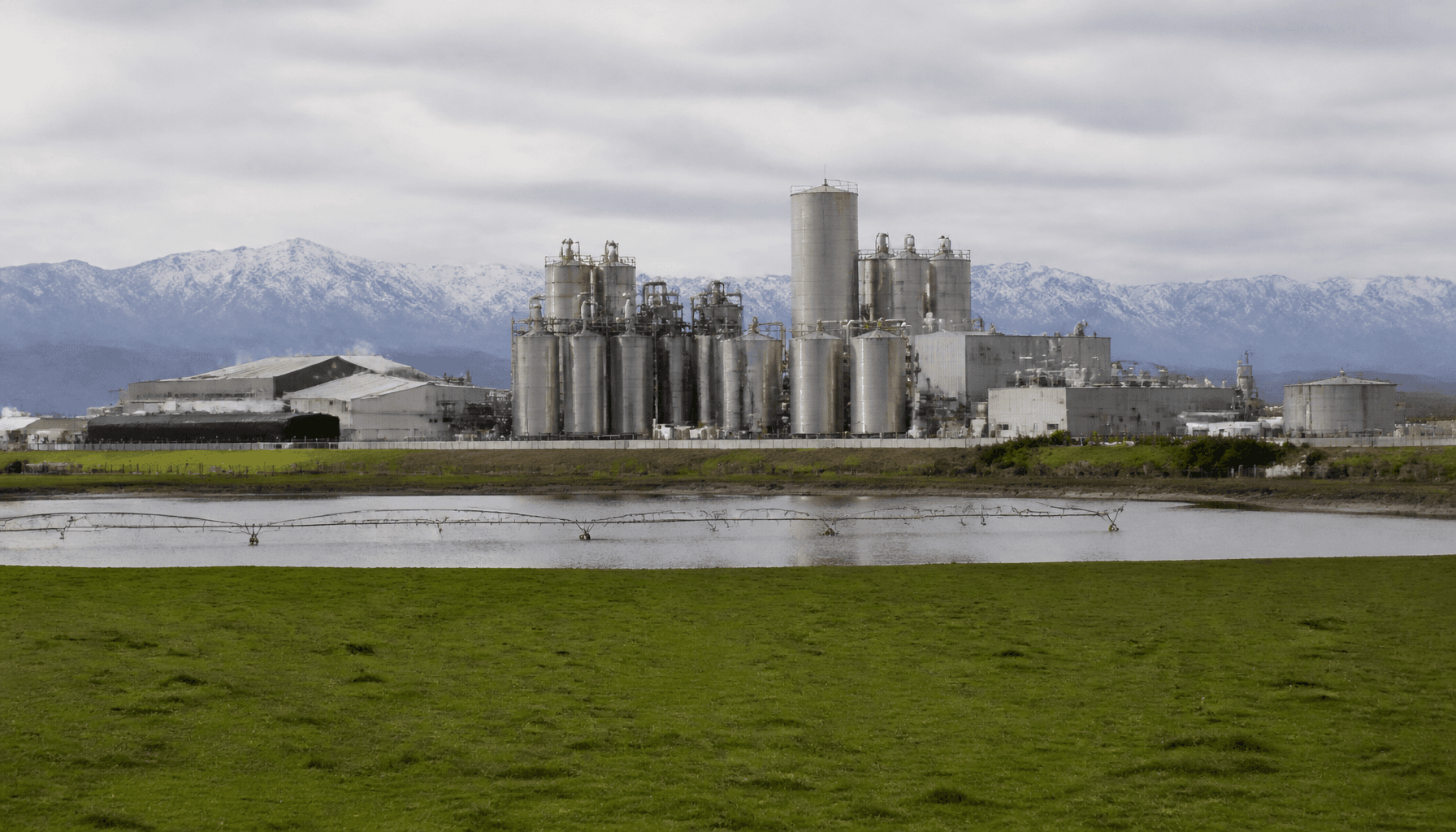
Fonterra applied on 2 October 2026 to Environment Canterbury to vary seven existing resource consents at three Canterbury processing plants, allowing disposal of up to 22.34 million litres of surplus raw milk.
Fonterra lodged the application to expand the definition of wastewater at its Clandeboye, Darfield and Studholme sites. The variation would permit incorporation of surplus raw milk into existing treatment systems or land application at a maximum depth of 1.5 mm per application.
The company described the measure as purely precautionary. Domestic Manufacturing Director Chris Kane stated on 23 November 2026 that the co-operative had processed record volumes in Canterbury during the 2026 peak without disposing of any milk.
According to DairyNZ, New Zealand dairy production reached a record 21.8 billion litres of milk in the 2025/26 season. Fonterra's own figures show the co-operative processes about 16 billion litres annually across 24 manufacturing sites nationally.
Proposed Volume and Rationale
The application covers a conservative worst-case estimate averaging 808 cubic metres per day during the FY27 peak. Fonterra emphasised flexibility across its network of sites, processing plants and milk tankers to redirect supply.
The consents, if varied, would run until 2045 in some cases. No milk has been disposed of under the proposed regime this season.
"We've just gone through peak, we've actually processed record volumes in Canterbury and we haven't dumped one litre of milk. So it's been a great season."
— Chris Kane, Fonterra Domestic Manufacturing Director, speaking to Newstalk ZB.
Opposition and Support
The Environmental Law Initiative urged ECan to reject the variation and require a new publicly notified consent. ELI argued the discharge constitutes a materially different activity with higher nutrient loads.
Greenpeace described the proposal as part of unchecked pollution by New Zealand's largest polluter. Poverty advocates criticised the optics of potential food waste amid cost-of-living pressures.
Federated Farmers supported the application as prudent risk management. The group noted recent infrastructure upgrades have largely addressed South Island constraints.
- Environmental Law Initiative: reject the variation, require a new publicly notified consent
- Greenpeace: calls it part of unchecked pollution by New Zealand's largest polluter
- Poverty advocates: criticise the optics of food waste amid cost-of-living pressures
- Federated Farmers: supports the application as prudent risk management
Regulatory Status
ECan confirmed the application is under processing. The regional council may commission further technical advice on environmental effects.
Fonterra's consultants assessed effects as no more than minor, citing similarity to existing consented wastewater and soil characteristics in Canterbury.
Scale Comparison
Set against Fonterra's roughly 16 billion litres of annual national processing volume and New Zealand's record 21.8 billion litre season, the proposed 22.34 million litres represents a small proportion of total output. Environmental Law Initiative researcher Eliza Prestidge-Oldfield has noted the proposed volume is more milk than Fonterra has donated for the KickStart Breakfast Programme in the fifteen years that programme has been running.
Outlook
The ECan decision will determine whether similar contingency provisions remain available through administrative variations. Outcomes could influence processing resilience planning for the wider dairy sector.