Government Delays Modest Equity Ask for Ratepayer Solar Loan Scheme
The government has yet to decide on a $7 million Crown equity investment that would let councils offer long-term loans for rooftop solar and other home upgrades.
The Government will direct $5 million from the International Visitor Levy into one-off marketing and business events programmes for the 2026/27 year to accelerate tourism's return toward pre-pandemic levels.
The Government will remove nine health and life insurers from New Zealand's mandatory climate-related disclosures regime, reducing the total number of required reporting entities to 67.
Former United Future leader Peter Dunne has called for an independent body to scrutinise opposition parties' spending commitments, arguing that New Zealand's existing fiscal transparency rules leave a critical gap ahead of elections.
The government has yet to decide on a $7 million Crown equity investment that would let councils offer long-term loans for rooftop solar and other home upgrades.
Ministers received preliminary advice on the Ratepayer Assistance Scheme in February 2026. No final decision has followed as of May 2026.
The scheme requires only minor legislative change. It would stand up in 12 to 18 months once approved.
Participating councils and the Local Government Funding Agency would own the vehicle alongside central government. Loans would sit off council and Crown balance sheets.
Modest Fiscal Ask, High Multiplier
The Crown would contribute $7 million in equity. Councils would add up to $30–35 million. The structure could facilitate up to $5 billion in lending over time.
Interest rates would run 1 to 2.5 percent below bank mortgage equivalents. The model draws on the Local Government Funding Agency's proven credit rating.
This approach avoids new subsidies or direct grants. It leverages private capital and existing local-government infrastructure.
Cross-Party Support Emerges
Local Government New Zealand chief executive Scott Necklen said the scheme had pretty broad support right across the parties that we've spoken to and would deliver immediate cost-of-living relief to New Zealanders.
deliver immediate cost-of-living relief to New Zealanders — Scott Necklen, LGNZ chief executive
Labour energy spokesperson Megan Woods said she was open to looking at what we can do through a financing scheme like the RAS but stressed the need to avoid rent inflation.
New Zealand First deputy leader Shane Jones described himself as quite interested during debate at the Electrify conference.
Energy Minister Simon Watts confirmed in May 2025 that the mechanism remained under active consideration by this Government and formed part of the tools in the toolkit.
Household Savings and Uptake Gap
New Zealand had more than 73,000 registered rooftop solar systems at the end of 2025. That figure equals one in 27 homes and marks a 15 percent rise from 2024.
EECA data show typical small-to-medium installations cost $8,500 to $11,500. Average annual savings reach $1,000 through lower power bills. Payback periods run 7 to 10 years.
For a typical 9 kW array financed over 25 years under the scheme, households would record cumulative net savings of about $1,100 in the first year and $26,000 by 2055.
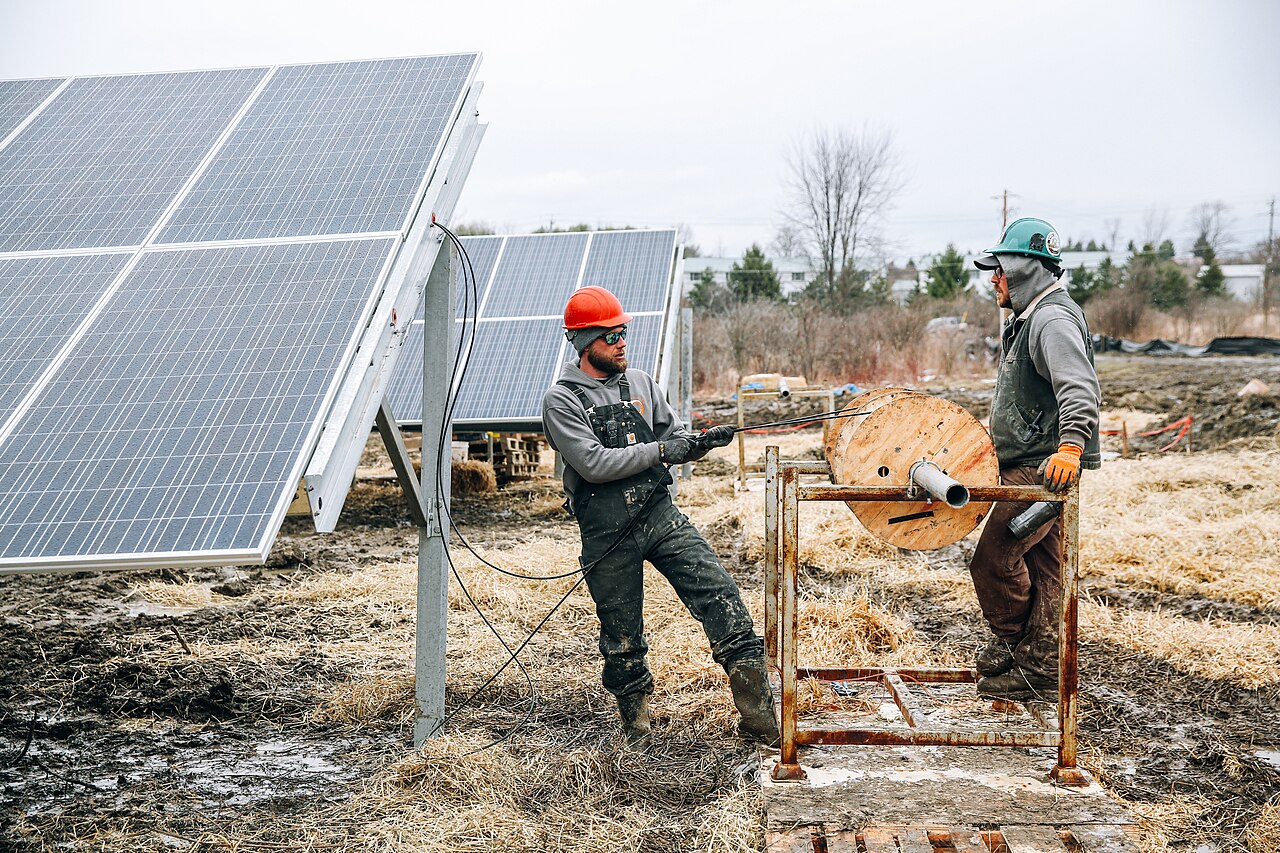
Solar panel installation in progress. Under the RAS, New Zealand households could access loans at 1–2.5 percentage points below bank mortgage rates, with typical installations costing $8,500–$11,500.
Projected cumulative net household savings under RAS (9 kW array, 25-year loan)
Assumes average annual power bill saving of $1,000, rising modestly with electricity price inflation. Loan repaid over 25 years at RAS rate.
Source: Rewiring Aotearoa RAS overview
Australia Shows Faster Progress
Australia's Small-scale Renewable Energy Scheme supplies upfront subsidies through certificates. State schemes add interest-free loans up to $15,000.
These measures have lifted Australian rooftop solar penetration several times higher than New Zealand's current 3.7 percent of homes.
Rooftop solar penetration: New Zealand vs Australia
NZ figure as at end of 2025; Australian figure reflects national average across states with active subsidy and loan schemes.
Source: Newsroom / energy.gov.au
Bureaucratic Caution Risks Missed Opportunity
The government's measured pace on risk assessment continues despite no public objections from Treasury or regulators. Proponents from Local Government New Zealand and Rewiring Aotearoa urge faster rollout.
The scheme targets cost-of-living pressure and decarbonisation without expanding Crown debt or creating ongoing fiscal commitments. Further delay only extends the period before ratepayers gain access to lower-cost financing for essential upgrades.