Economic News
Subscribe →
HomeMonetary PolicyFiscalTradeRegulationBankingEconomic DataAbout
Vol. 02 · New Zealand
FRIDAY 22/05/2026
Iss. 2026 / 21
Economic News

Balanced. Independent. Informed.

Sections

  • Monetary Policy
  • Fiscal
  • Trade
  • Regulation
  • Banking
  • Economic Data

Subscribe

  • Free email
  • Email preferences
  • RSS feed

Company

  • About
  • Privacy policy

About

Economic News is an independent New Zealand publication covering monetary policy, markets, the public finances and the wider economy.

© 2026 Economic News Limited
.

Health NZ $1.8B Liability Spurs Holidays Act Reform — Economic News
Live
Retail Volumes Rise 0.9 Percent in March QuarterBudget 2026 Documents Available 28 May as Government Tightens SpendingHormuz Closure Turns Supply Chain Disruptions Into Multi-Year Cost Burden for New Zealand ExportersRetail Volumes Rise 0.9 Percent in March QuarterBudget 2026 Documents Available 28 May as Government Tightens SpendingHormuz Closure Turns Supply Chain Disruptions Into Multi-Year Cost Burden for New Zealand ExportersRetail Volumes Rise 0.9 Percent in March QuarterBudget 2026 Documents Available 28 May as Government Tightens SpendingHormuz Closure Turns Supply Chain Disruptions Into Multi-Year Cost Burden for New Zealand ExportersRetail Volumes Rise 0.9 Percent in March QuarterBudget 2026 Documents Available 28 May as Government Tightens SpendingHormuz Closure Turns Supply Chain Disruptions Into Multi-Year Cost Burden for New Zealand ExportersRetail Volumes Rise 0.9 Percent in March QuarterBudget 2026 Documents Available 28 May as Government Tightens SpendingHormuz Closure Turns Supply Chain Disruptions Into Multi-Year Cost Burden for New Zealand ExportersRetail Volumes Rise 0.9 Percent in March QuarterBudget 2026 Documents Available 28 May as Government Tightens SpendingHormuz Closure Turns Supply Chain Disruptions Into Multi-Year Cost Burden for New Zealand ExportersRetail Volumes Rise 0.9 Percent in March QuarterBudget 2026 Documents Available 28 May as Government Tightens SpendingHormuz Closure Turns Supply Chain Disruptions Into Multi-Year Cost Burden for New Zealand ExportersRetail Volumes Rise 0.9 Percent in March QuarterBudget 2026 Documents Available 28 May as Government Tightens SpendingHormuz Closure Turns Supply Chain Disruptions Into Multi-Year Cost Burden for New Zealand ExportersRetail Volumes Rise 0.9 Percent in March QuarterBudget 2026 Documents Available 28 May as Government Tightens SpendingHormuz Closure Turns Supply Chain Disruptions Into Multi-Year Cost Burden for New Zealand ExportersRetail Volumes Rise 0.9 Percent in March QuarterBudget 2026 Documents Available 28 May as Government Tightens SpendingHormuz Closure Turns Supply Chain Disruptions Into Multi-Year Cost Burden for New Zealand ExportersRetail Volumes Rise 0.9 Percent in March QuarterBudget 2026 Documents Available 28 May as Government Tightens SpendingHormuz Closure Turns Supply Chain Disruptions Into Multi-Year Cost Burden for New Zealand ExportersRetail Volumes Rise 0.9 Percent in March QuarterBudget 2026 Documents Available 28 May as Government Tightens SpendingHormuz Closure Turns Supply Chain Disruptions Into Multi-Year Cost Burden for New Zealand ExportersRetail Volumes Rise 0.9 Percent in March QuarterBudget 2026 Documents Available 28 May as Government Tightens SpendingHormuz Closure Turns Supply Chain Disruptions Into Multi-Year Cost Burden for New Zealand ExportersRetail Volumes Rise 0.9 Percent in March QuarterBudget 2026 Documents Available 28 May as Government Tightens SpendingHormuz Closure Turns Supply Chain Disruptions Into Multi-Year Cost Burden for New Zealand ExportersRetail Volumes Rise 0.9 Percent in March QuarterBudget 2026 Documents Available 28 May as Government Tightens SpendingHormuz Closure Turns Supply Chain Disruptions Into Multi-Year Cost Burden for New Zealand ExportersRetail Volumes Rise 0.9 Percent in March QuarterBudget 2026 Documents Available 28 May as Government Tightens SpendingHormuz Closure Turns Supply Chain Disruptions Into Multi-Year Cost Burden for New Zealand ExportersRetail Volumes Rise 0.9 Percent in March QuarterBudget 2026 Documents Available 28 May as Government Tightens SpendingHormuz Closure Turns Supply Chain Disruptions Into Multi-Year Cost Burden for New Zealand ExportersRetail Volumes Rise 0.9 Percent in March QuarterBudget 2026 Documents Available 28 May as Government Tightens SpendingHormuz Closure Turns Supply Chain Disruptions Into Multi-Year Cost Burden for New Zealand ExportersRetail Volumes Rise 0.9 Percent in March QuarterBudget 2026 Documents Available 28 May as Government Tightens SpendingHormuz Closure Turns Supply Chain Disruptions Into Multi-Year Cost Burden for New Zealand ExportersRetail Volumes Rise 0.9 Percent in March QuarterBudget 2026 Documents Available 28 May as Government Tightens SpendingHormuz Closure Turns Supply Chain Disruptions Into Multi-Year Cost Burden for New Zealand ExportersRetail Volumes Rise 0.9 Percent in March QuarterBudget 2026 Documents Available 28 May as Government Tightens SpendingHormuz Closure Turns Supply Chain Disruptions Into Multi-Year Cost Burden for New Zealand ExportersRetail Volumes Rise 0.9 Percent in March QuarterBudget 2026 Documents Available 28 May as Government Tightens SpendingHormuz Closure Turns Supply Chain Disruptions Into Multi-Year Cost Burden for New Zealand ExportersRetail Volumes Rise 0.9 Percent in March QuarterBudget 2026 Documents Available 28 May as Government Tightens SpendingHormuz Closure Turns Supply Chain Disruptions Into Multi-Year Cost Burden for New Zealand ExportersRetail Volumes Rise 0.9 Percent in March QuarterBudget 2026 Documents Available 28 May as Government Tightens SpendingHormuz Closure Turns Supply Chain Disruptions Into Multi-Year Cost Burden for New Zealand Exporters
FISCAL POLICY · EMPLOYMENT LEGISLATION

Health NZ $1.8 Billion Liability Drives Holidays Act Reform

Health New Zealand carries a $1.8 billion liability for past Holidays Act compliance errors. The Employment Leave Bill 2026 targets this fiscal burden with simpler rules.

Fiscal Desk18/05/2026 · 10:08 NZT8 min read
FiscalBreaking
FD
Fiscal Desk
Fiscal Policy Correspondent · 18/05/2026 · 10:08 NZT · 8 min read
Wellington payroll office overlooking the harbour, workstations open with compliance documents

At a glance

A $1.8B Health NZ underpayment exposes the Holidays Act's fatal complexity; the replacement bill simplifies accrual but unions warn shift workers will lose out.

Key stats

Total Liability
$1.8 billion
Health NZ, back to 2010
Paid — Current Staff
$685 million+
96% of workforce
Paid — Former Staff
$175 million+
31,000 ex-employees
Consultant Spend
$130 million+
remediation effort
Staff Affected
220,000
current and former
Implementation Year
2028
new rules take effect
"Within the technical drafting that we've done, there will be some cases where an employer would be worse off, and in some cases where an employee will be worse off."Brooke van Velden, Minister for Workplace Relations and Safety

Sources cited

  • Overhaul of broken Holidays Act on the way — Beehive.govt.nz
  • Long awaited Holidays Act replacement passes first reading — Beehive.govt.nz
  • Holidays Act reform: Employment Leave Bill — MBIE
  • Key changes to the employment leave system — MBIE
  • Health NZ eyes $1.8b cost for unpaid leave dating back 15 years — RNZ
  • Proposed leave bill will make workers' lives 'materially worse', select committee hears — RNZ
  • What sets Holiday Act overhaul apart from what Labour had planned — Newsroom

Free

New Zealand's economy, straight to your inbox.

By subscribing you accept our privacy policy.

More from fiscal

Shoppers browsing a well-stocked New Zealand supermarket aisle, illustrating the retail trade activity recorded in the March 2026 quarter
Economic Data · 22/05/2026 · 13:16 NZT

Retail Volumes Rise 0.9 Percent in March Quarter

New Zealand retail sales volumes increased 0.9 percent in the March 2026 quarter on a seasonally adjusted basis. The gain matched the December 2025 quarter and exceeded market expectations of 0.5 percent.

Data Desk·22/05/2026 · 13:16 NZT·6 min
A Wellington government office interior with stacked Budget documents on a conference table and harbour views, representing Budget 2026 preparations
Fiscal · 22/05/2026 · 09:32 NZT

Budget 2026 Documents Available 28 May as Government Tightens Spending

Budget 2026 documents go online from 2pm on Thursday 28 May, with hard-copy packs on sale for $55 through two retailers.

Fiscal Desk·22/05/2026 · 09:32 NZT·8 min
Wellington's Lambton Quay looking toward the Beehive on an overcast morning, a For Lease sign visible in a ground-floor office window
Economic Data · 21/05/2026 · 14:53 NZT

BDO Index Shows Multi-Speed Recovery as Fuel Shocks Hit Domestic Sectors

Business leaders report modest gains in financial positivity while overall sentiment stays near record lows, underscoring a diverging economy where export-oriented sectors gain ground and domestic-facing industries struggle under fuel-price pressures and pre-election uncertainty.

Analysis Desk·21/05/2026 · 14:53 NZT·22 min

All fiscal →

Health New Zealand carries a $1.8 billion liability for past Holidays Act compliance errors. The Employment Leave Bill 2026 targets this fiscal burden with simpler rules.

Health NZ liability exposes broken system

Health New Zealand estimates a $1.8 billion liability for Holidays Act compliance errors. The figure covers underpayments dating back to May 2010. It affects 220,000 current and former staff.

The Employment Leave Bill repeals the Holidays Act 2003. It introduces an hours-based accrual system. Annual leave accrues at 0.0769 hours per standard hour worked from day one.

Sick leave accrues at 0.0385 hours per standard hour worked. A 160-hour cap replaces the current flat 10-day entitlement after six months.

Health NZ's remediation payments to date illustrate the direct taxpayer cost of overly complex legislation:

  • Paid to current employees: more than $685 million
  • Paid to former employees: more than $175 million
  • Consultant and contractor spend: over $130 million

Trade-offs acknowledged by Minister

Minister Brooke van Velden addressed earlier drafts that tried to protect every worker. She said the feedback was clear.

The feedback that I had back on that draft was, “stop, this is worse than the current law”

She also noted inevitable winners and losers under the new drafting.

Within the technical drafting that we’ve done, there will be some cases where an employer would be worse off, and in some cases where an employee will be worse off.

The bill passed its first reading on 12 March 2026. The Education and Workforce Select Committee must report back by 13 July 2026.

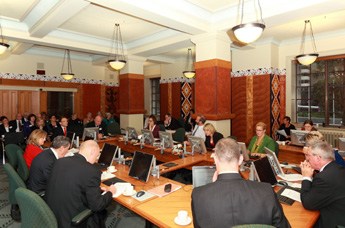
The Education and Workforce Select Committee, which is hearing submissions on the Employment Leave Bill and must report back by 13 July 2026. Clerk of the New Zealand House of Representatives · CC BY 4.0 · Wikimedia Commons

Impact on part-time and shift workers

Unions including the PSA and NZCTU argue the changes will disadvantage part-time and shift workers. Charge nurse Mary Becker told the committee she projects a $2,700 annual loss. Shift and overtime allowances will no longer count toward leave pay.

The bill uses a single hourly leave pay rate. It excludes bonuses, commissions and penal rates. Part-time workers receive pro-rated sick leave instead of the flat 10 days.

Business groups support the reforms. They highlight reduced compliance costs and fewer future remediation exercises like Health NZ’s.

Implementation timeline and costs

The new rules take effect in 2028. This two-year window allows payroll providers and businesses to update systems.

Previous Labour Government attempts focused on expanding access rather than simplicity. The current National-led approach prioritises certainty for employers and workers.

The reforms align with efforts to control public sector spending. Successful simplification could reduce future Crown liabilities across health, education and other sectors.

Broader fiscal stakes

Every employer and employee in New Zealand faces changes. High-hour workers in essential services may see lower leave payments. Payroll system updates will create short-term costs for businesses.

Longer term, the bill aims to end the cycle of billion-dollar back-pay claims. It delivers proportionality without the current Act’s unworkable complexity.

The select committee hearings continue. Final decisions will determine whether the trade-offs deliver net savings for taxpayers or create new costs for vulnerable workers.