Iran-US MOU Offers Conditional Petrol Price Relief for New Zealand Households
A memorandum of understanding between the United States and Iran has cut Brent crude prices from near US$93 a barrel to US$83-87, creating scope for New Zealand 91 petrol to fall toward $2.80 a litre if tanker traffic through the Strait of Hormuz resumes and insurance markets normalise. The relief remains conditional on sustained de-escalation and carries direct implications for the Reserve…
"This deal's been announced more times than I've had birthdays… I think we're waiting to see ships move through the Strait of Hormuz and until that happens none of this is anything more than talk on social media."Brad Olsen, Infometrics chief executive
ASB’s Q2 2026 Regional Economic Scoreboard left Wellington joint last with Gisborne while Canterbury led on dairy cash, jobs and retail. The capital’s multi-quarter underperformance is structural: public-service consolidation, a deep housing correction and stalled population growth colliding with a national OCR still set for nationwide inflation.
Economists expect New Zealand’s June quarter GDP to rise just 0.1–0.2 percent when Stats NZ reports on 17 September, a sharp slowdown from March’s 0.8 percent gain as elevated oil prices compress real incomes.
Finance Minister Nicola Willis has refused the Reserve Bank’s first bid to roll $10.1 million of 2025/26 underspend into 2026/27 and published three criteria that will govern every future variation under the 2025–30 Five-Year Funding Agreement.
A memorandum of understanding between the United States and Iran has cut Brent crude prices from near US$93 a barrel to US$83–87, creating scope for New Zealand 91 petrol to fall toward $2.80 a litre if tanker traffic through the Strait of Hormuz resumes and insurance markets normalise. The relief remains conditional on sustained de-escalation and carries direct implications for the Reserve Bank's inflation forecasts and the OCR path.
Immediate Pass-Through Mechanics
Brent crude settled at US$87.33 on 12 June 2026 before touching US$83.22 on 15 June. These levels mark the lowest closes since early March. Westpac chief economist Kelly Eckhold noted Brent futures sat around US$87, with scope for 91 petrol to reach around $2.80 if prices hold.
Gaspy data placed the nationwide average 91 petrol price at $3.15. AA fuel specialist Terry Collins stated that better prices should appear through this week and next, though a collapse to pre-conflict levels remains unlikely.
Pass-through from crude to pump prices in New Zealand typically occurs within one to two weeks. Each US$1 move in crude translates to roughly 1 cent per litre at the pump, according to historical patterns cited by the AA.
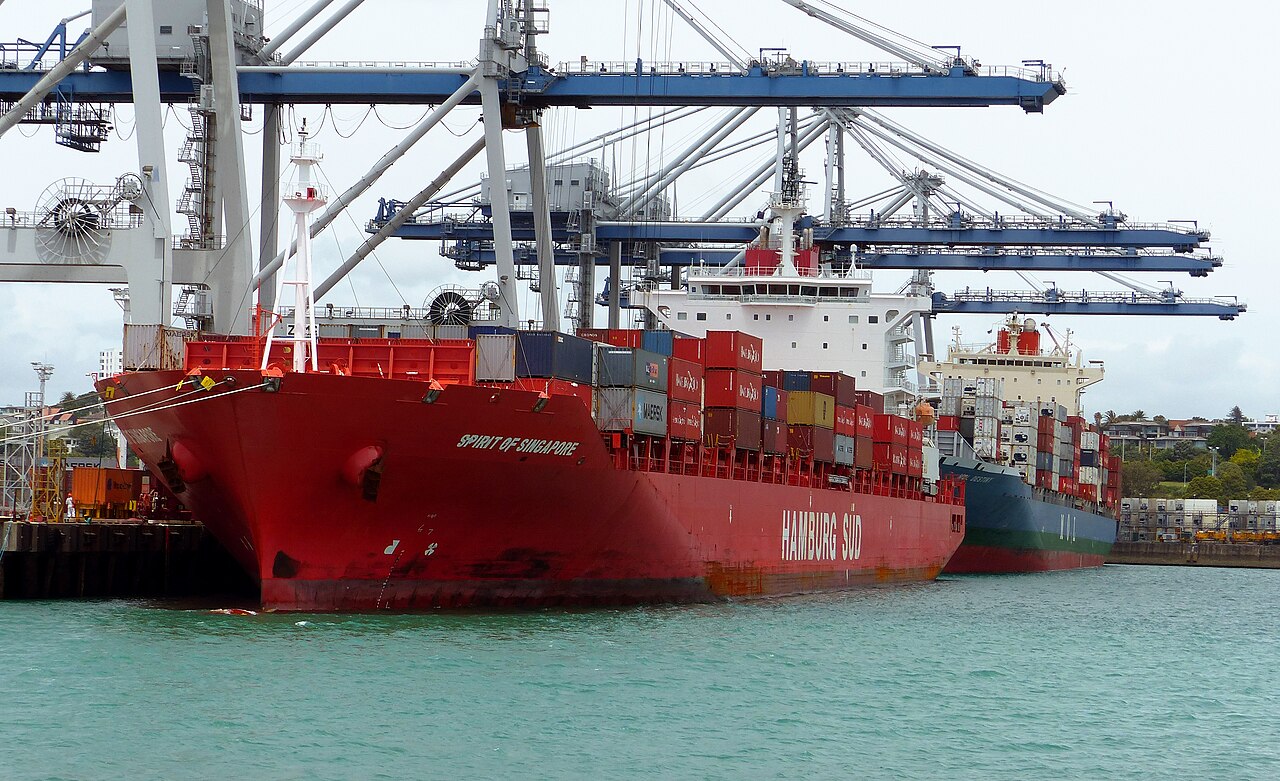
New Zealand imports 100 per cent of its refined petroleum products, with the majority arriving from South Korean and Singaporean refineries that source their crude from the Persian Gulf — making any Hormuz disruption a direct supply-chain risk for Kiwi motorists. Photo: Bernard Spragg. NZ / CC0 / Wikimedia Commons
RBNZ and Treasury Inflation Forecasts
The Reserve Bank of New Zealand's May 2026 Monetary Policy Statement projected annual CPI inflation peaking at 4.3 per cent in the September 2026 quarter before returning to the 2 per cent midpoint in mid-2027. Fuel accounts for about 4 per cent of the CPI basket, with the bank attributing part of the near-term spike to higher fuel prices.
Treasury's Budget Economic and Fiscal Update 2026 forecast a 4.0 per cent peak in the June quarter, noting the oil shock adds around 1 percentage point to headline inflation before easing. Futures markets still price oil 20–30 per cent above pre-conflict levels through the medium term.
Lower fuel costs would trim these peaks and ease pressure on household disposable income at a time when the labour and housing markets remain fragile.
Brent Crude Spot Price, Jan–Jun 2026
Pre-conflict average, conflict peak, and post-MOU settlement levels.
Source: U.S. Energy Information Administration / Trading Economics
OCR Reaction Function
BNZ chief economist Mike Jones saw scope for a modest confidence-driven lift to business investment and consumer spending in the second half of 2026. Recoveries in housing and labour markets still look more like a story for 2027.
"Naturally there will be some nervousness as to whether the deal can be sustained… Recoveries in both the housing and labour markets still look more like a story for next year than this." — Mike Jones, BNZ chief economist
ASB chief economist Nick Tuffley revised the 2026 CPI peak higher, approaching 5 per cent, and signalled expectations for OCR hikes starting mid-2026. NZIER forecasts exceed 4 per cent CPI in June and anticipate 25 basis point hikes in July and September.
Eased inflation expectations from lower oil prices could give the Reserve Bank marginally more room on the OCR path, though any reversal would re-ignite concerns.
High-Uncertainty Premium
Westpac's Kelly Eckhold described the development as encouraging but emphasised a wait-and-see approach. Uncertainties remain around oil flow normalisation, Iranian control of shipping and fees, and release of sanctioned funds.
"The Reserve Bank is obviously quite focused on the risk of persistent inflation and these lower fuel prices and other prices probably are going to reduce inflation forecasts as we go through the next few months." — Kelly Eckhold, Westpac chief economist
Infometrics chief executive Brad Olsen likened the announcement to previous false starts. Concrete evidence of tanker traffic resuming through the Strait is required before any lasting impact can be assumed.
MBIE data as of early June showed 61.5 days of petrol cover overall, with 33.7 days in-country. Fifteen vessels were inbound. Stocks have declined gradually amid the disruption.
Drivers of the Price Movement
The US-Iran MOU calls for immediate reopening of the Strait of Hormuz without tolls, conditional sanctions relief, and release of billions in frozen Iranian assets. Iran's nuclear program would be addressed in subsequent 60-day talks.
The Strait normally carries around 20 per cent of global oil supply. Its effective closure had removed roughly 15 million barrels per day from the market. Market optimism reflects potential supply normalisation.
New Zealand imports 100 per cent of refined fuels since the 2022 closure of the Marsden Point refinery. More than 90 per cent arrive from South Korea and Singapore, which source the majority of their crude from the Persian Gulf. This creates second-order exposure.
Trade-Offs for Households and Business
Immediate terms-of-trade gains for households must be weighed against structural elevation priced into futures and a 6–12 month normalisation lag for shipping and insurance. MBIE's Minimum Stockholding Obligation provides a buffer but adds inventory holding costs amid uncertain flows.
The pure negative terms-of-trade shock hits New Zealand without offsetting energy export income, unlike Australia. Importers, logistics firms and the agricultural sector face the greatest exposure through freight and fertiliser costs.
Second-Order Effects on CPI and Growth
Fuel costs feed into airfares, freight and energy-intensive goods. Air New Zealand has warned of its biggest pre-tax loss in four years due to the jet fuel spike, while Qantas raised its second-half 2026 fuel cost outlook by up to A$800 million, according to Reuters reporting. The World Bank cut its 2026 global growth forecast from 2.9 per cent to 2.5 per cent due to the shock.
BNZ's Jones noted the most likely initial impact is a pickup in confidence supporting investment and spending at the margin. Key remains the extent to which tanker traffic resumes quickly.
Historical Context
Pre-conflict Brent averaged around US$66.60 in January 2026 and US$70.89 in February. The benchmark peaked near US$117 in April during conflict. The 2022 energy shock showed rapid one-to-two week retail pass-through but slower reversal.
Repeated Iran deal announcements in prior episodes failed to sustain de-escalation. Current futures still embed a 20–30 per cent premium above pre-conflict levels through the medium term.
The Counter-Argument
Analysts including Olsen, Collins and Eckhold stress that shipping and insurance risk appetite, vessel transit times and Iranian shipping control must normalise before relief materialises. Production restarts take weeks and require stability guarantees. OPEC+ adjustments and seasonal demand could reverse gains quickly.
The preliminary MOU status and cautious Iranian statements add to the case for measured expectations. Evidence of actual tanker movements will determine whether relief proves durable or partial.
Open Questions
The exact timeline for Hormuz transits and insurance normalisation after any signing remains unclear. Details of nuclear compliance in 60-day talks and release of frozen assets require clarification.
Precision of the Reserve Bank's 4 per cent fuel CPI weight and pass-through elasticity under the current import-only regime needs monitoring. Duration before any reversal re-ignites inflation concerns in the next Monetary Policy Statement is another key variable.
Forward Outlook
Treasury and the Reserve Bank will track pass-through closely in coming data releases. A durable price drop would ease pressure on the current account and household budgets, while any rebound would tighten the inflation outlook and support earlier OCR hikes. The next RBNZ Monetary Policy Statement, due later in 2026, will provide updated projections incorporating these developments.