Labour Market Resilience Tested by Oil Shock and Confidence Collapse — Economic News
LABOUR MARKET · MONETARY POLICY
Labour Market Resilience Tested by Oil Shock and Confidence Collapse
New Zealand's unemployment rate fell to 5.3 per cent in the March 2026 quarter, the first decline since December 2021. This points to pre-oil-shock momentum in the labour market. Yet the sharp drop in April consumer and business confidence, alongside Australia's proactive rate hike, signals transmission risks that could stall the recovery and prompt tighter policy later in the year.
ASB’s Q2 2026 Regional Economic Scoreboard left Wellington joint last with Gisborne while Canterbury led on dairy cash, jobs and retail. The capital’s multi-quarter underperformance is structural: public-service consolidation, a deep housing correction and stalled population growth colliding with a national OCR still set for nationwide inflation.
Economists expect New Zealand’s June quarter GDP to rise just 0.1–0.2 percent when Stats NZ reports on 17 September, a sharp slowdown from March’s 0.8 percent gain as elevated oil prices compress real incomes.
Finance Minister Nicola Willis has refused the Reserve Bank’s first bid to roll $10.1 million of 2025/26 underspend into 2026/27 and published three criteria that will govern every future variation under the 2025–30 Five-Year Funding Agreement.
New Zealand's unemployment rate fell to 5.3 per cent in the March 2026 quarter, the first decline since December 2021. This points to pre-oil-shock momentum in the labour market. Yet the sharp drop in April consumer and business confidence, alongside Australia's proactive rate hike, signals transmission risks that could stall the recovery and prompt tighter policy later in the year.
Labour Market Shows Pre-Shock Momentum
New Zealand's labour market delivered clear evidence of stabilisation in the March 2026 quarter. The seasonally adjusted unemployment rate dropped to 5.3 per cent from 5.4 per cent in the December 2025 quarter, according to Stats NZ. This marked the first decline since December 2021. Employment rose by 4,000 to 2.889 million. Hours worked increased 0.8 per cent in the Household Labour Force Survey and 0.6 per cent in the Quarterly Employment Survey.
Participation held at 70.4 per cent. The underutilisation rate remained steady at 12.9 per cent. Private sector hourly wage growth stayed at 3.6 per cent annually. Total earnings growth reached 4.0 per cent, outpacing the 3.1 per cent CPI inflation recorded in the same quarter.
These figures reflect momentum built before the full effects of elevated fuel prices registered. Real earnings growth provided a partial buffer for households. The data aligned with broader stabilisation after the post-2024 slowdown, where annual average GDP growth turned modestly positive at 0.2 per cent by the December 2025 quarter.
Confidence Indicators Signal Transmission Risks
The positive labour market print contrasted sharply with April confidence readings. The ANZ-Roy Morgan consumer confidence index fell 11 points to 80.3, its lowest level since May 2023. Business outlook in the ANZ Business Outlook survey plunged to -10.6 net per cent from +32.5 in March.
Expected own activity dropped to +19.6 from +39.3. Profit expectations turned negative at -13.3. Employment intentions fell to -2.7. Inflation expectations rose to 3.81 per cent, the highest since February 2024. The NZIER Quarterly Survey of Business Opinion showed the general business situation at +1.2 net per cent in the March quarter, down from +39.1 in December 2025.
These collapses mirror patterns seen in prior energy price spikes. They highlight how higher fuel costs erode real purchasing power and compress business margins. Cost expectations outpaced pricing intentions, pointing to margin pressure that could delay hiring and investment.
Global Central Bank Responses Diverge
Global central banks responded cautiously to the inflation spike from higher fuel prices. The US Federal Reserve held its policy rate at 3.5–3.75 per cent in early May. The European Central Bank and Bank of England also maintained steady rates amid mixed core inflation readings.
In contrast, the Reserve Bank of Australia raised its cash rate target by 25 basis points to 4.35 per cent on 6 May 2026. This was its third consecutive increase in 2026, decided by an 8-1 vote. The RBA cited upside risks to inflation expectations from elevated fuel prices. Headline inflation reached 4.6 per cent in March, with the trimmed mean at 3.5 per cent.
The RBA updated forecasts showed headline inflation peaking at 4.8 per cent. GDP growth was projected to slow to 1.4 per cent by June 2027, down from 1.8 per cent previously. In adverse scenarios, deeper disruption could push unemployment above the baseline 4.4 per cent by June 2027.
RBNZ Holds OCR Amid Split Vote
The Reserve Bank of New Zealand held the Official Cash Rate at 2.25 per cent on 27 May 2026. The decision came in a 3-3 split, with Governor Anna Breman casting the deciding vote. The Monetary Policy Statement acknowledged the conflict's dual impact of higher near-term inflation and weaker activity.
Inflation is expected to peak at 4.3 per cent in the September 2026 quarter before returning to the 2 per cent midpoint in mid-2027.
Core inflation, wage growth and medium-term expectations remain consistent with the target. The Committee signalled that further OCR increases would likely be needed later in 2026 to anchor expectations. This cautious approach contrasts with the more dovish February outlook. It reflects the need to balance near-term cost pressures against risks to activity.
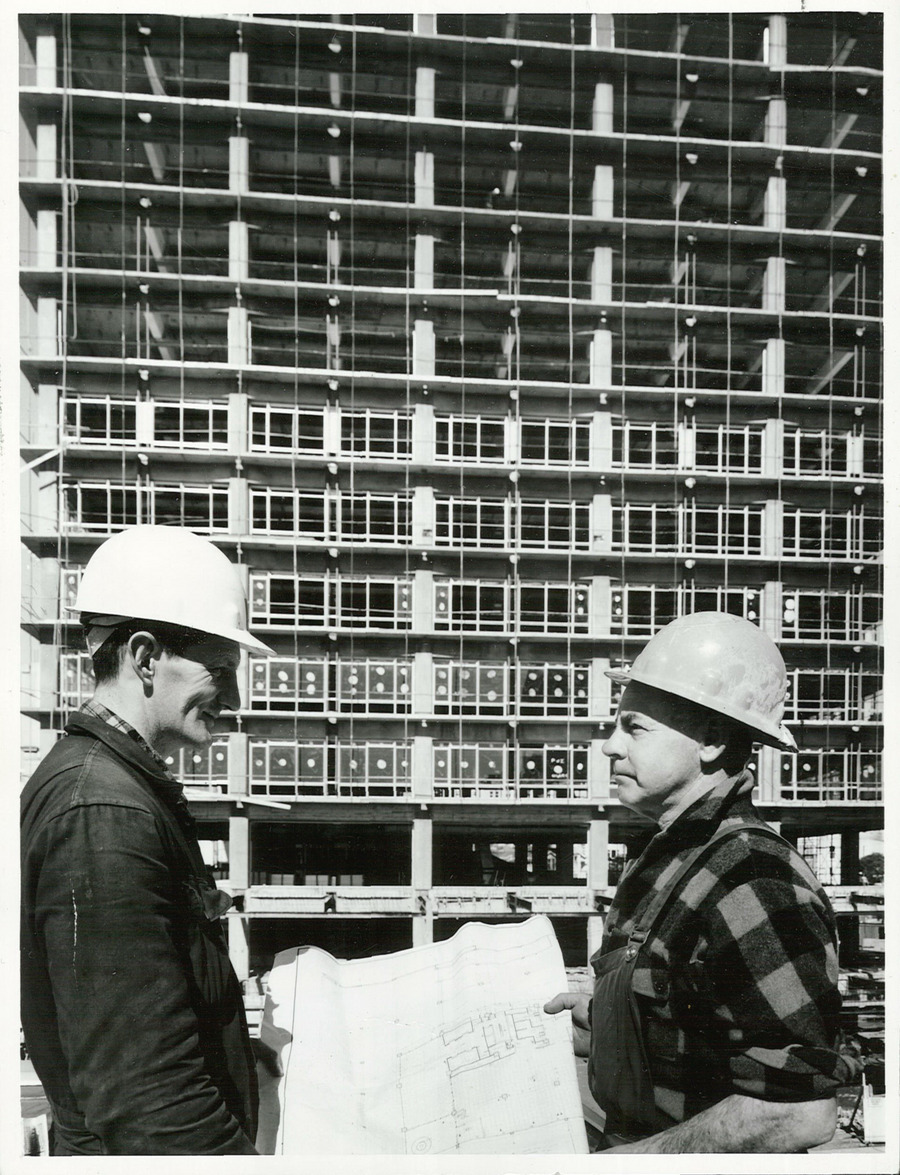
Construction workers on a Wellington site — the March 2026 quarter's employment gain of 4,000 jobs reflected pre-oil-shock momentum now threatened by margin compression and falling business hiring intentions. Archives New Zealand from New Zealand · CC BY 2.0 · Wikimedia Commons
Treasury Revises Growth Forecasts Downward
Treasury incorporated the oil shock into its Budget Economic and Fiscal Update 2026. Annual average real GDP growth was revised down to 1.2 per cent in 2025/26 and 2.3 per cent in 2026/27. Adverse scenarios showed real GDP 0.5 to 1.0 per cent below base by end-2026 or start-2027.
Nominal GDP impacts could reach up to $4.1 billion lower in 2027 due to terms-of-trade effects and lower activity. These revisions underscore the fiscal risks from weaker revenue. Lower nominal GDP directly affects tax collections and Crown borrowing requirements.
The update positions the economy at an inflection point. Pre-conflict momentum risks derailment from cost-of-living pressures and policy tightening abroad.
New Zealand Unemployment Rate
Quarterly seasonally adjusted rate showing the first decline since late 2021 before the oil shock fully impacted confidence and activity.
Source: Treasury Fortnightly Economic Update 7 May 2026 and Stats NZ Labour Market Statistics March 2026 quarter
Transmission Mechanism Through Fuel Prices
The oil shock operated primarily through direct fuel price pass-through. New Zealand 91 octane pump prices rose from approximately $2.50 per litre in late February to $3.29 per litre. This added around 0.5 percentage points directly to CPI. Indirect effects via transport, fertiliser, food production and shipping costs were estimated to add a further 0.1 to 0.2 percentage points over time.
Higher costs eroded real household purchasing power. This prompted precautionary saving and reduced discretionary spending. April electronic card data already showed month-on-month softening, with ANZ estimating real spending flat year-on-year.
Businesses faced margin compression. Cost expectations reached 90.4 net per cent in the ANZ Business Outlook April survey, well above pricing intentions of 57.7 net per cent. The divergence points to profit pressure that could constrain wage growth and hiring beyond the immediate period.
Historical Parallels Highlight Persistence Risks
The April confidence collapse echoes the 2022 energy shock related to the Ukraine conflict. Confidence drops persisted for several months even as underlying activity stabilised. This amplified second-round effects when fuel prices did not ease promptly.
The 1970s oil shocks provide longer-term parallels. Stagflationary pressures led to sharp rises in unemployment after the initial shock. New Zealand's unemployment rate sequence in the current episode shows a similar pattern of gradual increase before the recent modest decline.
Current conditions share the cost shock and confidence erosion. They differ in the starting point of labour market resilience and the more contained global PMI readings outside the euro area.
Trade-Offs in Policy Calibration
The RBNZ's 3-3 split and signal for later hikes balance the need to anchor inflation expectations against activity risks. Raising rates too soon could exacerbate the confidence-driven slowdown. Delaying action risks second-round inflation from wage and price setting.
Australia's proactive tightening illustrates one approach. The RBA's 25 basis point move and updated forecasts reflect a judgement that fuel-driven inflation upside warrants pre-emptive action. New Zealand's intermediate position leaves room for data dependence while acknowledging the need for vigilance.
Fiscal settings face similar trade-offs. Lower nominal GDP projections reduce revenue available for spending. This limits the scope for additional support measures without increasing Crown debt. Market signals from depressed profit and employment intentions provide early warning of weaker investment and hiring.
Second-Order Effects on Households and Business
Margin compression and negative employment intentions in April data point to potential delays in business investment and hiring. Sectors exposed to fuel costs, including transport, logistics and agriculture, face direct pressure. Rural incomes could come under strain if dairy price softness persists despite gains in meat, fibre and aluminium.
Housing and construction face headwinds. According to the Treasury's Fortnightly Economic Update, dwelling consents remained stable near 3,350 per month on average in the 12 months to March, up 11 per cent year-on-year. However, weak consumer confidence and house price growth of just 0.2 per cent year-on-year in the REINZ index cap dwelling investment prospects.
Over the next 12 months, unemployment could peak higher than previously expected. Inflation returning to target only by mid-2027 would affect wage bargaining and real income growth. Electronic card transactions and May confidence readings will test whether the April softening translates into sustained weakness in Q2 spending.
Counter-Argument on Transitory Nature of Shock
Some analysis emphasises the transitory nature of the oil shock. According to the Treasury's Fortnightly Economic Update, the JPMorgan global composite PMI rose to 51.8 in April, supported by strength in India and China. The same update notes US GDP growth held at 2.0 per cent saar in the March quarter despite slower consumption. Commodity prices remained elevated overall.
This view holds that front-loading of activity and contained international spillovers could limit domestic damage. Recovery assumptions in Treasury scenarios project a return to 3.2 per cent growth by 2027/28 once fuel prices normalise.
Evidence for this rests on the labour market's demonstrated resilience to date and the partial offset from real earnings growth. However, the speed and depth of the confidence collapse, combined with the RBA's more hawkish response, suggest downside risks to activity may materialise faster than base forecasts assume.
Open Questions for the Coming Quarters
Will April and May electronic card data and the partial May business confidence rebound to +10.0 translate into measurable Q2 spending weakness? How persistent will fuel prices prove, and will the RBNZ June review alter the signal for later OCR increases?
Will adverse Treasury scenarios of real GDP 0.5 to 1.0 per cent lower by end-2026 materialise if euro-area contraction and US net export drag intensify? Upcoming releases on migration, retail trade and overseas trade will provide early tests.
Forward Risks and the Policy Outlook
The economy stands at a point where pre-shock labour market gains risk being undermined by cost pressures and eroded confidence. Treasury's revised forecasts and the RBNZ's signalled path of holding now while flagging later tightening reflect the judgement that inflation anchoring must be balanced against the risk of amplifying the confidence-driven slowdown. Revenue projections have weakened alongside the nominal GDP revisions, narrowing the fiscal headroom available without increasing Crown debt. Market signals from business surveys — particularly depressed profit expectations and employment intentions — will be watched closely as early indicators of whether investment and hiring soften in line with the April confidence data.