
Economic News
Subscribe →
HomeMonetary PolicyFiscalTradeRegulationBankingEconomic DataAbout
Vol. 02 · New Zealand
FRIDAY 22/05/2026
Iss. 2026 / 21
Economic News

Balanced. Independent. Informed.

Sections

  • Monetary Policy
  • Fiscal
  • Trade
  • Regulation
  • Banking
  • Economic Data

Subscribe

  • Free email
  • Email preferences
  • RSS feed

Company

  • About
  • Privacy policy

About

Economic News is an independent New Zealand publication covering monetary policy, markets, the public finances and the wider economy.

© 2026 Economic News Limited
.

Labour Delays Future Fund Asset Details to After Election — Economic News
Live
Retail Volumes Rise 0.9 Percent in March QuarterBudget 2026 Documents Available 28 May as Government Tightens SpendingHormuz Closure Turns Supply Chain Disruptions Into Multi-Year Cost Burden for New Zealand ExportersRetail Volumes Rise 0.9 Percent in March QuarterBudget 2026 Documents Available 28 May as Government Tightens SpendingHormuz Closure Turns Supply Chain Disruptions Into Multi-Year Cost Burden for New Zealand ExportersRetail Volumes Rise 0.9 Percent in March QuarterBudget 2026 Documents Available 28 May as Government Tightens SpendingHormuz Closure Turns Supply Chain Disruptions Into Multi-Year Cost Burden for New Zealand ExportersRetail Volumes Rise 0.9 Percent in March QuarterBudget 2026 Documents Available 28 May as Government Tightens SpendingHormuz Closure Turns Supply Chain Disruptions Into Multi-Year Cost Burden for New Zealand ExportersRetail Volumes Rise 0.9 Percent in March QuarterBudget 2026 Documents Available 28 May as Government Tightens SpendingHormuz Closure Turns Supply Chain Disruptions Into Multi-Year Cost Burden for New Zealand ExportersRetail Volumes Rise 0.9 Percent in March QuarterBudget 2026 Documents Available 28 May as Government Tightens SpendingHormuz Closure Turns Supply Chain Disruptions Into Multi-Year Cost Burden for New Zealand ExportersRetail Volumes Rise 0.9 Percent in March QuarterBudget 2026 Documents Available 28 May as Government Tightens SpendingHormuz Closure Turns Supply Chain Disruptions Into Multi-Year Cost Burden for New Zealand ExportersRetail Volumes Rise 0.9 Percent in March QuarterBudget 2026 Documents Available 28 May as Government Tightens SpendingHormuz Closure Turns Supply Chain Disruptions Into Multi-Year Cost Burden for New Zealand ExportersRetail Volumes Rise 0.9 Percent in March QuarterBudget 2026 Documents Available 28 May as Government Tightens SpendingHormuz Closure Turns Supply Chain Disruptions Into Multi-Year Cost Burden for New Zealand ExportersRetail Volumes Rise 0.9 Percent in March QuarterBudget 2026 Documents Available 28 May as Government Tightens SpendingHormuz Closure Turns Supply Chain Disruptions Into Multi-Year Cost Burden for New Zealand ExportersRetail Volumes Rise 0.9 Percent in March QuarterBudget 2026 Documents Available 28 May as Government Tightens SpendingHormuz Closure Turns Supply Chain Disruptions Into Multi-Year Cost Burden for New Zealand ExportersRetail Volumes Rise 0.9 Percent in March QuarterBudget 2026 Documents Available 28 May as Government Tightens SpendingHormuz Closure Turns Supply Chain Disruptions Into Multi-Year Cost Burden for New Zealand ExportersRetail Volumes Rise 0.9 Percent in March QuarterBudget 2026 Documents Available 28 May as Government Tightens SpendingHormuz Closure Turns Supply Chain Disruptions Into Multi-Year Cost Burden for New Zealand ExportersRetail Volumes Rise 0.9 Percent in March QuarterBudget 2026 Documents Available 28 May as Government Tightens SpendingHormuz Closure Turns Supply Chain Disruptions Into Multi-Year Cost Burden for New Zealand ExportersRetail Volumes Rise 0.9 Percent in March QuarterBudget 2026 Documents Available 28 May as Government Tightens SpendingHormuz Closure Turns Supply Chain Disruptions Into Multi-Year Cost Burden for New Zealand ExportersRetail Volumes Rise 0.9 Percent in March QuarterBudget 2026 Documents Available 28 May as Government Tightens SpendingHormuz Closure Turns Supply Chain Disruptions Into Multi-Year Cost Burden for New Zealand ExportersRetail Volumes Rise 0.9 Percent in March QuarterBudget 2026 Documents Available 28 May as Government Tightens SpendingHormuz Closure Turns Supply Chain Disruptions Into Multi-Year Cost Burden for New Zealand ExportersRetail Volumes Rise 0.9 Percent in March QuarterBudget 2026 Documents Available 28 May as Government Tightens SpendingHormuz Closure Turns Supply Chain Disruptions Into Multi-Year Cost Burden for New Zealand ExportersRetail Volumes Rise 0.9 Percent in March QuarterBudget 2026 Documents Available 28 May as Government Tightens SpendingHormuz Closure Turns Supply Chain Disruptions Into Multi-Year Cost Burden for New Zealand ExportersRetail Volumes Rise 0.9 Percent in March QuarterBudget 2026 Documents Available 28 May as Government Tightens SpendingHormuz Closure Turns Supply Chain Disruptions Into Multi-Year Cost Burden for New Zealand ExportersRetail Volumes Rise 0.9 Percent in March QuarterBudget 2026 Documents Available 28 May as Government Tightens SpendingHormuz Closure Turns Supply Chain Disruptions Into Multi-Year Cost Burden for New Zealand ExportersRetail Volumes Rise 0.9 Percent in March QuarterBudget 2026 Documents Available 28 May as Government Tightens SpendingHormuz Closure Turns Supply Chain Disruptions Into Multi-Year Cost Burden for New Zealand ExportersRetail Volumes Rise 0.9 Percent in March QuarterBudget 2026 Documents Available 28 May as Government Tightens SpendingHormuz Closure Turns Supply Chain Disruptions Into Multi-Year Cost Burden for New Zealand ExportersRetail Volumes Rise 0.9 Percent in March QuarterBudget 2026 Documents Available 28 May as Government Tightens SpendingHormuz Closure Turns Supply Chain Disruptions Into Multi-Year Cost Burden for New Zealand Exporters
LABOUR POLICY · FISCAL TRANSPARENCY

Labour Defers Future Fund Asset Choices Until After Election

Labour finance spokeswoman Barbara Edmonds confirmed on 19 May 2026 that the party will not name the Crown assets to seed its proposed Future Fund until after the 7 November election.

Fiscal Desk19/05/2026 · 21:42 NZT6 min read
FiscalBreaking
FD
Fiscal Desk
Fiscal Policy Correspondent · 19/05/2026 · 21:42 NZT · 6 min read
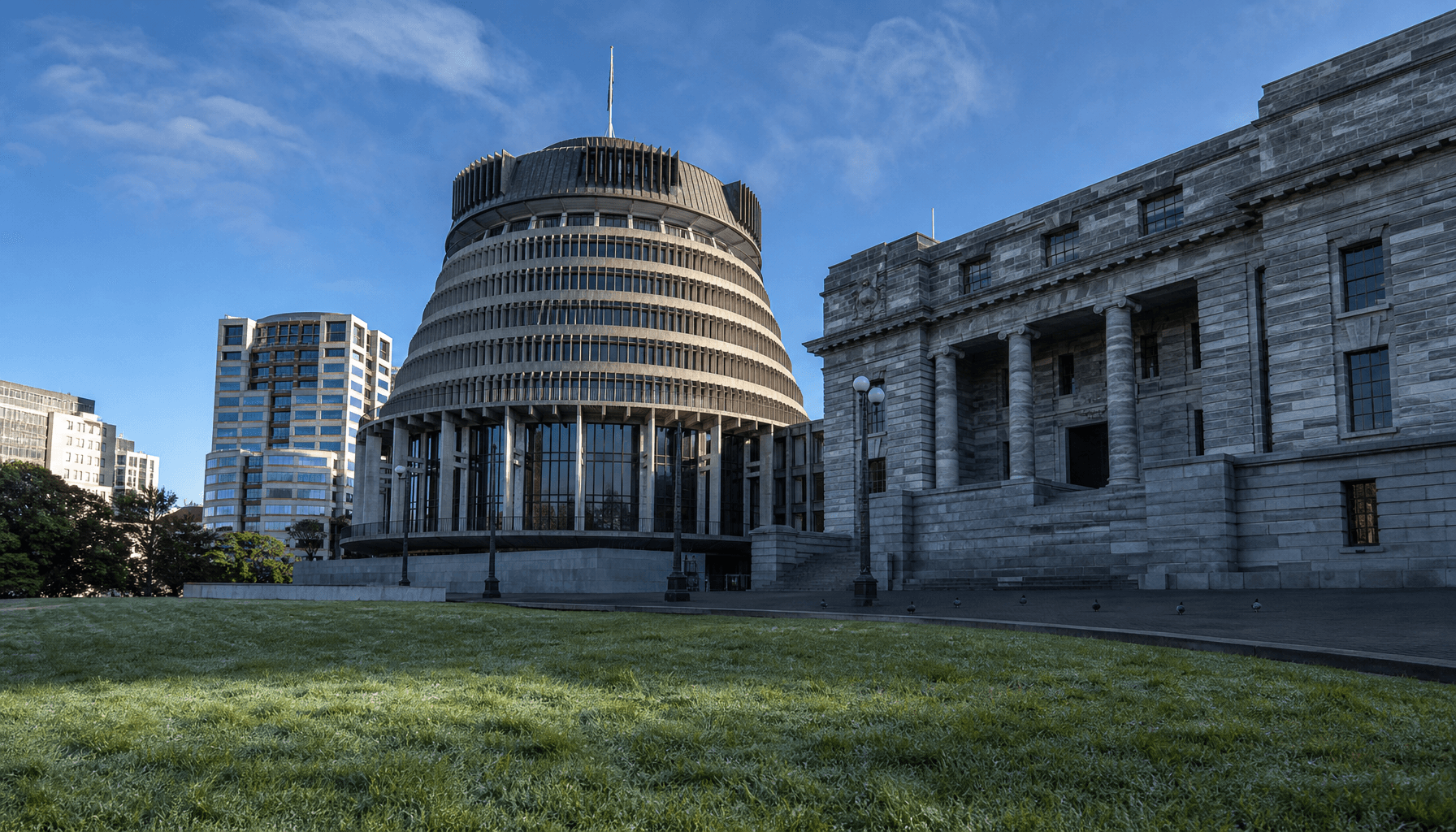
The Beehive executive wing in Wellington on a clear morning, shot from the lawn forecourt at low angle

At a glance

Labour will not reveal which Crown assets seed its Future Fund until after 7 November, leaving voters without fiscal or jobs costings for a policy unveiled seven months ago.

Key stats

Potential annual dividend loss
$700M
National estimate
SOE dividends FY19
$770M
Treasury data
SOE dividends FY22
$607M
Treasury data
Future Fund seed capital
$200M
Labour proposal
ISIF capital deployed
€6.5B
since 2014
ISIF private co-investment
€10.2B
since 2014
"The move returns Labour to the bad old days of policy by working group."Simeon Brown, National campaign chair

Sources cited

  • Labour announces 'Future Fund' as first key election policy — RNZ
  • What would Labour's 'NZ Future Fund' actually look like? — The Spinoff
  • Briefing for Incoming Minister for State Owned Enterprises — Treasury
  • From 'dead horse' to golden child: Why Pāmu is suddenly making millions — The Spinoff
  • Privatising Pamu would be challenging — Interest.co.nz
  • 2026 New Zealand general election — Wikipedia

Free

New Zealand's economy, straight to your inbox.

By subscribing you accept our privacy policy.

More from fiscal

Shoppers browsing a well-stocked New Zealand supermarket aisle, illustrating the retail trade activity recorded in the March 2026 quarter
Economic Data · 22/05/2026 · 13:16 NZT

Retail Volumes Rise 0.9 Percent in March Quarter

New Zealand retail sales volumes increased 0.9 percent in the March 2026 quarter on a seasonally adjusted basis. The gain matched the December 2025 quarter and exceeded market expectations of 0.5 percent.

Data Desk·22/05/2026 · 13:16 NZT·6 min
A Wellington government office interior with stacked Budget documents on a conference table and harbour views, representing Budget 2026 preparations
Fiscal · 22/05/2026 · 09:32 NZT

Budget 2026 Documents Available 28 May as Government Tightens Spending

Budget 2026 documents go online from 2pm on Thursday 28 May, with hard-copy packs on sale for $55 through two retailers.

Fiscal Desk·22/05/2026 · 09:32 NZT·8 min
Wellington's Lambton Quay looking toward the Beehive on an overcast morning, a For Lease sign visible in a ground-floor office window
Economic Data · 21/05/2026 · 14:53 NZT

BDO Index Shows Multi-Speed Recovery as Fuel Shocks Hit Domestic Sectors

Business leaders report modest gains in financial positivity while overall sentiment stays near record lows, underscoring a diverging economy where export-oriented sectors gain ground and domestic-facing industries struggle under fuel-price pressures and pre-election uncertainty.

Analysis Desk·21/05/2026 · 14:53 NZT·22 min

All fiscal →

Labour finance spokeswoman Barbara Edmonds confirmed on 19 May 2026 that the party will not name the Crown assets to seed its proposed Future Fund until after the 7 November election.

The admission leaves voters without full costing or job-modelling figures for a policy first unveiled on 20 October 2025.

Edmonds cited the need for post-election official advice on Treaty of Waitangi obligations attached to certain state-owned enterprises.

"We haven't decided what assets to put in it [the fund], because different assets have different caveats that come with it. For example, some assets have Treaty claims and overlay, like first right of refusal rights if it gets sold." — Barbara Edmonds, Labour finance spokeswoman

She pointed to Pāmu-Landcorp as an example where land covenants and settlements complicate any transfer. Labour has received advice urging it to wait until in government to determine specific assets and their caveats.

National's Fiscal Warning

National campaign chair Simeon Brown said the move returns Labour to the bad old days of policy by working group.

National estimates the diversion of SOE dividends could cost the Crown up to $700 million a year. Those funds currently support health, education and law-and-order services. National argues that diverting them to the Future Fund would require cuts in those areas.

Treasury data shows SOE dividends reached $770 million in FY19 before falling to $607 million in FY22.

Crown SOE Dividend Revenue FY19 vs FY22
Bars show the scale of dividend revenue potentially at stake if SOE flows are diverted to the Future Fund.
Source: Treasury Briefing for Incoming Minister for State Owned Enterprises, 2023

The Fund's Structure and Stated Aims

The Future Fund would start with $200 million in new government capital plus selected Crown assets. Dividends would be reinvested inside the fund rather than paid to the Crown account. The vehicle would operate alongside the New Zealand Super Fund under the same Guardians, with the Minister of Finance as sole shareholder.

Labour's stated aim is to invest in infrastructure and innovative Kiwi businesses to create secure, well-paid jobs and keep wealth in New Zealand. The fund's assets would be protected in law from sale, with returns — financial and social — reinvested for long-term national benefit.

AI illustration of a New Zealand sovereign investment fund concept, used here to illustrate Labour's proposed Future Fund — a vehicle that would divert Crown asset dividends away from the government account and reinvest them domestically.

The Irish Comparator

Labour has compared the proposal to Ireland's Strategic Investment Fund, which deployed €6.5 billion and attracted €10.2 billion in private co-investment since 2014. Edmonds referenced the Irish fund's job creation and strong returns as a model on 19 May 2026.

Critics question whether a new domestic-only fund with a social-returns mandate can match that record.

Treaty Constraints and Historical Precedent

The 1987 Lands case already established that asset transfers must respect Treaty principles. Most Pāmu land remains unavailable for sale or tied to settlements. Pāmu has three core roles, including returning land as part of Treaty settlements while running profitable farming operations.

Diverting existing revenue streams risks forcing future governments to raise taxes or cut spending elsewhere. The policy adds another layer of state investment that could crowd out private capital and create fresh governance costs.

With the election six months away, the absence of detailed numbers leaves the proposal open to charges of incomplete fiscal planning.