Housing Policy Analysis: Interest Deductibility, RMA Reform and Kāinga Ora Limits Under Scrutiny
Angela Fang's 2026 Rod Oram Memorial Essay Prize win spotlights how tax settings and planning rules have distorted New Zealand housing into an investment vehicle rather than stable shelter. Policy must now prioritise supply through restored interest deductibility and flexible rules while curbing immigration-driven demand pressures.
Auckland’s potential $5 billion Fast-track infrastructure exposure and 16,270 wrongly suspended Winter Energy Payments have become the first real-world stress tests of the Regulatory Standards Act 2025.
Cabinet’s Economic Policy Committee has formally authorised public consultation on a prudential levy to shift Reserve Bank supervision costs onto banks, insurers and market infrastructure operators from 2027/28.
Cabinet has agreed in principle to three shifts in public performance reporting sought by the Finance and Expenditure Committee, while parking detailed design and costings until 2027.
Angela Fang's 2026 Rod Oram Memorial Essay Prize win spotlights how tax settings and planning rules have distorted New Zealand housing into an investment vehicle rather than stable shelter. Policy must now prioritise supply through restored interest deductibility and flexible rules while curbing immigration-driven demand pressures.
Essay Win Frames Generational Housing Strain
Angela Fang, a 19-year-old University of Auckland law and environmental science student, won the 2026 Rod Oram Memorial Essay Prize. Her piece argues that New Zealand has treated housing primarily as a financial asset. This approach, she contends, has left young workers in south Auckland paying over half their income in rent.
Fang draws on personal stories of constant lease churn and inspections. She contrasts this instability with non-monetary wealth like a fenced wetland near Ohakune that supports local wildlife and education.
Official data backs her observations on affordability gaps. REINZ reported the national median house price at $795,000 in February 2026. Cotality placed the national median dwelling value at $802,617 in January 2026.
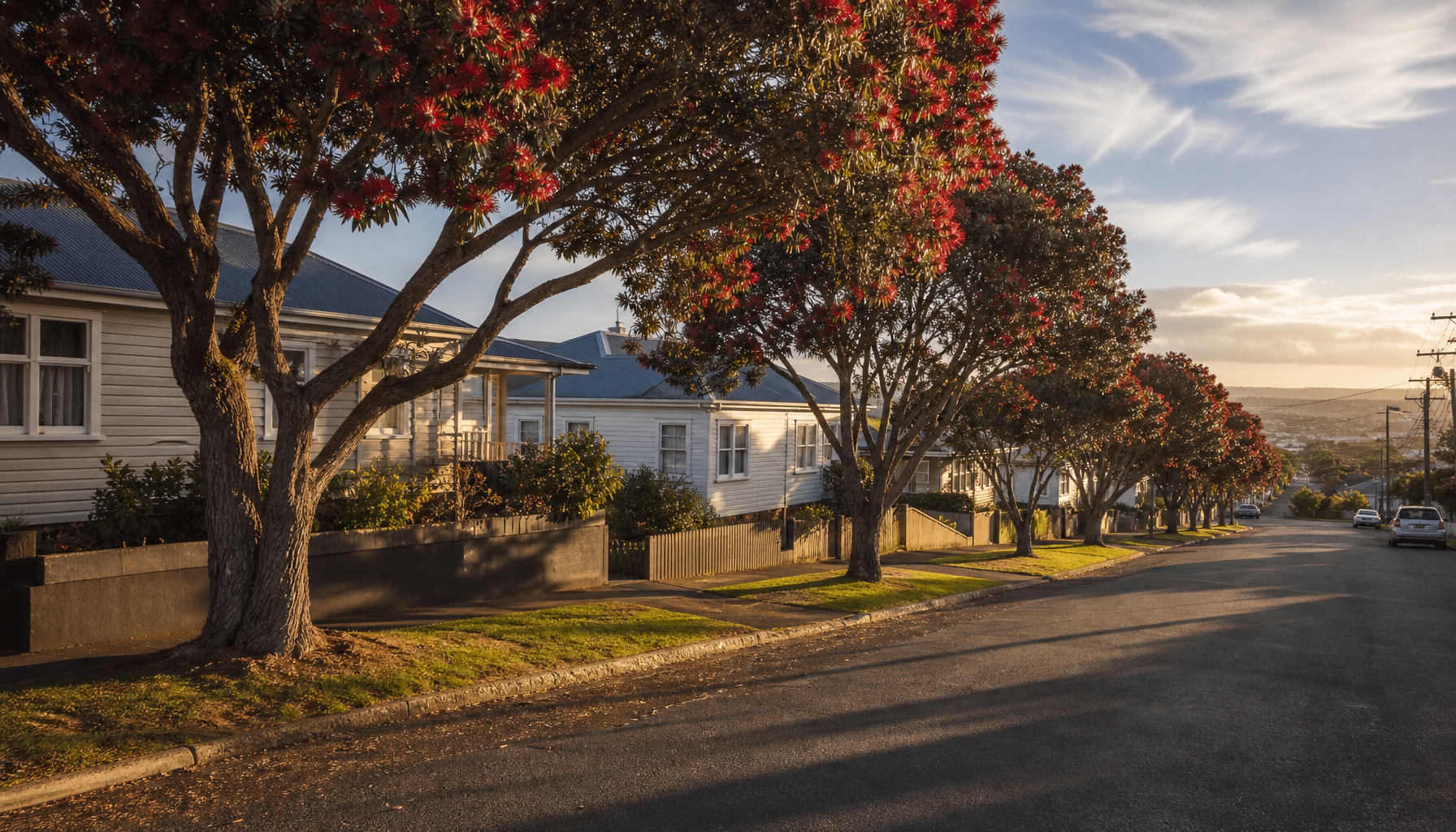
AI illustration of a south Auckland residential streetscape, used here to illustrate the housing affordability pressures facing young renters at the centre of Angela Fang's Rod Oram Memorial Essay Prize-winning piece.
Policy Implications of Restored Deductibility
The National-led government restored full 100 percent interest deductibility for residential investment properties from 1 April 2025. Inland Revenue Department rules confirm this reversal of prior Labour restrictions.
This change supports rental supply by improving after-tax returns for investors. Proponents note it counters earlier phased limits that reduced rental availability.
Critics from the essay perspective claim it subsidises speculation. Yet evidence from RBNZ Financial Stability Reports shows activity picking up with lower interest rates despite subdued migration and labour markets.
RMA Reforms and Auckland Capacity Adjustments
The Resource Management (Auckland Housing) Amendment Act 2026 reduced mandated housing capacity targets for Plan Change 120 from over 2 million to 1.4 million homes. Ministry for the Environment guidance highlights greater flexibility around infrastructure and hazards.
Auckland Council now explores amendments with a second submission period likely in August 2026. This adjustment acknowledges practical constraints on rapid densification.
Such flexibility reduces regulatory burden on local councils. It allows market responses rather than top-down mandates that often delay projects.
National Median House Prices: Selected Periods 2021–2026
Prices remain well below the 2021 peak despite modest recovery signals.
Source: REINZ February 2026 Property Report; Cotality NZ Home Value Index January 2026
Kāinga Ora Reset Limits Public Waste
Kāinga Ora operates under a portfolio cap near 78,000 homes. Its statement of performance expectations targets roughly 1,500 new builds plus retrofits annually from 2026/27.
The agency marked its 3,500th retrofit in April 2026. This focus on modernisation improves quality but limits net supply growth.
Large-scale state housing programmes carry fiscal costs. Post-WWII builds reached peaks of 70,000 state rentals by the early 1990s before 1990s market-rent reforms reduced stock. Current waiting lists stand at 19,704 applicants on the Housing Register as at 31 March 2026 per Ministry of Social Development data.
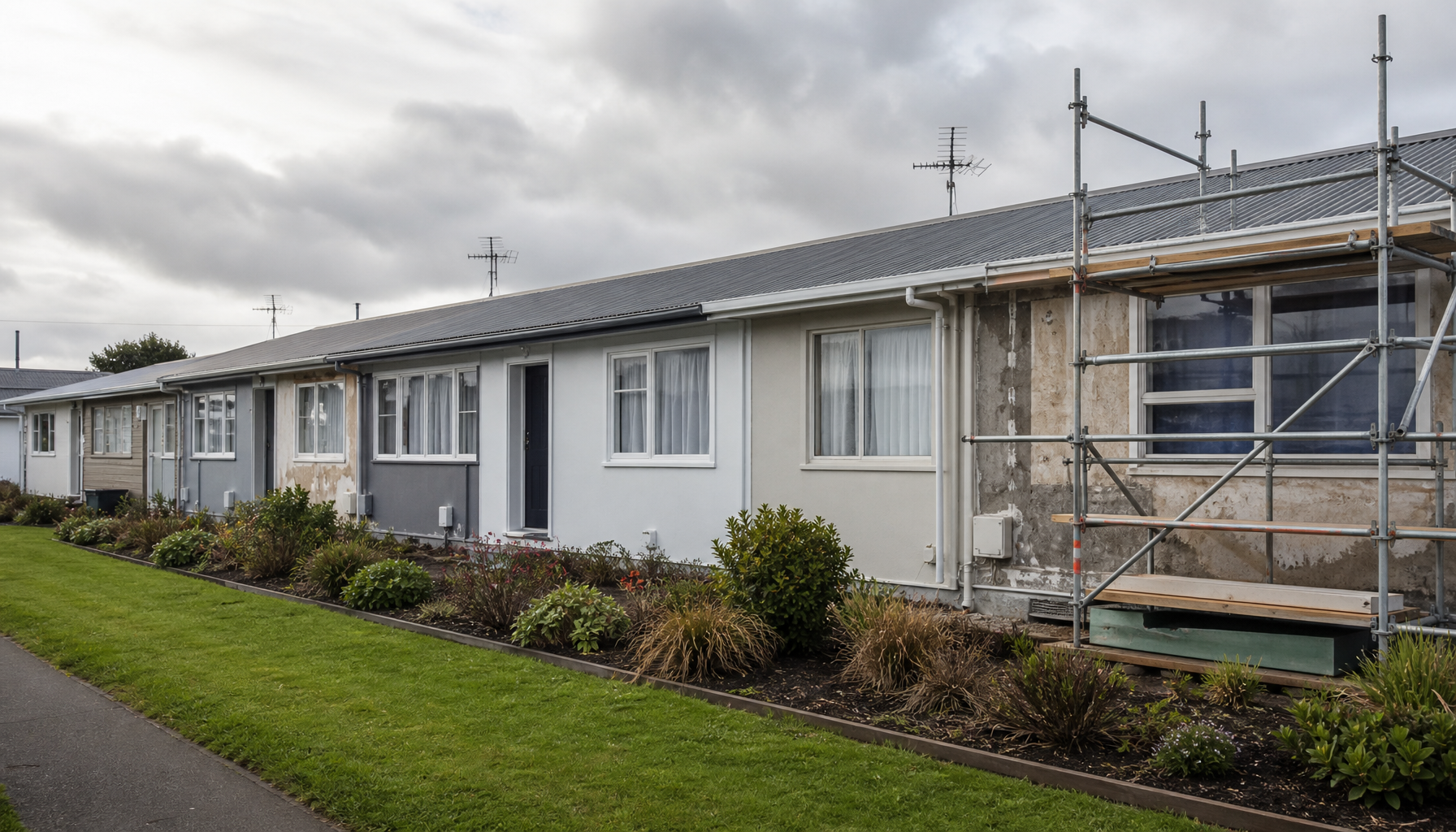
AI illustration of a New Zealand public housing retrofit in progress, used here to illustrate Kāinga Ora's programme of modernising its existing stock — the agency reached its 3,500th retrofit milestone in April 2026.
Systemic Risks from High Household Debt
Stats NZ data shows households spent 22.3 percent of disposable income on housing costs in the year to June 2025. Lower-income groups face severe stress with over 57 percent of low-income renters allocating 40 percent or more of income to shelter.
RBNZ maintains DTI restrictions limiting high-risk lending. Household debt reached 167 percent of gross disposable income in 2025.
These figures signal vulnerability. They arise partly from sustained high migration adding to demand without matching supply increases.
Intergenerational Equity and Migration Pressures
Fang notes young Aucklanders face delayed home ownership. Demographia data shows New Zealand's median multiple improved to 7.7 in 2024 from 11.2 in 2021.
Australia's figures reached 8.9 times income with Sydney at 13.8 times. Higher Australian wages offset some costs yet migration outflows from New Zealand persist as a noted pressure valve.
Immigration surges have amplified demand in major centres. This dynamic interacts with restrictive planning to sustain price premiums relative to incomes.
Historical Precedents Show Limits of State Expansion
Post-WWII governments built around 10,000 state homes annually through the 1960s. Kāinga Ora history records a peak of 70,000 state rentals by the early 1990s.
1990s market-rent reforms and sales reduced public stock. These shifts produced mixed results with some efficiency gains but lower net public provision.
Today's reset at Kāinga Ora avoids repeating expansive builds that strain Crown finances. Targeted retrofits deliver quality improvements without unchecked growth.
Trade-offs in Tax and Planning Choices
New Zealand stands out among OECD peers without a broad capital gains tax. The Tax Working Group estimated a comprehensive CGT could raise 1.2 percent of GDP annually.
The time-limited bright-line test serves as the current mechanism. Full interest deductibility restoration supports investor participation in rentals.
Planning capacity reductions in Auckland provide infrastructure flexibility. They risk slower densification yet prevent unrealistic targets that ignore hazard and funding realities.
Second-Order Effects on Productivity and Fiscal Load
Rental churn affects child educational outcomes and family formation. Stats NZ household income and housing-cost statistics link high shelter costs to lower disposable income for other priorities.
The Housing Register at 19,704 signals ongoing fiscal exposure via Accommodation Supplement. Labour mobility suffers as young workers cite costs when considering moves.
Infrastructure funding gaps delay regional development. Local government debt limits compound these pressures.
Counter-Arguments on Supply Response
Industry voices argue full deductibility and lighter rules boost investor supply and eventual rental stock. Bank forecasts range from a 1 percent Westpac-predicted decline to 2–5 percent modest growth in 2026.
REINZ and realestate.co.nz report easing national rents at $629 per week average in February 2026. This softening reflects stabilisation post-2021 peak.
Prior forecasts of stronger growth proved optimistic. Outcomes hinge on whether flexibility delivers concrete builds or entrenches existing patterns.
Open Questions on Long-Term Impacts
Net private supply response after deductibility changes remains under observation. Exact 1990s reform effects on stock reduction lack fresh primary updates beyond historical summaries.
Whether Auckland capacity adjustments unlock densification or merely adjust expectations requires monitoring of actual consents.
Outlook Over Two to Three Years
Planning flexibility combined with full deductibility offers scope for market-led supply gains. Success depends on containing immigration to ease demand pressures. Without that balance, precarity for post-2021 cohorts persists despite policy tweaks.