Taranaki Energy Policy Whiplash and Fiscal Risks | Economic News NZ — Economic News
TARANAKI ENERGY · FISCAL EXPOSURE
Taranaki Energy Policy Whiplash Raises Crown Fiscal Exposure and Regional Risks
New Zealand's repeated swings between banning and reviving offshore oil and gas exploration have left Taranaki with falling gas reserves, an industrial exit, and new taxpayer commitments through the Gas Security Fund.
Seventy-seven percent of accountants in a recent survey flagged the 15 January deadline for provisional tax and GST payments as particularly challenging for clients.
Auckland’s potential $5 billion Fast-track infrastructure exposure and 16,270 wrongly suspended Winter Energy Payments have become the first real-world stress tests of the Regulatory Standards Act 2025.
Cabinet’s Economic Policy Committee has formally authorised public consultation on a prudential levy to shift Reserve Bank supervision costs onto banks, insurers and market infrastructure operators from 2027/28.
New Zealand's repeated swings between banning and reviving offshore oil and gas exploration have left Taranaki with falling gas reserves, an industrial exit, and new taxpayer commitments through the Gas Security Fund.
Policy Reversals Drive Uncertainty
Taranaki has endured multiple policy shifts on petroleum exploration in less than a decade. The 2018 ban on new permits outside onshore Taranaki aimed to curb fossil fuel dependence. The 2025 amendment reversed that restriction to address supply shortfalls.
These changes coincide with sharply lower reserves and commercial exits. MBIE data show 2P natural gas reserves at 731 PJ as of 1 January 2026, down 23 percent from the prior year. Production is forecast at 85 PJ for calendar 2026.
The first new offshore permit since the reversal went to EnZed Energy for the Kaheru prospect in July 2026. Resources Minister Shane Jones said the government is pragmatic about natural gas in the energy mix for decades ahead.
The Drivers
Declining reserves stem from both production and downward revisions at mature fields such as Pohokura. MBIE attributes 108 PJ of the drop to production and 109 PJ to revisions.
Methanex announced in September 2026 that it will cease New Zealand operations in Q1 2027 due to insufficient gas supply, affecting around 300 jobs at Motunui.
Dairy has overtaken oil and gas as Taranaki's top export earner. Port Taranaki forecasts trade volumes halving to 2.3 million tonnes annually as energy cargoes decline.
Taranaki regional GDP reached $11.663 billion for the year to June 2026, with just 0.4 percent growth against the national 1.7 percent. The energy sector contributed $2.03 billion directly and supported nearly 1,800 jobs in 2024.
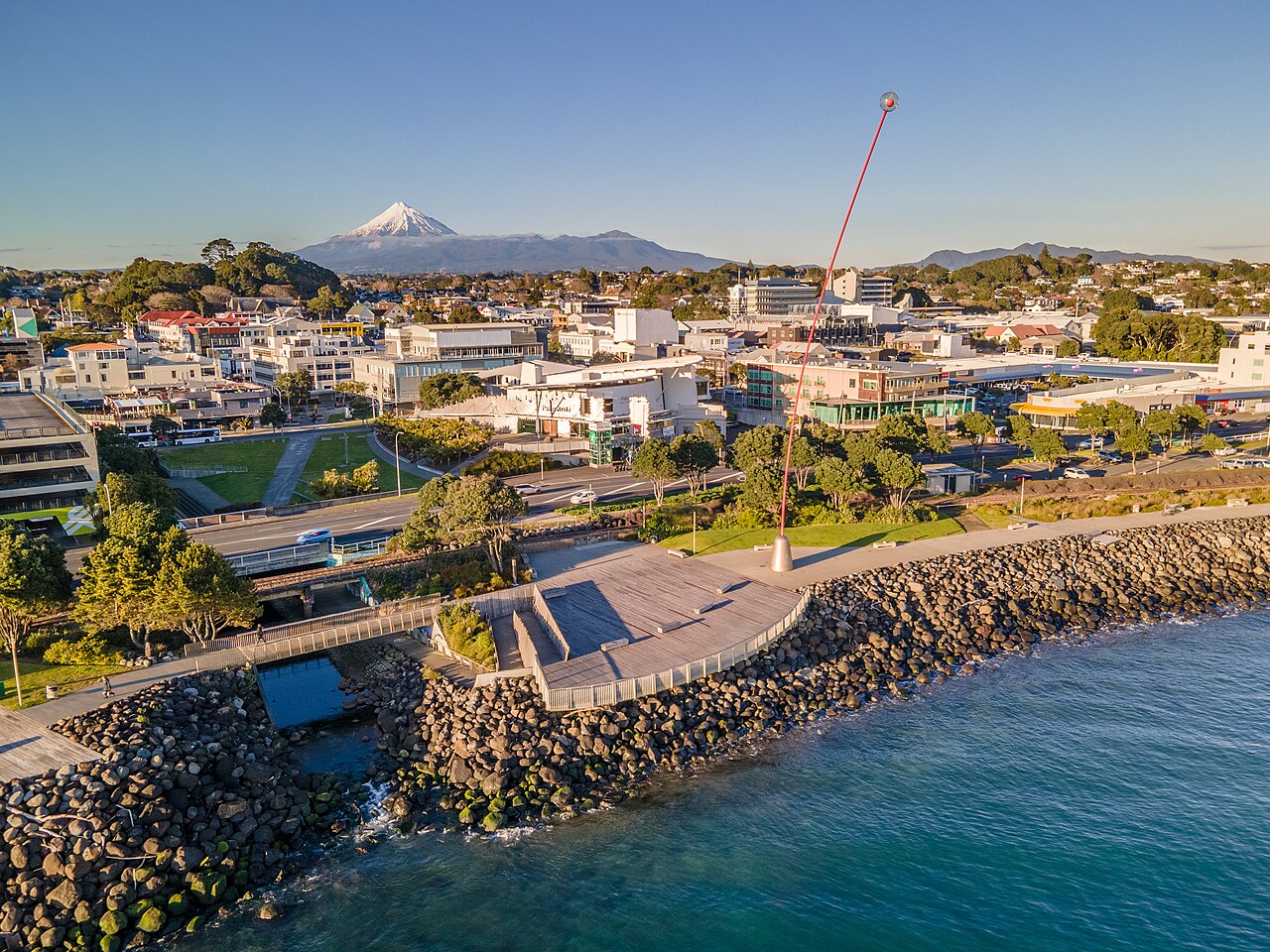
New Plymouth, the hub of a region now navigating falling gas reserves, an industrial exit and new fiscal exposure through the Crown's Gas Security Fund.
Trade-Offs and Fiscal Exposure
The government established a $113 million Gas Security Fund for co-investment in new projects, including equity for Kaheru. Critics note long lead times for new production and the Supreme Court's emphasis on climate considerations in permitting.
Parallel cuts removed support mechanisms. The Just Transitions Unit closed in May 2024. Ara Ake funding of $6 million annually ended from 1 July 2026. Energy Minister Simeon Brown called the Ara Ake decision tough, with functions shifting to EECA.
These moves reduce direct Crown spending on transition programs previously labelled a talk-fest by ACT leader David Seymour. However, co-investment in gas projects introduces new fiscal risk if results disappoint or policy changes again.
Second-Order Effects
Skilled labour faces reallocation pressure. Taranaki's heavy-engineering workforce risks outmigration without clear pathways to renewables or other sectors.
Port infrastructure sized for higher energy throughput faces potential stranding if diversification lags. Electricity system dry-year backup relies on gas-fired generation, and tighter supply margins could amplify price volatility.
Crown exposure extends to decommissioning liabilities, with past examples such as the Tui field costing taxpayers $293 million. Ministerial discretion introduced in the 2025 Act aims to balance risk and investment but leaves future liability decisions open.
Historical Context
Similar patterns appear in the UK North Sea, where maturing fields and mid-cycle tax changes produced investment hesitation. New Zealand's smaller, isolated basin lacks import infrastructure alternatives, amplifying domestic effects.
The Tiwai Point aluminium smelter experience shows how a single large industrial exit can dominate regional planning for years. Methanex's departure presents a comparable concentration risk for Taranaki.
Counter-Argument
Proponents of the 2025 reversal argue the prior ban accelerated reserve declines and threatened energy security for industry and power generation. Indigenous gas reduces reliance on imports and supports the transition period.
Evidence for this view rests on the 23 percent reserve drop and Methanex exit. Opponents counter that new permits face long timelines and climate litigation risk, while repeated policy changes raise sovereign risk premiums for all investors.
Open Questions
Seven companies applied for offshore rights before the November 2026 election. Labour has indicated it would reimpose the ban if elected while honouring existing permits.
Whether the Gas Security Fund delivers commercial discoveries or becomes stranded capital remains to be seen. Regional diversification under the Taranaki 2050 Roadmap continues with reduced national support.
Next Pivot Point
The November 2026 election will determine whether the current reversal holds or another reset occurs. Investors and Taranaki's workforce watch for clarity on permitting stability, decommissioning rules, and any further fiscal commitments.
Consistent policy signals matter more than the direction chosen.