Treasury's $13.9 Billion Deficit Leaves Little Room for Election Giveaways
Treasury forecasts a $13.9 billion OBEGALx deficit for 2025/26, equal to 3.0 percent of GDP, the largest share since the COVID period. This constrained position is forcing parties to limit 2026 election promises to low-cost measures rather than new spending.
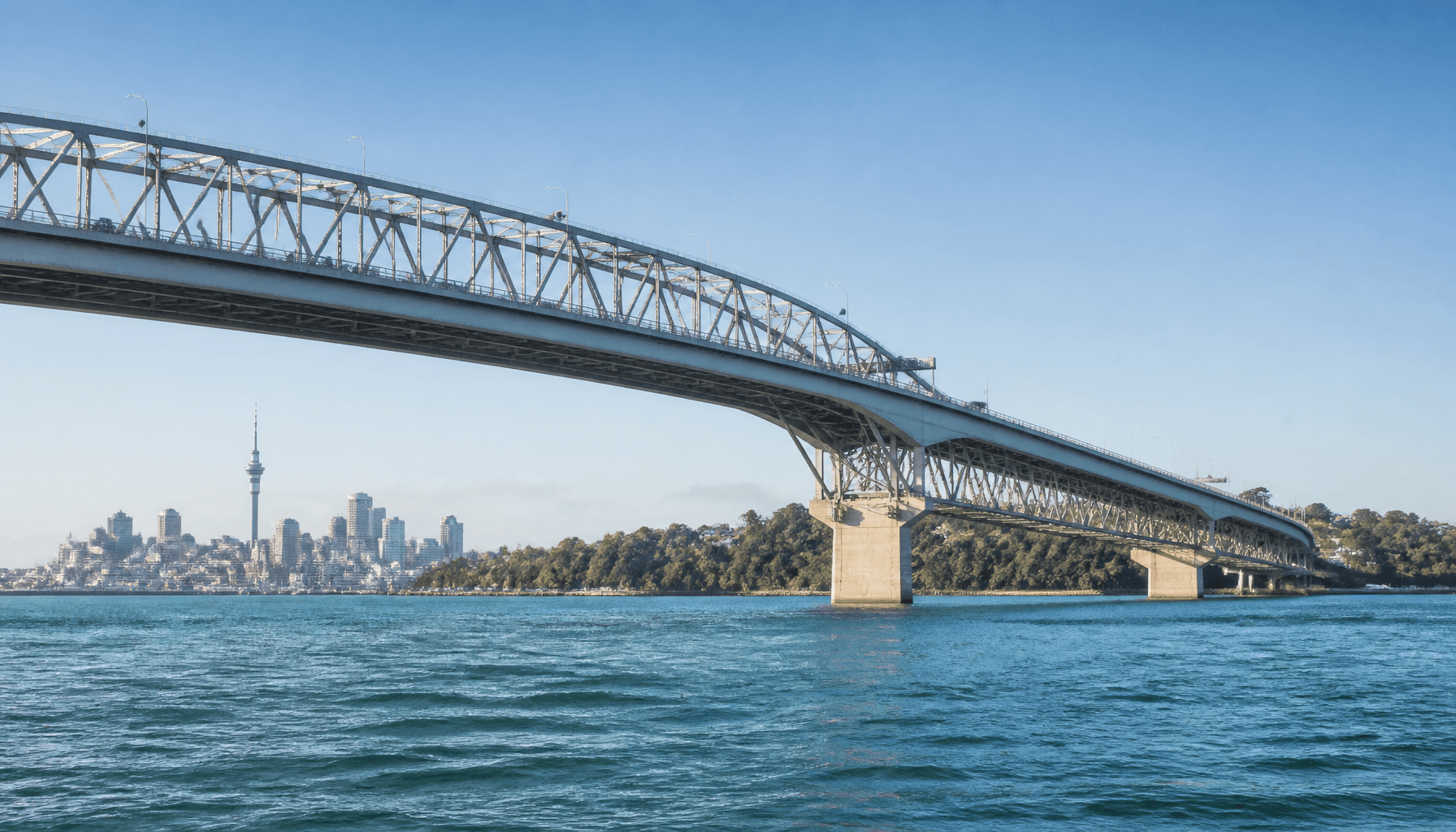
Cabinet has pulled the additional Waitematā Harbour Crossing under direct Crown control and ordered an independent detailed business case, deferring any preferred option until funding, financing and delivery are settled against a tight balance sheet.
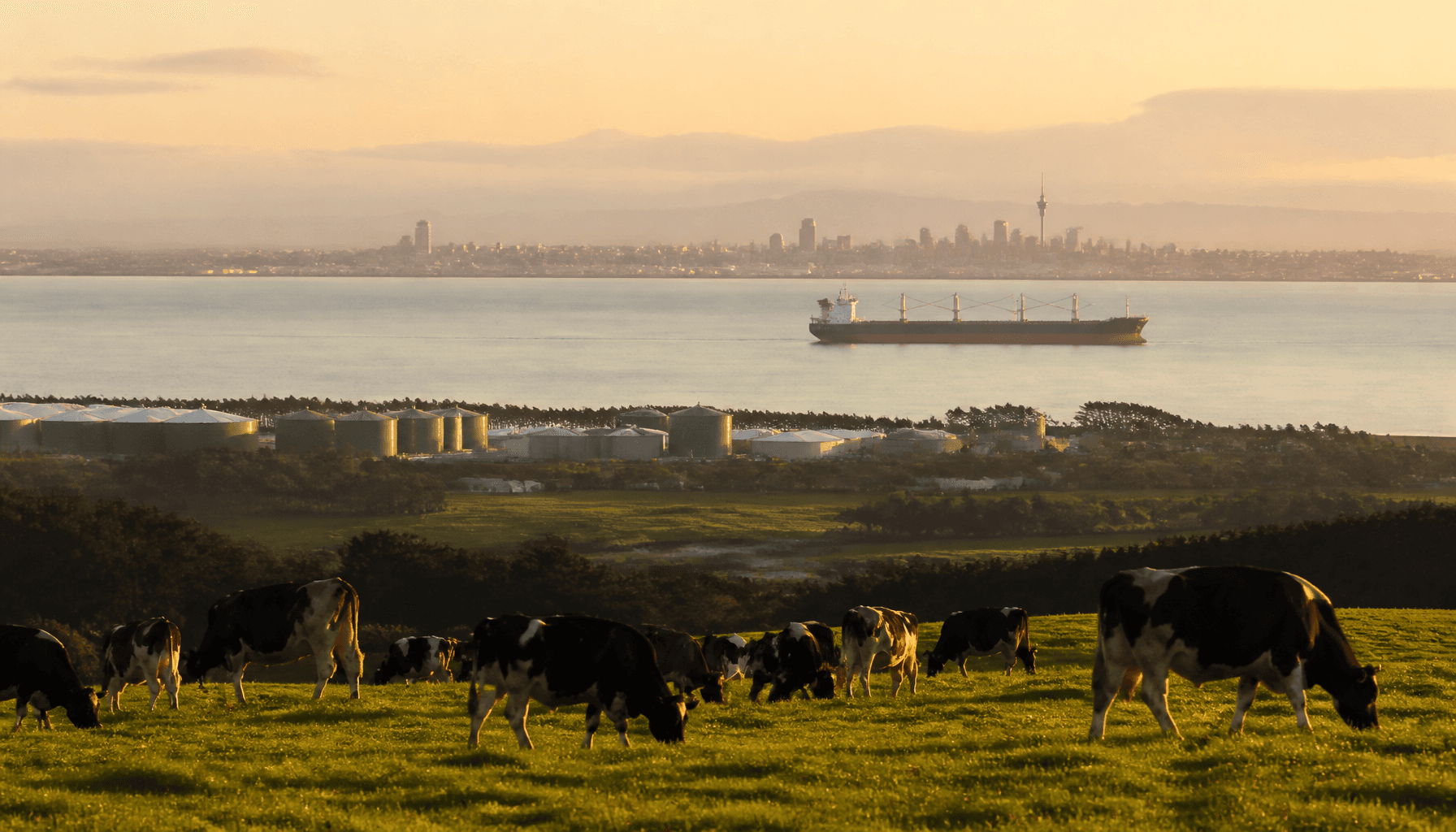
Christchurch City Holdings is committing about $300 million of public capital to an $821 million Lyttelton container expansion after rejecting a DP World–rūnanga operating lease, pairing seismic resilience with a prospective bet on dual large-ship berths and design capacity near 850,000 TEU by 2031.
New Zealand’s recovery is real in soft indicators and South Island export cash-flow, yet annual CPI at 4.1% and unemployment at 5.6% leave the RBNZ removing stimulus into spare capacity—and the pain is not evenly shared.
Treasury forecasts a $13.9 billion OBEGALx deficit for 2025/26, equal to 3.0 percent of GDP, the largest share since the COVID period. This constrained position is forcing parties to limit 2026 election promises to low-cost measures rather than new spending.
Fiscal Position Constrains Campaign Options
New Zealand enters the 2026 election with tight fiscal headroom. Treasury's Half Year Economic and Fiscal Update 2025 projects the operating balance before gains and losses excluding ACC at a $13.9 billion deficit for the year ending June 2026.
This represents 3.0 percent of GDP. The figure marks the worst outcome as a share of GDP since 2019/20.
Core Crown expenses sit at 32.8 percent of GDP this year. They are set to ease only modestly to 30.5 percent by 2029/30 under annual operating allowances of just $2.4 billion.
Debt Trajectory Peaks Near 47 Percent of GDP
Net core Crown debt is forecast to rise from $182.2 billion in 2024/25 to a peak of $235.7 billion, or 46.9 percent of GDP, in 2027/28.
The trajectory then eases only slightly to 46.1 percent by 2029/30. These projections worsened from Budget 2025 forecasts due to slower revenue growth and higher costs including superannuation and finance expenses.
A structural deficit of 1.9 percent of GDP means two-thirds of the gap requires deliberate spending restraint rather than automatic recovery.
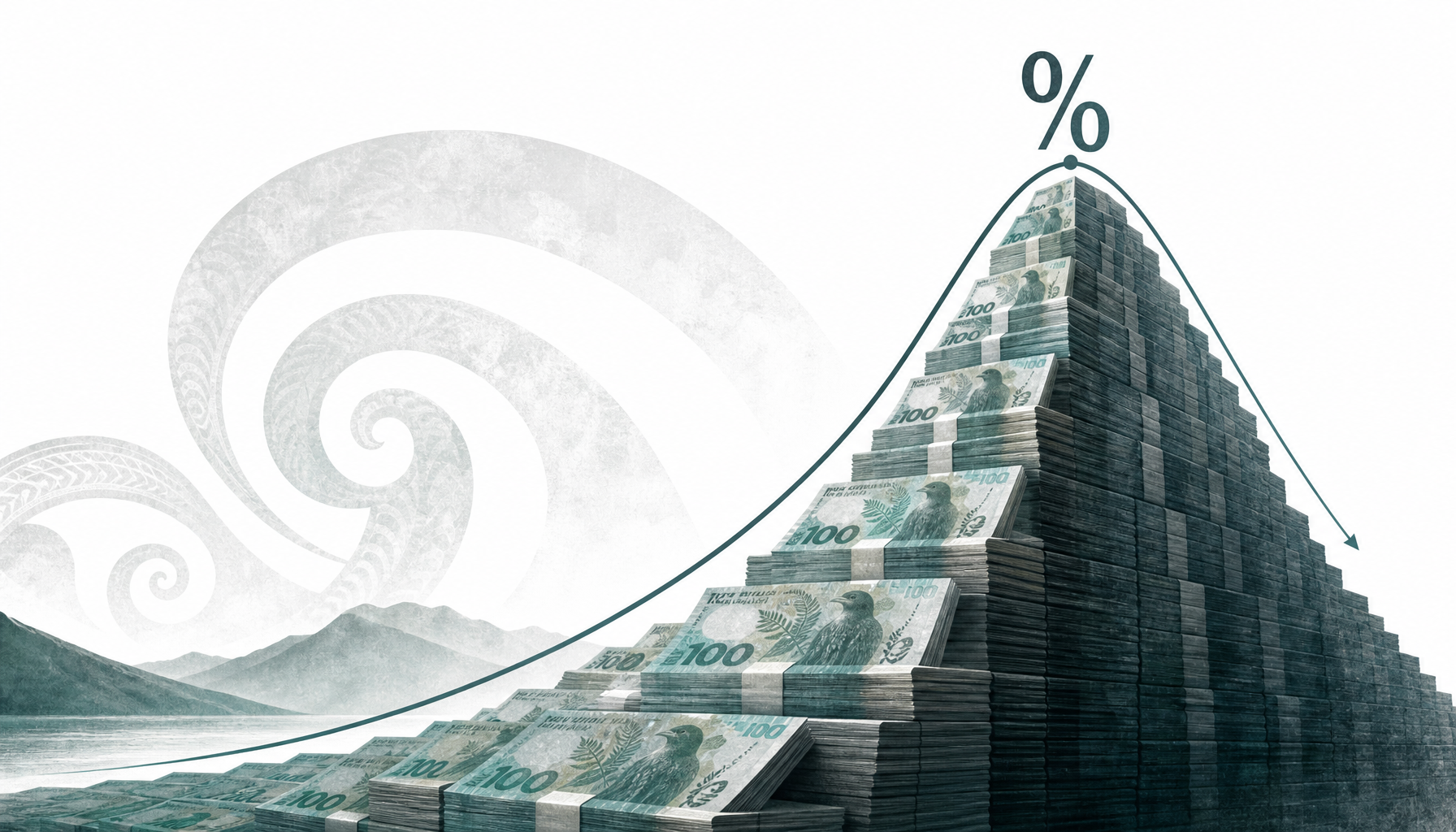
AI illustration of New Zealand's net core Crown debt trajectory — forecast to peak near 46.9% of GDP in 2027/28 before easing, a path that constrains all parties' 2026 election spending plans.
OBEGALx Deficit Forecasts
Deficits shrink only gradually under tight $2.4 billion annual allowances.
Source: Treasury Half Year Economic and Fiscal Update 2025
Parties Shift to Low-Cost Pledges
National announced on 17 May 2026 that it would abolish good-character sentencing discounts for sexual offenders if re-elected.
Prime Minister Christopher Luxon said the move puts the government on the side of victims.
NZ First proposed buying back the BNZ and merging it with Kiwibank. Luxon dismissed the idea as potentially costing $30 billion and too much to contemplate.
National will also campaign on gradually raising the superannuation eligibility age from the second term onward.
These measures avoid large new outlays while delivering visible differentiation.
Westpac Flags Further Downside Risk
Westpac's preview of Budget 2026 estimates weaker near-term growth could add around $8 billion to cumulative deficits versus the HYEFU baseline.
That would push the return to surplus further out. The government's fiscal strategy still targets an OBEGALx surplus by 2028/29 and net debt trending toward 40 percent of GDP longer term.
Discipline Remains Essential
Core Crown tax revenue is forecast to dip to 27.3 percent of GDP in 2025/26 before recovering. Demographic pressures from an ageing population continue to lift superannuation and health costs.
Unfunded commitments risk higher borrowing costs and renewed ratings scrutiny. Historical experience after the global financial crisis shows credible rules helped rebuild buffers.
Voters face four years of flat real wages and high mortgage rates. The coming campaign will test which parties respect the numbers rather than chase headlines.