Westpac Caps Hazard-Risk Mortgage Adjustments at 2 Per Cent
Westpac New Zealand will adjust loan size or term in no more than 2 per cent of mortgage applications due to natural hazard risk from 11 November 2026. The bank becomes the first in the country to share property-level flood, landslide and coastal erosion data with buyers while ruling out blanket refusals or risk-based pricing.
Westpac New Zealand has obtained a High Court summary judgment for $12.8 million plus interest against David Mason, the former managing director and majority shareholder of the collapsed Sacred Hill wine group.
The S&P/NZX 50 Total Return index rose 4.68% over the year to 13 November 2026, reaching 14,173.68, while delivering modest five-year gains of 1.89%. This performance stands in contrast to the S&P 500 Total Return's stronger run, highlighting how New Zealand's domestically focused market provides a buffer when concentrated technology bets falter.
Westpac New Zealand will adjust loan size or term in no more than 2 per cent of mortgage applications due to natural hazard risk from 11 November 2026. The bank becomes the first in the country to share property-level flood, landslide and coastal erosion data with buyers while ruling out blanket refusals or risk-based pricing.
Westpac Sets Tight Limit on Adjustments
Westpac will reduce the loan amount or shorten the mortgage term in a maximum of 2 per cent of cases. The bank cites high modelled hazard scores from ClimSystems Powered by SLR.
A beachfront property that would normally support a $1 million loan could see the amount cut to $800,000. A standard 30-year term could be shortened to 20 or 25 years.
Head of consumer lending Jo McGregor said the bank is not moving to risk-based pricing and does not expect to decline applications solely on hazard risk.
We are not moving to risk-based pricing and we don't expect to be declining applications solely on the basis of this risk.
Insurance Retreat Adds Pressure
AA Insurance has paused new policies in Westport postcode 7825 due to flood exposure. Existing policies continue with transfer options.
The Reserve Bank of New Zealand's May 2026 Financial Stability Report flagged insurance retreat from flood-prone areas as an emerging risk. It identified five transmission channels to banks, including collateral impairment and reduced borrower serviceability.
Residential insurance penetration sits at approximately 90 per cent. Total sum insured stands at around $1.5 trillion. Average annual buildings premiums run at $2,900.
Peer Banks Trail on Transparency
ASB's FY26 statement puts 0.47 per cent of its residential properties vulnerable to material damage in a 1-in-100 flood event. Kiwibank reports 1.2 per cent of its home lending exposed to coastal flood risk, rising to 1.8 per cent by 2050 under a high-emissions scenario.
ANZ and BNZ have published scenario analysis but have not committed to sharing individual property data or adjusting terms case by case.
Westpac's own climate report shows 97.9 per cent of its residential mortgage portfolio assessed for physical risk. The share vulnerable to severe rainfall flooding is projected to rise modestly to 2050 under IPCC scenarios.
Bank Physical Risk Exposure Comparison
Selected vulnerability metrics from latest climate statements; metrics differ slightly by flood type and severity
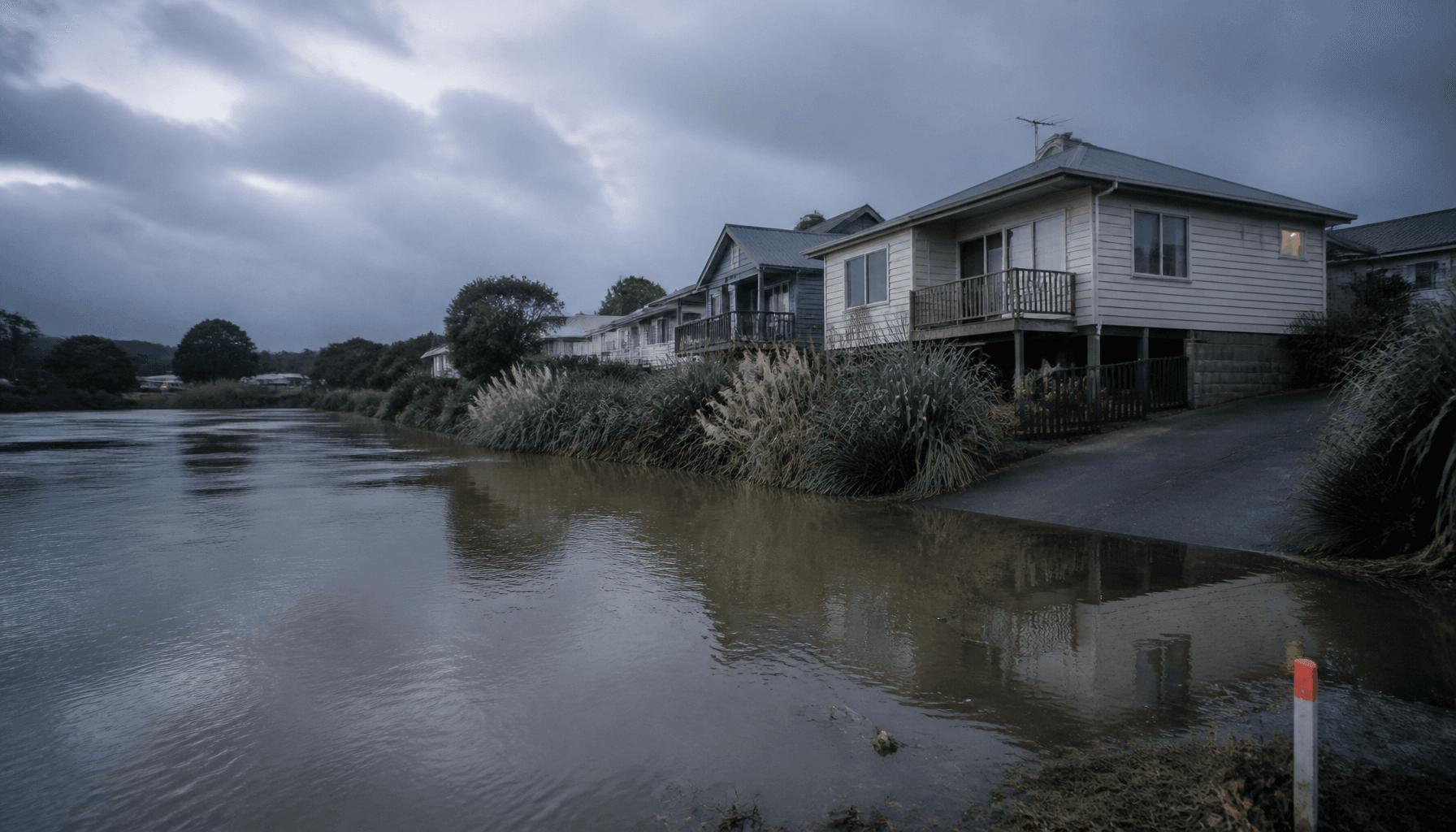
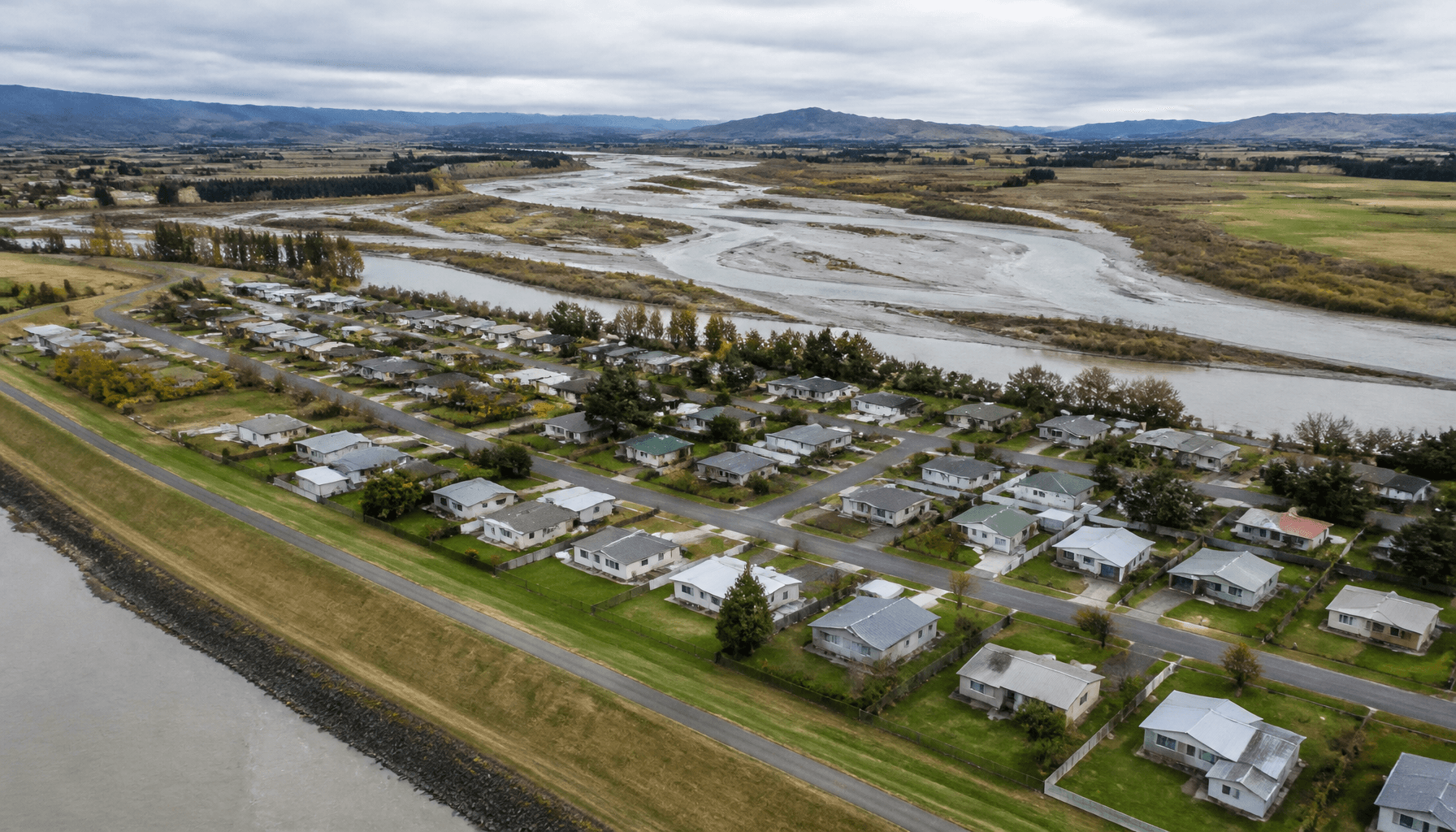
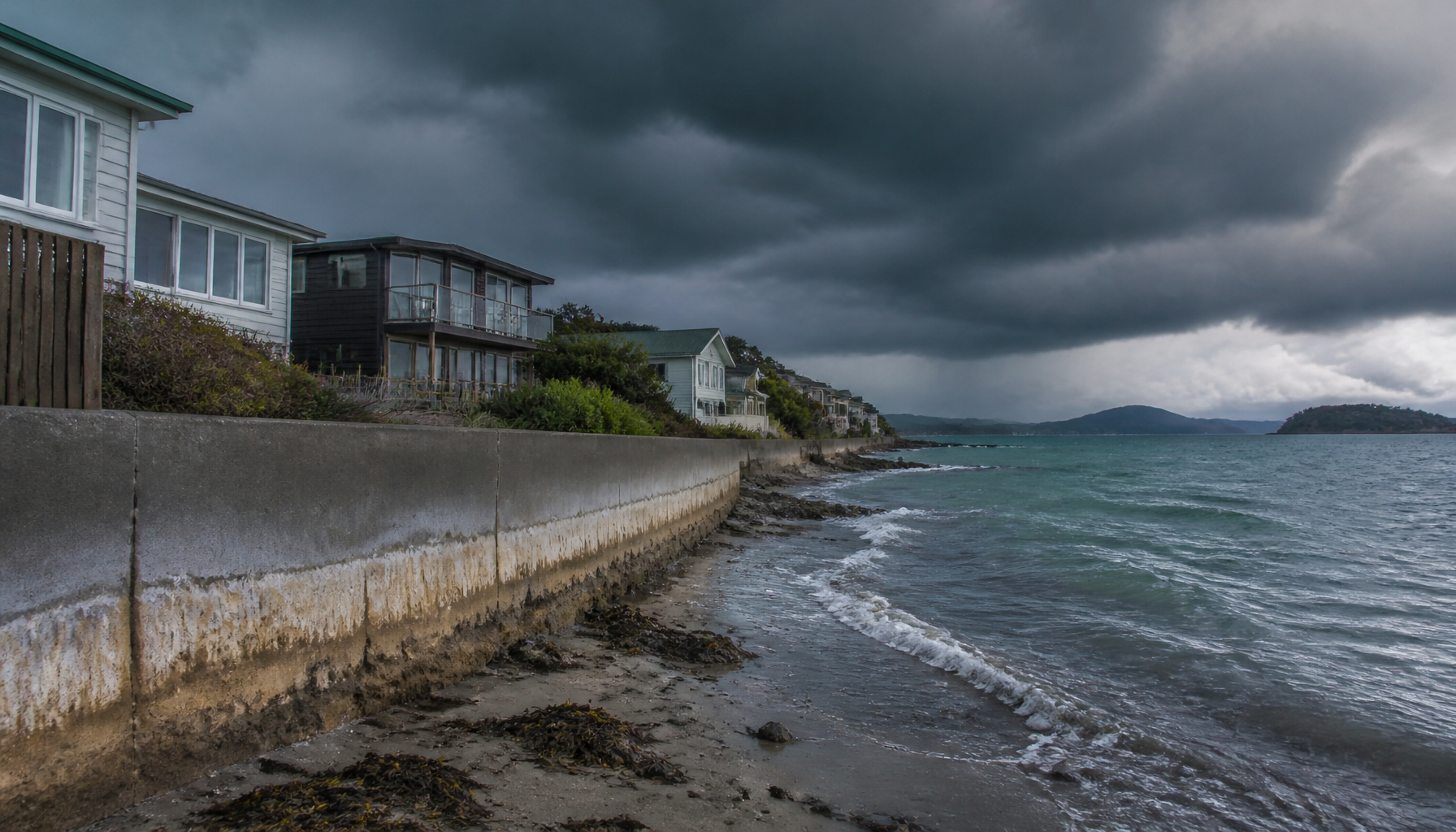
AI illustration of a low-lying New Zealand coastal property, the type of site now subject to Westpac's hazard-risk lending adjustments.
Borrower Costs Rise in High-Risk Spots
Shorter amortisation periods increase fortnightly repayments for affected borrowers. Reduced loan sizes force larger deposits or price negotiations with sellers.
Westpac offers up to $50,000 interest-free top-up lending over five years for resilience measures such as drainage improvements and house raising. The product expanded in February 2026.
Data Gaps Persist Until 2027
The first public version of the National Flood Map is not due until early 2027. LIM reports now include hazard information, but coverage varies by council.
Government modelling projects roughly 10,000 properties in major centres could become difficult or uninsurable by 2035 and likely uninsurable by mid-century under plausible scenarios.
Westpac's June 2026 survey found 90 per cent of respondents rate natural hazard risk information as extremely or very important. Only 63 per cent of current homeowners had sought it before buying.
Forward Outlook
The policy gives Westpac a competitive edge in transparency while aligning with RBNZ expectations for active climate-risk management. Other banks face pressure to match the customer-facing data sharing.
Regional economies with high exposure, including Buller, parts of Auckland, Hawke's Bay and Canterbury, will feel the lending adjustments first. The National Flood Map and upcoming disclosure rules will test whether the 2 per cent cap holds or expands.