

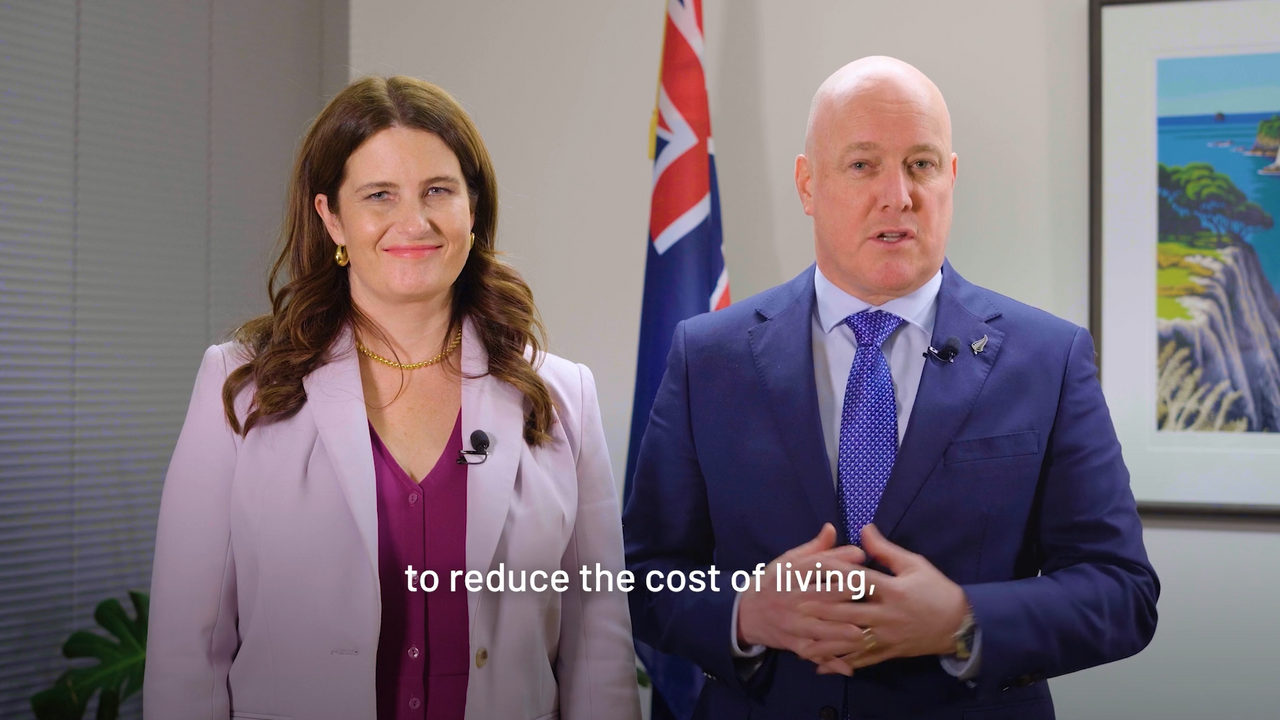
Finance Minister Nicola Willis will set an explicit target to reduce New Zealand's core public service below 60,000 full-time equivalent staff by 2029 in her pre-Budget speech today.
Workforce Expansion and Reversal
The public service grew 34 percent from 47,251 FTEs in June 2017 to 63,537 FTEs in June 2024. Public Service Commission data records this expansion during the previous Labour-led government.
Recent moderation has begun. The workforce fell to 62,654 FTEs by June 2025, a 1.4 percent drop. It stood at 63,657 FTEs by December 2025 after quarterly fluctuations.
Willis said increasing public sector headcount by a third in six years had allowed the sector's headcount to get out of whack. She has signalled a return toward pre-2017 proportions.
Explicit Reduction Target
The minister will announce a 2029 workforce reduction goal to keep the public service below 60,000 FTEs. This aligns with projected population growth to 5.5–5.7 million.
Three-Legged Reform Plan
The government pursues three measures:
- Continued gradual headcount cuts
- Accelerated adoption of AI and digitisation
- Potential department mergers
These steps support Budget 2026 preparations due on 28 May 2026.
Prior Savings Delivered
Earlier workforce reductions exceeded 4,300 roles. These delivered $1.5 billion in savings across agencies.
Further cuts could generate over $1 billion in additional savings, according to Stuff.co.nz reporting. Treasury documentation emphasises operating allowance restraint.
Union Criticism
Public Service Association national secretary Duane Leo called the plan reckless. Leo described it as an act of wilful destruction that will devastate the services New Zealanders rely on every single day.
This is irresponsible and reckless and, make no mistake, the price will be high.
Leo questioned the practical consequences, asking: Will there be fewer biosecurity officers keeping pests and diseases out of the country? Fewer social workers protecting vulnerable children?

Fiscal Discipline Context
Public sector payroll forms a material share of operating expenses. Containing costs supports efforts to return to OBEGAL surplus and manage Crown debt-to-GDP.
Historical reforms in the 1980s showed that reduced core departmental functions can shift delivery toward Crown entities and contracted providers.
Path Forward
Budget 2026 will incorporate realised savings into the 2026/27 fiscal track. Sustained restraint could create headroom for tax relief or capital investment while maintaining service quality through technology gains.