Auckland Council Locks in 7.9% Rates Rise After 14-7 Vote
Auckland councillors voted 14 to 7 on 26 May 2026 to approve Mayor Wayne Brown's 2026/27 annual budget, delivering an average 7.9 percent increase in residential rates.
Auckland’s potential $5 billion Fast-track infrastructure exposure and 16,270 wrongly suspended Winter Energy Payments have become the first real-world stress tests of the Regulatory Standards Act 2025.
Cabinet’s Economic Policy Committee has formally authorised public consultation on a prudential levy to shift Reserve Bank supervision costs onto banks, insurers and market infrastructure operators from 2027/28.
Cabinet has agreed in principle to three shifts in public performance reporting sought by the Finance and Expenditure Committee, while parking detailed design and costings until 2027.
Auckland councillors voted 14 to 7 on 26 May 2026 to approve Mayor Wayne Brown's 2026/27 annual budget, delivering an average 7.9 percent increase in residential rates.
The rise marks the highest in recent city history. It stems largely from the City Rail Link entering operation. The $235 million annual bill covers interest, depreciation and extra services.
Auckland Council contributes $2.75 billion toward the $5.5 billion project. The line is due to open in the second half of 2026.
Fuel price spikes and inflation add at least $25 million to $50 million in extra costs. Deputy Mayor Desley Simpson noted the budget already absorbs more than $230 million in pressures.
Amendment for Lower Rise Defeated
Councillors rejected an amendment for a 5.9 percent rise backed by deeper cuts. The proposal came from councillors John Gillon and Bo Burns.
Mayor Wayne Brown said the railway must be funded now or costs will rise later.
"We've got this railway, if you don't pay for it this year it's just going to be more next year." — Mayor Wayne Brown
Revaluations Deepen the Burden
Property revaluations add to the burden. Many households face effective increases of 12 to 15 percent. Nearly 1,000 properties see rises of 50 percent or more.
The average residential property will pay about $320 more per year. This lifts the bill to around $4,375. Business rates rise by an average 9.84 percent.
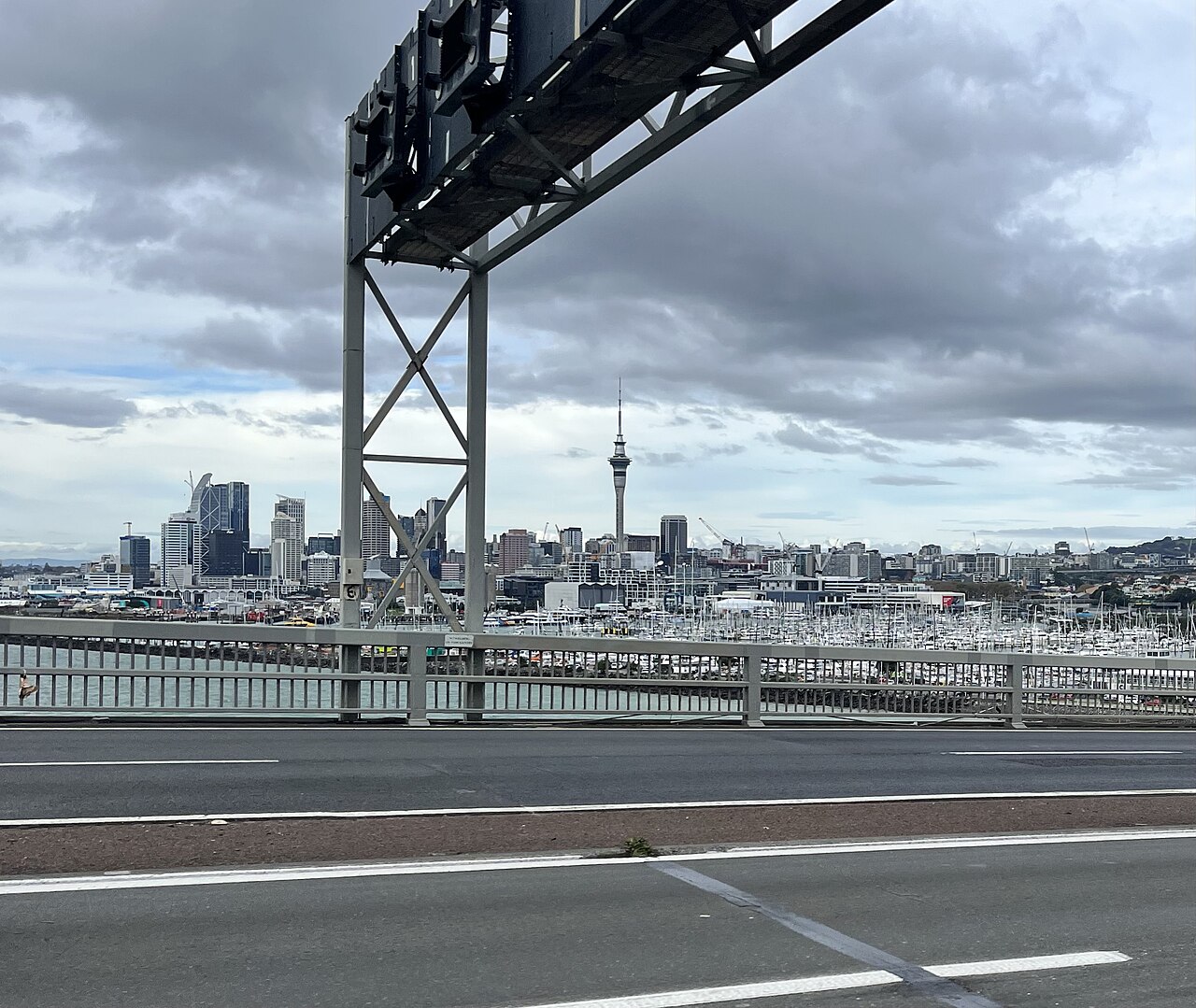
Auckland's CBD skyline from the Harbour Bridge. The city's 1.7 million residents will face an average 7.9% rates rise from 1 July 2026, the steepest in recent council history.
Savings and Capital Spending
The budget targets $106 million in operating savings. According to Auckland Council's OurAuckland reporting, the council has achieved 90 percent of its current $86 million savings target — demonstrating discipline but leaving limited headroom for further reductions.
Capital spending reaches $3.6 billion to $3.9 billion. Priorities include transport, water infrastructure and flood resilience.
Auckland Average Residential Rates Rise by Year
The 2026/27 rise is the steepest in recent history; the Long-term Plan caps subsequent increases at 3.5%.
Source: Auckland Council Annual Plans 2024/25–2026/27; Long-term Plan 2024-2034
National Context and Future Trajectory
Auckland's increase sits below the national median of 9.2 percent for 2025/26, according to the Taxpayers' Union Ratepayers' Report 2026. Some councils face double-digit rises.
The Long-term Plan 2024-2034 caps future increases at 3.5 percent annually from 2027/28. Central government proposes a 2 to 4 percent rates cap regime with a regulator by 2029.
The decision tests ratepayer tolerance in a high cost-of-living environment. It highlights tensions between major infrastructure delivery and household affordability.
Sustained high rises risk affecting disposable income, consumption and business costs across New Zealand's largest economy. Central-local fiscal relations face added scrutiny as debt sustainability and service delivery come under pressure.