BNZ Appoints Receivers Over 92,902 Dairy Goat Co-op Shares
Bank of New Zealand appointed receivers on 11 May 2026 to 92,902 shares in Dairy Goat Co-operative held by King Country Partnership (2013) Limited Partnership, together with all associated milk supply rights.
Cabinet’s Economic Policy Committee has formally authorised public consultation on a prudential levy to shift Reserve Bank supervision costs onto banks, insurers and market infrastructure operators from 2027/28.
Australian-based users viewing New Zealand property listings jumped 190% year-on-year in August, realestate.co.nz said, after Canberra tightened capital gains and negative gearing rules on new residential investments.
Finance Minister Nicola Willis has refused the Reserve Bank’s first bid to roll $10.1 million of 2025/26 underspend into 2026/27 and published three criteria that will govern every future variation under the 2025–30 Five-Year Funding Agreement.
Bank of New Zealand appointed receivers on 11 May 2026 to 92,902 shares in Dairy Goat Co-operative held by King Country Partnership (2013) Limited Partnership, together with all associated milk supply rights. McGrathNicol partners Andrew Grenfell and Kare Johnstone took the appointments. The general partner company itself remains outside receivership. Directors Bruce and Jesse Bolt of Ōtorohanga continue to run the entity.
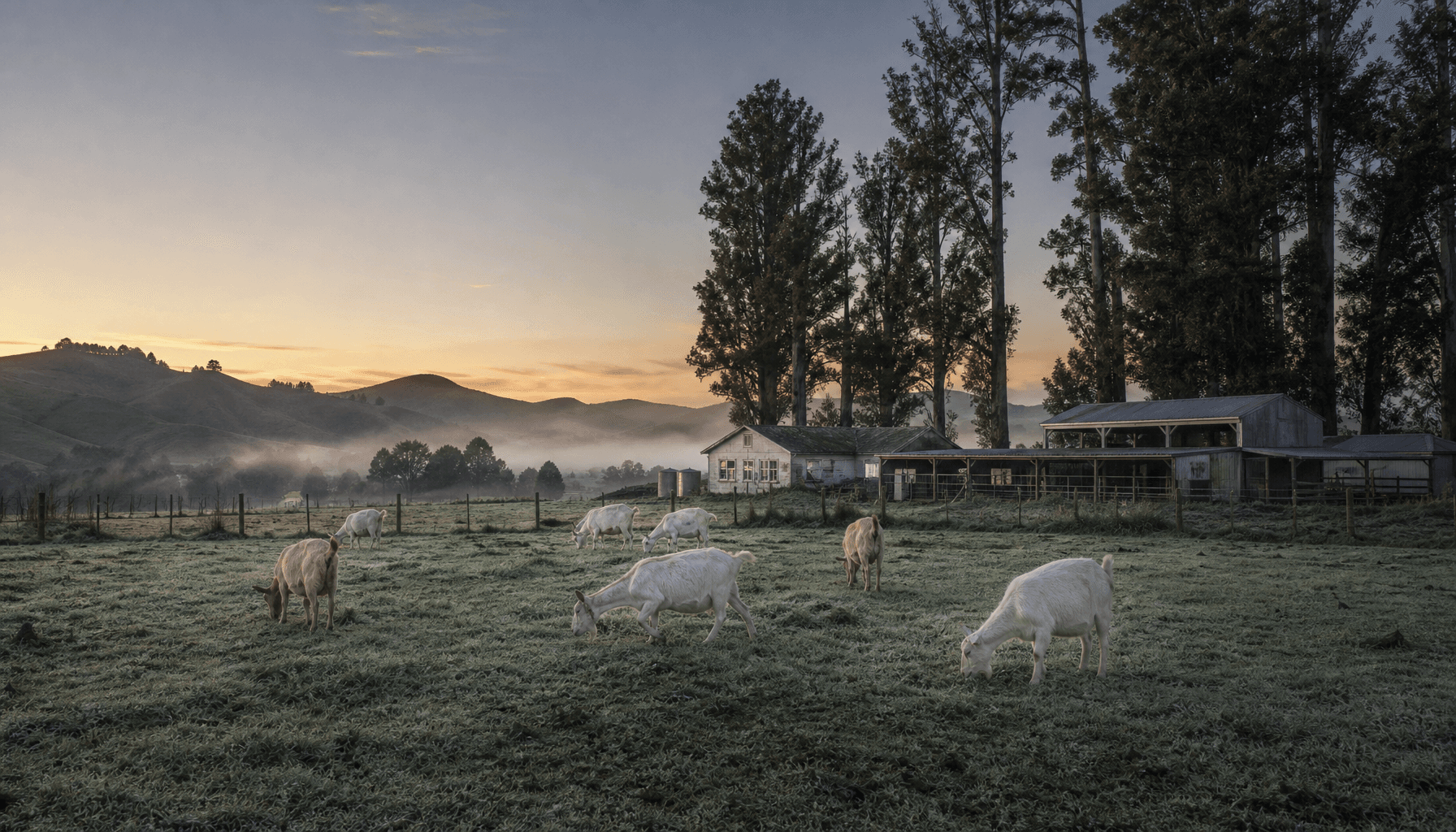
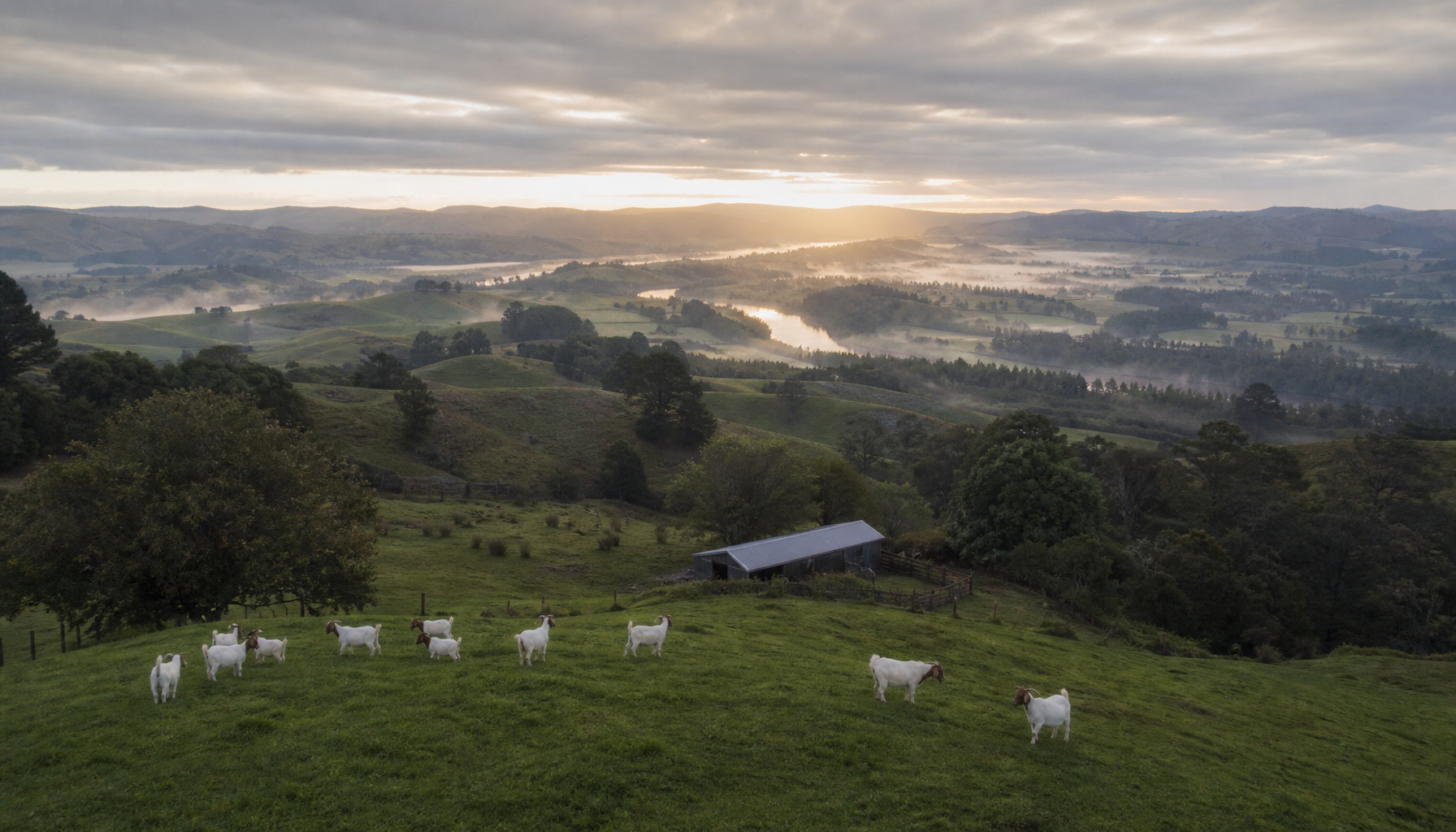
AI illustration of King Country pastoral farmland in the Waikato, where King Country Partnership (2013) Limited Partnership holds dairy goat supply rights now subject to BNZ receivership.
DGC's Finances: Recovery Under Pressure
Dairy Goat Co-operative reported revenue of $124 million for the year ended 31 May 2024. The co-operative posted an $8.9 million net loss that year after a modest profit in 2023. A subsequent $1 million loss showed modest improvement. The co-operative repaid about $18 million of debt during 2025.
The co-operative introduced a dual-payment system that rewards infant-formula output more than commodity milk. Its May 2025 strategy presentation outlined a five-year plan to expand infant-formula production and raise up to $40 million in new capital. Forecast payouts for the 2025/26 season sit at $12.50 to $14.50 per kilogram of milksolids.
Average operating costs excluding debt servicing hover near $12 per kilogram of milksolids for DGC suppliers. This narrow margin leaves limited room for leveraged operators when export returns fluctuate.
BNZ's Dual Posture: New Entrants and Distressed Debt
BNZ has promoted its First Farm initiative since October 2025 to help new entrants with reduced deposits and mentoring. At the same time the bank continues to enforce security on legacy exposures. Agriculture accounts for roughly 11 percent of total bank lending, with dairy comprising about 60 percent of that book.
The Reserve Bank has stated that non-performing loans in agricultural portfolios remain low but are projected to rise in dairy as lagged cash-flow pressures materialise.
BNZ owed $36.5 million in a March 2026 dairy receivership involving Waitonui Limited Partnership.
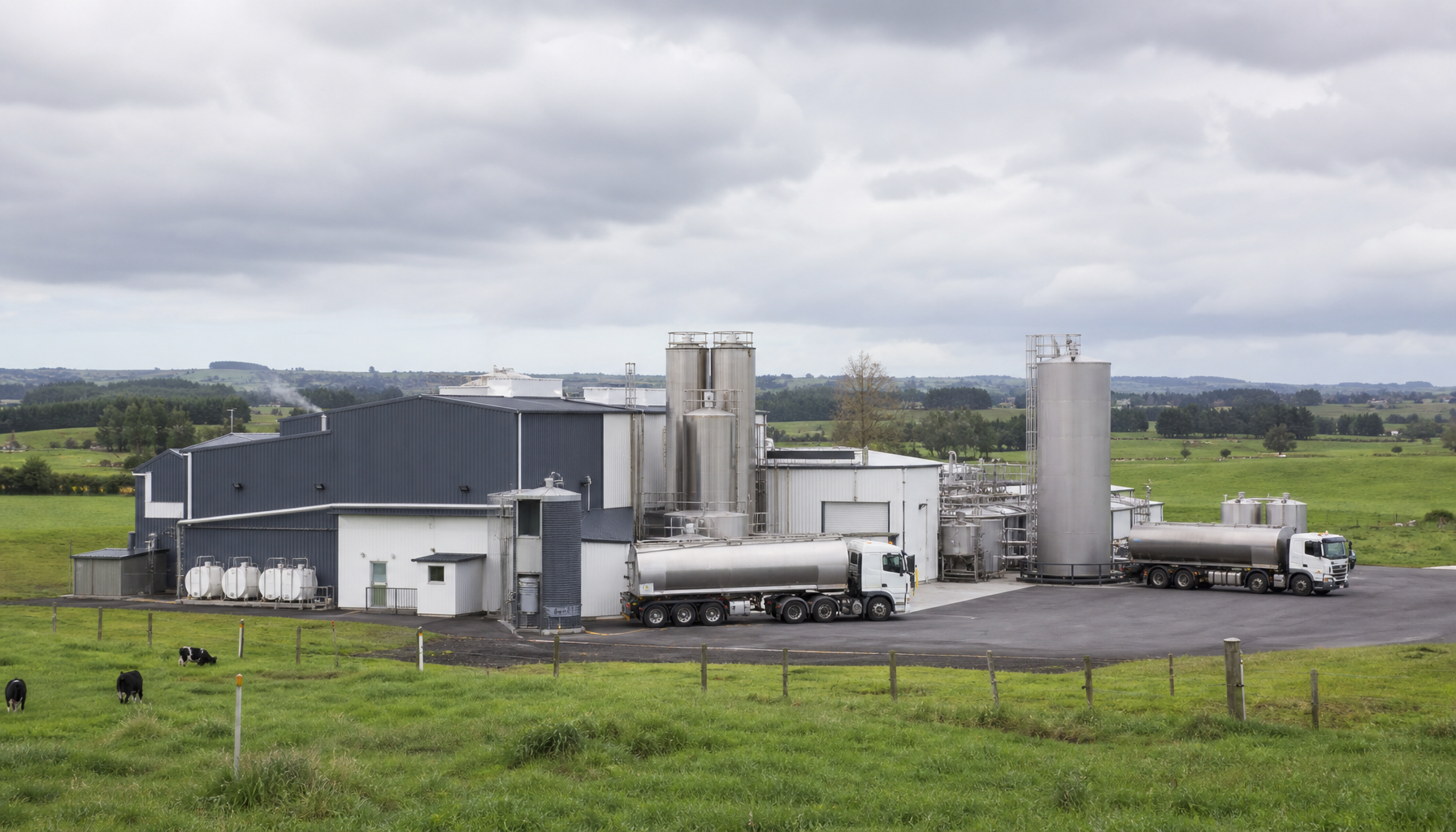
AI illustration of a New Zealand goat-milk processing facility of the kind operated by Dairy Goat Co-operative at its Hamilton plant, where any disruption to King Country supply volumes could affect infant-formula output.
Implications for DGC and Remaining Shareholders
The current case targets shares and supply rights rather than the full farm operation. Any sale or restructuring could affect processing volumes at DGC's Hamilton facility and payout capacity for remaining shareholders. The King Country operation sits in a sector still recovering from pandemic-era export shocks and elevated interest costs.
Other DGC shareholders may now review their own leverage levels. BNZ's actions signal continued scrutiny of collateral in niche agricultural lending even as overall rural debt trended lower through 2025.