Budget 2026 to Prioritise Fiscal Repair After $13.9bn Deficit
Finance Minister Nicola Willis will deliver Budget 2026 on 28 May 2026 against a backdrop of a projected $13.9 billion operating deficit and fresh downside risks from the Middle East conflict.
"We're still carrying a deficit from the Covid spend-up and international credit rating agencies are watching us closely."Nicola Willis, Finance Minister
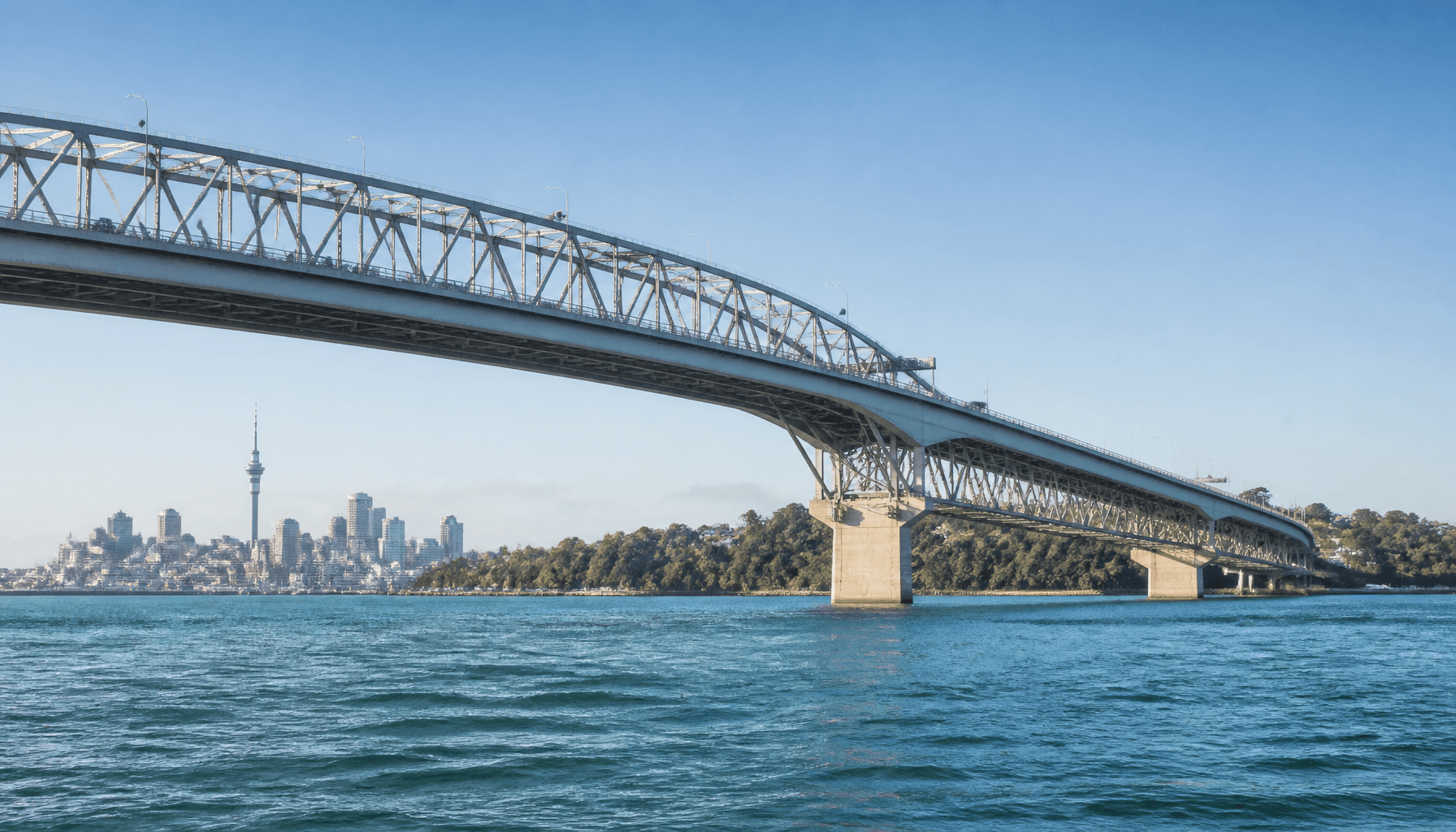
Cabinet has pulled the additional Waitematā Harbour Crossing under direct Crown control and ordered an independent detailed business case, deferring any preferred option until funding, financing and delivery are settled against a tight balance sheet.
Christchurch City Holdings is committing about $300 million of public capital to an $821 million Lyttelton container expansion after rejecting a DP World–rūnanga operating lease, pairing seismic resilience with a prospective bet on dual large-ship berths and design capacity near 850,000 TEU by 2031.
New Zealand’s recovery is real in soft indicators and South Island export cash-flow, yet annual CPI at 4.1% and unemployment at 5.6% leave the RBNZ removing stimulus into spare capacity—and the pain is not evenly shared.
Finance Minister Nicola Willis will deliver Budget 2026 on 28 May 2026 against a backdrop of a projected $13.9 billion operating deficit and fresh downside risks from the Middle East conflict.
Baseline Forecasts Show Persistent Shortfall
Treasury's Half Year Economic and Fiscal Update 2025 projects an OBEGALx deficit of $13.9 billion, or 3.0% of GDP, for the year ending June 2026. This marks the largest such share since 2019/20 and compares with an actual $9.3 billion deficit in 2024/25.
The cyclically adjusted component stands at -1.9% of GDP. Only about one-third of the shortfall is expected to close automatically with economic recovery.
A return to OBEGALx surplus of $2.3 billion, or 0.4% of GDP, is now forecast only for 2029/30. Net core Crown debt is projected to rise from $182.2 billion (41.8% of GDP) at June 2025 to a peak of $246.8 billion (46.9% of GDP) in 2027/28.
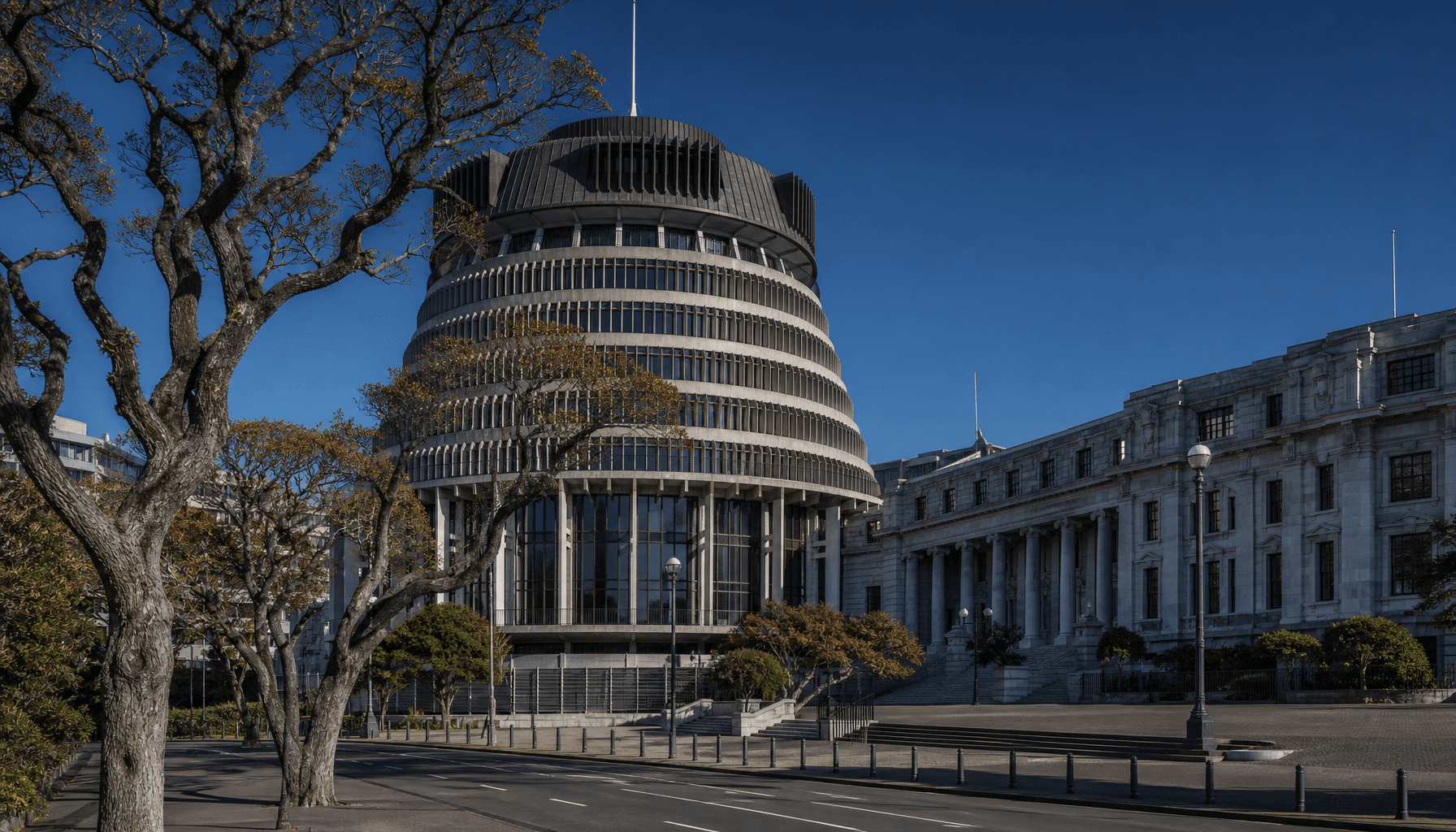
AI illustration of a New Zealand Treasury-style budget office, used here to illustrate the fiscal repair task facing Finance Minister Nicola Willis ahead of Budget 2026 on 28 May.
Key HYEFU 2025 Fiscal Metrics
Metric
Value
2025/26 OBEGALx deficit
$13.9bn (3.0% GDP)
2029/30 OBEGALx surplus
$2.3bn (0.4% GDP)
Net core Crown debt peak 2027/28
$246.8bn (46.9% GDP)
Net core Crown debt 2029/30
$253.9bn (46.1% GDP)
OBEGALx and debt trajectory under baseline assumptions
Source: Treasury Half Year Economic and Fiscal Update 2025
Pre-Budget Levers Focus on Restraint and Reprioritisation
The government has trimmed the operating allowance for Budget 2026 by $300 million to $2.1 billion. Much of this sum is already committed.
The capital allowance has been lifted to $5.7 billion to fund what Willis described as "job-rich" infrastructure in health, education, defence and transport.
Public service reforms announced in mid-May, including departmental consolidation and a reduction of approximately 8,700 positions by mid-2029, are projected to deliver $2.4 billion in savings over the forecast period.
ASB senior economist Mark Smith said:
Budget 2026 is likely to be more about fiscal repair, spending prioritisation and bolstering New Zealand's economic security against a highly fluid global backdrop.
External Shock Adds Uncertainty
The Middle East conflict has prompted Treasury to reopen its economic forecasts. Higher global energy prices are feeding into domestic inflation and pressuring tax receipts.
Banks have revised growth forecasts lower. ASB cut its 2026 projection to 1.3% from 2.9%.
Westpac senior economist Darren Gibbs said:
The conflict in the Middle East will negatively affect the government's finances through a variety of channels that sit outside of its immediate control.
Economists warn of up to $10 billion extra borrowing over the next four years, potentially lifting net debt toward 48% of GDP.
ANZ senior economist Miles Workman said the government was between a rock and a hard place — needing to support the economy, but not stoke inflation, at a time its finances were pressured.
Finance Minister Nicola Willis has repeatedly emphasised the weight of the inherited fiscal position, noting that New Zealand is still carrying a deficit from the Covid spend-up and that international credit rating agencies are watching the country's debt trajectory closely.
The Labour Party and opposition finance spokesperson were approached for comment. No response had been received at time of publication.
Path Forward
The length of the conflict remains the key swing factor. A prolonged disruption could force marked revisions in the Pre-Election Economic and Fiscal Update due by early October. The Budget will test the government's ability to deliver restraint while protecting core services amid external volatility.