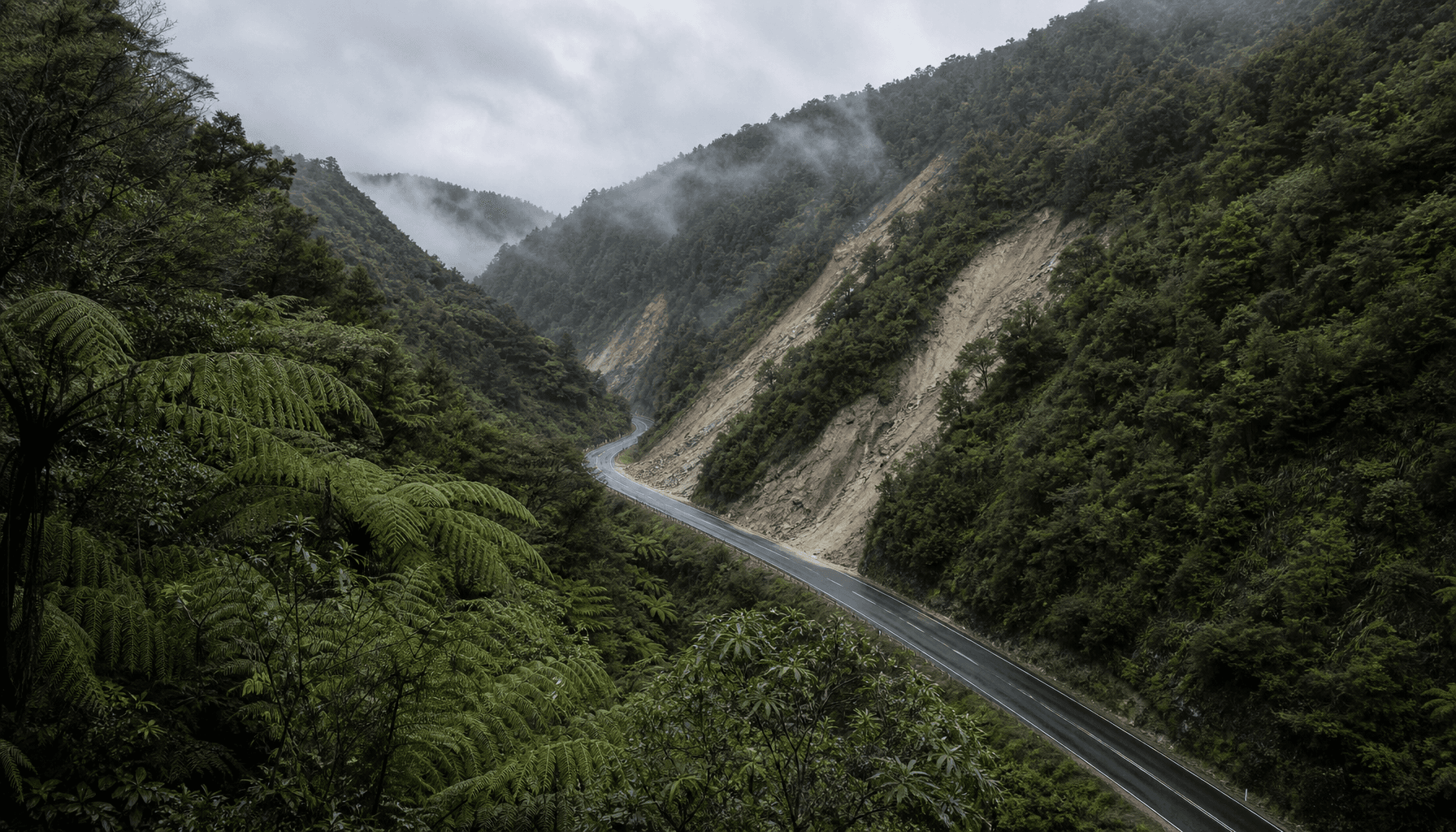
Closures on the Waioweka Gorge section of State Highway 2 disrupt $190 million in annual tradeable gross domestic product in the Tairāwhiti region, according to the Trust Tairāwhiti Waioweka Gorge Closure Impacts Report released in mid-May 2026.
The figure represents lost output from freight, production, tourism and business activity dependent on the 48km corridor between Gisborne and Ōpōtiki.
Gisborne District GDP totalled $2.93 billion in the year ended March 2025, according to Infometrics analysis of Stats NZ data. The disrupted amount equals roughly 6.5 percent of that baseline.
During closures the report estimates $524,000 per day in road-dependent tradable GDP is lost. An additional $482,000 per day is incurred in extra travel costs across all vehicles.

Supply chains under strain
Freight operator Eastlite Carriers reported doubled fuel costs, extra drivers, hotel stays for stranded staff and rescheduling challenges that reduce fleet efficiency.
Tairāwhiti's economy relies heavily on primary industries. Agriculture, horticulture and forestry accounted for around 20 percent of direct GDP or $504 million in 2022 data and employ more than 6,000 people. Tourism added $72.6 million or 2.5 percent of regional output in 2025.
The region recorded a 0.5 percent year-on-year decline in GDP for the year to March 2025 amid national economic softness. Population stood at approximately 52,700.
Trust Tairāwhiti CEO Doug Jones described unreliable access as a major economic resilience risk. — Doug Jones, Trust Tairāwhiti CEO
Business case and government response
Waka Kotahi NZ Transport Agency completed a May 2024 business case that assessed resilience options for the corridor. A recommended cheaper option would reduce closures by 53 percent. A fuller programme would cut closures by 70 percent.
Following weather events in January 2026, NZTA is revising scope and costs. NZTA director of regional relationships Linda Stewart stated the report provides valuable insights and that freight operators have been significantly affected.
East Coast councils including Gisborne, Ōpōtiki, Bay of Plenty Regional and Hawke's Bay sent a joint letter to Transport Minister Chris Bishop on 10 April 2026 seeking formal nationally significant status for SH2.
Councils met the minister around 20 May 2026. The Government Policy Statement on land transport 2024 prioritises East Coast resilience and flood recovery projects within the National Land Transport Programme.