MDF holds $38.21m baseline as Crown co-invests in three Māori exporters
Budget 2026 locked the Māori Development Fund at $38.21 million a year from 1 July 2026. Te Puni Kōkiri is deploying the fund under strict 50 percent cash co-investment rules to de-risk Māori asset and export projects.
NZ Transport Agency has recalculated Funding Assistance Rates for the 2027–30 National Land Transport Programme, stepping down co-investment for more than a dozen councils and shifting multi-million-dollar local-road costs onto thin rural rate bases just as rates-band discipline begins.
The Crown has vested with rights to $2,377.28 linked to the estate of late Queenstown hotelier Kevin Carlin after removal of Ex CHPML Limited from the Companies Register, Treasury has notified under section 324 of the Companies Act 1993.
Proposed staffing cuts at the National Library and Archives New Zealand could trim services to schools by about 36 percent, the School Library Association says, as officials review a 47 full-time-equivalent reduction already flagged against Budget 2025 baseline savings.
Budget 2026 set the Māori Development Fund at $38.21 million a year from 1 July 2026. Te Puni Kōkiri administers the fund as a Crown co-investment tool, not a full capital provider.
Investment Priorities 1 and 2 require applicants to put up at least 50 percent cash. The minimum Crown cheque is $100,000. The rules force skin in the game and limit open-ended subsidy.
Māori Development Minister Tama Potaka has announced three recent grants under the fund. Halcyon Power at Mōkai receives $865,000 for green hydrogen export work. Ngāti Pāhauwera receives $2.1 million for a 30-hectare export apple orchard at Raupunga. Marlborough wine producer Tiraki receives $100,000 for United States brand expansion.
The three line items total $3.065 million. Government communications have framed the package as more than $3.4 million of investment through the fund. Taxpayers should track the audited line items, not the headline framing.
MDF package snapshot
Annual MDF baseline
$38.21m
Halcyon Power
$0.865m
Ngāti Pāhauwera
$2.1m
Tiraki
$0.1m
Min. co-invest
50% cash
Line-item grants sum to $3.065m; annual baseline set in Budget 2026.
Source: Te Puni Kōkiri; ministerial announcement
The fund sits inside Going for Growth with Māori | Tōnui Māori. That plan targets infrastructure, whenua productivity and Māori export revenue. It aligns with the coalition’s economy-wide goal of doubling New Zealand export value within a decade.
Treasury has described the national export target as highly ambitious. It implies compound annual growth near 7 percent. Small MDF grants cannot move that needle alone. Their value is leverage and demonstration, not macro scale.
Budget 2026 also cut Te Puni Kōkiri operating spending by $5.9 million a year, or $23.6 million over the forecast period. Savings come from personnel and contractor reductions. A further $10 million of MDF money was reprioritised over five years toward Te Māori Tū cultural-trade showcase work.
The pattern is clear. Departmental baseline shrinks. Project co-investment continues under tighter economic criteria. Critics, including Te Pāti Māori and Labour voices reported by RNZ, argued the Budget lacked broad new targeted Māori spending. The Government points to fiscal discipline and measurable export and asset outcomes.
Māori asset base and export context
BERL’s Te Ōhanga Māori 2023 report for MBIE valued the Māori asset base at $126 billion in 2023, up from $69 billion in 2018. Māori contribution to GDP reached about $32 billion, or 8.9 percent of national GDP. Māori exports were estimated near $5.2 billion.
Māori asset base and GDP contribution
Asset base nearly doubled over five years; GDP share rose to 8.9%.
Source: Te Ōhanga Māori 2023, BERL for MBIE
Primary industries still hold a large share of collective assets. Agriculture, forestry and fishing sat near $39.7 billion. That is the backdrop for orchard and wine tickets. Hydrogen sits at the demonstration end of the clean-energy spectrum.
Three projects, three scales
Halcyon Power is a 50/50 joint venture between Tūaropaki Trust and Japan’s Obayashi Corporation. Its 1.25 MW plant at Mōkai uses geothermal electricity. Capacity is around 100 to 180 tonnes of hydrogen a year. Obayashi has confirmed New Zealand’s first green hydrogen cylinder shipment to Fiji for dual-fuel generation. Singapore feasibility work is under way.
The $865,000 therefore accelerates an operating asset toward further export markets. It is not greenfield capital for an unbuilt plant.
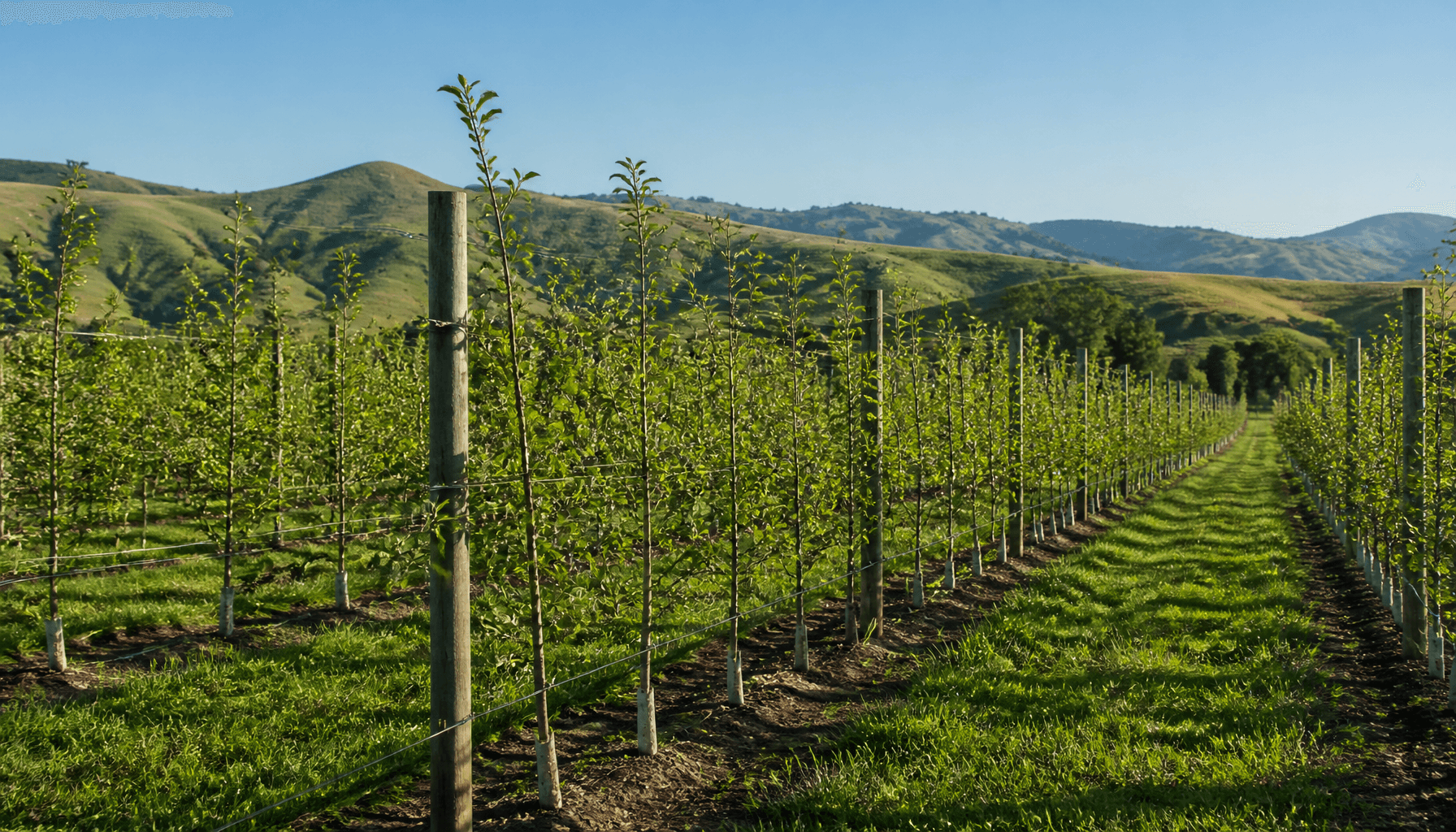
Ngāti Pāhauwera is converting 30 hectares at Raupunga into a modern export apple orchard. More than 23,000 trees are in the ground. Nineteen new horticulture roles have been filled. More than $400,000 has already gone to local contractors, according to the ministerial announcement.
MPI’s December 2025 Situation and Outlook put apples and pears export revenue at $1.246 billion in the year to June 2025. Hawke’s Bay dominates planted area and volume. Sector strength is real. Variety and climate risk remain. Ngāti Pāhauwera’s own 2024–25 annual reporting flagged Rockit underperformance and multi-million-dollar losses alongside better outlooks for other varieties.
Tiraki is a B Corp-certified Marlborough single-estate brand with Ngāi Tahu heritage. B Lab records an overall B Impact Score of 102.5. The $100,000 sits at the fund’s minimum threshold and supports US distribution expansion from eight states to 12, plus a further container order. NZ wine exports were about $2.10 billion in the year to June 2025, with the United States still the largest market near $762 million but softer on value.
MDF grant line items in this package
Ngāti Pāhauwera orchard takes the bulk of the three-ticket package.
Source: Ministerial announcement / Te Puni Kōkiri
Prior pipeline and fiscal weight
In 2024/25 Te Puni Kōkiri reported $12.1 million into 31 asset-productivity initiatives and $5.8 million into 25 Māori exporters. Expected FTE growth among those exporters was strong on the agency’s figures. Outcomes reporting after Crown funding ends is the real test.
An earlier June 2026 package channelled more than $5.3 million through the same fund into Hineuru cherries infrastructure and Akaroa King Salmon upgrades. The sequence shows a consistent preference for primary-sector and export-linked co-investment over broad social programme sprawl.
Minister Potaka has said prosperity does not stop at a business balance sheet and that the Crown’s role is to back Māori ambition rather than constrain it. He has also argued that when Māori enterprise succeeds, whānau, regions and the wider New Zealand economy strengthen.
These three tickets will not shift OBEGAL. They will not close the national export gap on their own. They do illustrate the post-Budget settings: smaller departmental overhead, retained project co-investment, and a demand that Māori capital match the Crown dollar for dollar in cash.
Watch the next two to three years of TPK outcomes data. If export receipts, contractor spend and sustained jobs materialise without further operating subsidy, the co-investment model earns its keep. If not, the fiscal case for even a $38.21 million baseline weakens against competing claims on the Crown accounts.