Parliament clears India FTA 93–29; tariffs cut on 95% of NZ exports
Parliament passed the India Free Trade Agreement legislation 93–29 on 16 September 2026. Preferential tariffs await mutual ratification, with Indian officials pointing to mid-to-late October entry into force.
New Zealand rural confidence stayed positive for a ninth straight quarter in August 2026, with horticulturalists overtaking sheep and beef as the most optimistic sector while investment plans stayed soft.
Electric vehicles on New Zealand roads have avoided about $90 million in oil-product imports since the start of 2024, a Newsroom analysis estimates, as Stats NZ reported fuel led the rise in merchandise imports in the year to July 2026.
Treasury told Finance Minister Nicola Willis that Foreign Minister Winston Peters committed New Zealand to host the 2027 Pacific Islands Forum before Cabinet approved the arrangement, locking in unavoidable costs inside a still-deficit Budget track.
Parliament passed the India Free Trade Agreement Legislation Amendment Bill at third reading by 93 votes to 29 on 16 September 2026.
National, ACT and Labour backed the bill. New Zealand First, the Greens, Te Pāti Māori and two independents voted against.
Trade and Investment Minister Todd McClay said the vote delivered a first-term promise to conclude an India deal. Both countries must still finish ratification and exchange notifications before preferential tariffs apply.
Indian Commerce Secretary Rajesh Agrawal has said India expects operationalisation in the second half of October 2026. Some reports cite a possible mid-to-late October date once procedures finish.
From day one of entry into force, 57 per cent of New Zealand's exports to India become duty-free, according to the Government. Once fully phased, duty-free access rises to 82 per cent. Tariffs are eliminated or sharply cut on 95 per cent of current export value.
Winners: pastoral, forestry and horticulture
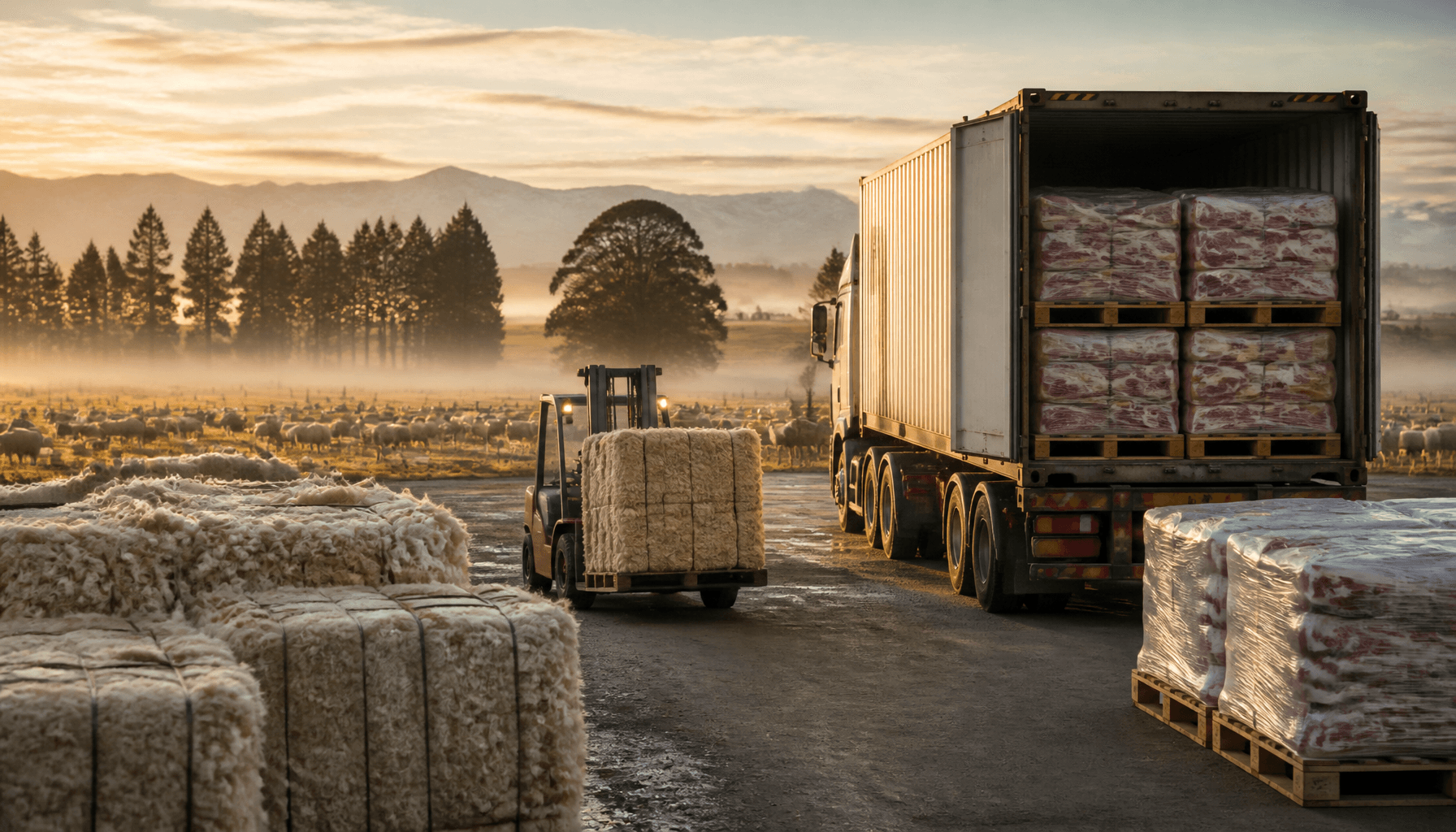
Immediate day-one elimination covers sheepmeat (previously 33 per cent), wool (2.75 per cent), coal and more than 95 per cent of forestry and wood products. Those lines matter for South Island and lower North Island pastoral exporters and for forestry processors shipping logs and wood products into Indian construction and manufacturing.
Horticulture gains quota-based access. Kiwifruit enters duty-free inside a tariff-rate quota that rises from 6,250 to 15,000 tonnes — about four times recent average exports — with the out-of-quota tariff halved to 16.5 per cent. The Government says the kiwifruit industry alone expects about NZ$125 million in tariff savings over five years. Apples receive a 50 per cent cut inside a large quota nearly double recent trade. Mānuka honey tariffs fall from 66 per cent toward 16.5 per cent over five years. Wine tariffs phase from 150 per cent toward 25 or 50 per cent over ten years, with an MFN commitment.
Kiwifruit vines on a New Zealand orchard. Under the FTA, kiwifruit enters India duty-free inside a quota rising to 15,000 tonnes, with the industry expecting about NZ$125 million in tariff savings over five years.
Seafood phases over seven years. High-value dairy niches open gradually: bulk infant formula and preparations, albumins inside a New Zealand quota at a halved tariff, and duty-free ingredients for re-export from day one. Core dairy — milk, cheese, butter and most bulk products — remains largely excluded to protect India's smallholder sector.
It is disappointing that the negotiations with India were unable to secure any significant new core dairy access opportunities for New Zealand into the Indian dairy market.
Fonterra Group Director Global External Affairs Simon Tucker said in December 2025 that the absence of significant new core dairy access was disappointing though unsurprising given India's long-standing sensitivities. Dairy companies welcomed secondary provisions and a consultation hook if India later opens core dairy to comparable partners.
What New Zealand gives in return
In return, New Zealand grants 100 per cent duty-free access on all tariff lines to Indian goods. That benefits labour-intensive Indian exports such as textiles, apparel, leather, footwear and engineering goods. New Zealand also committed to facilitate US$20 billion of private-sector investment into India over 15 years. India holds a rebalancing option if the target is not met.
Two-way trade totalled about NZ$3.99 billion in the year to June 2026, the Government said, with India New Zealand's ninth-largest goods and services export market. MFAT key facts for the year ended December 2025 put two-way trade at NZ$3.95 billion and India around 11th among export markets at roughly 1.8 per cent of total exports — a thin base after years of high Indian tariffs.
The modelled economic gain
Independent Motu modelling for MFAT projects New Zealand exports to India about NZ$340 million higher in 2027 and about NZ$1.27 billion higher in 2050 versus a no-FTA baseline. New Zealand GDP is about NZ$135 million higher in 2027 (0.03 per cent) and NZ$658 million higher in 2050 (0.10 per cent). Static tariff savings on current trade levels are estimated at about NZ$43 million a year initially, rising to about NZ$62 million when fully phased. Average applied tariffs faced by New Zealand exporters fall from about 10 per cent to about 3 per cent.
Bank and official commentary has framed the deal as helpful for diversification and long-run income, not a near-term macro game changer. Much of the modelled bilateral export gain is diversion from lower-return markets, though total global exports still rise in the Motu work. Officials argue past FTAs with China, the EU, the UK and the UAE under-predicted utilisation once new product networks formed.
A second attempt, a decade apart
Negotiations relaunched in March 2025 after political engagement between Prime Ministers Christopher Luxon and Narendra Modi, concluded in December 2025, and were signed in New Delhi on 27 April 2026 by McClay and Indian Commerce and Industry Minister Piyush Goyal. Earlier talks from about 2009–2015 failed, largely over dairy. The 2025–26 round closed in roughly nine months.
New Zealand First opposed the package as asymmetric: full New Zealand market opening versus closed Indian dairy, plus mobility elements and the investment facilitation target. The Greens and Te Pāti Māori raised environment, labour, climate and process concerns. Labour's support produced the 93–29 majority on the implementing bill.
The omnibus bill, introduced in June 2026 and advanced through the Foreign Affairs, Defence and Trade Committee, amends domestic law for quota systems covering apples, kiwifruit and mānuka honey and other implementing changes. Preferential rates start only after both sides complete final steps and the formal entry-into-force date is set.
For New Zealand exporters, the commercial test begins after that date: whether kiwifruit, apples, sheepmeat, wool and forestry fill the new preferences; whether two-way trade moves toward the Modi–Luxon goal of doubling by 2030 from a roughly NZ$4 billion base; and whether the dairy consultation clause ever becomes operational. Near-term GDP effects remain modest on Motu's numbers. The strategic case rests on diversification away from concentrated partners and on long-horizon access to a large, fast-growing market.